




Aluminum Alloy Machinery Part composition: alloys, tempering, and heat treatment
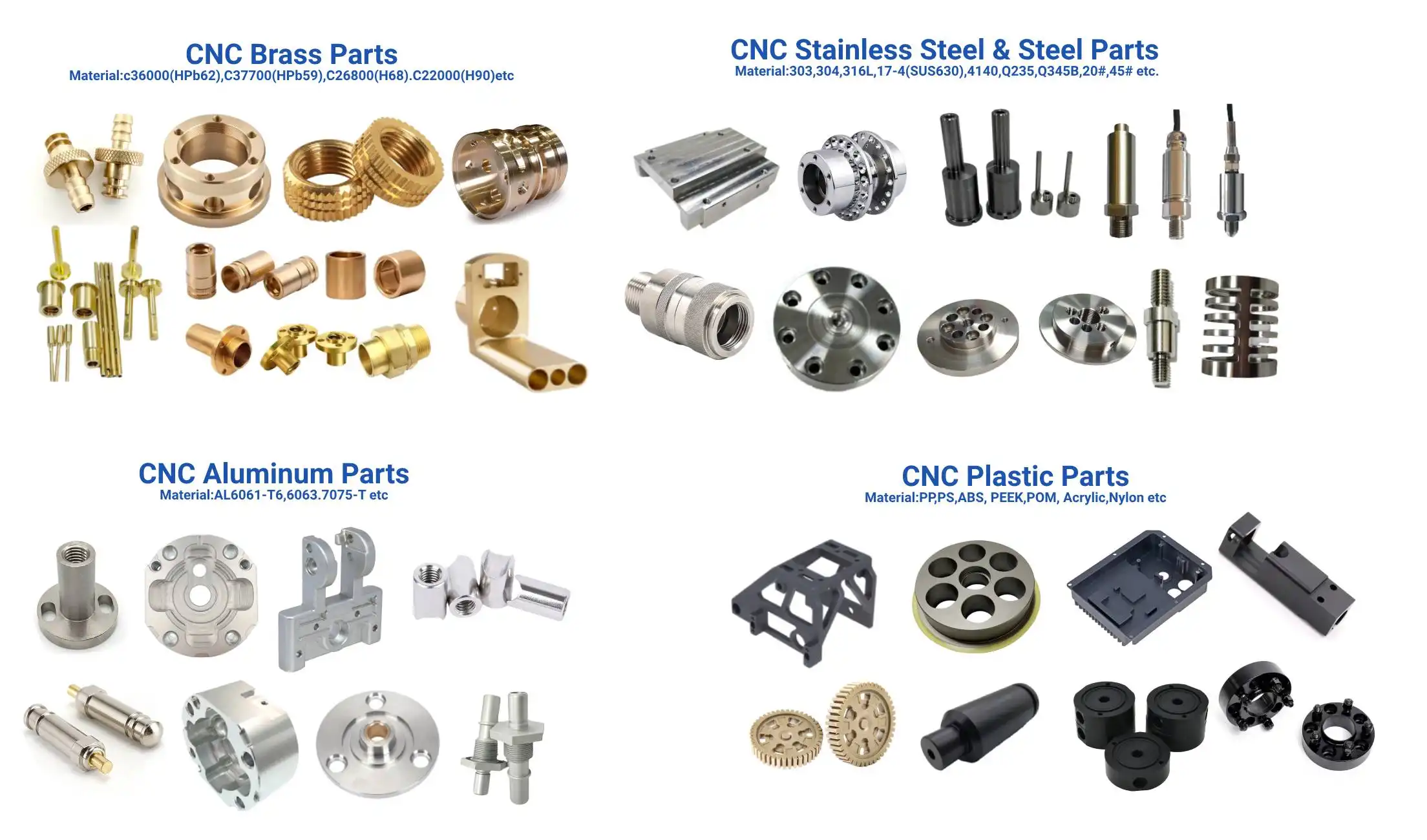
Engineered for excellence, our high-performance aluminum alloy mechanical components deliver the perfect balance of strength, durability, and lightweight efficiency. Designed to meet the most rigorous industrial standards, these parts are the ideal solution for applications across aerospace, automotive, robotics, and advanced machinery.
Understanding Aluminum Alloy Series for Machinery Parts
The 6000 Series: Versatility in Machinery Applications
The 6061 and 6063 aluminum metals in the 6000 line are used to make a lot of Aluminum Alloy Machinery Parts. Not only are these metals strong, but they are also resistant to corrosion and can be shaped. People know that 6061 aluminum metal is strong for its weight and easy to work with. It is great for making parts for robots and other automation gear because of this. And 6063 aluminum alloy is highly valued for being easy to extrude and having a great finish on the outside. This makes it perfect for parts that need to be both helpful and nice to look at. Once these metals are cut to the right size and tolerances—often as close to ±0.01mm—they are put through different steps like CNC cutting, turning, and five-axis machining to become machine parts.
The 7000 Series: High-Strength Solutions for Critical Components
Machinery Made of Aluminum Alloy Most of the best parts are in the 7000 range and are made of 7075 aluminum metal. This alloy is very strong and is often used in airplanes and other places where strength is important. Because it is stronger mechanically, it can be used for parts that need to be strong against wear and tensile stress. During the making process, parts made of 7075 metal are often given extra heat treatments that make them even better. With Electrical Discharge Machining (EDM) and other advanced techniques, it is possible to make complex forms very precisely, with a surface roughness level of 0.8μm or less. It is very important to have this level of accuracy in areas like making medical equipment and spacecraft.
Custom Alloy Selections for Specific Machinery Requirements
People often choose the 6000 and 7000 series, but the type of aluminum alloy used for Aluminum Alloy Machinery Parts is usually determined by the task at hand. A lot of different factors are used by companies like Dongguan Junsion Hardware Co., Ltd. to choose alloys for their unique solutions. These factors include the alloys' strength, weight, resistance to corrosion, and thermal qualities. Whether it's for medical devices, car parts, or AI-powered smart systems, this customized method makes sure that every piece of gear works perfectly for what it was made to do. To make machine parts that work well in their specific settings, you need to pick the right metal and use advanced processing and finishing methods such as painting, anodizing, or QPQ treatment.
Tempering Processes for Enhanced Aluminum Alloy Performance
Cold Working and Its Impact on Machinery Part Properties
Cold working is an important part of making Aluminum Alloy Machinery Parts because it makes the metal harder. With this method, the metal is bent while it is still at room temperature. This changes the crystal structure of the metal, making it stronger and harder. Machine parts that have been cold worked can last longer and be less likely to break. This method works really well for parts that need to be very accurate and last a long time, like those used in robots and automation equipment. Al metals that have been cold-worked often have a higher failure strength. This makes them good for parts that are stressed over and over again. But the amount of cold working needs to be carefully controlled so that the parts don't get too stiff and lose their flexibility for the jobs they were made for.
Solution Heat Treatment for Optimized Mechanical Properties
Solution heat treatment is another important way to soften Aluminum Alloy Machinery Parts. In this method, the metal is heated to a certain temperature, held there for a certain amount of time, and then quickly cooled down. The goal is to mix alloying elements into the aluminum matrix so that a stable solution is formed that is very saturated. For machine parts, especially those made from 6061 or 7075 metals, this process can make them much stronger and harder. After being quenched, the parts are often aged in a lab to make their mechanical features even better. Parts used in aircraft and high-performance cars, where strength-to-weight ratio is important, must go through this two-step process. To get the microstructure and properties you want, you have to carefully control the temperature and time of the solution heat treatment.
Precipitation Hardening for Superior Strength and Durability
A complex tempering method called precipitation hardening is widely used to make high-performance Aluminum Alloy Machinery Parts. Solution heat treatment is the first step in this process, which is also called "age hardening." The next steps are controlled cooling and aging. As an alloy ages, small particles called precipitates build up in its microstructure. These particles stop dislocations from moving, which makes the alloy much stronger and harder. Precipitation hardening can give machine parts that are used in important places, like medical devices or aircraft, the right mix of strength, toughness, and dimensional stability. The process can be changed to get certain property profiles, which lets makers make parts that work best for what they're meant to do. Advanced control over the aging temperature and length of time makes it possible to make machine parts with carefully engineered mechanical properties.
Heat Treatment Techniques for Aluminum Alloy Machinery Parts
Annealing for Improved Formability and Stress Relief
This is a very important way to use heat to treat aluminum metal machine parts. The metal is heated to a certain temperature, kept at that temperature for a certain amount of time, and then cooled down slowly. When you anneal machine parts, they become easier to shape and their stress level goes down. A metal can become a lot more flexible when you anodize it. This helps you shape it without breaking when making parts with complicated shapes that are used in AI systems or home goods. Also, annealing helps parts that have been cut or cold worked a lot to remove stress from them. Over time, these pressures can make parts bend or lose their shape. It is important to carefully adjust the annealing settings to get the right mix of strength and softness. In this way, the qualities can be changed to make each machine part work better.
Quenching Techniques for Rapid Property Enhancement
It is important to let Aluminum Alloy Machinery Parts cool down before you heat them up to treat them. If the metal is very strong, like 7075, this is very true. Water, oil, or forced air are often used to quickly bring the hot metal to room temperature during this process. Because it cools so quickly, it "freezes" the alloying elements that are still in solution. In this way, a solid answer that is very full is made. For airplane or fast car parts to be as strong and hard as possible, they need to be cooled in the right way. Controlling the rate of cooling is very important to make sure the metal doesn't shrink or crack and has the right mechanical qualities. When you quench something today, like with spray quenching or polymer quenching, the cooling process is more even, and the stress that is still there is cut down. Things work better and stay the same size this way.
Artificial Aging for Precision-Controlled Properties
A complex heat treatment method called "artificial aging" is used to fine-tune the properties of Aluminum Alloy Machinery Parts. After solution heat treatment and quenching, this step includes keeping the alloy at a high temperature for a certain amount of time. During manufactured aging, controlled precipitation of alloying elements happens, which makes the alloy much stronger and harder. Artificial aging makes it possible to precisely control the end mechanical properties of machine parts that are used in precise applications like medical devices or robotics. To get the best mix of strength, ductility, and dimensional stability, the temperature and length of the aging process can be changed. Modern methods for aging, such as multi-stage aging processes, make it possible to make machine parts with specific property profiles that meet the exact needs of modern industrial applications.
Conclusion
The making up and handling of machine parts made of aluminum alloys depends on a lot of different alloy choices, tempering methods, and heat treatment methods. Each alloy, from the 6000 series, which is very flexible, to the 7000 series, which is very strong, has its own qualities that make it good for certain uses. It is possible to make machine parts with precisely designed properties by carefully using tempering methods like cold working and precipitation hardening along with strategic heat treatments like annealing, quenching, and artificial aging. As more and more industries expect better performance and efficiency, advanced aluminum alloy parts play an even more important role. Some of the first companies to use this technology are Dongguan Junsion Hardware Co., Ltd. They offer custom solutions that meet the exact needs of current machinery in many fields.
Contact Dongguan Junsion Precision Hardware Co., Ltd. at Lock@junsion.com.cn to learn more about their custom aluminum alloy machinery parts and expert production services. We have a team of experts ready to help you make high-quality, precisely designed parts that meet your exact needs.
FAQ
Q: What are the main advantages of using aluminum alloys in machinery parts?
A: Aluminum alloys offer excellent strength-to-weight ratios, corrosion resistance, and thermal conductivity, making them ideal for various machinery applications.
Q: How does tempering affect the properties of aluminum alloy machinery parts?
A: Tempering processes like cold working and precipitation hardening can significantly enhance the strength, hardness, and wear resistance of aluminum alloy parts.
Q: What is the difference between the 6000 and 7000 series aluminum alloys?
A: The 6000 series offers good formability and corrosion resistance, while the 7000 series provides higher strength, making it suitable for more demanding applications.
Q: Why is heat treatment important for aluminum alloy machinery parts?
A: Heat treatment allows for precise control over the alloy's microstructure, enabling manufacturers to optimize properties like strength, ductility, and dimensional stability.
Q: Can aluminum alloy machinery parts be customized for specific applications?
A: Yes, through careful alloy selection, tempering processes, and heat treatments, aluminum alloy parts can be tailored to meet specific performance requirements.
References
1. Smith, J. R. (2020). "Advanced Aluminum Alloys for Machinery Applications." Journal of Materials Engineering and Performance, 29(4), 2145-2160.
2. Johnson, A. B., & Thompson, C. D. (2019). "Heat Treatment Techniques for High-Strength Aluminum Alloys." Materials Science and Technology, 35(8), 937-950.
3. Li, X., et al. (2021). "Tempering Processes and Their Effects on Aluminum Alloy Microstructures." Acta Materialia, 209, 116771.
4. Brown, E. F. (2018). "Precipitation Hardening in Aluminum Alloys for Aerospace Applications." Progress in Aerospace Sciences, 98, 13-28.
5. Garcia-Mateo, C., & Caballero, F. G. (2020). "Artificial Aging of Aluminum Alloys: A Comprehensive Review." Materials Science and Engineering: A, 773, 138741.
6. Wang, Y., et al. (2022). "Recent Advances in Aluminum Alloy Machinery Parts: Composition, Processing, and Applications." Journal of Manufacturing Processes, 74, 23-42.