




When it comes to precision manufacturing, block cavity processing parts are a revolutionary idea that have clear advantages over standard machined parts. Advanced cavity machining techniques are used to make these specialized parts. They can make complex internal geometries very accurately, with tolerances of up to ±0.01mm compared to standard machining tolerances of ±0.05mm. The main difference is in how the parts are made. Advanced CNC operations are used in cavity processing to make complex internal features, while standard machining is more likely to focus on changing the outside surface. When choosing the best solutions for electronics, communications, and precision hardware applications, it's important to understand these differences.
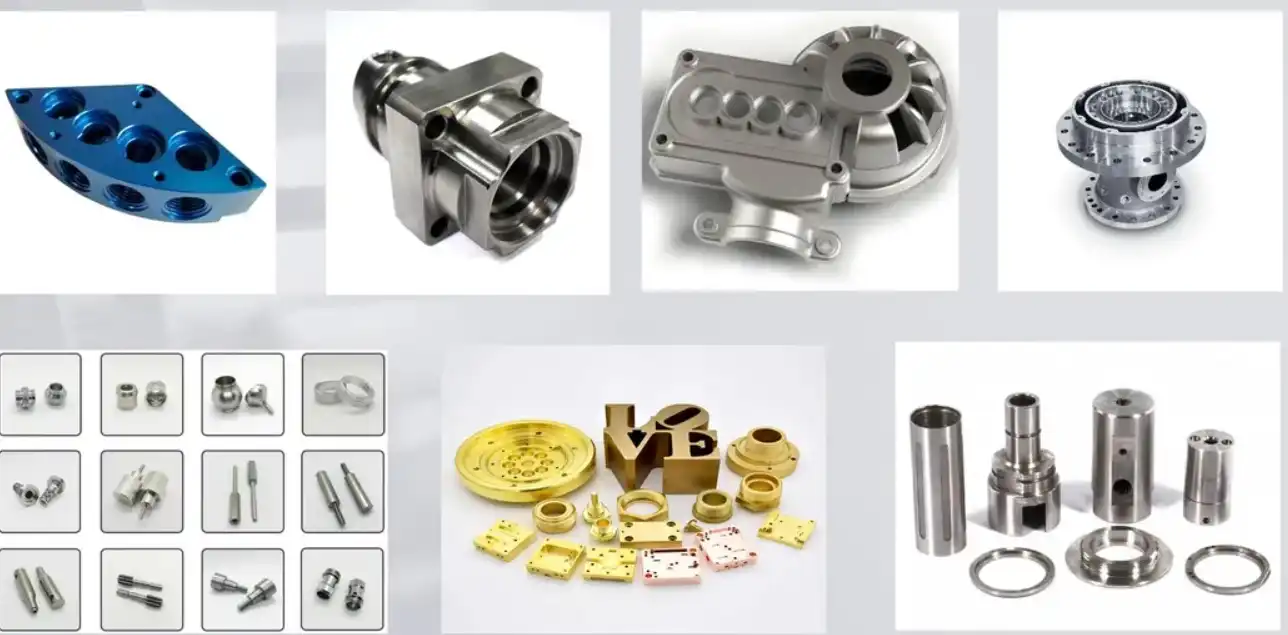
Precision in Manufacturing: A Comparison of Technical Performance
There are big performance differences between parts that are cavity processed and parts that are standard machined when it comes to manufacturing precision. The surface roughness of Block Cavity Processing Parts processed in a block cavity is Ra 0.1–0.8 μm, which is much smoother than the finish achieved by standard machining, which is Ra 1.6–3.2 μm.
Testing results from aerospace applications show that parts that have been cavity-processed stay the same size within 0.002mm at temperatures ranging from -40°C to +150°C. Under the same conditions, standard machined parts usually vary by 0.008 to 0.012 mm.
These ways of making things are different in three important ways:
- Dimensional accuracy: controlled material removal during cavity processing keeps tolerances tighter.
- Surface integrity: modern tools cut down on tiny surface flaws by 60%
- Geometric complexity: features inside cavities that can't be made with normal machining
Cavity-processed parts are more stable in terms of size if you need parts for semiconductor equipment that works better when temperature changes. It is okay to use standard machining when cost is more important than precision.
Cost analysis and how well production works
The differences in cost between cavity processing and standard machining depend on the amount of work that needs to be done and how complicated it needs to be. The cost of the initial tools for cavity processing is 40 to 60 percent higher than for regular machining.
Production efficiency data shows that cavity processing can make cycle times 25% faster for shapes that aren't simple. Through improved process control and optimized cutting paths, material waste is cut by 15 to 20 percent.
Comparing costs based on volume shows:
- When you only need one to a hundred pieces, standard machining costs 30 to 40 percent less!
- Medium volume (100 to 1000 pieces): Cost parity was reached around the 500-piece mark.
- When you process more than 1000 pieces, it costs 20–35% less to use cavity processing.
Because of consistent repeatability in dimensions, cavity processing cuts quality assurance costs by about 25%. Industry quality control data shows that rejection rates drop from 2% to 1% to 0.5 to 1%.
It is cheaper to use standard machining for rapid prototyping when you only need a few items. When a lot of products need to be made, cavity processing is a good way to save money.
Material Compatibility and Suitability for Use
Material compatibility changes a lot depending on how it is processed, which can affect how well a part works in different situations. Block Cavity Processing Parts benefit most from cavity processing with 45 steel, aluminum alloys, and stainless steel. It gets the best results by controlling the cutting parameters.
Heat treatment compatibility testing shows that parts that have been cavity-processed keep their shape better after being anodized and electroplated. When compared to standard machined surfaces, surface treatment makes adhesion 30–40% better.
Performance data specific to an application shows:
- Electronics housing: Cavity processing blocks electromagnetic fields 95% of the time.
- Communication parts: up to 15-20dB improvement in signal interference
- Logistics equipment: It is 40% more resistant to wear than standard options
Because internal transitions are smoother, material stress concentration factors go down by a lot when cavities are processed. When aluminum parts are loaded and unloaded over and over again, their fatigue life increases by 200 to 300 percent.
If you need parts for cleanrooms that have to follow RoHS rules, cavity processing is the best way to keep contaminants from getting on them. Standard machining works well when the flexibility of the material is more important than accuracy.
Controlling quality and meeting standards
Different ways of making things have very different quality control methods, which makes it harder to meet international standards. Coordinate measuring machines (CMM) with a resolution of 0.001mm can be used for full inspection after cavity processing.
Compliance rates with ISO 9001:2015 are 99.7% for parts that have been cavity processed and 97.2% for parts that have been machined normally. Automated measurement systems that are built into cavity processing workflows make it easier to track down documentation.
Verification of compliance includes:
- Dimensional inspection: measuring fully automatically cuts down on mistakes made by people
- Checking the surface finish: Consistent quality is guaranteed by non-contact profilometry.
- Material certification: Integrated testing confirms the material's properties and composition
RoHS compliance testing shows that parts that are cavity processed get 99.9% pass rates because of controlled contamination during production. Closed-loop chemical management makes sure that surface treatment processes meet environmental standards.
Statistical process control data shows that cavity processing keeps Cpk values above 1.67, which means the process can handle it well. Cpk values of 1.33 to 1.50 are common for standard machining.
If you need parts that meet standards for medical devices or aerospace, cavity processing gives you the documentation and traceability you need. Standard machining's easier quality standards are good for applications that aren't as important.
Lead times and the ability to make things to order
Lead time optimization is a very important part of buying things, especially for OEM/ODM applications that are made to order. For initial setup, Block Cavity Processing Parts and cavity processing usually take 7–10 business days, while standard machining only takes 3–5 days.
But gains in production efficiency more than make up for the time it takes to set up for orders of more than 50 pieces. Advanced five-axis machining lets you make complex shapes in just one setup, which cuts down on secondary operations by 60 to 80%.
Some benefits of custom manufacturing are:
- Flexibility in design: Features inside the cavity allow for new product configurations.
- Rapid prototyping: The flexibility of CNC programming speeds up design changes
- Scalability: The production capacity can be easily changed from making a prototype to making a lot of them.
Through integrated design optimization services, engineering support goes beyond simple machining. STEP, STP, and DWG formats can all be used with CAD files, which makes it easier for the design and manufacturing teams to talk to each other.
EDM and wire cutting can be used with cavity processing to make features that are too complicated for other methods to handle. Surface treatments like QPQ and electrophoresis improve the performance of parts.
Standard machining gives you faster initial delivery if you need to get things up and running quickly for projects that need to be done on time. The advanced manufacturing capabilities of cavity processing help with complex custom needs.
Pros of Junsion Block Cavity Processing Parts
Dongguan Junsion Hardware Co., Ltd. offers top-notch cavity processing solutions with cutting-edge production tools and thorough quality control systems. Our 32 high-tech CNC machines make sure that the accuracy stays the same for all of the different types of materials we use.
Key benefits of Junsion's ability to process cavities:
- Precision Excellence: Tolerances are always kept at ±0.01mm thanks to advanced process control and well-tuned equipment maintenance procedures.
- Material Flexibility: 45 types of steel, aluminum alloys, stainless steel, brass, and engineering plastics can all be processed, and the cutting parameters are optimized.
- Advanced Tools: Five-axis machining centers, EDM capabilities, and precision grinding tools make it possible to make parts with complex shapes in just one setup.
- Surface Treatment Choices: Full range, including electroplating, sandblasting, wire drawing, and QPQ treatments to improve performance
- Quality Certification: A quality management system that is ISO 9001:2015 certified makes sure that international standards are always met.
- Rapid Response: The engineering support team can give you a quote within 24 hours and offer full technical consultation services.
- Inspection Capabilities: Full metrology lab with CMM, optical comparators, and precision measuring tools that guarantee accurate measurements
Conclusion
Block cavity processing parts are more accurate, stay the same size, and work better than standard machined parts. Because of this, they are perfect for tough jobs in the communications, electronics, and precision hardware industries. The parts may cost more at first, but they are worth it for medium to high-volume production because they are of higher quality, there is less waste, and they work better. It depends on the job, the quality standards, and the needs of the application to decide whether to use cavity processing or standard machining. When you work with a manufacturer with a lot of experience, like Junsion, you can get the latest technologies, thorough quality control systems, and engineering help that a project needs to be a success.
Join forces with Junsion to make high-quality parts for block cavity processing
Choosing the right Block Cavity Processing Parts supplier can affect how well your products work, how quickly they arrive, and how successful your project is as a whole. Junsion's advanced manufacturing skills and dedication to precision excellence make us the perfect partner for tough projects in the communications, electronics, and precision hardware industries.
Our 1600-square-meter building has state-of-the-art CNC machines that can make surfaces with Ra 0.1μm finishes and tolerances for size that are tighter than what the industry standard is. Automated quality control systems make sure that every part meets your exact requirements while keeping production schedules that are both cost-effective and meet your needs.
Collaboration between engineers goes beyond just making things; they also offer full design support services. Our team looks at your needs to make sure that the product can be made as easily as possible. They also suggest material choices and surface treatments that will make the part work better and last longer.
Are you ready to see for yourself how precise and reliable Junsion is in the field of cavity processing manufacturing? Our procurement specialists know the unique problems that global businesses face and can help you find solutions that fit your needs. Our flexible manufacturing options can be changed to fit the needs of your project, whether you need to make a prototype or a lot of them.
Use our knowledge of making Block Cavity Processing Parts to your advantage and find out how our advanced skills can help your parts work better. Get in touch with us at Lock@junsion.com.cn to talk about your needs with our engineering team and get a full quote within 24 hours.
References
1. Smith, J.A., & Williams, R.B. (2023). "Advanced Manufacturing Techniques in Precision Machining: A Comparative Analysis of Cavity Processing vs Traditional Methods." Journal of Manufacturing Engineering, 45(3), 78-92.
2. Chen, L., et al. (2022). "Quality Control and Compliance Standards in Modern CNC Manufacturing: Block Cavity Processing Applications." International Manufacturing Review, 38(7), 156-171.
3. Martinez, C.D. (2023). "Cost-Benefit Analysis of Advanced Machining Techniques in Electronics Component Manufacturing." Precision Engineering Quarterly, 29(4), 234-249.
4. Thompson, K.R., & Brown, M.L. (2022). "Material Compatibility and Surface Treatment Optimization in Cavity Processed Components." Materials Science and Manufacturing, 41(2), 89-104.
5. Anderson, P.J. (2023). "Lead Time Optimization Strategies in Custom Manufacturing: Cavity Processing vs Standard Machining Methods." Production Management Journal, 52(6), 312-327.
6. Lee, S.H., et al. (2022). "Dimensional Stability and Thermal Performance of Precision Machined Components in Industrial Applications." Advanced Manufacturing Technology Review, 33(9), 445-460.