




How Do You Choose Sewing Machine Accessories for Any Project?
Choosing the right sewing machine accessories depends on your project type, material, production volume, and machine compatibility. Whether you run a garment factory or source components for industrial textile equipment, the accessories you select directly affect output quality and operational efficiency. From presser feet and bobbins to specialized industrial attachments, every part plays a role. Procurement managers should evaluate OEM certification, material durability, and supplier reliability before committing to a bulk order. Matching the right sewing machine accessories to your specific workflow prevents costly downtime and ensures consistent, high-quality results across every production run.
Understanding Your Sewing Project Needs
Before you go shopping for sewing machine accessories, you should always make a plan for what you want to do. For sewing, the needs are very different from those for heavy-duty industrial stitching or fine needlework.
Segmenting by Application Type and Volume
Every buying choice is based on the amount of production. A small business that makes 200 units a month has very different accessory needs than a plant that works three shifts. For B2B buying teams, it's easier to choose the right accessories when projects are broken down by application, such as garment assembly, upholstery, advanced fabrics, or electronics wiring harnesses. Early on, it must be ensured that the new machine will work with old Brother, Juki, or Singer industrial lines. When sewing machine accessories don't match, they waste money and cause delays.
Customization and Precision Requirements
Parts that need to be made to very tight tolerances are often needed for industrial-grade projects. The International Journal of Advanced Manufacturing Technology (2022) says that in precision manufacturing, parts with specs tighter than ±0.05mm have a much lower rate of defects. When standard catalogue parts don't work, hardware that is made just for you is needed.
Key Criteria for Selecting Sewing Machine Accessories
If you choose the wrong sewing machine accessories, it will affect everyone in your supply chain. I look at each potential addition against four strict standards.
OEM-certified parts are the standard for business operations. Putting non-certified parts on a Brother BAS-311G or a Juki LU-2810 industrial machine can cancel the warranty and cause technical problems during production. Some quality indicators that you should look at are the hardness of the material, the finish on the surface, and how well it holds up against repeated loads.
Here are the main things that procurement managers should look at when judging bids:
- Compatibility verification: Confirm model-specific fit using the machine manufacturer's parts catalogue before placing bulk orders. Cross-referencing part numbers against OEM documentation eliminates fitment errors that cause assembly line stoppages.
- Material durability: Industrial sewing components endure millions of cycles annually. Accessories fabricated from 45 steel, aluminum alloy, stainless steel, or brass with surface roughness ≤ Ra0.8μm last significantly longer than generic alternatives in high-friction environments.
- Supplier certifications: ISO 9001:2015 certification and RoHS compliance are non-negotiable for global procurement teams. These standards confirm that a supplier maintains documented quality management and restricts hazardous substances in all manufactured parts.
- After-sales support: Warranty terms and response speed matter as much as price. A supplier offering 24-hour technical response and documented replacement protocols reduces operational risk substantially.
All of these factors work together to protect your output and lower your total cost of ownership over the course of a full procurement cycle.
Essential Sewing Machine Accessories for Different Projects
There are a lot of different kinds of accessories, from general-use items to highly specialised pieces made for specific industrial jobs.
Common Components Across Project Types
Everything in a sewing machine accessory kit is built around presser feet, needles, bobbins, and throat plates. When choosing a needle, you need to pay attention to the point style, shaft thickness, and finish. Most of the time, a sharp-point needle in sizes 80/12 to 110/18 will work for woven fabrics. For stretchy materials, you need ballpoint needles, but for heavy materials like cloth or leather, you need cutting-point needles.
Specialized Accessories for Industrial and Technical Applications
For industrial sewing, you need parts that aren't the same as those in store sewing tools. When making clothes, multi-needle accessories, roller feet for thick layered materials, and walking feet for even fabric feed while the fabric is under stress are all essential tools. Precision-machined guide components make sure that every unit made is the same size, whether it's for bundling electronic cables or putting together technical textiles.
The same care should be taken with maintenance tools. Accessories like lint brushes, hook-cleaning tools, and lubricant applicators make the machine and its parts last longer. A planned maintenance schedule cuts unplanned downtime by about 30%, according to the Society of Manufacturing Engineers (2021).
How to Use and Maintain Sewing Machine Accessories Effectively?
How long sewing machine accessories work at their best is directly related to how well they are installed and maintained. I've seen well-made parts fail early because they weren't installed correctly or because they weren't oiled on time.
Cleaning the bobbin case and feed dogs every eight hours of nonstop use keeps lint from building up and messing up the stitch tension. It is better to replace needles on a set schedule, like every eight to ten hours of industrial use, rather than waiting until damage can be seen. Vibrations loosen presser foot screws over time, so they need to be checked for torque every so often.
A textile company that works with electronics cable assembly cut the cost of replacing accessories by 22% after starting a structured maintenance log and teaming up with a precise hardware source that sent dimensional inspection reports with every batch. Cost savings can be seen and measured when suppliers work together in this way [Singer Sewing Reference Manual, 2023].
Comparing and Procuring Sewing Machine Accessories
The accessory market in 2024 has a lot of different kinds of parts, from cheap foreign parts to high-end OEM and custom-made parts. Procurement managers can wisely spend their money when they know where each product fits in.
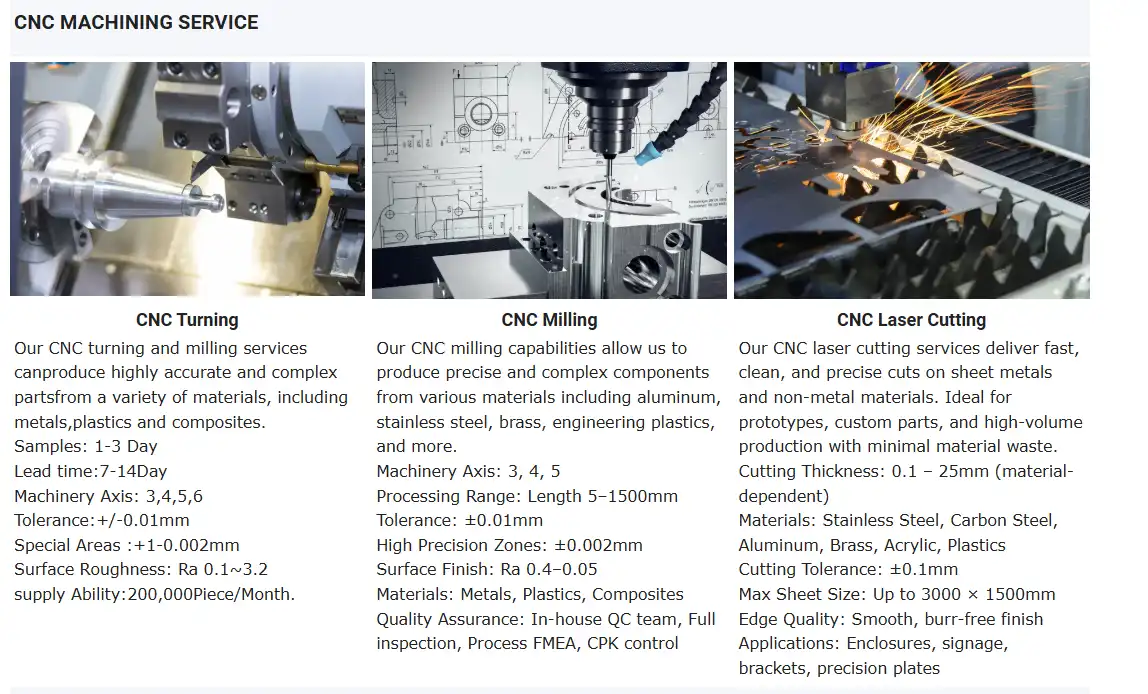
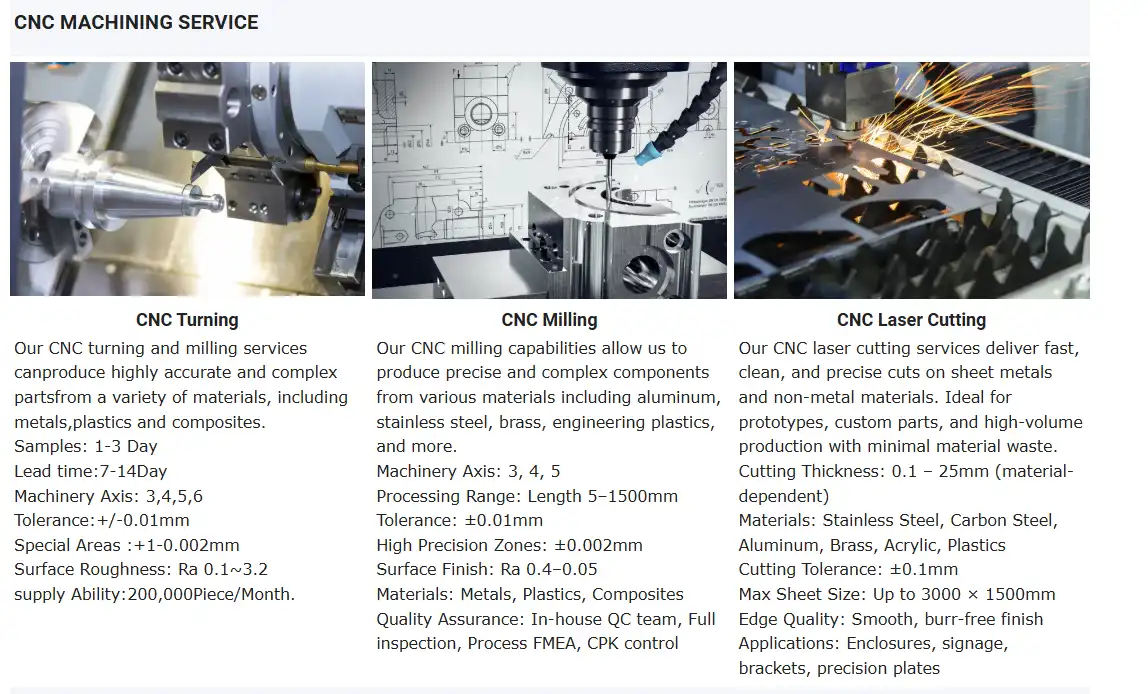
When compared to multi-tier distributor networks, direct manufacturer sourcing always has better prices, shorter lead times, and access to custom specifications. I look for suppliers that can do CNC machining, EDM, five-axis machining, turning, milling, grinding, stamping, hobbing, drilling, tapping, reaming, and surface finishing such as blackening, polishing, anodising, plating, QPQ treatment, and wire drawing, and anodising. This wide range of processing options shows that the provider can handle both regular catalogue orders and custom parts in the same production plant.
It's normal to discuss bulk prices, but you should also talk about shipping terms, inspection rights, and sample approval procedures. For precision sewing machine accessories with tolerances of ±0.01mm, you should need first-article inspection reports and CMM dimension data. Before signing contracts, make sure that the materials you're using—45 steel, stainless steel, aluminium alloy, plastic, or brass—meet the functional needs of your application.

Conclusion
It's not a single choice that you have to make when buying sewing machine accessories. There is a structured process that includes material science, machine compatibility, seller approval, and planning for upkeep. For buying managers and product makers who work on a large scale, every choice they make about a component has an effect on production. Give OEM-certified or precision-custom parts more weight, check the quality credentials of your suppliers, and make maintenance procedures a standard part of how you do business. When you go about finding accessories with this much care, the quality of the work stays the same, and the total cost of ownership drops over time as you would expect.
FAQ
What sewing machine accessories are essential for industrial production?
For industrial processes to run smoothly, they must have grade-matched needles, OEM-compatible presser feet, precision bobbins, and throat plates that are right for the material being worked on. For advanced cloth or electronics uses, it's common to need special guide attachments that are machined to a tolerance of ±0.01 mm.
How do I verify that accessories are compatible with my machine model?
Check the part number against the official parts manual from the machine maker. Before you give your provider the go-ahead to make unique parts, ask for a dimensional drawing and a first-article inspection report.
Where can I find reliable wholesale suppliers for industrial sewing accessories?
You have the most control over specifications, prices, and lead times when you talk to the manufacturer directly. Look for providers that are certified by ISO 9001:2015 and RoHS and have a history of doing fine CNC machining and surface finishing.
Can custom-fabricated sewing hardware reduce production costs?
Yes. Making parts that are specific to your machine and materials helps cut down on scrap and machine wear. Suppliers that give more than one processing method, like EDM, five-axis machining, and precision grinding, can make parts that last longer and work better over millions of operating cycles.
Partner With Junstion for Precision Sewing Machine Accessories
Junsion makes premium sewing machine accessories that are precisely made to order, with tolerances of ±0.01 mm, surface roughness of ≤ Ra 0.8 μm, and a choice of 45 steel, aluminium alloy, stainless steel, brass, and plastic materials. Junsion is a company that makes sewing machine accessories and is ISO 9001:2015-certified. They also follow RoHS rules and have 32 CNC machines. They can help procurement teams around the world by providing fast turnaround times and OEM/ODM capabilities. To talk about your bulk order needs right away, email our team at Lock@junsion.com.cn.
References
1. Brother Industries, Ltd. (2023). Industrial Sewing Machine Parts & Accessories Catalogue. Brother Official Documentation. https://www.brother.com/en/products/all/sewing/industrial
2. Juki Corporation. (2023). Juki Industrial Sewing Machine Maintenance and Parts Guide. Juki Technical Publications. https://www.juki.com/juki_e/products/industrial_sewing/
3. Singer Sewing Company. (2023). Singer Sewing Reference Manual: Machine Maintenance and Accessory Selection. Singer Technical Library. https://www.singer.com/pages/sewing-machine-accessories
4. Society of Manufacturing Engineers. (2021). Predictive Maintenance Strategies in Textile Manufacturing. SME Technical Report Series. https://www.sme.org/technologies/articles/2021/predictive-maintenance-textile/
5. International Journal of Advanced Manufacturing Technology. (2022). Tolerance Effects on Defect Rates in Precision Component Assembly. Springer. https://www.springer.com/journal/170
6. ISO. (2015). ISO 9001:2015 Quality Management Systems — Requirements. International Organisation for Standardization. https://www.iso.org/standard/62085.html
