




How Durable Are PEEK Machining Parts in Harsh Environments?
When procurement managers ask about durability, peek machining parts in extreme conditions, the answer is clear: Peek machining parts deliver exceptional performance where other materials fail. Engineered from Polyether Ether Ketone, these precision-manufactured components withstand temperatures ranging from -40°C to +260°C, resist aggressive chemical exposure, and maintain dimensional integrity under continuous mechanical stress. Unlike conventional plastics that degrade rapidly or metals that corrode, PEEK components offer a unique combination of strength, stability, and longevity that directly translates to reduced downtime and lower lifecycle costs across demanding industrial applications.
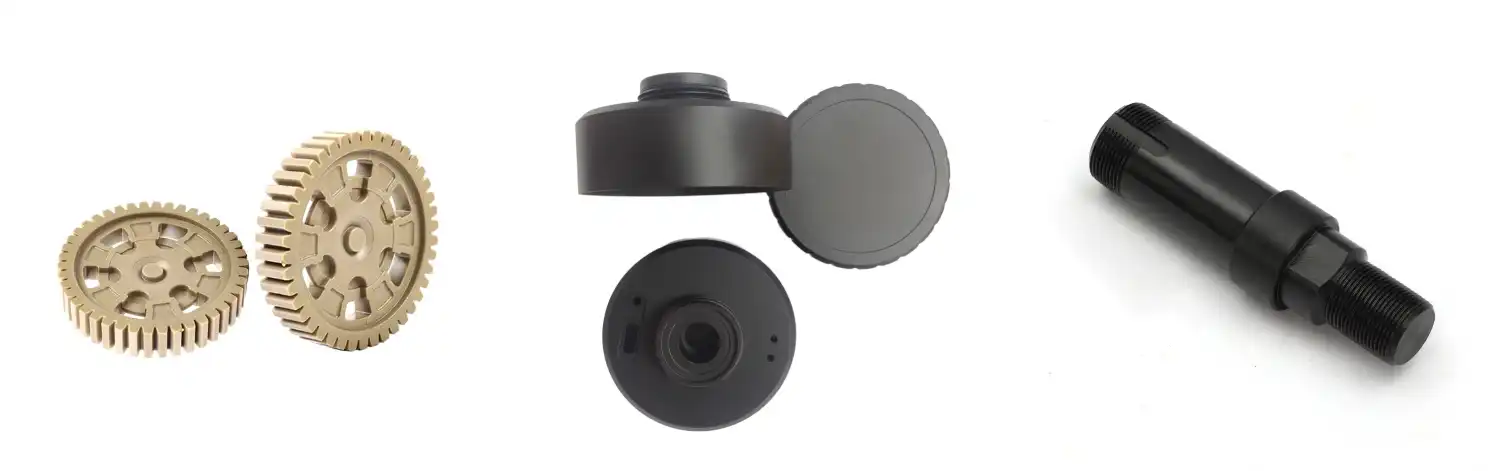
Understanding the Material Properties of PEEK Machining Parts
Chemical Composition and Molecular Architecture
PEEK lasts a long time because it has a semi-crystalline structure, which means that its molecular chains are tightly packed together and don't break down easily as other polymers do. The material's glass transition temperature is around 143°C, and it can keep its mechanical properties up to 250°C constantly. It can also handle 260°C for short periods of time. Precision-cut parts made from PEEK can handle high temperatures, so they can be used in places where parts will be exposed to steam, hot gases, or the high temperatures that are common in industrial machinery and processing equipment. The polymer's aromatic backbone naturally resists flames, so it doesn't need any extra chemicals to do so. It meets strict safety standards in many businesses. When you're looking for parts for communication or consumer goods, this trait takes away the need to worry about regulatory compliance while also making sure that operators are safe in case of equipment breakdown.
Mechanical Strength and Stability in Dimensions
PEEK machining parts that are CNC-machined have a tensile strength of 90 to 100 MPa and a flexural stiffness of about 3.6 GPa, which means they are as rigid as many aluminum metals but 60% lighter. This ratio of strength to weight is especially useful in aircraft and automatic handling systems, where lowering mass saves energy without compromising structural integrity. Advanced CNC turning and five-axis machining at our plant allow us to keep margins of ±0.01mm for sizes. This accuracy makes sure that components fit perfectly into systems where alignment mistakes could lead to early wear or failures in operation. The material has a low coefficient of thermal expansion (47 × 10⁻⁶ /°C), which means that parts keep their shape even when the temperature changes. This is important for AI systems and precision instruments that need to be accurate to the micron level. Controlled machining settings that produce roughness values ≤ Ra0.8μm meet surface finish standards. This makes parts with smooth contact surfaces that reduce friction and particle generation in clean environments or sensitive assemblies.
Chemical Resistance Across Aggressive Environments
PEEK is very resistant to almost all organic and inorganic chemicals, but not to strong sulfuric acid and some halogenated compounds. Parts made from this material can stand up to long-term exposure to:
- Petroleum-based fluids: Hydraulic oils, lubricants, and fuels that are used in cars and factories don't break down over long periods of time.
- Aqueous solutions: Acids and bases across a wide pH range, such as those used to make semiconductors and process chemicals, don't damage the polymer's structure.
- Cleaning agents and solvents: Components can be exposed to harsh cleaners many times, like those used to sterilize medical devices and make electronics, without losing their shape or surface crazing.
Procurement managers can specify these components, peek machining parts, for uses where metal parts would rust, and regular engineering plastics would grow or break due to their chemical resistance. Because the material is harmless, there are no worries about contamination in devices used to make drugs or move fluids precisely.

Evaluating the Durability of PEEK Machined Parts in Harsh Conditions
Wear Resistance and Abrasion Performance
Based on ASTM G99 standards, tests show that PEEK has a wear factor that is about 250 times higher than that of common thermoplastics like acetal or nylon. This wear resistance immediately leads to longer service times and lower replacement costs when parts slide against each other or move over and over again. We've made machined parts for logistics handling tools that work nonstop for 18 to 24 months without changing size, which is something that can't be done with regular plastics. The self-lubricating qualities of the material lower the friction coefficients against steel to 0.3 to 0.4, which means that less heat is produced during use. This trait is useful in robotic equipment because it lowers power use and gets rid of the need for external lubrication, which makes system design and upkeep easier. Aerospace uses have shown that PEEK can handle particle erosion and foreign object contact better than softer plastics. It can also do this without the weight costs and rust problems that come with metal options. The surface finish and dimensional accuracy of parts in rotor units and control devices stay the same for more than 10,000 hours of use.
Environmental Stability and Long-Term Performance
In contrast to many industrial plastics that turn yellow or become more fragile when exposed to UV light, PEEK machining parts keep their mechanical qualities even after years of service outside. This stability comes from the polymer's aromatic structure, which naturally soaks up UV energy without starting any chain-splitting or cross-linking processes. Even in conditions of high humidity, moisture absorption stays below 0.5%. This keeps the size of the material from expanding and weakening as nylon and other hygroscopic materials do. This steadiness is liked by equipment makers because it means they don't have to use protective coatings or weather sealing in places where the humidity level changes. Gamma and electron beam treatment at doses up to 50 kGy, which are popular ways to sterilize medical devices, do not change their properties in a meaningful way. This makes it possible to sterilize many times without breaking down, which is very important for surgical tools and diagnostic equipment parts that will be used again and again.
Fatigue Resistance Under Cyclic Loading
Dynamic mechanical analysis shows that precisely made PEEK parts can withstand millions of load cycles without cracks starting or spreading. When tested at stress levels equal to 50% of the ultimate tensile strength, the wear life is more than 10 cycles, which is similar to high-grade metals but doesn't cause rust. Because they are resistant to cycle loads, these components are perfect for systems that move back and forth, valve parts in process equipment, and structural parts in transportation systems. When vibration and repeated stress build up in one place, the toughness and crack resistance of the material stop sudden fails that stop production. Components made with the right cutting techniques—such as controlled feed rates, sharp tools, and the right coolant strategies—have better wear performance because the finish on the surface affects where cracks start. Our five-axis cutting lets us make parts with complicated shapes that don't leave stress-concentrated tool marks that could weaken the parts over time.
Comparing PEEK to Alternative Materials for Harsh Environment Applications
PEEK Versus PTFE and PEI
Additionally, PTFE is better at resisting chemicals and has less friction, but its mechanical strength and creep resistance are much lower than PEEK's. When temperatures rise above 100°C, PTFE parts distort when they are continuously loaded, which limits their use in structural applications. The physical stability and load-bearing capacity of PEEK machining parts, on the other hand, are maintained throughout their entire operating temperature range.PEI (Polyetherimide) has about the same temperature performance as PEEK, but it is less resistant to chemicals and soaks up more water. When parts are stressed by both chemical and temperature forces at the same time, like in semiconductor processing equipment or chemical reactor parts, PEEK's balanced property profile gives better long-term performance. Because it is cheaper, PEEK is preferred in situations where the long life of the parts supports the higher cost. The cost of the raw materials is higher than that of PEI or strengthened nylons, but the equipment lasts longer and doesn't need to be replaced as often, so the total cost of ownership is much lower over its lifetime.
PEEK Advantages Over Metallic Alternatives
Corrosion problems can happen to aluminum and stainless steel parts in places with a lot of salt, acidic air, or where different metals galvanically couple together. Precision-made PEEK parts don't have any of these problems because they can work effectively in corrosive situations where metal parts would need expensive alloys or protection coatings to stay in good shape. Another great thing about PEEK is that it is lighter than metal parts of the same size and shape, saving 40 to 60 percent of the mass. This directly means better fuel economy in aerospace uses. In automated systems for moving things, moving parts that are lighter make the motors less stressed and allow for faster cycle times without losing reliability. Because PEEK is naturally electrically insulating, you don't have to worry about short circuits or electromagnetic interference in computer systems. The dielectric strength of the material is higher than 20 kV/mm, which means it can be used in high-voltage situations where metal parts would need complicated protection schemes.
Performance Comparison with PPA and PPS
Polyphthalamide (PPA) and polyphenylene sulfide (PPS) machining parts are less expensive than PEEK and have good protection against heat and chemicals. This makes them appealing for some uses. Machined PEEK parts, on the other hand, exhibit better hardness and impact resistance, which are important characteristics for parts that might be hit by something during installation or service. PPS crystallizes quickly, which can make it harder to machine with tight tolerances because it is more likely to break. PEEK's processing properties make it easier to control dimensions and achieve finer surface finishes through CNC operations. This is very important when parts need to fit together precisely in systems. When buying something depends on how reliable it will be in the worst situations, especially when a lot of different stress factors come together. PEEK's wide range of properties makes it worth specifying, even though it costs more at first.

Best Practices for Machining and Procuring Durable PEEK Parts
Precision Machining Techniques for Optimal Performance
Expertise in cutting is needed to get the precise measurements and high-quality surfaces that let PEEK work at its best. When you use sharp carbide or polycrystalline diamond (PCD) tools, you can make clean cuts without generating too much heat, which could cause leftover stress or surface flaws. We use controlled feed rates and cutting speeds between 100 and 200 m/min to find a good mix between production and surface finish needs. Five-axis CNC machining lets you make complicated shapes without having to move the workpiece, and it keeps the tolerances the same across all of its intricate parts. When making PEEK machining parts with internal channels, angled surfaces, or compound curves that conventional three-axis operations can't easily achieve, this feature comes in handy. Coolant tactics keep heat from building up during long cutting processes. For many tasks, PEEK machines work well when they are dry. However, flood cooling or minimum quantity lubrication (MQL) systems help control heat when deep drilling or heavy roughing cuts are made that produce a lot of heat.
Supplier Selection and Quality Assurance Protocols
Managers of procurement should look at possible sellers' past work to see if they can do more than just make things. Here are the most important things that set skilled PEEK component makers apart:
- Certification compliance: ISO 9001:2015 certification makes sure that quality management is done in a planned way throughout production. RoHS compliance makes sure that parts used in market goods or regulated businesses are safe for the environment.
- Measurement tools: High-tech measurement machines, like coordinate measuring machines (CMM) and optical comparators, make sure that finished parts are within the allowed ranges. Dimensional check records with traceable calibration should be given by suppliers.
- Material traceability: Reliable makers keep batch records that connect certified raw materials to finished parts. This lets them figure out what went wrong if quality problems happen later on.
- Process documentation: Detailed work directions and manufacturing processes make sure that all batches of the product are the same, and they give you trust when going from small test orders to large production runs.
Our center combines these quality standards with the ability to respond quickly. Depending on the complexity, we can usually quote custom needs within 24 hours and send prototype parts within 7–10 business days.
Strategic Procurement Considerations
Understanding the cost drivers that affect price is important for negotiating good terms for precision components. For small-batch production, material costs make up 40–50% of component costs. However, these costs go down proportionally for large orders, where setup time compensation is more advantageous. When planning lead times, you should think about when to get the raw materials (usually two to three weeks for specialty grades) and when to start making the products. Setting up blanket buy orders with planned releases lets suppliers keep materials in stock, which cuts down on delivery times for needs that come up again and again. During the engineering process, design for manufacturability consultations can help find ways to make things simpler without sacrificing usefulness. Making simple changes, like standardizing hole sizes, raising corner angles, or loosening non-critical standards, can often cut costs by 15 to 20 percent while keeping performance the same in the end use.
Applications and Industry Use Cases of Durable PEEK Machined Parts
Aerospace and Aviation Components
For uses where weight savings and dependability in high and low temperatures are crucial, aircraft makers request PEEK machining parts. Cable management brackets, structural fittings in interior sections, and special fasteners that don't rust during coastal or marine operations are some of the parts that make up the system. The material doesn't catch fire easily and doesn't make a lot of smoke, so it meets FAR 25.853 flammability standards without any extra treatments. This makes the approval process easier. Temperature changes that airplanes experience—from hot at ground level to cold at cruise altitudes—don't affect the mechanical features of the parts. This is because they don't need the thermal management techniques that are needed for peaking machining parts for temperature-sensitive materials.
Automation Equipment and Robotics
Precision-made parts in pick-and-place robots, conveyor systems, and automatic assembly equipment work better with PEEK because it is strong, doesn't wear down easily, and doesn't conduct electricity. Bushings, bearings, and guide parts work effectively at high cycle rates without lubrication. This means that they don't need to be serviced as often, and there is no risk of contamination in clean production settings. We've made special parts for systems that put together electronics. Some of these parts do more than 5 million rounds of motion every year. Maintaining assembly accuracy over lengthy production runs is made possible by the physical stability and low wear qualities of these components.
Consumer Electronics and Communication Devices
PEEK's strength-to-weight ratio and electrical qualities are used in the internal structure parts of smartphones, tablets, and networking equipment. When the device is being used or charged, the antenna mounting clamps, RF screen structures, and precision alignment features keep their original sizes even though the temperature changes. Because it doesn't react with cleaning agents used in PCB assembly and can be used with lead-free soldering methods, the material is perfect for parts that stay in place while the board is being made. When it comes to metals, insulated walls are needed, but PEEK parts can be placed next to live electronics without worrying about electrical isolation.
Specialized Industrial Applications
For pump parts, valve seats, and seal systems that come into contact with harsh chemicals at high temperatures, chemical processing equipment uses these components. Because the material doesn't break down easily in water or steam, it can be used in places where many industrial plastics fail within months. Wafer handling systems, process chambers, and precision positioning stages are all pieces of semiconductor assembly tools that use PEEK parts. Because the material is pure and doesn't give off much gas, it doesn't get into sensitive production areas and keeps its shape accurately across the temperature ranges needed for casting and etching. For surgical tools, implantable device parts, and diagnostic equipment where biocompatibility, sterilization resistance, and dependability are essential, medical device makers rely on machined PEEK parts. The material is FDA-compliant and biocompatible (meets ISO 10993 and USP Class VI standards), which speeds up the clearance process.
Conclusion
When it comes to businesses where part reliability directly affects working efficiency and product quality, the longevity of PEEK machining parts in harsh conditions is a proven advantage. PEEK parts that are precisely made work well in challenging situations, with chemical resistance that is better than most metals and thermal stability that goes beyond 250°C. When purchasing managers know about a material's features, how it needs to be machined, and its benefits for a certain purpose, they can make smart choices that lower long-term costs and make equipment more reliable. Whether you're making automation systems, consumer electronics, or specialized industrial equipment, these parts are a great choice because they are long-lasting, precise, and flexible, and they can handle the challenges of tough working conditions.
FAQ
1. How does PEEK's chemical resistance compare to stainless steel in corrosive environments?
PEEK is much more resistant to chlorides, acids, and bases than stainless steel, which can cause pitting and stress corrosion cracks. PEEK machining parts function consistently across a wide chemical range without the complexity of grade selection, whereas stainless metals need specific grades for specific corrosive environments.
2. What are typical lead times for custom PEEK components?
After the design is approved, prototype numbers usually need 7–10 business days. Production volumes rely on how complicated the product is and how many are needed. By building ties with suppliers through blanket orders, delivery times for common parts can be cut down to 3–5 weeks, which makes it easier to handle inventory and plan production.
3. How can I be sure that a provider can do precision PEEK machining?
Ask for dimensional inspection records from past projects, check to see if they are ISO 9001 certified, and look at their tools, such as their multi-axis CNC machines and metrology systems. Reputable makers offer certifications for their materials and keep written quality control methods that show they consistently control the process.
Partner with Junsion for High-Performance PEEK Machining Parts
Dongguan Junsion Precision Hardware Co., Ltd. combines advanced manufacturing capabilities with specialized expertise in producing PEEK machining parts that meet the most demanding specifications. Our 1,600 square-meter facility houses 32 CNC machines equipped for turning, milling, and five-axis operations that achieve tolerances of ±0.01mm and surface finishes ≤ Ra0.8μm. We serve procurement managers and product developers across electronics, communications, consumer goods, and logistics industries who require precision components that perform reliably in harsh environments. As a certified manufacturer maintaining ISO 9001:2015 and RoHS compliance, we deliver custom solutions backed by rigorous quality control and rapid response—typically providing quotes within 24 hours. Contact our technical team at Lock@junsion.com.cn to discuss your specific requirements and discover how our precision-engineered PEEK components can enhance your product performance and operational reliability.
References
1. Kurtz, S.M. (2012). PEEK Biomaterials Handbook: Performance in Medical Devices. William Andrew Publishing.
2. McKeen, L.W. (2014). The Effect of Temperature and Other Factors on Plastics and Elastomers (3rd ed.). Plastics Design Library.
3. Tripathi, D. (2002). Practical Guide to Polypropylene. Rapra Technology Limited.
4. Brydson, J.A. (1999). Plastics Materials (7th ed.). Butterworth-Heinemann.
5. Margolis, J.M. (2006). Engineering Thermoplastics: Properties and Applications. Marcel Dekker.
6. Shah, V. (1998). Handbook of Plastics Testing and Failure Analysis (2nd ed.). John Wiley & Sons.