




Where to Source Reliable Laser Cutting Parts Online?
To find reliable providers for laser cutting parts, you need to carefully look at their technical skills, quality certifications, and service reliability. Advanced fiber and CO2 laser technology, as well as ISO 9001:2015 approval and RoHS compliance, can be found at the best online sites. Leading providers offer a wide range of services, from making prototypes to mass production, and can work with metals, plastics, and composites, among other materials. These providers usually have modern facilities with several CNC machines and offer flexible design help through different file types, such as AutoCAD, SolidWorks, and STEP files. Laser-cut parts of good quality have very accurate measurements, smooth surfaces, and few areas that get too hot, which is important for uses in electronics, communications, and transportation.

Understanding Laser Cutting Parts: Essentials for Buyers
Procurement workers can make better buying decisions when they know the basics of laser-cutting parts. Laser cutting technology uses focused laser beams to melt materials, making clean cuts with great edge quality. Advanced lenses and computer numerical control systems are used to direct the high-power laser output to cut in a pattern that has already been set.
Core Technologies and Materials
There are two main methods used in modern laser cutting that offer clear benefits for business uses:
- Fiber laser technology: Works very well with metals like carbon steel, stainless steel, aluminum alloys (6061, 7075, and 5052), and delivers faster cutting speeds while using less energy.
- CO2 laser systems are great at working with non-metallic materials like plastics, composites, and thick plates while keeping the edges sharp and causing little heat warping.
With these high-tech systems, makers can work with materials from thin sheets to thick plates while keeping the limits tight and the cutting edges smooth.
Manufacturing Advantages
For precise industrial tasks, laser cutting technology is especially useful because it has many useful benefits. With margins as low as ±0.05mm, the process gives very accurate measurements, making it perfect for shapes and forms that are hard to understand. High operational efficiency is maintained thanks to fast processing speeds and minimal setup needs. Design freedom makes it easy to make changes without having to change the tools.
Laser-cut parts are cost-effective because they are used in real life in the automobile, aircraft, and electronics industries. Laser cutting is used by electronics companies to make precise housing parts and heat sinks, and by transportation companies to make storage solutions and fixing frames. The low amount of material waste and high level of repeatability help to make the best use of materials and maintain quality across production runs.
Key Performance Characteristics
Laser-cutting parts have a number of important performance traits that are needed in industrial settings. Their high strength-to-weight ratios make them perfect for structural uses, and their high rust resistance means they will last for a long time in harsh settings. The material's high thermal conductivity helps it get rid of heat, which is important for electronics and communications equipment.

Comparing Laser Cutting Parts with Alternative Manufacturing Methods
Procurement professionals benefit from understanding how Laser Cutting Part compares against alternative manufacturing approaches to make strategic supplier selection decisions. This analysis examines waterjet cutting, plasma cutting, and CNC machining to highlight where laser cutting excels or faces limitations.
Material Compatibility and Processing Speed
It is proven that laser cutting works better on a wider range of materials while having high-quality standards. The following analysis shows the most important changes in how they work:
- Waterjet cutting can handle very thick materials and doesn't leave heat-affected areas, but it works more slowly and costs more to run.
- Plasma cutting: quickly works with thick metals, but makes bigger heat-affected zones and rougher edge ends than laser cutting.
- CNC cutting gives you great control over dimensions and a smooth surface, but it takes longer to set up and wastes more material.
Laser cutting is the best way to get the best edge quality, processing speed, and flexibility of materials. It works especially well for small-batch production and the complicated shapes that are popular in electronics and communications.
Dimensional Accuracy and Surface Quality
Key performance indicators show where laser cutting technology gives companies a competitive edge when they need to make precise products. Laser-cut parts have measurement accuracy of ±0.05mm to ±0.1mm and sides that are smooth and free of burrs, so they usually don't need any extra finishing steps.
Surface finish quality has a direct effect on how well the product works and how quickly it is put together. Laser-cut part components usually get surface roughness levels between Ra 1.6 and Ra 3.2 micrometers, which is about the same as CNC-made surfaces but at much faster processing speeds. The 0.1 mm to 0.3 mm minimum width of the heat-affected zone keeps the material's qualities near the edges of cuts.
Cost Structure Analysis
When buying, teams understand how costs are structured, and they can better match performance needs with budget limits. When compared to standard methods of machining, laser cutting has benefits in terms of setup costs and material use. Through improved stacking algorithms, the technology gets rid of the need for tools and cuts down on material waste to less than 5%.
Labor costs stay low because machines do most of the work, and humans don't have to do much. Lead times for normal materials and shapes are usually between 3 and 7 days. This supports just-in-time production techniques that are popular in the consumer goods and technology industries.
How to Choose a Reliable Online Supplier for Laser Cutting Parts
Supplier selection directly impacts product quality, delivery performance, and long-term partnership success. Effective evaluation requires a systematic assessment of technical capabilities, quality systems, and service offerings aligned with procurement objectives.
Essential Certification and Compliance Standards
Quality approvals are the best way to make sure that a company is reliable and that the process is always the same. Leading suppliers have quality management systems that are ISO 9001:2015 approved. These systems show that the seller is committed to ongoing growth and customer happiness. RoHS compliance makes sure that the world is safe and that rules are followed, which is important for gadgets and communications.
Adherence to ASTM and ANSI standards is another certification that you should look at. These confirm the material qualities and the ability to accurately measure things. Suppliers with a wide range of certifications usually use strict quality control measures, such as 100% checking processes that use coordinate measuring machines and other advanced measurement tools.
Manufacturing Capabilities Assessment
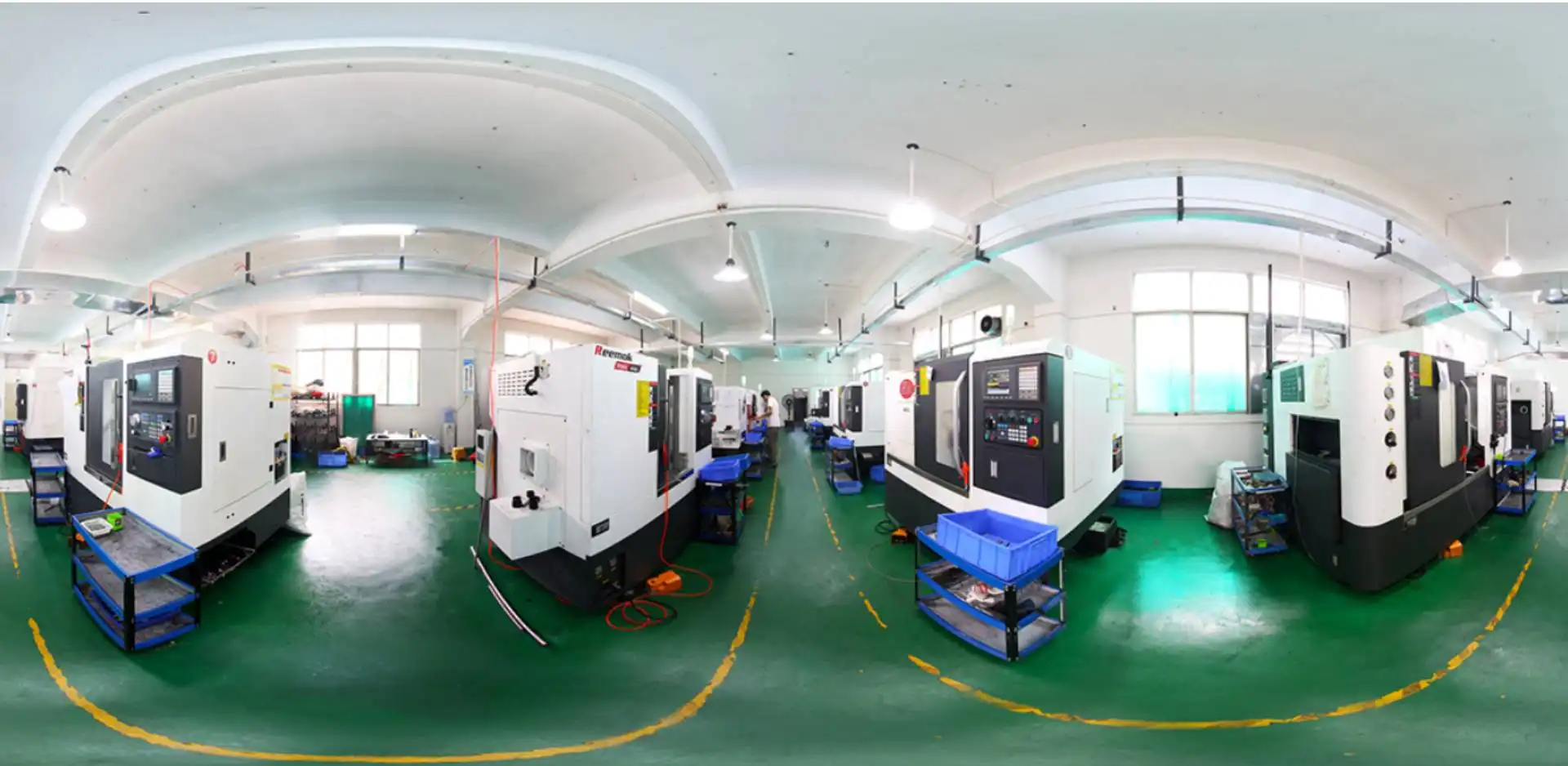
A review of the supplier's technical equipment shows how well they can meet current and future needs. Advanced factories usually have several 3-axis and 5-axis CNC machines that can handle a wide range of processing needs, from making prototypes to making a lot of them.
The best sellers offer a wide range of design support services that make projects more likely to succeed:
- CAD file integration: It can read files in several forms, such as AutoCAD (DWG, DXF), SolidWorks, STEP, and IGES, and make suggestions for how to improve the design.
- Engineering collaboration: work closely with clients to make accurate technical drawings and improve ideas so they can be made and cost less.
- Prototype services: help with short development processes by offering quick turnaround times and iterative design improvement
These features make it possible to run projects smoothly while reducing technology risks and development times.
Service Offerings and Logistics Optimization
Offering a wide range of services helps buyers find the best providers and makes the buying process run smoothly. Some important parts of the service are the ability to customize, the different ways the surface can be treated, and the shipping arrangements that work with the production plan and the budget.
Surface treatment options have a big effect on how well a product works and how it looks. Good providers give anodizing to protect against rust, hard anodizing to protect against wear, powder coating to protect against chemicals, electroplating to improve conductivity, and grinding to make coatings stick better. With these choices, buying teams can choose the styles that work best for each purpose.
When it comes to shipping laser-cutting parts, working speed and total cost of ownership are directly affected by how practical things are. Minimum order amounts should be in line with strategies for managing goods, and big discount structures help keep costs low for purchases that are made often. Quality packing and reliable shipping are two parts of delivery operations that make sure goods get to their destinations safely and on time.
Practical Tips for Ordering Laser Cutting Parts Online
Successful procurement of a laser cutting part requires strategic planning and effective supplier communication to achieve optimal outcomes. These practical guidelines help procurement professionals navigate common challenges and maximize order success rates.
Design Guidelines and Material Selection
Proper planning and preparation have a big effect on how well and how cheaply something can be made. When choosing a material, you should think about its strength, resistance to rust, heating qualities, and the area it will be used in. For structural uses, aluminum alloys like 6061-T6 have great strength-to-weight ratios, while 5052 is better at resisting rust in outdoor settings.
Important design factors to think about are:
- Thickness tolerances: Choose the right tolerances based on the function, taking into account the ability to manufacture and the cost effects.
- Edge quality requirements: Set limits on accepted surface roughness and burrs to make sure that parts fit and work properly in assembly tasks.
- Hole sizes and spacing: Make sure that the minimum hole width is 1.5 times the thickness of the material and that there is enough space between features to keep the structure strong.
These rules help make sure that the product can be made while still meeting the design purpose and useful needs.
Quality Control and Communication Strategies
Good contact with suppliers avoids mistakes and makes sure that requirements are known and followed. Giving detailed technical sketches with all the measurements, material requirements, and quality standards gets rid of confusion and cuts down on the number of times they need to be changed.
To avoid problems during production, quality control methods should be set up from the start. Before placing an order, talk about the checking standards, measurement methods, and acceptance criteria. Leading providers usually give inspection records that include measures of the surface finish, material approval, and checks of the dimensions. Communication that happens on a regular basis during work helps find problems early and fix them quickly.
Supply Chain Risk Management
Strategies for proactive risk management protect against supply problems and make sure that deliveries happen on time. Spreading out your provider base across different areas lowers the risk of concentration while keeping prices low by giving you more than one way to get the supplies you need. Setting clear delivery plans with checks at key places helps find possible delays early on.
Realistic lead time planning that takes into account things like getting materials, making schedules, and sending processes is helpful for laser cutting part sales. Standard wait times are between 5 and 10 working days, but they can be longer or shorter based on the difficulty and amount needed. Orders that need to be processed quickly may be accepted for an extra fee, but planning is the best way to get the best prices and schedule freedom.
Conclusion
To find trustworthy online laser cutting part providers, you need to carefully look at their technical skills, quality certifications, and service offers that match your buying goals. Leading suppliers use advanced CO2 and fiber laser technology, along with full quality management systems, to make sure that the precision parts they give meet strict requirements for size and performance. Successful buying strategies focus on relationships with suppliers that allow for collaborative design, flexible production, and on-time delivery. Procurement professionals can get high-quality parts that help with operational excellence and competitive advantage in electronics, communications, and logistics by learning the basics of laser cutting, comparing different ways to make things, and using good criteria for choosing suppliers.
FAQ
What materials work best for laser cutting in industrial applications?
Laser cutting technology accommodates a wide range of materials suitable for industrial applications. Metals, including aluminum alloys (6061, 7075, 5052), stainless steel, and carbon steel, respond excellently to fiber laser processing. Non-metallic materials such as engineering plastics, composites, and ceramics work well with CO2 laser systems. Material thickness capabilities range from 0.5mm thin sheets to 25mm thick plates, depending on material type and laser power specifications.
How can I ensure precision and quality in custom laser cutting orders?
Quality assurance requires collaboration between procurement teams and suppliers throughout the manufacturing process. Specify dimensional tolerances, surface finish requirements, and inspection protocols clearly in purchase orders. Request material certifications, dimensional inspection reports, and surface quality documentation. Leading suppliers implement 100% inspection protocols using coordinate measuring machines and maintain ISO 9001:2015 quality management systems that ensure consistent results across production runs.
What are typical lead times for custom laser cutting part orders?
Standard lead times for custom laser cutting part orders typically range from 5-10 business days, depending on complexity, quantity, and material availability. Prototype orders often receive expedited processing with 2-3 day turnaround capabilities. Large volume production runs may require 2-3 weeks to accommodate material procurement and production scheduling requirements. Rush processing options are available with premium pricing for urgent requirements.
How do minimum order quantities affect pricing and delivery?
Minimum order quantities vary significantly among suppliers and material types. Many suppliers accommodate single-piece prototype orders while offering volume discounts for quantities exceeding 100-500 pieces. Bulk pricing structures typically provide 10-30% cost reductions for quantities over 1000 pieces. Planning larger batch orders when possible optimizes unit costs while maintaining inventory flexibility through strategic procurement timing.
Partner with Junsion for Your Laser Cutting Part Manufacturing Needs
Dongguan Junsion Hardware Co., Ltd. stands ready to become your trusted laser cutting part supplier, combining advanced fiber and CO2 laser technology with ISO 9001:2015 certification and RoHS compliance. Our state-of-the-art 1,600 square-meter facility houses 32 advanced CNC machines capable of handling orders from prototype development through mass production volumes. We specialize in precision components for electronics, communications, and logistics applications with exceptional dimensional accuracy and superior surface finishes. Our engineering team collaborates closely with clients to optimize designs for manufacturability while maintaining cost-effectiveness. Contact our procurement specialists at Lock@junsion.com.cn to discuss your specific requirements and receive personalized quotes for your laser cutting part projects.
References
1. Technology Handbook: Laser Cutting Applications and Best Practices in Industrial Manufacturing, 4th Edition
2. Precision Manufacturing Guidelines: Quality Standards for Laser Cut Components in Electronics and Communications Industries
3. Supply Chain Management for Technical Procurement: Strategies for Sourcing Precision Hardware Components
4. Industrial Laser Processing: Comparative Analysis of Cutting Technologies and Material Applications
5. Quality Assurance in Manufacturing: ISO Standards Implementation for Laser Cutting Operations
6. Global Procurement Strategies: Risk Management and Supplier Selection for Technical Components Manufacturing