




Why Choose CNC Processing Part for Precision Manufacturing?
When acquiring components for electronics, communications, consumer products, or logistics, procurement managers must choose precise and reliable production procedures. Computer-controlled accuracy, material diversity, and repeatable quality make CNC processing parts the gold standard in precision production. Dongguan Junsion Precision Hardware Co., Ltd. has seen these components improve output across sectors. Our 1,600 square-meter facility has 32 CNC machines with tolerances up to ±0.01mm, providing remarkable accuracy for complicated designs for customers in over 20 countries.

Understanding CNC Processing Parts and Their Manufacturing Process
What Are CNC Processing Parts?
CNC processing parts are precision parts that are processed by computer numerical control. The movement of cutting tools and machines is controlled by pre-programmed software. Unlike traditional hand machining, the automated method carves components from solid blocks of metals or synthetic polymers known as billets to strict specifications. The system solves key production problems: removing human error in repeated tasks, ensuring dimensional uniformity across thousands of parts, and enabling complex geometries that are difficult to produce with existing processes.
Materials Commonly Used in CNC Manufacturing
The performance and the application of components are greatly influenced by the selection of material. Junsion uses a variety of materials, including stainless steel to prevent corrosion in medical equipment, aluminium alloys for lightweight aircraft components, copper for electrical conductivity in communication systems, and titanium for high-strength marine propellers. Grade 5 Titanium (Ti-6Al-4V) has a tensile strength in the region of 950 MPa and a density of just 4.43 g/cm3. This material is a perfect illustration of how materials science may improve the possibilities of CNC processing. All materials are thoroughly tested to ensure they meet the criteria, such as RoHS compliance and ISO 9001:2015 quality standards, before being used in manufacturing.
The Step-by-Step Manufacturing Process
We start our production procedure with the submission of design files. Clients provide us with CAD models with their precise requirements. Then, engineers configure CNC equipment – lathes, machining centers, and multi-axis milling machines – to perform accurate cutting routes. Machining involves a variety of processes, including turning for cylindrical components, milling for complicated shapes, and drilling for accurate holes. Real-time monitoring systems monitor dimensional correctness throughout the process, and measuring equipment verifies tolerances at several checkpoints. Machining is followed by de-burring and surface finishing, including anodising or electroplating, and final quality checks verifying load capacity and dimensional accuracy before shipping.
Design Considerations for Optimal Results
“Early-stage planning has a huge impact on manufacturing efficiency and cost control.” Tolerance setting is a compromise between functional needs and manufacturing capability; tighter tolerances lead to increased accuracy but also to increased production time. Wall thickness is an issue of structural integrity and machining capability, especially in lightweight designs. Corner radii should reflect the tool geometry. Sharp interior corners are difficult to machine with ordinary end mills. Material choice depends on design complexity: softer metals machine quicker but could not be strong enough for demanding applications. Our engineers work with the customer throughout the design process, suggesting changes that make the product easier to manufacture, but it still performs the same for CNC Processing Parts.
The Advantages of Choosing CNC Processing Parts in Precision Manufacturing
The correct manufacturing technique will decide the quality of the product, how fast one can produce it, and long-term competitiveness. There are unique benefits to CNC machining that fit the requirements of procurement executives at worldwide organisations.
Unmatched Precision and Tight Tolerances
A good part is a great part when it has dimensional correctness. The tolerances are ±0.01mm, almost 1/10 the diameter of a human hair. Those specs are maintained for whole production runs. CNC machining. Such accuracy is critical in assemblies where misaligned elements create system failure, such as in communications device housings where perfect seal integrity is required, or consumer electronics where accurate button actuation is required. We have five-axis simultaneous machining capability to build complicated blade designs for titanium propellers that preserve their hydrodynamic profiles to minimise cavitation damage in high-speed maritime applications. Such repeatability is impossible to achieve with manual machining, especially for quantities in excess of 1,000 pieces.
Material Versatility and Complex Geometries
Modern CNC machinery can work with an incredible diversity of materials and forms. We often produce stainless steel brackets with complex mounts, aluminium heat sinks with delicate cooling fins, and copper connections with close-tolerance threading. The adaptability extends to speciality applications: Titanium alloy propellers for autonomous underwater vehicles combine corrosion resistance and fatigue strength beyond 800 MPa, addressing the strength-to-weight contradiction in deep-sea robotics. Multi-axis machining allows the production of complex geometries such as variable-pitch blades, internal channels and undercut features, allowing designs that improve product performance without complicating assembly.
Cost Efficiency Compared to Traditional Methods
The set-up cost is greater than manual machining, but the ultimate cost is reduced by the CNC processing via many mechanisms. Automation saves the expense of paying for labour on repetitive operations, freeing experienced experts to concentrate on quality control and process optimisation. Material waste is minimised; smart nesting software maximises useable area from raw stock and chip recycling recovers precious metal. Prototyping becomes faster without the costly tooling expenditures of injection moulding, reducing the time to market for innovative products. With high-volume manufacturing, you have economies of scale. The cost per unit goes down with batch size. Whether you want low-volume prototype orders or large-scale production runs, our pricing methods are intended to be economical for projects of any kind.
Advanced Surface Treatments Enhance Performance
Surface finishing converts functional CNC Processing Parts into high-performance products. Aluminium parts are anodised to provide a corrosion-resistant oxide coating that protects them and may be coloured to differentiate brands. Electroplating is the process of applying thin metal coatings—chrome to increase hardness, nickel to prevent wear, and gold to increase electrical conductivity—that improve durability without affecting the dimensional precision. Sandblasting creates consistent matte surfaces that enhance adherence for the next coating, essential in automotive applications where paint bonding is necessary. Brushing produces refined linear textures on visible elements like consumer electronics housings, merging aesthetics and tactile appeal. Our specialists in surface treatments consider environmental considerations and application needs and advise on techniques that prolong component life and improve the end-user experience. These characteristics together make CNC processing the dominant production technology for businesses that need dependability, customisation and performance in tough operational environments.

Comparing CNC Processing Parts with Alternative Manufacturing Solutions
CNC Machining versus Injection Molding
Injection molding excels at high-volume plastic component production, achieving cycle times measured in seconds and per-unit costs below $1 for simple geometries. However, the method's limitations become apparent in several scenarios. Tooling expenses for injection molds typically range from $5,000 to $100,000 depending on complexity, creating prohibitive upfront costs for prototype development or small batches. Design changes require costly mold modifications, whereas CNC programming updates implement revisions within hours. Material restrictions further constrain applications; injection molding suits thermoplastics but cannot produce metal components essential in structural applications. Precision CNC machining addresses these gaps, offering metal part production, rapid design iteration, and economic viability for volumes from single prototypes to thousands of units.
Additive Manufacturing versus CNC Processing
3D printing technologies promise revolutionary manufacturing flexibility, building parts layer-by-layer from digital files without dedicated tooling. The approach benefits rapid prototyping and organic geometries like lattice structures. However, mechanical properties often fall short of machined equivalents. Fused deposition modeling (FDM) parts exhibit anisotropic strength—weakness along layer boundaries—unsuitable for load-bearing applications. Surface finish quality typically measures Ra 6-15μm off standard FDM printers, compared to Ra 0.4-0.8μm achievable through CNC machining without post-processing. Material strength differs substantially; selective laser sintering (SLS) nylon parts reach approximately 48 MPa tensile strength, while CNC-machined aluminum 6061 achieves 310 MPa. Production speed favors CNC for quantities exceeding 50-100 units, as additive manufacturing build times increase linearly with part count while CNC processes benefit from setup amortization.
Laser Cutting and Other Alternatives
Laser cutting efficiently processes sheet materials, delivering clean edges and rapid throughput for two-dimensional profiles. The technology suits applications like electronics enclosures and mounting brackets requiring flat patterns. Limitations emerge when components demand three-dimensional features—threads, pockets, or multi-plane geometry. Laser systems cannot create internal channels or undercuts inherent in functional assemblies. Achievable thickness typically maxes around 25mm for steel, whereas CNC machining handles stock materials exceeding 300mm, enabling one-piece construction that eliminates assembly and associated tolerance stacking. Our CNC capabilities complement laser cutting where appropriate, combining technologies for optimal results in hybrid projects.
Selecting Certified CNC Suppliers
Supplier selection profoundly impacts production success. Essential evaluation criteria include industry certifications confirming quality systems: ISO 9001:2015 validates comprehensive quality management, AS9100 demonstrates aerospace sector compliance, and RoHS certification ensures environmental safety in electronic applications. Production capabilities matter equally—facility size, machine quantity, and technology generation determine capacity and lead time reliability. Client references provide insight into communication responsiveness and delivery performance. We maintain transparency in our operations at Junsion, welcoming facility tours and providing detailed capability documentation that builds confidence before procurement commitments.
Streamlining Procurement: What B2B Clients Need to Know
Understanding Order Workflows and Lead Times
A good understanding of the procurement process is the first step towards efficient procurement. Our normal approach begins when customers upload their design files – often STEP, IGES or native CAD formats – with specifications including materials, quantities and finish requirements for CNC processing parts. Engineering assessment in 24 hours to detect possible concerns for manufacturing and suggest optimisations. The quotation includes material prices, machining time, surface treatments and logistics. The sample stages generate first units for customer verification after design approval and generally take 5-7 business days for conventional geometries. Once the samples are approved, full production will start with lead times ranging from one to four weeks depending on the complexity, quantity and existing capacity of the facility. We have 32 CNC machines so we can parallelise processes and compress timetables, and provide rush services for urgent needs.
Volume Pricing and Prototype Services
Manufacturing economics determine pricing. Prototype orders (usually 1-50 pieces) spread setup expenses over fewer pieces, resulting in a higher per-piece price, but allow design validation before committing to production. You have economies of scale when you make more than 500 units. The cost of setting up becomes an insignificant proportion of the overall value of the project, and optimised toolpaths cut down cycle times. We provide tiered pricing that enables greater commitments and keeps costs accessible for early-stage development initiatives. Sample orders are a key consideration as they mitigate risk and validate fit, finish, and performance prior to large investment. This is especially useful for specialised OEM/ODM applications where specs change during iterative testing.
Importance of Supplier Certifications
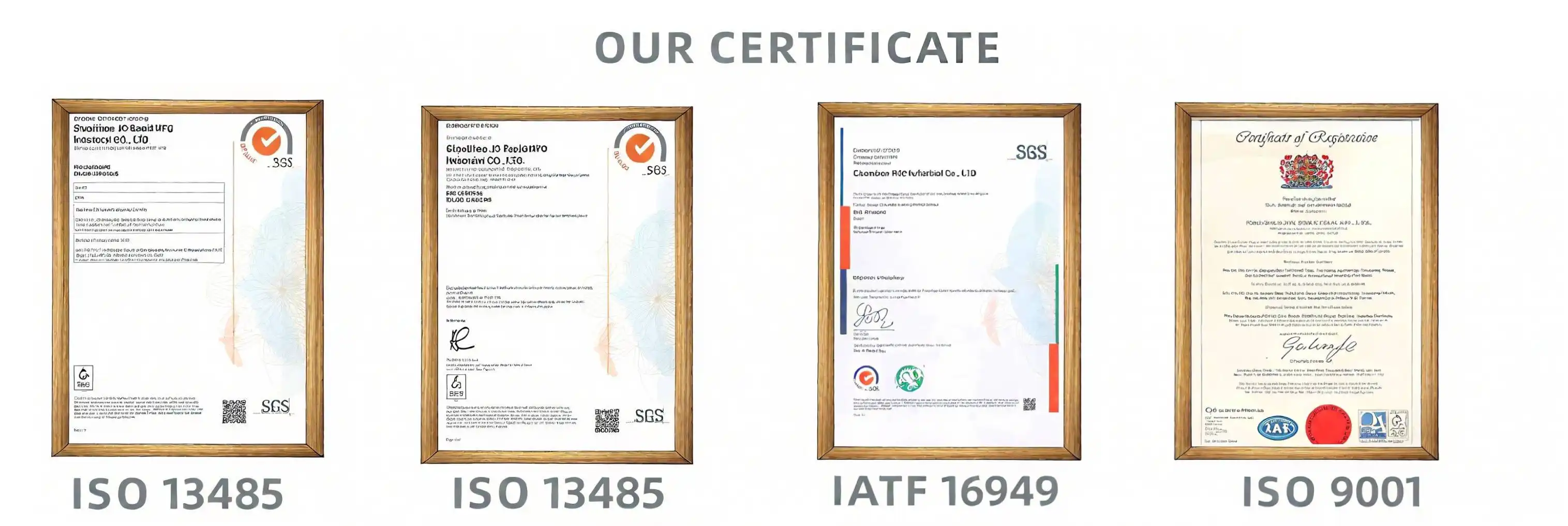
Quality assurance is not only about checking components, but the whole management system. Our ISO 9001:2015 accreditation signifies established methods for process control, continuous improvement, and customer satisfaction metrics. RoHS compliance validates restricted substance testing, which is an important factor for electronics supplied in regulated markets. Material certificates track raw stock to mill test reports to validate chemical composition and mechanical qualities. These credentials assure procurement managers that the parts are continually meeting specs, minimising the need for inbound inspection and facilitating just-in-time inventory methods that minimise working capital.
Building Strategic Manufacturing Partnerships
Transactional supplier ties restrict the possible advantages. Strategic relationships support collaborative product development, with manufacturing experience impacting design choices to enhance performance and save costs. In early-stage discussions, our team looks for ways to combine parts, simplify assemblies, or replace materials that perform the same function at a lower cost. We are unique as partnership-oriented suppliers, being responsive in communication; we appoint dedicated account managers to B2B customers to ensure that enquiries are answered the same day and technical issues are sent to engineering people. Long-term connections enable us to arrange capacity, hold production space in high-demand times, and provide delivery dates that complement client production calendars.
Future Trends and Innovations in CNC Processing for Precision Manufacturing
Integration of AI and IoT Technologies
Manufacturing is on the cusp of an intelligence revolution, with artificial intelligence and Internet of Things connections changing what manufacturing can do. Machine learning algorithms process historical data of machining and tune cutting parameters for real-time minimisation of cycle times with quality. Predictive maintenance systems monitor spindle vibration, tool wear, and temperature drift to schedule replacement of components before failure, avoiding unnecessary downtime. IoT-enabled sensors in the manufacturing monitor the part dimensions and automatically alter the next processes to correct for the observed deviations. These advancements improve our operational efficiency, reduce lead times, and increase first-pass yield rates that assist customers with quicker delivery and reduced prices.
Sustainability in Precision Manufacturing
Environmental concern is increasingly shaping industrial methods. Today’s CNC machines have energy-saving motors and sleep settings that decrease power usage while the machine is idle. Coolant recycling technologies prolong fluid lifecycles and avoid environmental discharge. Intelligent nesting inside material optimisation software reduces waste while scrap metal recycling algorithms recover value from machining chips. “We have put these sustainability initiatives in place in our 1,600 square-meter facility to help promote green manufacturing goals while managing operational costs.” In markets where people care about the environment, customers like it when suppliers show their commitment to the environment and these practices are consistent with the standards for corporate sustainability reporting.
Expanding Applications in Emerging Sectors
As industries change, the need for precise components rises. Titanium and advanced aluminium alloys are used more and more in aerospace, where there is a growing need for lightweight constructions with excellent strength-to-weight ratios. Manufacturers of medical devices are seeking biocompatible materials machined to demanding specifications for implants and surgical equipment. Sensor housings, mounting brackets, and structural components in the development of autonomous vehicles have to exceed automotive safety regulations. CNC processing is used for wind turbine components, solar trackers, and batteries within renewable energy systems. With our material know-how and machining skills, we are well placed to help these growing industries and enable innovation via manufacturing excellence.
Customization and Rapid Response Capabilities
Market trends favour nimble, quick-to-customize firms. Consumer tastes are changing more rapidly, shortening product lifecycles and demanding that manufacturing partners adapt to design changes without the penalty of long lead times. Our CNC technique naturally facilitates customisation. Programming changes are made efficiently as opposed to tooling-based procedures. With multi-axis machining centers and knowledgeable programmers, we are able to manufacture OEM/ODM components to customise goods for our clients to stand out in competitive marketplaces. Speed is a competitive advantage – our 24-hour quote turnaround and accelerated production options let customers take advantage of market possibilities when speed is everything.
Conclusion
CNC processing parts provide the accuracy, repeatability and variety in materials to meet the demands of contemporary production in the electronics, communications, consumer products and logistics industries. The technology’s ability to hold tolerances of ±0.01mm and yet cater for complicated geometries makes it the procurement manager’s best bet for a dependable and customised solution. Considering flexibility, the range of materials that may be used and dimensional accuracy requirements, it becomes obvious that there are comparative benefits over injection moulding, additive manufacturing and laser cutting. Strategic supplier connections enhance these advantages by giving access to technical knowledge, quality certifications, and prompt communication that improve procurement operations. Innovative organisations that are forward-thinking and that want to differentiate themselves competitively may turn to CNC machining to stay at the forefront of manufacturing trends, such as integrating AI and expanding applications with sustainability.
FAQ
1. What are typical lead times for CNC processing parts?
Lead times generally span one to four weeks, influenced by design complexity, order quantity, and surface finishing requirements. Simple geometries in standard materials like aluminum may complete within 7-10 business days, while intricate multi-axis components requiring heat treatment and specialized coatings extend to three or four weeks. Prototype orders often receive priority scheduling, with sample parts available in 5-7 days for urgent design validation needs. We offer expedited services that compress timelines through overtime shifts and dedicated machine allocation, accommodating emergency requirements when production schedules demand accelerated delivery.
2. How do CNC machined parts compare to 3D printed alternatives in cost?
Initial costs for CNC processing often exceed 3D printing for single prototypes, reflecting setup and programming expenses. However, economics shift dramatically at higher volumes. CNC per-unit costs decrease substantially beyond 50-100 pieces as setup amortizes, while additive manufacturing costs remain relatively constant since build time scales linearly with quantity. Material strength differences affect total cost of ownership; CNC-machined metal components outlast polymer 3D-printed equivalents in demanding applications, reducing replacement frequency and lifecycle expenses. The choice depends on application requirements, volume projections, and performance specifications rather than simple piece-price comparison.
3. What certifications should I look for in a CNC supplier?
ISO 9001:2015 certification validates comprehensive quality management systems encompassing process control, documentation, and continuous improvement. Industry-specific standards like AS9100 (aerospace) or ISO 13485 (medical devices) demonstrate sector expertise and regulatory compliance. RoHS certification confirms environmental safety through restricted substance testing, essential for electronics applications in regulated markets. Material certifications tracing raw stock to mill test reports verify chemical composition and mechanical properties. We maintain these credentials at Junsion, supporting client quality requirements and facilitating smooth integration into certified supply chains.
Partner with Junsion for Superior CNC Processing Part Manufacturing
Dongguan Junsion Precision Hardware Co., Ltd. stands ready to transform your component requirements into precision-manufactured reality. As an established CNC processing part supplier since 2019, we combine advanced machining capabilities—32 CNC machines achieving ±0.01mm tolerances—with customer-centric service that prioritizes fast response and quality assurance. Our ISO 9001:2015 certified processes and RoHS compliance provide confidence in consistency and regulatory adherence. Whether your project demands prototype development or volume production runs, our experienced team delivers custom OEM/ODM solutions across stainless steel, aluminum, copper, and titanium materials. Connect with our precision manufacturing experts today: reach out to Lock@junsion.com.cn to discuss your specific requirements and receive detailed quotations within 24 hours.
References
1. Kalpakjian, S. & Schmid, S.R. (2014). Manufacturing Engineering and Technology, Seventh Edition. Pearson Education, Upper Saddle River, New Jersey.
2. Groover, M.P. (2020). Fundamentals of Modern Manufacturing: Materials, Processes, and Systems, Seventh Edition. John Wiley & Sons, Hoboken, New Jersey.
3. Society of Manufacturing Engineers. (2018). CNC Machining Technology: Design, Programming, and Applications in Precision Manufacturing. SME Publications, Dearborn, Michigan.
4. International Organization for Standardization. (2015). ISO 9001:2015 Quality Management Systems – Requirements. ISO Central Secretariat, Geneva, Switzerland.
5. ASM International Handbook Committee. (2016). ASM Handbook Volume 16: Machining. ASM International, Materials Park, Ohio.
6. Boothroyd, G., Dewhurst, P. & Knight, W.A. (2011). Product Design for Manufacture and Assembly, Third Edition. CRC Press, Boca Raton, Florida.