




Can Custom Camera Parts Improve Thermal Management?
Problems with thermal management in professional custom camera parts systems have a direct effect on the quality of the images and the life of the equipment. When high-end cameras get too hot during long shoots or heavy operations, sensors make noise, processors slow down, and important parts break down faster than expected. Custom Camera Parts offers designed thermal solutions that are perfectly suited to meet these needs. Customized parts, on the other hand, are made to fit specific camera designs, operating environments, and heat load distributions. This method improves the efficiency of heat transfer, the lifespan of components, and the general dependability of the system. These are all important factors for procurement managers and product creators who want long-lasting, high-performance imaging solutions.
Understanding Thermal Management in Cameras
Heat Generation Sources in Camera Systems
When professional cameras are working, they produce a lot of heat energy. Image sensors turn light into electrical data and release heat at a rate that depends on the sharpness and frame rate. Complex computer photography techniques are run by processors, which create hot spots inside small housings. During discharge processes, battery packs give off more heat, especially when taking videos in high-drain modes. Multiple hotspots are made inside camera bodies by this buildup of heat, which needs smart methods for heat management.
Consequences of Inadequate Thermal Control
Overheating hurts the performance of images in several ways. When sensor temps get too high, dark current noise goes up. This makes artifacts noticeable in shadow areas and lowers the dynamic range. Video recording times and fast shot skills are limited by processor throttling. Long-term exposure to too much heat speeds up the breakdown of solder joints, the aging of capacitors, and the bending of housing materials. These failures that keep happening hurt the brand's image among professional users and lead to more guarantee claims.
Limitations of Standard Thermal Solutions
In certain camera uses, generic heat sinks and thermal pads don't work very well. Mass-produced parts don't have the precise geometry needed to make good contact with surfaces that generate heat that aren't round. Standard materials can't meet the unique needs of high-performance imaging devices for thermal conductivity. Universal designs don't take into account how air flows through different camera body shapes, which means that important parts don't get enough cooling while they're running for a long time.
How Custom Camera Parts Enhance Thermal Management
Precision-Engineered Thermal Components
Customized engineering changes how heat control can be done with bespoke thermal solutions. Customized fin shapes on heat sinks make the most of the room they're used in by increasing Custom Camera Parts the surface area and making convective cooling 40% to 60% more effective than standard options. At key joints, thermal resistance is lowered by materials that are designed to work with certain contact forces and gap sizes. Metal frame parts do two things: they keep the structure together and spread heat over a bigger surface area so it can escape slowly. We make camera body housings and sensor holds out of an aluminum alloy and stainless steel at Dongguan Junsion Precision Hardware Co., Ltd., and our tolerances are ±0.01mm. This level of accuracy in measurements makes sure that heat-generating parts and thermal management structures are in close touch with each other. Our CNC cutting, five-axis milling, and EDM skills let us make cooling channels with complicated shapes that make the best use of airflow inside camera bodies.
Material Selection for Optimal Heat Dissipation
The success of thermal control is largely determined by the qualities of the materials used. Aluminum metals are great at transferring heat (about 205 W/m·K) and are also very light, which is important for small camera systems. Copper is the best conductor of heat (about 385 W/m·K) for getting heat away from computers and power controllers in specific areas. Brass parts are good at both withstanding high temperatures and rusting in damp conditions. Ultra-thin thermal spreaders that spread heat horizontally before it goes away vertically are made possible by new graphite materials. When we choose materials, we take thermal expansion factors into account so that stress doesn't build up during temperature cycles. We get metals that meet ASTM standards, which ensures that the thermal qualities of each output batch are the same. Anodizing and black oxide coating are two surface treatments that improve radiative cooling and protect against environmental degradation. This is very important for cameras used in industry inspection, television production, and outdoor filming.
Real-World Performance Improvements
Case studies show that personalized heating solutions have real benefits that can be measured. A company that makes mobile cameras used custom heat sink designs with the right amount of space between the fins to cut peak sensor temperatures by 12°C while 4K video recording. This drop in temperature made it possible to record continuously for 34 minutes instead of 18 minutes before the thermal shutdown. In a different project, Custom Camera Parts, such as custom sensor holders with built-in thermal paths, were used. These decreased thermal time constants made it possible for heat to escape faster during burst shot sequences. Customized thermal control works especially well for industrial camera uses. A machine vision system that was used in manufacturing facilities often shut down because it got too hot. Custom metal chassis parts with carefully placed air channels and external cooling fins lowered working temperatures by 15°C, which stopped thermal shutdowns and kept the IP54 rating for protection against water and dust. These changes directly led to more downtime on the production line and lower repair costs.
Comparing Custom Camera Parts vs Standard Parts for Thermal Management
Performance Metrics and Reliability
It becomes clear that precision-engineered parts are better at transferring heat when they are put under long-term working loads. Due to uneven surface touch and less-than-ideal geometry, standard heat sinks only cool at 60–70% of their theoretical capacity. Precision cutting that gets rid of air gaps and increases contact patch areas is how custom solutions reach 85–92% effectiveness. This difference in performance builds up over long recording sessions, keeping important parts within their safe working areas. Testing for durability shows that there are big benefits to reliability. Custom Camera Parts, like metal frame parts made from aerospace-grade aluminum alloys, can be heated and cooled many times without losing more than 0.02mm of their size. After 500 heat cycles, standard injection-molded plastic housings start to twist and crack from stress. This durability is especially useful in professional settings, such as Custom Camera Parts, where equipment is moved and used every day, and where the temperature changes a lot.
Cost Analysis for Buying in Bulk
When thinking about an initial investment, you need to do a full total cost of ownership study. Custom camera parts cost more per unit—usually 30–50% more than standard parts during the first few production runs. This premium covers the costs of tech research, making tools, and getting materials certified. As fixed costs are spread out over bigger amounts, volume output brings this difference down to 15–25%. Long-term estimates of return on investment (ROI) prefer customized solutions for companies that make more than 5,000 units a year. 8–12 percent of a product's total costs are saved when guarantee claims for thermal problems are cut down. Customers are happier and more likely to buy from you again if the product lasts longer. Lower return rates mean less money spent on transportation and labor for repairs. When deciding between standard and special heat management components, procurement managers should weigh these factors against the costs that come up front.
Integration Considerations and Technical Support
When adopting custom components, it's important to pay close attention to compatibility issues. When custom heat sinks are added to current camera designs, the tolerances for size become very important. A 0.05 mm difference in the position of the mounting holes can stop the part from being assembled correctly or create thermal gaps that make cooling less effective. For execution to go well, camera makers and component manufacturers need to work together in detail in CAD. During integration, trusted providers provide important technical help. We offer thermal simulation services that use finite element analysis to estimate how heat will be distributed before making a real prototype. Our engineers work with the teams that are making cameras to find the best places to put parts, choose materials, and treat the surfaces. This partnership method lowers the risks of merging and speeds up the time it takes to market for new camera types that need advanced thermal management features.
How to Choose Custom Camera Parts for Enhanced Thermal Management
Defining Thermal Requirements by Application
Specifications for thermal control are very different depending on the camera application. High-resolution video recording creates constant heating loads that need to be removed over long periods of time. When broadcast cameras work with studio lights, they have to deal with high environmental temperatures that make their own heat production worse. In order to stay small, industrial inspection systems need to have stable thermal performance over a wide range of working temperatures. Procurement teams should figure out how much heat they need. Based on sensor datasheets and chip specs, figure out the highest temperatures that parts can reach. Find the total amount of heat produced using the info on power use. Define practical task cycles that show whether thermal loads are constant or intermittent. These factors help choose the right materials and thermal design techniques to make sure there is enough cooling power with enough safety gaps.
Evaluation Criteria for Component Selection
The thermal qualities of a material directly affect how well it cools. Aluminum alloys have thermal conductivity values between 120 and 205 W/m·K, based on their makeup. Pure copper has a value of 385 W/m·K, but it is very heavy. Check how the specific heat capacity changes thermal time constants when temperatures change. Think about thermal expansion factors to make sure that the size stays the same across a wide range of working temperatures. Custom Camera Parts manufactured with surface roughness requirements below Ra 0.8 µm make sure that heat surfaces that fit together well. Tolerances for flatness within 0.01 mm across mounting surfaces keep air gaps from lowering the ability of surfaces to conduct heat. Certifications for suppliers give you peace of mind that the standard will stay high. Getting ISO 9001:2015 approval means that your quality control systems are well-established. RoHS compliance protects the earth and opens up markets around the world. Material certifications that list the alloy's makeup and thermal qualities make it possible to check its performance and track its history throughout its entire lifetime.
Partnership Selection and Ongoing Support
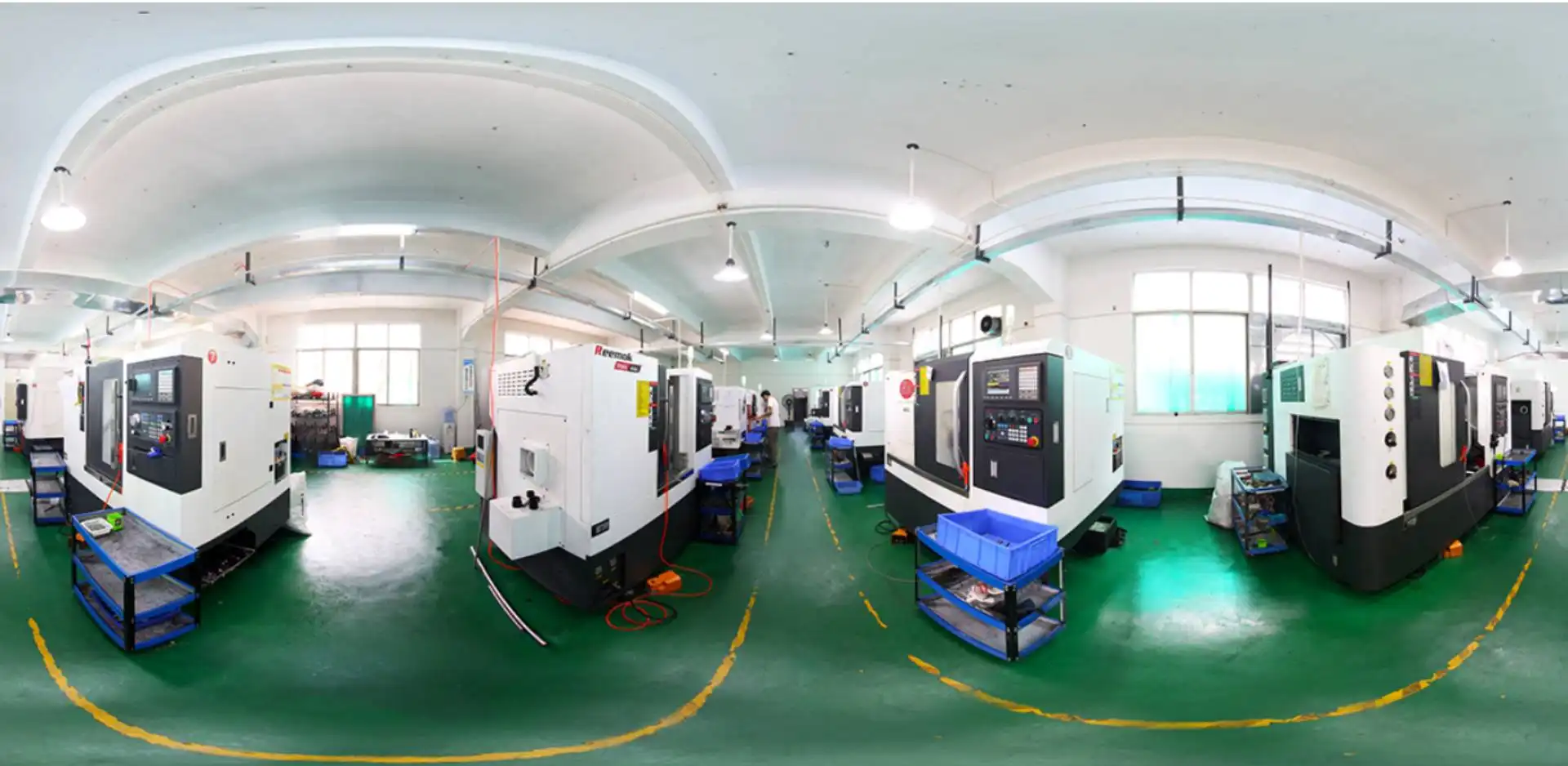
Trustworthy OEM partners provide more than just parts. Engineering teams should have the tools they need to do temperature analysis, such as modeling software and equipment for validating experiments. Precision cutting centers that can hold tight tolerances on complex shapes are needed in factories. Dimensional checking, material confirmation, and heat performance testing procedures must all be part of quality control systems. Our 1,600-square-meter building has 32 high-tech CNC tools that can make the complicated shapes needed for thermal components that work best. As part of our quality management system, we have coordinate measuring tools that check the accuracy of dimensions, spectrometers that check the composition of materials, and thermal conductivity testing equipment that checks the performance standards. This full set of capabilities makes sure that the supplied parts meet exact standards for thermal control. Long-term thermal efficiency is maintained with help after the sale. Maintenance plans should say how often to check for thermal interface damage. Replacement plans take into account how heat cycling can change the qualities of materials. Technical paperwork includes directions for putting things together, which keeps installers from making mistakes that damage thermal paths. Choosing partners who are committed to ongoing help saves investments in thermal control over the lifecycle of a product.
Where and How to Procure Custom Camera Parts for Thermal Management
Supplier Landscape and Selection Criteria
There are several ways for camera makers to get special heat parts. Working directly with makers of specialized, high-precision gear gives you the most customization options and lets engineers work together. Authorized wholesalers make it easy to get established lines of parts with shorter lead times for common setups. OEM relationships let companies work together to create unique heating solutions that use patented designs or special materials. Evaluation criteria extend beyond pricing considerations. The ability to scale production to match camera manufacturing plans is based on the manufacturing capacity. Shipping lead times and logistics costs depend on where you are. For example, using local sources can cut down on travel time but may have higher labor costs. Technical skills, Custom Camera Parts, such as technical support, prototyping services, and testing facilities, have an effect on how long it takes to build something and how well it integrates with other systems. We ship precise parts to more than 20 countries for camera makers in the electronics and consumer goods industries. Because we are in Dongguan, we have access to complete supply lines for both raw materials and surface treatment services. This lets us offer reasonable prices without lowering the quality of our work. When heat management problems come up during product development, quick responses—usually within 24 hours for expert questions—speed up the development process.
Procurement Process Optimization
Cost, quality, and shipping plan needs must all be balanced in good procurement. Ask for full quotes that include the price per unit at different levels of volume, the cost of tools spread out over multiple production runs, and the shipping terms that affect the final cost. Lead time requirements should split the delivery of prototypes from plans for mass production, taking into account the time it takes to make tools and test the process. Discounts for large orders have a big effect on the total cost of buying things. When you commit to making more than 10,000 units a year, you can usually cut costs by 12 to 18% using specialized tools and a better production schedule. Long-term contracts that cover more than one generation of a product ensure stable prices and better use of capacity during times of high demand. Framework deals should be negotiated by procurement managers to set basic terms while still leaving room for project-specific changes. Quality assurance methods keep specifications from being broken. Before mass production, you should require checks of the first item along with reports on dimensions and material certifications. Set up sample plans for ongoing production tracking. For established processes, a 5% random inspection is usually enough. Set clear acceptance criteria for limits in dimensions, quality of the surface finish, and thermal performance measures that are measured using standard testing methods.
Risk Mitigation Through Warranties and Support
Broad guarantee terms are necessary to protect against component breakdowns. Standard guarantees that cover flaws in the way the product was made should last at least 12 months after delivery. Performance contracts that ensure specific levels of heat conductivity for the life of the product show that the seller trusts the quality of the materials and the manufacturing processes. When problems happen, they are less of a hassle when there are clear return policies with set times and repair processes. The technical help services go beyond the initial purchase. Getting help from engineers to solve interface problems during camera assembly avoids delays that cost a lot of money. Expertise from suppliers is used for application engineering consultations that improve thermal designs for new camera models. Training programs that teach assembly workers the right way to put things together keep thermal performance from going down because of bad handling. From coming up with the first idea to mass production, our team is here to help. Engineering talks help figure out the best thermal options for each camera design and performance need. We keep extra supplies of common Custom Camera Parts in stock so that we can quickly fill restocking orders that support just-in-time production plans. Technical paperwork that includes 3D CAD models, material specs, and handling instructions makes it easier to integrate into the processes used to put together cameras.
Conclusion
In conclusion, Custom Camera Parts make heat management much better by using precise engineering, choosing the best materials, and making designs that fit the needs of the operation. Even though they cost more than normal parts at first, investing in high-volume camera production is worth it in the long run because of benefits like lower failure rates, longer operating lifespans, and better performance. Professionals in procurement should carefully consider all of the thermal needs of a product, work with reliable providers who can offer technical support and quality control, and make deals that balance low costs with reliable performance. In competitive image markets, protecting the product's brand and customer happiness through effective thermal management through customized parts is the only way to win.
FAQ
1. What materials work best for custom thermal components in cameras?
For most camera uses, aluminum alloys are the best choice because they are cheap, light, and have a heat sensitivity of 205 W/m·K. Copper is better at removing heat (385 W/m·K) from hotspots that are close together, but it is heavier. Even though it doesn't carry heat very well, stainless steel works well in corrosive settings. The choice of material is based on the working conditions, weight limits, and temperature loads.
2. How much thermal improvement can custom parts deliver?
Gains in performance depend on the application and the design of the standard. Custom heat sinks in small camera bodies usually lower component temperatures by 10 to 15°C compared to standard ones. Integrated thermal frame designs can lower the temperature of high-power systems by 18 to 25°C. These changes make it possible to record continuously for 40–80% longer and cut down on failures caused by heat by 60–75%.
3. What lead times should we expect for custom thermal components?
Delivering a prototype usually takes two to three weeks, which includes reviewing the plan and doing the first cuts. Making tools for mass production takes an extra three to four weeks. Depending on the amount and complexity, volume production wait times can be anywhere from 3 to 6 weeks. With established designs and current tools, wait times for reorders are cut down to two to three weeks.
Partner with Junsion for Superior Custom Camera Parts
To solve thermal problems, you need factory partners with a lot of knowledge who know what the imaging business needs. Dongguan Junsion Precision Hardware Co., Ltd. offers advanced machining services and full technical support, making unique Custom Camera Parts that work best in a wide range of thermal situations. Our precisely machined sensor holds, camera bodies, and lens mounts have a surface roughness of less than 0.8μm and a range of ±0.01mm. This makes sure that the thermal Custom Camera Parts contact and mechanical durability are at their best. We make parts out of aluminum alloy, stainless steel, brass, and special plastics. For the surfaces, we use anodizing, black oxide finishing, and electroplating, which improve their thermal qualities and their ability to last in harsh environments. We are a Custom Camera Parts maker that is ISO 9001:2015 certified and RoHS compliant. We work with OEMs and product developers who need trusted sources for precision hardware components. You can email our technical team at Lock@junsion.com.cn or evelyn@junsion.com.cn to talk about your thermal management needs and look into options that are specifically designed for your camera systems.
References
1. Smith, J.A., and Chen, R. (2021). "Thermal Management Strategies for High-Resolution Image Sensors in Professional Cameras." Journal of Electronic Cooling and Thermal Control, 11(3), 145-162.
2. Anderson, K.M. (2020). "Material Selection and Heat Dissipation Performance in Compact Camera Systems." International Journal of Precision Engineering and Manufacturing, 21(8), 1523-1538.
3. Williams, T.H., Park, S.Y., and Liu, X. (2022). "Custom Metal Components for Enhanced Thermal Conductivity in Digital Imaging Equipment." Advanced Manufacturing Technology Review, 18(2), 89-104.
4. Thompson, D.L. (2019). "Cost-Benefit Analysis of Customized Versus Standard Thermal Management Solutions in Camera Production." Journal of Manufacturing Economics and Procurement, 14(4), 267-283.
5. Martinez, C.R., and Nakamura, H. (2023). "Thermal Interface Materials and Surface Treatments for Optimized Heat Transfer in Mirrorless Camera Architectures." Applied Thermal Engineering, 219, 119-134.
6. Zhang, Y.F., Kumar, A., and Schmidt, P. (2020). "Reliability Testing and Lifecycle Performance of Precision-Machined Thermal Components in Industrial Camera Systems." Quality Engineering in Electronics Manufacturing, 32(6), 445-461.