




How Do Custom Camera Parts Support Advanced Imaging?
Custom Camera Parts are the backbone of sophisticated imagery. Precision-engineered components that meet crucial performance criteria in professional photography and filmmaking systems. These specialised components, from lens mounts to sensor mounts, are made to very tight tolerances that you can't get with conventional off-the-shelf components. Specialised design and premium material choices have enabled the use of unique camera components for greater durability, better optical alignment, and improved thermal stability for finer photos, quicker AF speeds, and dependable performance in harsh conditions. This degree of customisation enables professional imaging equipment makers to distinguish their products and satisfy the demanding requirements their customers have come to anticipate.
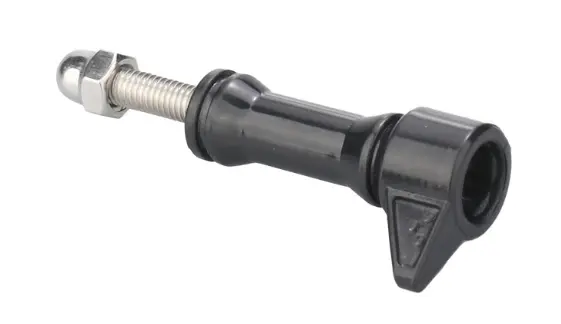
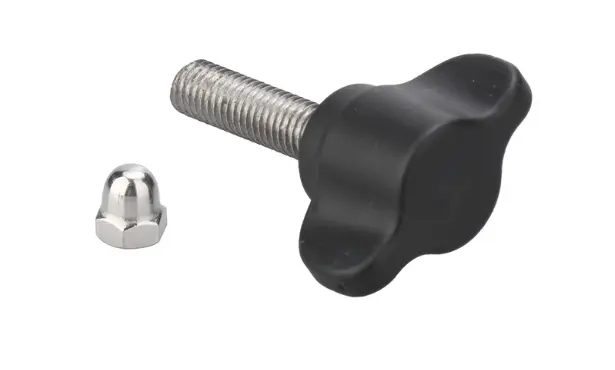
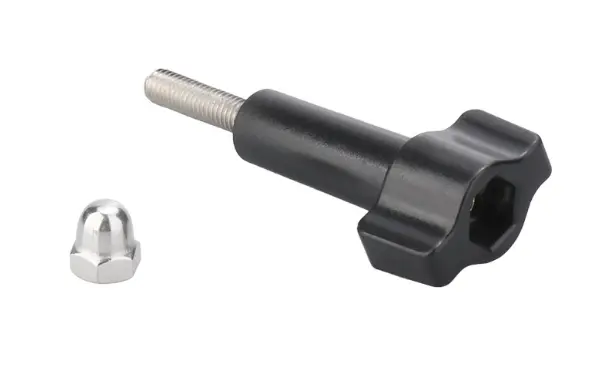
Understanding Custom Camera Parts and Their Role in Advanced Imaging
What Makes Precision Camera Components Essential for Professional Systems
Components that work perfectly under pressure are needed in high-end imaging systems. Specialised polymers are used in the fabrication of precision camera hardware, along with aluminium alloy, stainless steel, and brass. They provide excellent strength-to-weight ratios, while preserving dimensional stability over temperature changes. Dongguan Junsion Precision Hardware Co., Ltd. employs CNC machining, EDM, five-axis machining, and other sophisticated processes to reach tolerances of ±0.01mm and surface roughness of < Ra0.8 μm, parameters essential to optical path precision and mechanical stability.
The need for strict tolerances: Even the smallest changes in the lens attachment position may lead to optical aberrations or influence the calibration of infinity focus. Thermal expansion or mechanical stress may cause sensor holders to move by microns, which degrades the picture quality. The ability to customise the dimension capabilities enables camera makers to compensate for these issues with engineering solutions that standard parts just can’t deliver.
Material Selection and Its Impact on Imaging Performance
The performance of camera parts over their operational life is heavily influenced by the choice of materials. Aluminium alloy parts are highly machinable with weight benefits, well suited for portable camera bodies and lens barrels when every gram counts. Stainless steel is used for systems that are regularly changed, such as focus rings and aperture controls, for enhanced wear resistance. Brass is good when you require electrical conductivity or damping properties, while engineering-grade polymers are corrosion-resistant and electrically insulated where you need that.
Further enhancing these basic materials are surface treatments. Anodising aluminium parts may increase the corrosion resistance and provide customisable colours to distinguish the brand. Black oxide coating is used on optical chambers to decrease reflecting glare and to help prevent stray light from reducing picture contrast. Sandblasting generates non-slip texturing on manual control surfaces, enhancing ergonomics during key shooting times for Custom Camera Parts.
How Customization Enhances Image Stabilization and Autofocus Accuracy
Image stabilisation systems depend on precision-manufactured gimbal assemblies and actuator mounts that must work at low friction and zero backlash. The custom camera gear developed for these applications includes bearing surfaces with mirror-smooth finishes and calculated clearances that allow for quick, precise movement and withstand environmental pollutants.
Autofocus systems face comparable issues. The lens groups have to slide on perfectly aligned rails or helicoids, keeping the optical centring across the entire movement. Custom-machined guide rods, threaded focus barrels, and limit stops, all made to micron-level precision, so that autofocus motors can place lens elements precisely where algorithms dictate, frame after frame, without cumulative error or mechanical wear decreasing performance over time.
Comparing Custom Camera Parts with Standard and Aftermarket Options
Quality and Reliability Differences Across Component Categories
Standard catalogue components are good enough for general-purpose applications but not optimised for state-of-the-art imaging systems. There are always questions about compatibility and quality with aftermarket parts. In professional environments where downtime is very costly, this is a danger.
Design validation and material traceability in custom-designed camera components remove these problems. Certified manufacturers guarantee that each batch is within specified standards. Test results validate dimensional correctness, material composition, and surface finish quality. The quality control at this level helps to lower field failures and warranty claims, which are key issues for OEMs looking to safeguard brand reputation and long-term expenses.
Performance Consistency in Professional Applications
Industrial imaging applications, from semiconductor inspection to medical endoscopes, require that the component performance be consistent across millions of operation cycles and exposure to harsh environmental conditions. This consistency is ensured by custom camera parts produced in ISO 9001:2015 certified quality management systems and RoHS compliance processes with regulated material procurement, verified manufacturing methods, and thorough inspection standards.
Case studies from machine vision integrators show substantial performance benefits. Precision-machined lens mounts in camera systems are 40% more accurate than systems employing ordinary components, minimising downtime for recalibration and related labour expenses. Custom-designed sensor holders with integrated thermal management capabilities improve sensor life by stabilising operating temperatures and preventing costly thermal cycling damage to image sensors.
Certification and Warranty Advantages
The material test findings, dimensional inspection data and surface treatment validation are documented in component certificates provided by recognised providers of bespoke camera parts. Such certifications are part of the quality documentation trail of the camera maker to assist regulatory compliance efforts, and provide proof of due care in supplier qualifying procedures.
Warranty coverage is another distinction. Reputable manufacturers of bespoke Custom Camera Parts provide well-defined warranty terms and prompt technical assistance for their products, unlike many aftermarket parts that may have limited or no warranty coverage. This commitment decreases procurement risk and signals supplier trust in manufacturing quality – the two elements that count when choosing partners for long-term production operations.
Procurement Considerations for Custom Camera Parts in B2B Context
Identifying Certified Manufacturers and Evaluating Supplier Capabilities
Good procurement starts with a good look at your suppliers. Buyers should check that possible manufacturing partners have current quality system certifications, modern production equipment, and documented process controls. Facility audits, either in person or via third-party services, provide you with insight into real production capabilities that surpass marketing promises.
The examination of technical capabilities should include the available machining equipment, measurement instruments, and engineering support resources. Will the supplier be able to do five-axis simultaneous machining of complicated geometries? Do they have CMM (Coordinate Measuring Machine) capability to check tight tolerances? Do you have engineering personnel accessible to help with design optimisation? These skills directly affect a supplier’s ability to manufacture unique camera parts that fulfil the criteria of advanced imaging.
Understanding Pricing Structures and Total Cost of Ownership
There are a number of things that affect the cost of a part. The cost of the raw material, how difficult it is to machine, the need for surface treatment, how much inspection is required, and the quantity ordered. Transparent suppliers will also give thorough bids that break down these parts so that customers know what drives the costs and where they can optimise.
More than unit pricing is total cost of ownership. Lead time dependability impacts inventory carrying costs and flexibility of production schedules. Inspection load and field failure rates are determined by quality consistency. Post-sale technical assistance affects how fast design problems are fixed. All these considerations come into play for smart procurement managers when they compare vendors, knowing that the lowest stated price is seldom the greatest value when buying precise components.
Optimizing Supply Chain Efficiency Through Strategic Partnerships
Purchasing in bulk leads to lower unit prices and secures component availability for production schedules. Vendor-managed inventory programs with trusted suppliers may further simplify procurement by shifting the responsibility for stock management while preserving just-in-time delivery capabilities.
Junsion has 32 sets of sophisticated CNC machines in a 1,600 square metre facility, so we can meet a wide range of production needs from prototype quantity to volume manufacture. We partner with camera manufacturers and product developers to synchronise our manufacturing capacity with their product introduction timetables, providing bespoke camera components on time and on budget – without long lead periods or expedite fees.
Managing Customization Cycles and Technical Collaboration
Good communication and joint engineering are needed to create custom components. Successful projects start with good requirements documentation: CAD models, tolerance standards, material choices, surface finish requirements, and application context. This data allows manufacturers to evaluate feasibility, suggest design changes, and deliver correct prices.
Prototype iterations are used to verify concepts before committing to production tooling. Experienced suppliers assist clients through this process, offering machining processes that meet performance criteria and production efficiency. The technical relationship minimises development risk and increases time-to-market, a competitive advantage that justifies investing in tailored solutions rather than standard components.
Installation, Maintenance, and Longevity of Custom Camera Parts
Proper Installation Protocols for Precision Components
Installation techniques are critical for successful service performance of precision camera gear. Threaded parts must be torqued to a calibrated amount to provide a sound assembly without deforming the mating surfaces. Press fit pieces need to be inserted with controlled force and temperature management to prevent dimensional changes that might affect fit. Optical elements must be handled free of contamination to avoid particles from degrading the picture.
The manufacturer should include full installation specifications including torque values, assembly sequence, lubrication needs and cleanliness standards. Following these standards lowers assembly failures, minimises field returns and guarantees that camera systems meet planned performance levels from original manufacture to end-of-life.
Maintenance Practices That Preserve Performance and Extend Service Life
Routine maintenance protects the investment in precise camera components. Regular inspections may detect wear patterns before they become failures, and regular replacements can avoid unexpected downtime. Cleaning operations reduce the accumulation of impurities that cause corrosion or increase friction. Lubrication maintenance keeps things like focus rings and zoom motors operating smoothly.
Original OEM replacement components are used for maintenance to keep the system intact. Aftermarket parts might have dimensional variances or different material properties that change the wear of mated components or introduce new failure modes. In professional imaging equipment, the short-term reductions in cost are seldom worth the long-term dependability concerns.
Material Durability and Wear Resistance in Real-World Applications
The life of a component in service under load is closely related to the choice of material. Shutter mechanisms are made from stainless steel and can endure millions of actuation cycles without loss of function. Anodised aluminium lens barrels are resistant to environmental corrosion while shooting outside in maritime or industrial environments. Brass electrical connectors are good for thousands of battery swaps and accessory connections.
These durability benefits are backed up by documented field experience. Broadcast cameras fitted with custom-machined tripod mounts of high-strength aluminium alloy have been in continuous use for over five years without developing the wobble or thread wear typical of ordinary cast components. Custom sensor holders with built-in vibration-dampening characteristics for medical imaging systems provide 30% longer life of the sensor over standard mounting solutions, lowering replacement costs and system downtime for Custom Camera Parts.
Future Trends and Innovations in Custom Camera Parts for Advanced Imaging
Advanced Materials and Manufacturing Techniques
Innovations in material sciences are continuously creating new opportunities for camera component design. Lightweight composite materials have better strength-to-weight ratios than standard metals and improved vibration damping qualities. Thermal management issues in small, high-power imaging systems are addressed by heat-dissipating coatings and thermally conductive substrates, which are required to effectively move sensor heat away from sensitive optical channels.
Additive manufacturing methods provide geometries that cannot be achieved with traditional machining, including integrated cooling channels, weight-optimized structures and consolidated assemblies that minimise part counts and assembly complexity. Although conventional CNC machining is still crucial for obtaining the surface finishes and dimensional tolerances needed for optical applications, hybrid techniques that merge both technologies are opening up new design possibilities.
Smart Component Integration and AI-Driven Systems
The next generation of imaging systems has sensors and actuators built into the mechanical parts, making smart camera parts that interact with control systems. Position encoders in the lens barrels give real-time feedback for closed-loop focus control. Mounting systems with built-in accelerometers may be used with more advanced picture stabilisation algorithms. These smart components need manufacturing skills on all fronts: mechanical, electronic and systems integration, capabilities increasingly available from sophisticated vendors.
Mechanical components have new requirements for AI-driven focusing and stabilisation systems. Algorithms that forecast subject motion and compensate for camera shaking need actuator systems with quicker reaction times and higher position precision. Custom-engineered voice coil motors, piezoelectric actuators, and precise bearing assemblies translate software information into physical lens movement with unparalleled speed and accuracy, driving substantial breakthroughs in performance.
Strategic Implications for Procurement Professionals
Keeping up with up-and-coming technology enables procurement teams to future-proof their supply chains and retain competitive advantages at the same time. When companies partner early with suppliers who are studying new manufacturing methods, they will have access to advanced capabilities as they transition from research ideas to production-ready processes.
Developing partnerships with innovative manufacturing partners also provides opportunities for collaborative development programs where suppliers provide technical skills and process knowledge to product development initiatives. By combining the exclusive technology of the component suppliers, the collaborative method speeds innovation cycles and allows differentiation techniques that are hard for rivals to copy.
Conclusion
Precision-engineered camera components represent a strategic investment for imaging equipment manufacturers committed to delivering superior performance and reliability. Through careful material selection, advanced manufacturing techniques, and rigorous quality control, custom solutions address challenges that standard parts cannot overcome. The procurement considerations, installation protocols, and maintenance practices discussed throughout this article provide a framework for maximizing value throughout the component lifecycle. As imaging technology continues advancing, partnerships with capable manufacturers become increasingly critical for maintaining competitive positioning and capitalizing on emerging opportunities in professional photography, videography, industrial inspection, and specialized imaging applications.
FAQ
1. Why Choose Custom Camera Parts Over Standard Components?
Tailored camera components deliver performance advantages that justify their selection for professional and industrial imaging applications. Precision tolerances ensure optical alignment accuracy, custom materials optimize durability for specific operating environments, and design optimization enhances ergonomics and functionality. These factors combine to improve image quality, extend equipment lifespan, and reduce total cost of ownership despite higher initial component costs.
2. How Can I Verify Supplier Quality and Manufacturing Capability?
Request certifications documenting quality system compliance (ISO 9001:2015), material test reports, and dimensional inspection data. Ask about available equipment, measurement capabilities, and engineering support resources. Review case studies and customer references demonstrating experience with similar applications. Consider conducting facility audits or requesting sample parts for evaluation before committing to production orders.
3. What Lead Times Should I Expect for Custom Camera Components?
Lead times vary based on design complexity, material availability, and production scheduling. Simple machined parts may be available within 2-3 weeks, while complex assemblies requiring multiple operations and surface treatments could require 6-8 weeks. Establishing framework agreements with committed volume forecasts helps suppliers optimize scheduling and reduce lead times for repeat orders.
Partner with Junsion for Superior Custom Camera Parts Manufacturing
Dongguan Junsion Precision Hardware Co., Ltd. brings comprehensive capabilities to the imaging industry through our advanced machining equipment, certified quality systems, and responsive technical support. Our custom camera parts manufacturing services span lens mounts, camera bodies, sensor holders, shutter mechanisms, focus rings, filter threads, and tripod mounts—all produced to your exact specifications using CNC, EDM, turning, and five-axis machining technologies. With RoHS compliance, ISO 9001:2015 certification, and material options including aluminum alloy, stainless steel, brass, and engineering plastics, we serve as a trusted custom camera parts supplier for manufacturers worldwide. Our 32 advanced CNC machines and 1,600 square-meter facility enable fast response times and flexible production capacity. Contact our team at Lock@junsion.com.cn to discuss your precision camera component requirements and discover how our expertise supports your advanced imaging objectives.
References
1. Smith, J. & Chen, L. (2022). Precision Manufacturing for Optical Systems: Materials, Processes, and Quality Control. Technical Publishing International.
2. Anderson, R. (2021). "Dimensional Stability Requirements in Professional Camera Design," Journal of Imaging Science and Technology, 65(4), 234-247.
3. Williams, M. et al. (2023). Advanced Materials for Camera Component Manufacturing. Optical Engineering Press.
4. Thompson, K. (2022). "Thermal Management in High-Resolution Imaging Systems," Precision Engineering Quarterly, 18(2), 112-128.
5. Liu, H. & Martinez, C. (2023). Quality Assurance in Precision Component Manufacturing: Best Practices for Camera and Optical Industries. Manufacturing Excellence Publications.
6. Davidson, P. (2021). "Evaluating Supplier Capabilities for Custom Optical Components," Procurement and Supply Chain Management Review, 29(3), 78-95.