




What Applications Need High-Quality Electronic Watch Clasp?
High-grade electronic watch clasps have significant roles in many sectors that need accuracy, durability, and enhanced functionality. These advanced fastening systems are important in sport and fitness wearables, where shock resistance and tight closure ensure the device does not open accidentally during demanding physical activity. High-end clasps are the key to a smooth user experience and visual perfection for luxury smartwatch makers. Medical-grade watches need clasps that are sanitary, corrosion-resistant, and able to survive sterilisation processes. Industrial and professional equipment needs sturdy fastening solutions to provide dependability in difficult situations. Knowing which applications really need the sophisticated clasp technology means procurement managers may make intelligent purchasing selections that can balance the performance needs against cost.
Understanding Electronic Watch Clasps: Components and Mechanism
The evolution of watch strap technology has gone from the basic buckle to complex systems that combine mechanical accuracy and electrical functionality. These components are the crossroads of classic watchmaking skill and modern technical innovation.
Core Components of Advanced Clasp Systems
The high-performance watch clasp is designed around a basic architecture comprising many integrated, co-operating pieces. The structural basis of the main locking mechanism is usually made of stainless steel or aerospace-grade aluminium alloys. These materials provide great tensile strength yet keep the lightweight properties necessary for comfort while wearing. Micro-sensors incorporated in the housing of the clasp detect its closure state and may activate alarms if the fastening is compromised in use. Some sophisticated versions even have miniaturised electrical connections for charging or data transfer right inside the clasp mechanism itself.
The mechanical parts are CNC machined to tight tolerances measured in microns, so they operate smoothly over hundreds of thousands of open-close cycles. Deployant-type clasps with spring mechanisms must maintain constant tension for the life of the product, which means careful material selection and heat treatment techniques. Surface treatments such as PVD coating or anodising increase the aesthetic appeal but also provide crucial protection from corrosion, scratches, and everyday wear and tear.
Operational Mechanisms and User Experience
Electronic watch clasps work on the principle of finely regulated mechanical interactions with smart detecting ability. Deployant clasps fold into a small package that ensures pressure is uniformly distributed across the wrist and pain is avoided during long periods of usage. Butterfly mechanisms provide symmetrical appearance and fast release performance, which is desirable for luxury timepiece applications. Magnetic systems are easy to use with one hand but need careful engineering to avoid unintentional disengagement.
The use of electrical components turns simple fastening into intelligent connection. Added charging connectors within the Electronic Watch Clasp assembly, which means no more separate charging cords and a simpler life for smartwatch users. We can add biometric sensors to detect pulse rate or galvanic skin reaction right at the clasp attachment place. These sophisticated features need stringent testing processes to verify that water resistance standards are met and that the electrical components can endure the mechanical pressures of regular opening and shutting.
Durability Standards for Industrial Applications
B2B customers in the consumer products and electrical manufacturing industries are looking for clasp solutions that fulfil rigorous dependability standards. Salt spray testing verifies corrosion resistance for items exposed to maritime settings or high humidity. Fatigue testing mimics years of usage in accelerated cycling techniques. This generally involves 50,000+ operations with no loss of locking force or alignment accuracy. Temperature cycling tests performance across operating ranges from -20°C to +60°C, confirming operation in various temperature zones.
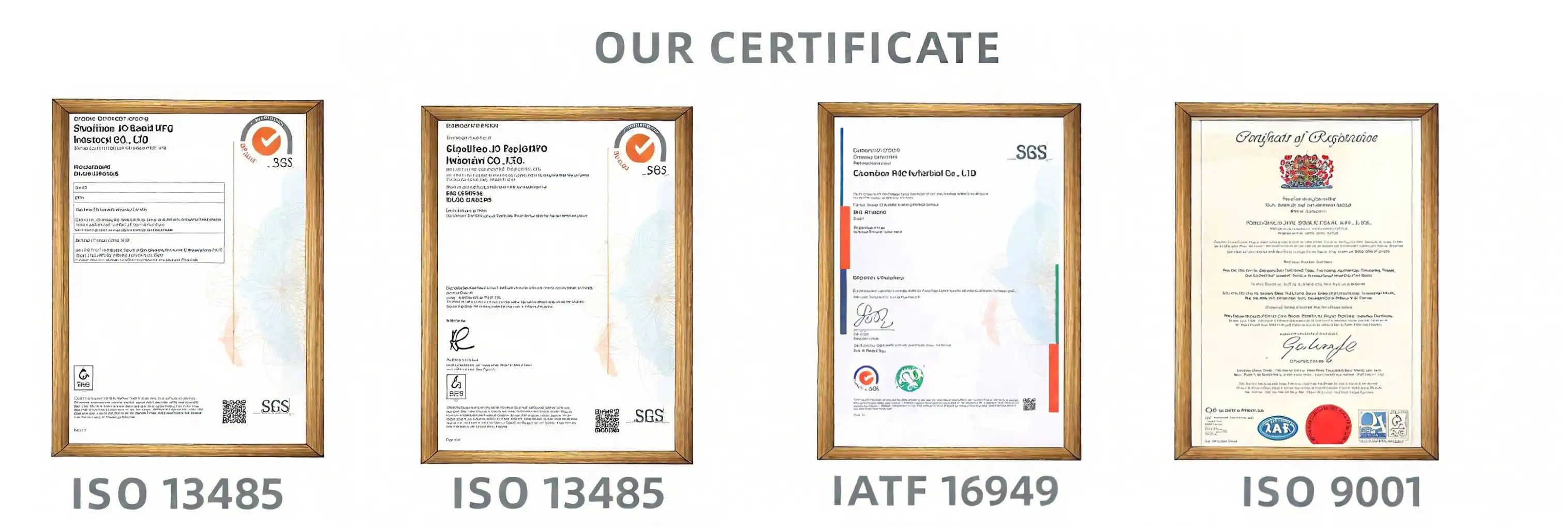
Material certifications such as RoHS compliance and ISO 9001:2015 quality management standards provide trust in the integrity of the supply chain for procurement managers. The traceability paperwork enables producers to verify that all components are manufactured in compliance with the material grades specified, which is especially crucial when utilising titanium alloys or stainless steel of medical grade. These quality guarantees help to reduce warranty claims and safeguard the reputation of the brand in the competitive consumer electronics marketplaces.
Applications Requiring High-Quality Electronic Watch Clasps
Various market sectors have distinct demands for the features of the clasps to meet different operational needs and user expectations. Knowing these application-specific criteria lets you choose the top components and how to customise them.
Sports and Fitness Wearables
Sports watches are subject to very high mechanical loads in the case of intense physical activity. Running, cycling, and swimming involve repeated impact pressures that might degrade weaker fastening systems. Tight closure devices that can withstand vibration and rapid acceleration without pressure points or chafing are essential for professional athletes. For swimming and water sports, waterproof integrity is key, demanding gasket seals and corrosion-resistant materials that can withstand extended contact to chlorine or saltwater.
Fitness tracker makers try to make their products as light as possible to interfere less with natural movement patterns. Aluminium clasps with anodised surface treatments provide the best strength-to-weight ratios and bright colour choices that match brand aesthetics. Quick-release mechanisms let you change bands quickly, so you can easily transition between silicone sport bands and formal leather straps. The clasp is designed to allow for different wrist sizes with micro-adjustment settings, usually providing an additional 5-8mm of fine-tuning outside the normal strap holes.
Luxury Smartwatch Manufacturing
Luxury watch manufacturers are characterised by their sharp eye for finishing details and subtle user experiences. Clasps in this area have to be whisper-silent, buttery smooth in articulation, a testament to great workmanship. The mix of polished and brushed surfaces adds visual variety, while also minimising the appearance of worn patterns. Laser engraving of brand logos and model IDs allows for permanent marking with sharp detail.
Luxury watchmakers prefer to use Grade 5 titanium or 316L surgical stainless steel because of their excellent material qualities and the prestige associated with them. These alloys may be treated in several ways, such as electroplating with gold, rose gold, or black PVD coatings, which keep their beauty for years of everyday usage. The clasp design must be aligned with the watch case architecture and be in a unified design language for all visible elements. The integration of the charging connections demands great technical effort to maintain the purity of form while providing a solid electrical connection.
Medical and Professional Equipment
Healthcare applications need to meet certain criteria such as cleanliness, biocompatibility, and resistance to sterilisation. Smartwatches for clinical application need to survive repeated exposure to disinfecting chemicals without loss of mechanical function or surface polish. Grade 23 titanium Electronic Watch Clasp clasps provide better biocompatibility, minimising allergic responses in healthcare workers when used for long shifts.
Professional equipment used by emergency responders and industrial personnel must be ruggedly built to withstand extreme environments. Locking systems strengthened to avoid inadvertent opening during physical interventions or handling of equipment. Glove-friendly operation for latching and releasing without removing protective equipment. The markings for low-light visibility may need to be luminous or of a very high-contrast colour. These highly specialised requirements frequently demand unique OEM development collaborations with manufacturers that can translate operational needs into engineering solutions.
Industrial OEM and Bulk Manufacturing
Consumer electronics original equipment manufacturers want scalable manufacturing capabilities with consistent quality across large volume orders. When procurement managers are looking at prospective suppliers, they’ll look at the production capacity, lead time flexibility, and pricing competitiveness for orders ranging from 10,000 to 500,000+ pieces. Products are differentiated in congested marketplace categories by customisation choices including proprietary measurements, distinctive surface treatments and brand-specific features.
When the clasp components are the possible obstacles to assembly timeframes, supply chain dependability is crucial. Suppliers with ISO-certified quality management systems and detailed inspection procedures help keep defect rates low enough to prevent line shutdowns. Technical support services such as design optimisation consulting and manufacturability studies bring more value throughout the product development stages. Established suppliers will have safety stock of regular component combinations and also provide quick prototyping for new designs.
Comparison: Electronic Watch Clasp vs Traditional Clasp in Various Use Cases
Understanding the performance differences between electronic-enabled and conventional mechanical clasps helps procurement professionals justify investment decisions and align component selection with product positioning strategies.
Security and Reliability Performance
Electronic clasps incorporate fail-safe detection that alerts users to improper closure before the watch becomes vulnerable to loss. This intelligent monitoring surpasses traditional mechanisms that rely solely on tactile feedback and visual inspection. Magnetic locking systems with electronic verification prevent gradual loosening that can occur with spring-loaded pins in conventional designs. The enhanced security proves particularly valuable in high-value luxury smartwatches where device replacement costs justify premium component investments.
Traditional mechanical clasps demonstrate proven reliability through decades of field use, though they lack the active monitoring capabilities of electronic variants. Deployant mechanisms without electronic features typically cost 30-40% less than sensor-equipped alternatives, making them attractive for budget-conscious consumer products. The maintenance requirements differ significantly—electronic clasps may require battery replacement or charging port cleaning, while traditional designs need only periodic lubrication and spring tension checks.
Cost-Benefit Analysis for Procurement Managers
Initial acquisition costs for electronic clasps range from $3-$15 per unit depending on feature complexity and order volume, compared to $1-$5 for quality mechanical alternatives. However, the total cost of ownership calculation must account for warranty returns related to accidental watch loss from inadequate fastening. If electronic clasp technology reduces loss incidents by just 2-3%, the prevented replacement costs offset the higher component price in premium product segments.
Durability advantages extend product lifecycle and reduce service center visits. Electronic clasps with integrated charging eliminate wear-prone external charging ports that frequently fail in consumer smartwatches. This consolidation improves overall device reliability while simplifying industrial design. Procurement managers should evaluate supplier testing data on cycle life, environmental resistance, and failure modes to quantify expected field performance differences.
User Comfort and Adjustability Considerations
Comfort engineering plays a crucial role in wearable adoption rates and user satisfaction scores. Electronic clasps with tool-free micro-adjustment enable users to fine-tune fit throughout the day as wrist circumference fluctuates with temperature and activity. This adaptability reduces pressure points and improves wearing compliance in medical monitoring applications where consistent sensor contact matters.
Traditional buckle designs offer simplicity and intuitive operation that requires no learning curve, appealing to users less comfortable with technology. The minimal profile of classic tang buckles suits thin watch designs where every millimeter of case thickness impacts aesthetic proportions. However, these conventional approaches sacrifice the convenience of quick-release mechanisms and one-handed operation that electronic variants provide through magnetic or sensor-activated opening sequences.
How to Select the Right Electronic Watch Clasp for Your Application
Strategic component selection requires systematic evaluation of technical specifications, supplier capabilities, and total cost implications across the product development and manufacturing lifecycle.
Material Selection Based on Application Environment
Harsh operational conditions demand corrosion-resistant alloys that maintain structural integrity despite chemical exposure, temperature extremes, and mechanical abuse. Stainless steel grades including 316L offer excellent general-purpose performance with moderate cost premiums. Titanium alloys provide superior strength-to-weight ratios and exceptional corrosion resistance, justifying their higher material costs in premium sports watches and aerospace applications. Aluminum with protective anodizing serves budget-conscious fitness wearable segments where weight reduction matters more than maximum durability for Electronic Watch Clasp.
Material choice directly impacts available surface treatment options and color possibilities. Aluminum accepts vibrant anodized finishes in dozens of colors, enabling product differentiation through distinctive visual identities. Stainless steel suits electroplating with precious metals and PVD coatings that deliver luxury aesthetics. Titanium can be colored through controlled oxidation processes, though color consistency across production batches requires careful process control. Procurement specifications should clearly define acceptable color variation tolerances and surface quality standards to prevent disputes during incoming inspection.
Compliance Standards and Industry Certifications
Regulatory compliance verification protects manufacturers from liability risks and enables market access in regulated territories. RoHS certification confirms that materials contain no restricted hazardous substances, satisfying environmental regulations in the European Union and other markets. REACH compliance addresses additional chemical safety concerns through comprehensive substance registration. Medical device applications may require ISO 13485 certification demonstrating quality management systems specific to healthcare products.
Third-party testing documentation provides objective validation of performance claims. Salt spray test reports quantify corrosion resistance through standardized ASTM B117 protocols. Dimensional inspection reports using coordinate measuring machines verify that manufactured parts meet drawing specifications within stated tolerances. Material certificates trace metal composition to certified foundries and include mechanical property test results. Procurement managers should request complete compliance documentation packages during supplier qualification processes to ensure regulatory readiness.
Supplier Evaluation and Partnership Criteria
Manufacturing capability assessment goes beyond pricing comparisons to examine technical competencies and operational reliability. CNC machining capacity determines whether suppliers can maintain delivery schedules during demand fluctuations. A facility with 32+ advanced CNC machines demonstrates production flexibility and reduced risk of bottlenecks. Geographic proximity to final assembly operations may reduce logistics costs and lead times, though specialized expertise sometimes justifies longer supply chains.
Quality management maturity influences defect rates and the likelihood of production disruptions. ISO 9001:2015 certification indicates established process controls and continuous improvement disciplines. In-house testing equipment including 2.5D projectors and hardness testers enables rapid quality verification without dependence on external laboratories. Supplier willingness to provide factory tours and process documentation signals transparency and confidence in their operations. Building strategic partnerships with technically capable suppliers creates opportunities for collaborative product development and preferential capacity allocation during supply constraints.
Installation, Troubleshooting, and Maintenance of Electronic Watch Clasps
Following best practices for handling and preventative maintenance helps to get the most performance out of Electronic Watch Clasp components and prolong their working life. This helps both B2B clients and end users minimise the total cost of ownership.
Installation Guidelines for OEM Manufacturing
The proper method of assembly will help avoid damage during first installation and will guarantee that the product functions well throughout its lifetime. The micro screws that hold the watch strap need calibrated torque drivers to provide the correct clamping force without tearing the threads in the delicate metals. If you use too much torque, you may break plastic inserts or warp thin metal parts; if you use too little, fasteners can loosen in vibration. Assembly instructions must contain torque levels in Newton-centimeters and suggest the proper kind of tools.
During clasp installation, care must be taken to align the electronic contacts to avoid short circuits or intermittent contact. The spring-loaded pins must be compressed within certain ranges to provide dependable electrical paths. There are also manufacturing tolerances in the mating surfaces to consider. Oils, dust, or handling residues might cause problems with the charging function and can get in during assembly. Clean room regulations, or at a minimum lint-free glove standards, safeguard critical electronic interfaces during manufacturing runs.
Common Issues and Practical Solutions
Experience shows recurrent concerns with clasp performance and user happiness. The usual cause of stiff operation after long storage is lubricant migration or contamination. A little application of PTFE-based lubricant to pivot points will restore smooth articulation without attracting dirt. Magnetic clasps deteriorate with age and need their magnetic components replaced; however, good designs hold their field strength for thousands of cycles. We recommend that users avoid exposing magnetic clasps to high external magnetic fields, which might cause permanent demagnetisation.
Failures of the charging contact are characterised by inconsistent power transmission or full inability to charge via the interface of the clasp. Cleaning contacts with isopropyl alcohol and gentle brushes eliminates oxidation and oils from skin. Bent contact pins must be straightened carefully using precise tools to prevent damage. If mechanical fixes don’t work, the whole clasp assembly may need to be replaced. This is an example of the value of providing for serviceability during product development.
Maintenance Schedules for Extended Lifespan
By proactively maintaining equipment, small problems may be resolved before they become functional failures requiring warranty servicing. Monthly visual examinations detect early indicators of deterioration such as surface scratches, discolouration or loose components. Periodic Cleaning: Every quarter, cleaning with suitable solvents eliminates the accumulated body oils, cosmetics and environmental pollutants that cause corrosion. The premium watches will keep like-new performance with the annual expert servicing of thorough disassembly, ultrasonic cleaning and lubrication refill.
How much maintenance is needed depends on the environment. Salt spray exposure in marine locations requires more regular examination and cleaning for corrosion. Specialised protective coatings or more regular replacement intervals may be required for industrial applications involving chemical exposure. Medical applications need materials compatible with sterilisation and may need proof that cleaning processes do not impact functional performance. Maintenance techniques and intervals should be included in product user manuals and service training materials.
Conclusion
Choosing the optimal fastening systems involves careful consideration of application requirements, material qualities and supplier capabilities. High-performance watch clasps are key components in sports wearables, premium smart watches, medical devices and industrial timepieces where dependability and user experience directly influence product success. Electronic versions provide added security measures and built-in capabilities that justify a premium price in value-conscious market sectors. Mechanical designs that have been around for years are still a good value choice for situations where the added capabilities don’t provide much value. Procurement managers must go beyond pricing and examine suppliers for their production capacity, quality certifications, and technical support skills. Strategic alliances with experienced manufacturers allow for customisation, regulatory compliance and supply chain stability. Following proper installation practices and preventative maintenance schedules extends the life of components and reduces warranty expenses.
FAQ
1. What advantages do electronic clasps offer over mechanical variants in industrial settings?
Electronic watch clasps provide active monitoring capabilities that detect improper closure, preventing device loss incidents that generate warranty costs. Integrated charging contacts eliminate separate ports that commonly fail in field use. Smart locking mechanisms resist vibration and impact forces better than conventional spring-loaded designs. These reliability improvements reduce total cost of ownership despite higher initial component prices.
2. Can suppliers accommodate bulk customization for OEM demands?
Established manufacturers with advanced CNC machining capacity routinely handle custom specifications including proprietary dimensions, unique surface treatments, and brand-specific features. Order quantities from 10,000 to 500,000+ units remain feasible with appropriate lead times. Technical consultation during design development ensures manufacturability and optimizes production efficiency. Prototype services validate designs before committing to volume production.
3. How can buyers verify supplier credibility and product quality?
Request comprehensive documentation including ISO 9001:2015 certification, RoHS compliance statements, and third-party test reports covering salt spray resistance and dimensional accuracy. Factory audits reveal manufacturing capabilities and quality control processes. Sample evaluation under actual use conditions validates performance claims. References from existing customers in similar industries provide insights into supplier reliability and responsiveness.
Partner with Junsion for Premium Electronic Watch Clasp Solutions
Dongguan Junsion Hardware Co., Ltd. specializes in precision-engineered fastening components crafted from premium stainless steel and aluminum alloys. Our 1,600 square-meter facility houses 32 advanced CNC machines delivering tight tolerances and consistent quality across production volumes from prototype to mass manufacturing. We serve electronics manufacturers, communications equipment producers, and consumer goods brands across 20+ countries with rapid response times and comprehensive technical support.
Our watch clasp manufacturing capabilities include multiple surface treatment options—anodizing, electroplating, PVD coating, and laser engraving—tailored to your aesthetic and durability requirements. RoHS-compliant materials and ISO 9001:2015 certified processes ensure regulatory readiness for global markets. Whether you're developing fitness trackers requiring lightweight durability or luxury smartwatches demanding impeccable finishing, our engineering team provides design optimization guidance and manufacturability analysis. As a trusted electronic watch clasp manufacturer, we deliver the perfect balance of functionality, aesthetics, and cost efficiency. Contact our procurement specialists at Lock@junsion.com.cn to discuss your custom requirements and explore volume pricing advantages that strengthen your competitive position.
References
1. Wilson, R.T. (2021). Advanced Materials in Modern Watchmaking: Engineering Perspectives. Horological Institute Press.
2. Chen, M.K., & Patterson, L.J. (2020). "Titanium Alloys in Consumer Electronics: Performance Characteristics and Manufacturing Considerations," Journal of Precision Engineering, 45(3), 287-301.
3. Anderson, S.F. (2022). Wearable Device Design: Components, Integration, and User Experience. Technical Publishing International.
4. Rodriguez, P.A., Kim, J.H., & Walsh, D.M. (2019). "Corrosion Resistance of Surface-Treated Fasteners in Marine Environments," Materials Science and Engineering Quarterly, 12(4), 412-429.
5. Thompson, E.L. (2023). Smart Fastening Systems: Electronic Integration in Mechanical Components. Engineering Design Council.
6. Hughes, C.R., & Nakamura, Y. (2020). "Quality Management Standards in Precision Hardware Manufacturing," International Journal of Production Management, 38(2), 156-174.