




How Do Insert Parts Support Lightweight Product Design?
Insert parts make it possible to design lightweight products by adding high-strength metal insert parts to weaker materials like plastics and composites to make them stronger. This lets engineers reduce the total weight of the product while keeping its structural integrity. These precisely designed fastening options, which include threaded inserts, molded-in inserts, and press-fit components, spread mechanical loads evenly across assemblies, so there's no need for big support structures. Manufacturers get better tensile strength and durability without the weight problems that come with traditional solid metal buildings by inserting lightweight materials with stainless steel or special alloys.
Introduction
Lightweight product design has become a key competitive advantage in global B2B procurement, changing the way companies in the electronics, automotive, medical devices, and aerospace sectors create new products. This change is due to stronger demands for better fuel efficiency, greater portability, lower shipping costs, and stronger sustainability credentials throughout supply chains. Today's procurement managers are under more pressure to find parts that perform well while causing the least amount of damage to the environment and costing the least amount of money to run. In this situation, insert parts have become essential, acting as the key link between goals to reduce weight and strict quality standards. With these precise hardware parts, engineers can choose base materials that are light, like engineered plastics, aluminium alloys, and carbon fibre composites, while metal reinforcements put in the right places keep the structure strong.
Understanding the Challenges of Lightweight Product Design
Lightweight product design in industrial B2B contexts represents far more than simply reducing component mass. Engineers must simultaneously satisfy rigorous performance specifications, regulatory compliance requirements, cost targets, and supply chain constraints—a balancing act that becomes exponentially more complex as weight reduction increases.
Structural Integrity Versus Weight Reduction Trade-offs
The fundamental tension in lightweight design stems from the inverse relationship between material density and mechanical properties. Aluminum alloys offer approximately one-third the density of steel but frequently exhibit lower fatigue resistance and elastic modulus. Engineering plastics deliver remarkable weight savings yet struggle with thermal stability and creep resistance under sustained loads. This creates procurement dilemmas where traditional heavy-gauge steel components provide known reliability, while newer lightweight alternatives introduce performance uncertainties that risk product recalls or field failures.
Cost Implications Across Product Lifecycles
Lightweight materials often command premium pricing for insert parts compared to conventional alternatives, directly impacting initial tooling investments and per-unit manufacturing costs. Procurement professionals must evaluate the total cost of ownership—considering not just component pricing but also assembly labor, shipping expenses, warranty claims, and end-of-life disposal. A lighter product may justify higher component costs through reduced freight expenses and improved energy efficiency during use, but these benefits require careful quantification during supplier negotiations.
Supply Chain Reliability Concerns
Specialized lightweight materials and precision hardware components frequently come from concentrated supplier bases with longer lead times than commodity materials. This concentration introduces supply chain vulnerabilities, particularly for OEM manufacturers operating just-in-time production systems. Procurement managers need backup suppliers and alternative material specifications to mitigate disruption risks without compromising design intent. Traditional heavy structural components limit innovation potential by constraining design flexibility and restricting opportunities for product differentiation. These challenges drive a continuous search for novel solutions that reconcile competing demands while aligning with market pressures for lighter, more sustainable products that maintain exceptional performance standards.
The Role of Insert Parts in Lightweight Product Design
Metal inserts, threaded inserts, and molded-in fastening components fundamentally transform how engineers approach lightweight product development by providing localized reinforcement exactly where mechanical strength is essential. Rather than specifying uniformly heavy materials throughout an assembly, designers can optimize each zone—using lightweight substrates for non-critical areas while embedding precision hardware components at load-bearing attachment points, threaded connections, and structural junctions.
Load Distribution and Structural Reinforcement
When used with lightweight base materials, threaded plugs are great at spreading out heavy fastening loads over larger areas. When a machine screw clamps down on an insert, the knurling or moulded ribs on the outside of the insert pass stress into the plastic or composite matrix around it. This keeps the boss from cracking and threads from stripping, which would happen when threading directly into soft materials. This mechanism lets engineers design thin-walled housings and skeletal support structures that achieve amazing strength-to-weight ratios that would not be possible with monolithic construction. At Dongguan Junsion Precision Hardware Co., Ltd., we make high-performance metal inserts from 316, 304, 303, and 410 stainless steel alloys, which last a very long time in tough situations. Our precise machining skills allow us to keep tolerances of ±0.01mm and surface roughness levels at or above Ra0.8μm. This makes sure that the fitting torque is always the same and that the load transfer is optimal. These requirements have a direct effect on the quality of the assembly and the long-term dependability of automation equipment, medical devices, aircraft parts, and AI intelligent systems.
Assembly Process Optimization
Traditional joining methods for lightweight materials—including adhesive bonding, ultrasonic welding, and snap-fit connections—impose design constraints and create permanent assemblies that complicate serviceability. Threaded inserts enable reversible mechanical fastening in materials that cannot support traditional threading, streamlining production workflows while facilitating field maintenance and component replacement. This capability proves particularly valuable in consumer electronics and home appliances, where repair economics significantly influence the total cost of ownership.
Material Reduction Without Performance Compromise
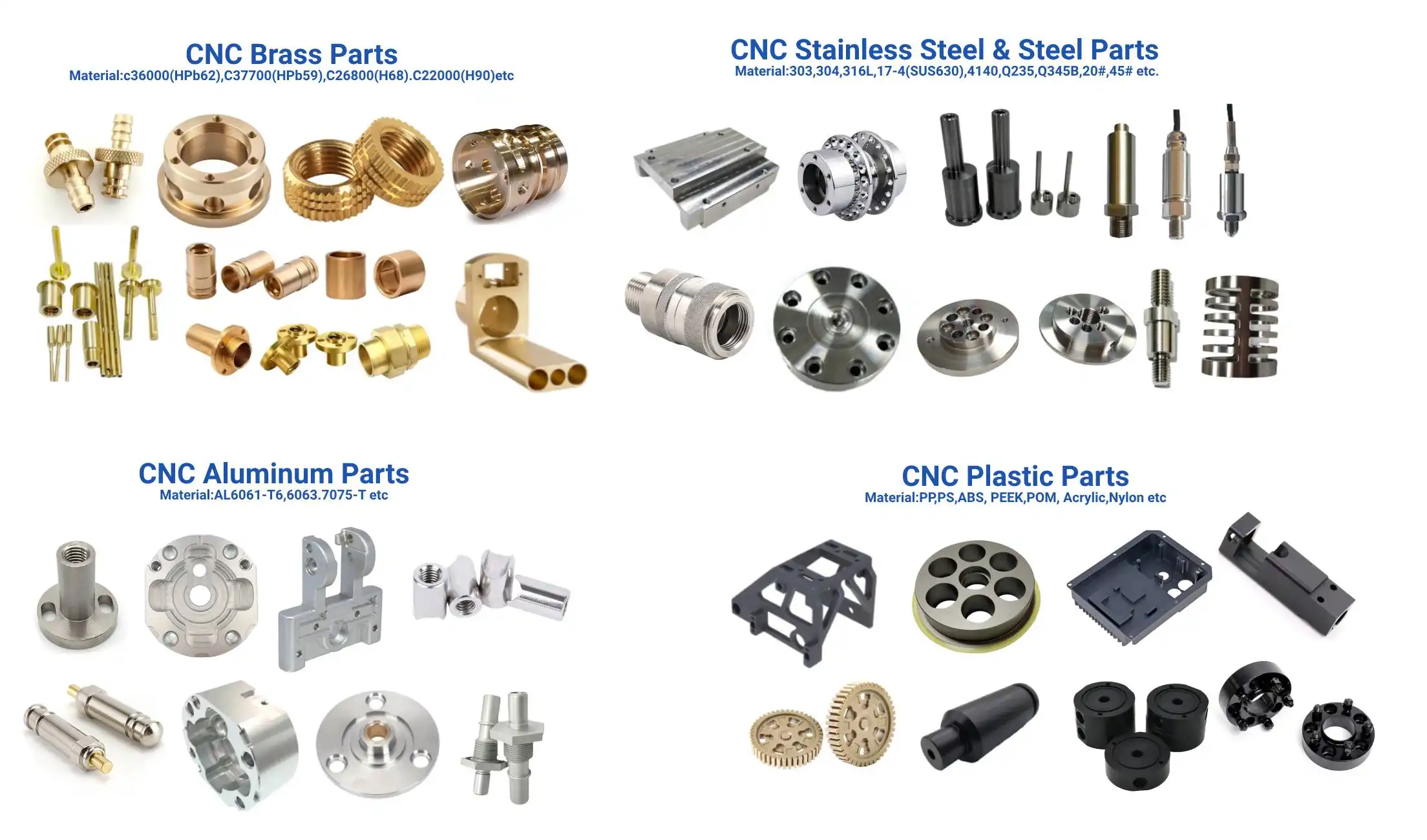
By only using high-strength materials where they are needed, designers can save a lot of weight while still meeting or beating structural performance standards. In many situations, a plastic housing reinforced with carefully placed stainless steel inserts can be used instead of heavier aluminium castings because it is just as strong but much lighter. This selective reinforcement method cuts down on the use of raw materials, the cost of transportation, and the amount of energy used while the product is in use. These are all great benefits that procurement managers who keep an eye on sustainability metrics and lifecycle environmental effects really like. These performance results are directly affected by the precise engineering that goes into making good fixing hardware. Our high-tech manufacturing methods, such as CNC machining, turning, five-axis machining, and stamping, make parts with exact threading geometry and consistent accuracy in their dimensions. We offer a wide range of surface treatments, including polishing, anodising, sandblasting, plating, and electrophoresis, to make our products more resistant to corrosion and make sure they can be used in a wide range of settings, from medical sterilisation to marine uses.
Key Design Principles for Using Insert Parts in Lightweight Products
Successful implementation of reinforced fastening solutions requires careful attention to material science, structural mechanics, and manufacturing process integration. Engineers and procurement insert parts specialists should evaluate these critical design parameters when specifying components for lightweight assemblies.
Material Compatibility Considerations
Thermal expansion coefficients between insert materials and host substrates must align closely to prevent stress development during temperature cycling. Stainless steel inserts installed in thermoplastic housings experience differential expansion that can loosen press-fit retention or induce micro-cracking if coefficient mismatches exceed acceptable limits. Material selection should account for operating temperature ranges, considering both ambient conditions and heat generation from internal components. Our engineering team provides detailed thermal compatibility data for various stainless steel grades paired with common engineering plastics, helping designers avoid field failures related to thermal stress.
Optimal Placement and Orientation Strategies
The position of an insert within a component has a big effect on how stress is distributed and how well the structure works. When threaded plugs are placed too close to the edges, thin-wall sections are made that are more likely to split during installation or service loading. When the boss width is too small compared to the insert size, the hoop stresses build up and cause radial cracking. Based on the size of the insert and the mechanical loads that are predicted, design guidelines say what the minimum wall thickness, boss geometry, and spacing need to be. Our technical documentation includes full installation instructions for a range of materials and assembly methods. This helps designers make the best choices while the product is being made.
Manufacturing Process Integration
Heat staking, ultrasonic insertion, molding-in, and press-fitting are some of the production methods used to install metal inserts. Each has its own design needs and cost structures. Ultrasonic installation has short cycle times that work well for mass-produced market goods, but it needs certain boss shapes and material qualities. Moulding-in during injection moulding gets rid of the need for extra steps, but it makes tools more complicated and requires accurate insert placement fixtures. Procurement managers need to look at these production effects along with the costs of the parts, taking into account the total cost of assembly rather than just the prices of the parts. When you ask for custom insert configurations, the costs of precision machining vs. stamping production come into play.
Quality Assurance and Testing Protocols
For a lightweight design to work, there needs to be strict quality control all along the supply chain. Advanced metrology tools are used to make sure that the insert's shape meets the requirements, and torque-to-failure testing is done on sample materials to make sure that the installation is solid. Junsion has quality control systems that are ISO 9001:2015 certified and RoHS compliant to protect the environment. We test materials and inspect batches on a regular basis to make sure they always work the same way. Verifying the load capacity and trying the pull-out strength gives real-world information that helps with design calculations and figuring out the safety factor. These quality assurance steps directly address procurement worries about the dependability of suppliers and the consistency of parts. Changes from batch to batch in important dimensions or material properties can stop assembly operations and lower the performance of the product. This is why supplier quality systems are just as important when choosing where to get parts as component specs.
Case Studies: Successful Applications of Insert Parts in Lightweight Designs
Real-world implementations across diverse industries demonstrate the tangible benefits precision hardware components deliver in lightweight product development. These examples illustrate how thoughtful design and component selection translate into measurable competitive advantages.
Automotive Lightweighting Initiatives
Threaded inserts have been used by major automakers to make vehicles lighter while still meeting standards for crash performance and longevity. Interior trim panels used to be made of heavy injection-molded plastics with metal brackets built in. Now, they are made of lighter composite substrates that are reinforced with stainless steel inserts at the connection points. This method cut the weight of a component by 35% in a recorded case while also making the assembly more ergonomic and allowing service without tools. Cutting down on weight directly led to better gas mileage and lower emissions, which helped makers meet stricter government rules while keeping the quality of the interiors.
Medical Device Durability Enhancement
Portable medical equipment needs to be both light and very durable so that it can withstand being sterilised many times and being handled by doctors. A company that makes diagnostic imaging devices switched from aluminium housings to glass-filled nylon frames with precision-machined inserts at the mounting bosses and adjustment mechanisms. The redesign cut the weight by 40%, which made it easier for doctors to place patients while keeping the structure rigid, which is important for stable optical alignment. Surface treatments that made the installed parts resistant to corrosion ensured that they could work with strict sterilisation practices. This meant that they would last longer than the original aluminium design.
Industrial Automation Equipment Optimization
It is very helpful to make robotic end-effector systems lighter because that lets them have faster cycle times, smaller actuators, and more accurate placement. Our engineering team worked with a business that makes automation equipment to come up with unique insert designs for carbon fibre gripper arms. These inserts are very strong for how light they are, and they have strong threaded links that let you switch out tools. We made sure that all of the key measurements were within ±0.01mm of accuracy. This made the assembly process repeatable and ensured dependable performance for millions of cycles. In this case, specialised fixing solutions allow the use of new materials that wouldn't be able to be joined together in any other way. What these case studies show is how important it is to do more than just buy parts from your providers. Engineers need to be able to work together, make prototypes quickly, and offer technical help quickly for lightweight design to work. These skills are what make key suppliers stand out from other vendors when they are being considered for contracts.
Future Outlook: Trends and Innovations in Insert Parts for Lightweight Design
The evolution of lightweight product design continues accelerating, driven by sustainability insert parts imperatives, performance demands, and technological innovations that expand what engineers can achieve with advanced materials and precision components.
Advanced Material Integration
New composite materials that contain carbon nanotubes, graphene reinforcement, and bio-based polymers offer better mechanical properties while leaving less of an impact on the environment. These next-generation substrates will need fastening solutions that are just as advanced and are designed to work with their special properties. Hybrid metal-composite inserts that improve the contact between different materials are being studied to solve problems with thermal expansion and increase adhesion strength. When manufacturers put money into these new technologies, they will be ahead of the curve when it comes to using sustainable materials.
Digital Design Tool Advancement
Computer-aided engineering software is getting better at including complicated simulation tools that can guess how well an insert will work in a wide range of loading conditions. Now, finite element analysis models can correctly show how stress moves between threaded parts and the materials around them. This lets engineers find the best placement and size before making a physical prototype. Time-to-market competitiveness is directly affected by these digital tools because they shorten development processes and cut down on expensive design iterations. Progressive suppliers offer thorough CAD models and data on the properties of materials that can be easily integrated into the design processes of their customers. This makes this analytical approach easier.
Supply Chain Collaboration Intensification
In today's competitive global markets, designing lightweight products is not just a choice; it's a strategic must. Precision-engineered metal inserts make this change possible by providing localised reinforcement that lets a lot of material be cut away without affecting the strength or lifespan of the structure. Understanding the rules of material compatibility, finding the best placement strategies, integrating manufacturing processes well, and working with sources who offer technical support along with high-quality parts are all important for a successful implementation. The case studies that were looked at show real benefits like weight reductions of more than 35%, better assembly efficiency, longer product life, and better sustainability profiles. As new advanced materials and digital design tools come out, market leaders will be able to tell the difference between those who are following the lightweighting revolution that is changing the way industrial products are made.
Conclusion
In today's competitive global markets, designing lightweight products is not just a choice; it's a strategic must. Precision-engineered metal inserts make this change possible by providing localised reinforcement that lets a lot of material be cut away without affecting the strength or lifespan of the structure. Understanding the rules of material compatibility, finding the best placement strategies, integrating manufacturing processes well, and working with sources who offer technical support along with high-quality parts are all important for a successful implementation. The case studies that were looked at show real benefits like weight reductions of more than 35%, better assembly efficiency, longer product life, and better sustainability profiles. As new advanced materials and digital design tools come out, market leaders will be able to tell the difference between those who are following the lightweighting revolution that is changing the way industrial products are made.
FAQ
1. What types of inserts work best for different lightweight materials?
Threaded inserts with external knurling or hexagonal profiles excel in thermoplastics, providing mechanical interlocking that resists pull-out forces during thermal cycling. Press-fit designs suit thermoset composites where heat installation isn't feasible. Molded-in configurations work ideally for high-volume injection molding applications requiring minimal assembly operations. Material selection depends on operating environment—stainless steel grades 304 and 316 offer superior corrosion resistance for medical and food-contact applications, while 303 provides excellent machinability for complex geometries.
2. How do precision inserts reduce overall manufacturing costs?
While quality components may carry higher unit costs than basic alternatives, they deliver total cost advantages through multiple mechanisms. Reduced assembly labor from easier installation, lower warranty claims due to superior durability, decreased shipping expenses from lighter products, and the elimination of secondary reinforcement operations all contribute to improved economic performance. Comprehensive cost analysis should evaluate these lifecycle factors rather than focusing narrowly on component purchase prices.
3. Can insert specifications be customized for unique applications?
Absolutely. Custom dimensions, specialized threading, unique surface treatments, and application-specific materials can be engineered to address particular design challenges. Our capabilities include customized dimensions with tolerances reaching ±0.01mm and surface roughness values of Ra0.8μm or better, ensuring optimal performance in demanding applications across diverse industries.
Partner with Junsion for Advanced Lightweight Design Solutions
Dongguan Junsion Precision Hardware Co., Ltd. stands ready to support your lightweight product development initiatives with precision-engineered insert parts manufactured to the highest quality standards. As a specialized insert parts manufacturer with ISO 9001:2015 certification and RoHS compliance, we deliver exceptional accuracy and reliability for even the most demanding applications. Our comprehensive capabilities—spanning 316/304/303/410 stainless steel materials, advanced CNC and five-axis machining, and complete surface treatment options including anodizing, plating, and electrophoresis—enable fully insert parts customized solutions tailored to your specific requirements across automation equipment, medical devices, aerospace components, and beyond.
Contact our engineering team today at Lock@junsion.com.cn to discuss how our expertise can accelerate your innovation journey, reduce development risk, and deliver competitive advantages through superior insert parts designed specifically for lightweight applications demanding uncompromising performance and quality.
References
1. Ashby, Michael F. "Materials Selection in Mechanical Design, Fifth Edition." Butterworth-Heinemann Engineering Materials Series, 2016.
2. Mallick, P.K. "Lightweight Materials for Automotive Applications: Challenges and Opportunities." Journal of Manufacturing Science and Engineering, 2019.
3. Gibson, Ian, David Rosen, and Brent Stucker. "Additive Manufacturing Technologies: 3D Printing, Rapid Prototyping, and Direct Digital Manufacturing." Springer Advanced Manufacturing Series, 2021.
4. European Aluminium Association Technical Committee. "Best Practice Guide for Mechanical Fastening of Lightweight Structures." Technical Paper Series on Joining Technologies, 2018.
5. Society of Plastics Engineers. "Design Guidelines for Threaded Inserts in Thermoplastic Components." Plastics Engineering Handbook Series, 2020.
6. International Organization for Standardization. "ISO 10993 Standards for Biological Evaluation of Medical Devices: Material Selection and Fastening Component Specifications." Geneva: ISO Standards Publication, 2022.