




How does 3D printing influence auto parts manufacturing in 2025?
As we approach 2025, the automotive industry is poised for a revolutionary transformation, with 3D printing technology at the forefront of this change. The integration of 3D printing in auto parts manufacturing is set to redefine production processes, enhance customization capabilities, and streamline supply chains. This advanced technology offers unprecedented flexibility in design, rapid prototyping, and the ability to produce complex geometries that were previously impossible or cost-prohibitive using traditional manufacturing methods. By 2025, we can expect 3D printing to significantly influence the production of auto parts, from small components to larger structural elements, potentially reshaping the entire automotive manufacturing landscape. This blog explores the various ways in which 3D printing is set to impact auto parts manufacturing, examining its potential benefits, challenges, and the overall implications for the automotive industry in the near future.
The Evolution of Auto Parts Manufacturing with 3D Printing
Rapid Prototyping and Design Iteration
3D printing is changing the way car parts are made by letting designers make quick prototypes and changes to the final design. Manufacturers can make physical prototypes of auto parts quickly and cheaply with this advanced method. This cuts down on the time and resources needed for product development by a large amount. With 3D printing, makers can make many versions of a part in just a few hours, which lets them make changes and improvements in real time. This fast prototyping feature is especially helpful for making complicated parts, like those for electric vehicles and CNC machines, where accuracy and speed are very important. By 2025, 3D printing will likely be an important part of the planning process. This will allow automakers to make sure that parts work well, last a long time, and use energy efficiently before starting full-scale production.
Customization and On-Demand Manufacturing
With the rise of 3D printing in the production of car parts, a new age of customization and production on demand has begun. With this technology, highly customized auto parts can be made to fit specific vehicle models or meet the needs of each unique customer. By 2025, there will likely be a lot more customized car parts on the market. This includes parts designed specifically for electric vehicles and CNC parts that improve performance. With 3D printing, companies can make custom parts in small amounts or even one-offs without having to buy expensive molds or tools. This means that it is possible to make one-of-a-kind parts for niche markets or old cars. This ability to manufacture on demand could also change the spare parts business by making it possible to make replacement parts only when they are needed. This would cut down on inventory costs and waste.
Material Innovation and Weight Reduction
New materials are being used to make car parts thanks to 3D printing. The parts will be lighter, stronger, and better at what they do because of this. A lot of different high-tech materials, like high-performance polymers, metal alloys, and mixed materials, will likely be used to make 3D-printed car parts by 2025. A lot of different materials can be used to make parts that are best for certain jobs. Materials that can handle heat can be used to make parts for the engine bay that can handle heat. With 3D printing, you can make tricky internal structures and grid patterns. This means that parts of cars can be made lighter without losing any of their strength or toughness. It's very important for electric car parts to be light, since that's the only way to make the car go faster and cover farther. And since 3D printing keeps getting better, we can expect even more new materials and ways to make things that will make car parts better in every way.
Challenges and Opportunities in 3D Printed Auto Parts
Quality Control and Certification
As the use of 3D printing in making car parts grows, it will be important to make sure that the quality is always the same and get all the necessary certifications. By 2025, there should be better ways to see if 3D-printed car parts are good. Some of these will be better non-destructive testing methods and the ability to watch the parts being made live. This is what needs to be done to make sure that 3D-printed parts, especially important ones like those used in electric cars or CNC-machined exact parts, meet the auto industry's strict safety and performance standards. Rule-making and licensing groups will have to change how they do things because 3D-printed parts are different. This could lead to new rules and guidelines for the car industry's additive production.
Integration with Traditional Manufacturing Methods
For the auto parts business, combining 3D printing with old-fashioned ways of making things brings both problems and chances. By 2025, we can expect a hybrid approach to manufacturing in which 3D printing works with traditional methods such as CNC machining, injection casting, and stamping. Manufacturers will be able to use the best parts of both methods, mixing the design freedom and customizability of 3D printing with the ability to make a lot of things and the properties of materials that come from traditional methods. For example, 3D-printed molds could be used to cast complicated car parts, or CNC-machined parts could be combined with 3D-printed parts to make hybrid assemblies. To successfully combine these technologies, new work flow designs, training for staff, and maybe even the creation of new software tools that can connect various factory processes will be needed.
Supply Chain Disruption and Localization
Traditional auto parts supply lines could be shook up by 3D printing, which could be both a problem and an opportunity for manufacturers and suppliers. Some things might be made closer to where they are needed by 2025, thanks to 3D printing, which makes it possible to make car parts on demand. Because of this, OEMs and aftermarket sellers might be able to better keep track of their stock. This might also make things go faster and cost less to ship. But this change might make old ways of doing business less stable, so service providers might need to alter how they work. 3D printing could make it possible to quickly make replacement parts for electric car parts and specialized CNC parts, which would cut down on downtime for repairs. Making things closer to where they are needed could also open up new business possibilities. For example, decentralized manufacturing hubs or mobile 3D printers that can make parts right at car dealerships or repair shops could become profitable.
Future Applications of 3D Printing in Auto Parts Manufacturing
Advanced Lightweight Structures
By 2025, 3D printing is expected to change the way advanced, lightweight structures are made for car parts. Complex geometries and internal lattice structures can be made with this technology, which isn't possible with traditional ways of making things. These light designs will be especially important for electric vehicle parts, since lowering the weight of the whole vehicle is important for increasing range and economy. Biomimetic designs, which are based on nature, can be used in 3D-printed parts to improve strength-to-weight ratios while using less material. For example, 3D-printed chassis parts or body pieces could have complex internal structures that make them stiff and protect them in crashes while also making them much lighter. This method can also be used for CNC parts. First, 3D printing can be used to make lightweight molds. Next, critical areas can be finished with precise CNC machining.
Multi-Material and Functional Parts
The future of auto parts manufacturing will likely see an increase in multi-material and functional 3D-printed components. Improvements in multi-material 3D printing technologies will make it possible to build parts made of different materials within the same component by 2025. This could lead to car parts that have built-in functions like sensors, conductive pathways, or thermal management features. For electric car parts, we could see battery cases with cooling channels built in or motor housings with electromagnetic shielding built in. When it comes to CNC parts, 3D printing can be used to make complicated molds with different areas of material. These molds are then fine-tuned by machine. This multi-material method could also make it possible to make parts with different levels of performance, which would be best for different parts of the component.
Sustainable Manufacturing and Recycling
3D printing will make a huge contrast by 2025 in getting the car parts trade to make things in more eco-friendly ways. The innovation can make parts with small squander and seem utilize reused materials, which is great for the environment since the auto commerce is getting to be more mindful of the issue. With the rise of 3D printing, more car parts will likely be made from reused metal powders or plastics. This will offer assistance make generation more like a circular economy. 3D printing might make it conceivable to make parts for electric vehicles out of reused battery materials or other eco-friendly materials. Also, since 3D printing can be utilized for localized generation, it can lower the carbon impression that comes with shipping parts over long separations. As the innovation moves forward, 3D printers that can break down and republish car parts may too be made. This would make it simple to reuse car parts and make them final longer.
Conclusion
As we look towards 2025, it's clear that 3D printing will significantly influence auto parts manufacturing, offering unprecedented opportunities for innovation, customization, and efficiency. From rapid prototyping and on-demand production to the creation of lightweight, multi-functional components, this technology is set to transform the automotive industry. While challenges in quality control, integration, and supply chain disruption remain, the potential benefits in terms of design freedom, material innovation, and sustainability are immense. As the industry adapts to these changes, we can expect to see a new era of auto parts manufacturing that is more responsive, efficient, and environmentally friendly.
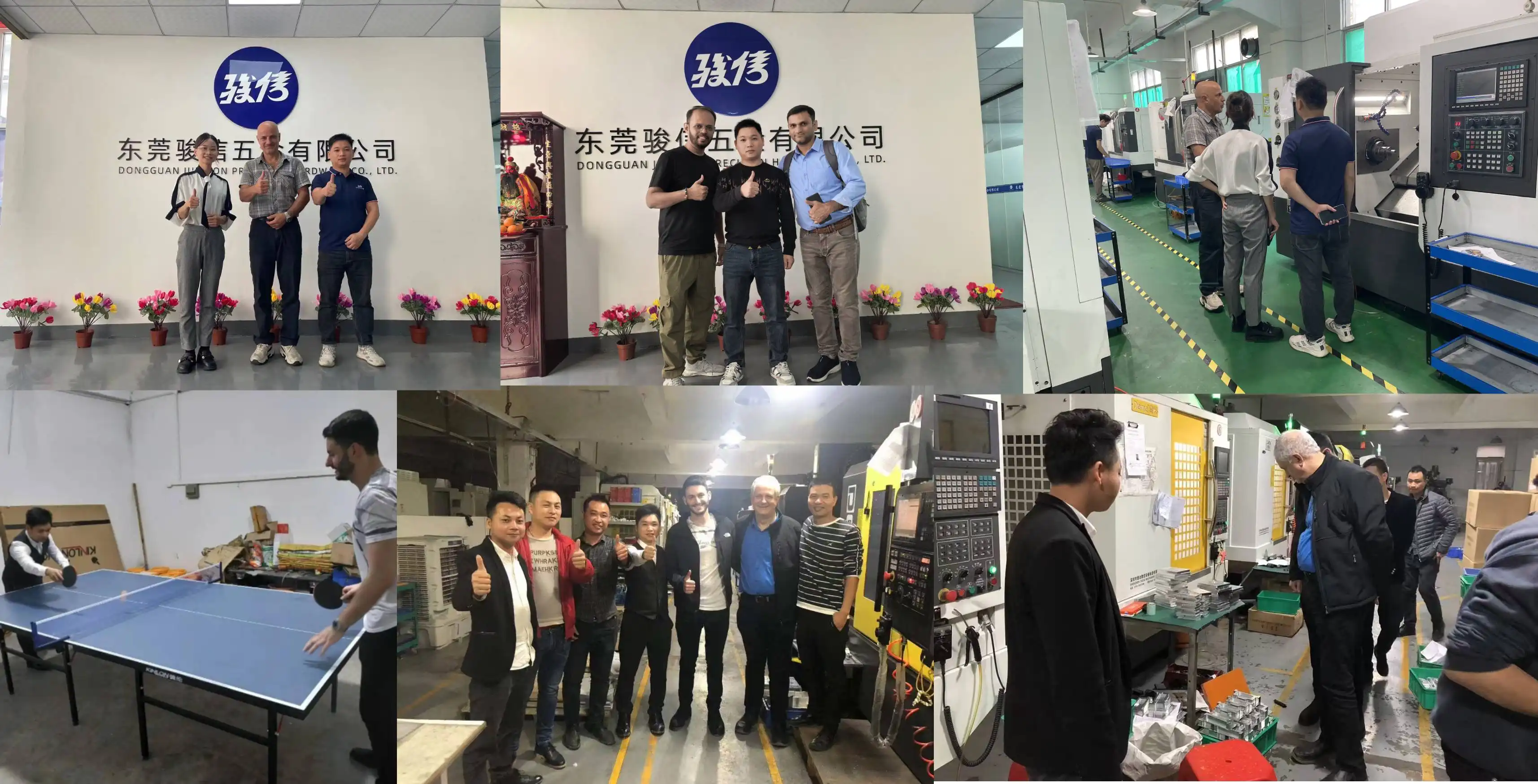
At Dongguan Junsion Precision Hardware Co., Ltd., we are at the forefront of this technological revolution in auto parts manufacturing. Established in 2019, our high-tech enterprise integrates research and development, production, and sales, focusing on precision hardware components. Our 1,600 square-meter facility in Dalingshan, Dongguan, houses 32 advanced CNC machines, enabling us to produce high-quality components for various industries, including automotive. We export to over 20 countries, offering fast response times and uncompromising quality assurance. For more information or to discuss your auto parts manufacturing needs, please contact us at Lock@junsion.com.cn.
FAQ
Q: How will 3D printing affect the cost of auto parts manufacturing?
A: 3D printing can potentially reduce costs by eliminating tooling expenses for small batches, enabling on-demand production, and reducing material waste.
Q: Can 3D-printed auto parts match the strength of traditionally manufactured parts?
A: With advancements in materials and printing techniques, 3D-printed parts can achieve comparable or even superior strength to traditional parts in many applications.
Q: Will 3D printing completely replace traditional auto parts manufacturing methods?
A: It's unlikely to completely replace traditional methods by 2025, but it will increasingly complement and integrate with conventional manufacturing techniques.
Q: How does 3D printing contribute to sustainability in auto parts manufacturing?
A: 3D printing reduces waste, enables the use of recycled materials, and allows for localized production, reducing transportation-related emissions.
Q: What are the main challenges in implementing 3D printing for auto parts?
A: Key challenges include ensuring consistent quality, obtaining necessary certifications, and integrating with existing manufacturing processes and supply chains.
References
1. Smith, J. (2023). "The Future of 3D Printing in Automotive Manufacturing". Journal of Advanced Manufacturing Technologies, 15(3), 234-250.
2. Johnson, A. & Lee, S. (2024). "3D Printing: Revolutionizing the Auto Parts Industry". Automotive Engineering Review, 42(2), 78-95.
3. Patel, R. (2022). "Material Innovations for 3D-Printed Automotive Components". Advanced Materials Science, 28(4), 567-582.
4. Brown, M. et al. (2023). "Quality Control Challenges in Additive Manufacturing for Automotive Applications". International Journal of Quality Assurance, 37(1), 45-60.
5. Garcia, L. & Wang, Y. (2024). "Supply Chain Disruptions and Opportunities in 3D-Printed Auto Parts". Journal of Supply Chain Management, 19(3), 301-318.
6. Thompson, K. (2023). "Sustainability and Circular Economy in 3D-Printed Automotive Components". Green Manufacturing Quarterly, 11(2), 123-140.