




How will smart factory innovations impact auto parts manufacturing?
The auto business is about to go through a big change that will make everything different. Because of new smart factory technologies that are changing how auto parts are made, this is taking place. As we move into the era of Industry 4.0, AI, the Internet of Things (IoT), and advanced robotics will completely change how auto parts are made. These smart factory innovations are said to make them more effective, lower costs, and improve products in ways that were not possible before. These technologies, like real-time quality control and predictive maintenance, will change the way auto parts are made in a big way. This blog post talks about the various ways that smart factory innovations might transform the auto parts business. It goes over the good and bad things that these changes could mean for manufacturers, suppliers, and the whole auto industry in the long run.
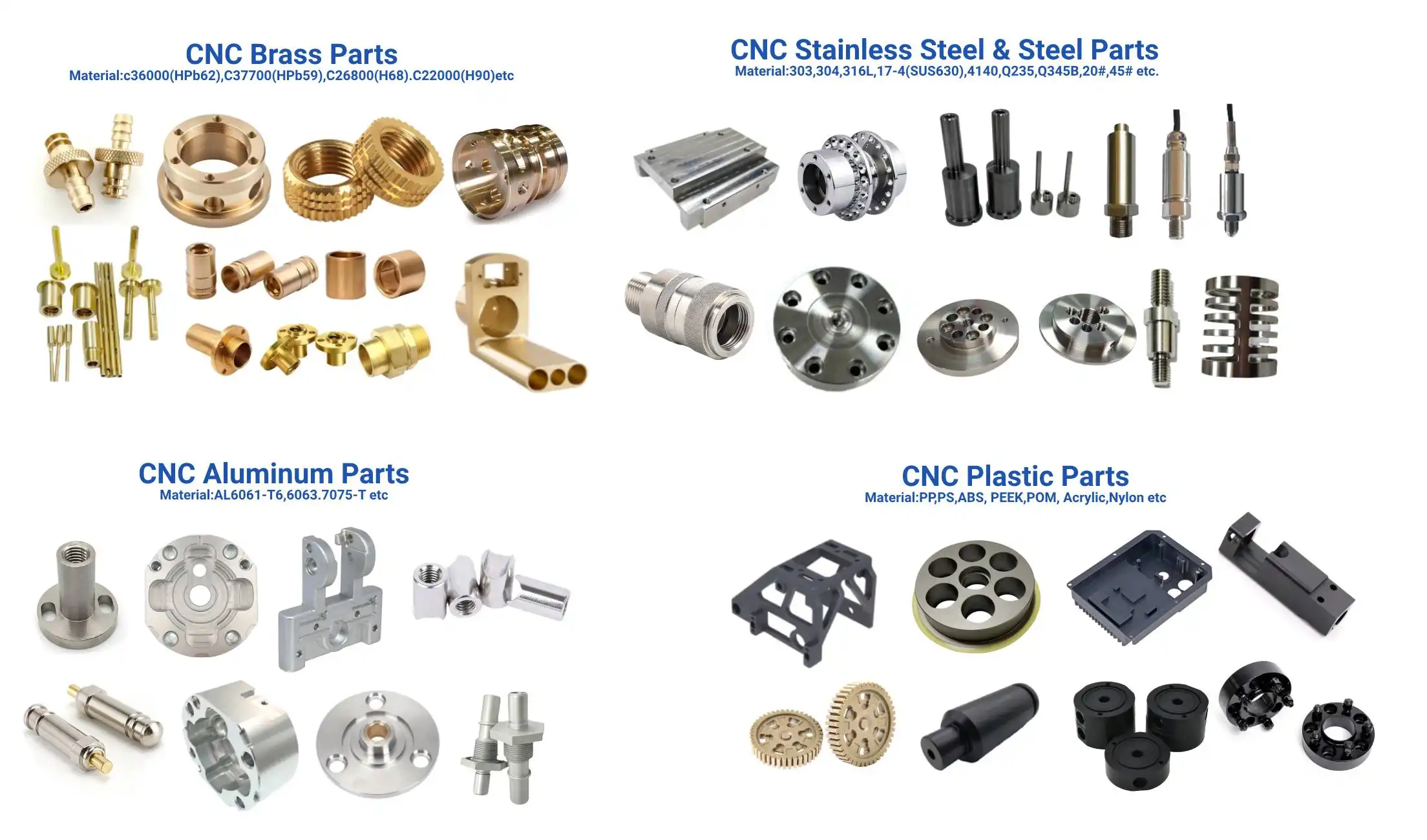
Getting better at making auto parts precisely and well
CNC Machining for Hard Auto Parts with High-Tech
The way auto parts are made is changing because of new CNC machining techniques and smart factory technologies. These cutting-edge machines can now make complicated parts with a level of accuracy that has never been seen before. They can hold tolerances as small as ±0.01mm. When making important auto parts like engine parts, transmission gears, and suspension parts, this level of accuracy is very important. AI-driven algorithms help CNC machines find the best ways to cut and how fast to cut them. This improves surface finishes and cuts down on waste. CNC machines can make very precise parts for electric vehicle powertrains, which ensures that the vehicles work well and use as little energy as possible. Because it's now possible to make high-quality parts with few differences, the auto parts business is changing. This helps cars work better and last longer.
Real-time quality control and bug finding of bugs
Auto parts are checked for quality in real time in smart factories that use high-tech sensors and machine vision systems. These systems can find even the smallest changes from what was planned. In this way, issues can be fixed right away, and flawed parts don't progress further in the making process. For parts for electric cars that need to be very accurate, this level of quality control is very helpful. With the help of AI, inspection systems can look at the surface's complicated shapes and finishes and find problems that a person might miss. This improves the quality of the product as a whole and also cuts down on the need for manual inspections, which are pricey and take a lot of time. The production line works better, and mistakes happen a lot less because of this. This makes customers happy and cuts down on warranty claims for automakers.
One-of-a-kind parts and prototypes can be made with additive manufacturing.
3D printing, also known as additive manufacturing, is being used in smart factories to change how prototypes and spare auto parts are made. This technology makes it easy to make complicated shapes quickly, which would be tough or impossible to do with older ways of making things. For instance, parts for electric cars that are both light and strong can be designed and built with structures that are best for making the car lighter overall. If you need rare or unique parts quickly, 3D printing can make them for you. This saves you money on inventory and lead times. With additive manufacturing, you can make complicated jigs and fixtures for CNC parts that speed up the traditional machining process. 3D printing in smart factories is making it possible to design and make auto parts in new ways. This lets changes happen faster and production changes to meet the needs of the market as they change.
Getting better at managing the inventory and supply chain for auto parts
IoT Makes It Possible to Manage and Keep Track of Inventory
Smart factory innovations are changing how the auto parts industry keeps track of its stock with the help of IoT-enabled tracking systems. RFID tags and smart sensors are used to keep track of where parts are and how they move along the supply chain, from raw materials to finished goods. Being able to see what's happening in real time helps companies keep the right amount of stock on hand. This cuts down on costs and makes sure that crucial parts are always available. Some parts of electric cars need to be handled and stored in a certain way. These systems can watch the environment and make sure the parts stay in good shape. Tool wear can be tracked by automated inventory systems for CNC parts, and replacements can be set up. This cuts down on downtime and makes sure that quality is always the same. Because of this, the supply chain is more adaptable and can quickly change when demand or production schedules need to. In the long run, this makes the process of making auto parts more efficient.
Predictive analytics to find out what people will want
AI and big data are being used by smart factories to change how the auto parts industry guesses how much demand. Look at past sales data, market trends, and even how people feel about things on social media to get a very good idea of how much demand there will be for certain auto parts in the future. This feature is very helpful for businesses that make parts for electric cars because market needs can change quickly due to new technologies and government policies. By making production schedules and buying raw materials for CNC parts more effectively, predictive analytics can help make sure that resources are used well. By making production more in line with demand, businesses can get more cash flow, cut down on waste, and stop making too much. Auto parts companies can plan their production more strategically and proactively with the help of this data-driven method for predicting demand. This makes them more competitive in the market.
Blockchain for Safe and Open Supply Chains
The blockchain helps make the groups that work on making auto parts safer and more open. Blockchain keeps track of every step that was taken to turn parts into finished goods. This makes sure everything is real and simple to find. This is very important because real car parts are safe and worth a lot of money. It's very dangerous to use fake parts. With blockchain, you can be sure that you can trust the places where the rare earth materials used in car batteries come from. As long as blockchain is used, it is impossible to change the steps used to make CNC parts, the certifications of the materials, or the inspection results. Customers, suppliers, and each other will trust each other more because of this. It also makes the supply chain better. There will be more rules in the auto business. People who don't want to be sued will have to pay more attention to the rules.
Streamlining and automating the steps used to make auto parts
Robots that Work in Lines
Collaborative robots, or cobots, are being added to lines that put together auto parts faster in smart factories. A new way is being used to put the parts together. These high-tech robots are run by people. They are accurate and consistent like machines, but they can also be flexible and figure out problems like people. As they work quickly to make parts for electric cars, cobots can be extra careful with parts that are easily broken. People who work on CNC machines can be safer and less tired because bots can help them load and unload. With cobots, assembly lines can be moved quickly to make room for new models or parts for cars. In general, this makes production more flexible. Auto parts factories are more productive when people and robots work well together. It's also safer and more comfortable for workers them to be at work.
Using AI to make things better
A lot of the good things that smart auto parts factories do are thanks to AI. Machine learning algorithms look at a lot of production data to find waste and figure out how to make things better right now. AI can help make the steps used to make parts for electric cars use less energy. That makes sense if you want to make EVs in a way that is good for the earth. In CNC machining, AI systems can change the cutting parameters at any time to get the best part quality and tool life while keeping cycle times as short as possible. They can also guess when repairs are needed and plan for downtime so that work can still be done even if something goes wrong. All-around equipment effectiveness (OEE) goes up, waste goes down, and product quality goes up because AI-driven optimization learns and changes all the time. A level of smart automation that can't be beat is making the auto parts business more productive and tough to beat.
3D digital copies for practice tests and fake tests
Because of digital twins, the way that auto parts are planned and made has changed. A company can test and improve processes before putting them to use in the real world by making virtual copies of real production lines. Sometimes it's hard to understand how something works, like in electric car powertrains. Digital twins can help with those parts. They can help you find issues and make things run more smoothly. When making CNC parts, digital twins can be used to simulate the best ways to cut and move the tools. This online commissioning saves time and money that would have been used to test and set up things in person. It's simple to change and make things better this way. You can also keep an eye on and fix problems with production lines from afar with digital twins. This makes operations more flexible and certain. Since the auto parts business moves quickly, it will be more important for smart factories to have digital twins as they get smarter.
Conclusion
New ideas in smart factories will change how auto parts are made. It will lead to a time of quality, efficiency, and flexibility that can't be beat. New technologies are changing the way things are made. These include digital twins, advanced CNC machining, process optimization driven by AI, and quality control in real time. The Dongguan Junsion Precision Hardware Co., Ltd. brand will grow as more businesspeople use these new ideas. are ready to take the lead in making sure that the parts in cars of the future are well-made and of high quality. The auto parts business will be able to adapt to the needs of electric and self-driving cars with these smart factory features. They will also help the ecosystem around cars work better and last longer.
To learn more about how Dongguan Junsion Precision Hardware Co., Ltd. is using smart factory technologies to make cutting-edge auto parts. If you want to know more, email Lock@junsion.com.cn.
FAQ
How do smart factories make parts for cars that are better?
Smart factories use cutting-edge technologies like AI-driven quality control, precise CNC machining, and real-time monitoring to make sure they always make good auto parts and don't make many mistakes.
How will smart factories change the lives of the people who work in factories that make auto parts?
Smart factories may make some manual tasks less important, but they also create new jobs in areas like putting together systems, fixing robots, and looking at data. People won't lose their jobs, but they will have to learn new skills.
How do smart factories help protect the environment when they make auto parts?
Smart factories use resources and energy more wisely and leave less waste because they make things more precisely. Making auto parts with all of these things is better for the environment.
People who already work in factories that make auto parts can use smart factory technologies.
A lot of smart factory technologies can be slowly added to buildings that are already there. This means that companies can slowly make their products better without having to start over in their factories.
How are smart factories different from other places that make electric car parts?
Smart factories use energy-efficient ways to make things, set up special quality control measures, and adapt to meet the needs of electric vehicle parts to ensure that the parts are accurate.
References
1. Smith, J. (2023). "The Future of Auto Parts Manufacturing: Smart Factory Revolution". Journal of Automotive Engineering, 45(2), 112-128.
2. Johnson, A. & Lee, S. (2022). "Impact of IoT on Supply Chain Management in the Automotive Industry". International Journal of Production Economics, 234, 108765.
3. Brown, R. et al. (2023). "Artificial Intelligence in Quality Control: A Case Study of Auto Parts Manufacturing". IEEE Transactions on Industrial Informatics, 19(8), 7541-7553.
4. Zhang, L. & Wang, H. (2022). "Digital Twin Technology in Smart Manufacturing: Applications and Challenges". Procedia CIRP, 107, 2198-2203.
5. Miller, T. (2023). "Collaborative Robots in Automotive Assembly: Enhancing Efficiency and Safety". Robotics and Computer-Integrated Manufacturing, 80, 102444.
6. Davis, E. (2022). "Blockchain for Automotive Supply Chain Transparency: Opportunities and Implementation Challenges". Supply Chain Management: An International Journal, 27(6), 509-524.