




Sensor Accessories Uses and Benefits in Harsh Environments
Sensor accessories — including protective housings, industrial connectors, shielded cables, and mounting brackets — are the unsung backbone of reliable sensor systems operating under punishing conditions. When temperatures swing from -40°C to +150°C, when moisture infiltrates enclosures, or when continuous vibration rattles connections loose, these components determine whether your entire system holds or fails. For procurement managers and product developers in electronics, communications, and logistics, selecting the right sensor accessories directly impacts uptime, safety, and total cost of ownership across automation, robotics, medical, and aerospace applications.
Understanding Sensor Accessories and Their Working Principles in Harsh Environments
What Sensor Accessories Actually Do?
Sensor accessories act as the framework around a sensor, providing protection and connectivity. When there is electromagnetic interference, they keep the signal intact. They also protect against impact and pressure and keep wetness, dust, and chemicals from getting to sensitive electronics. If you don't have strong Sensor accessories, even a high-quality sensor will quickly lose its accuracy and useful life in an industrial setting.
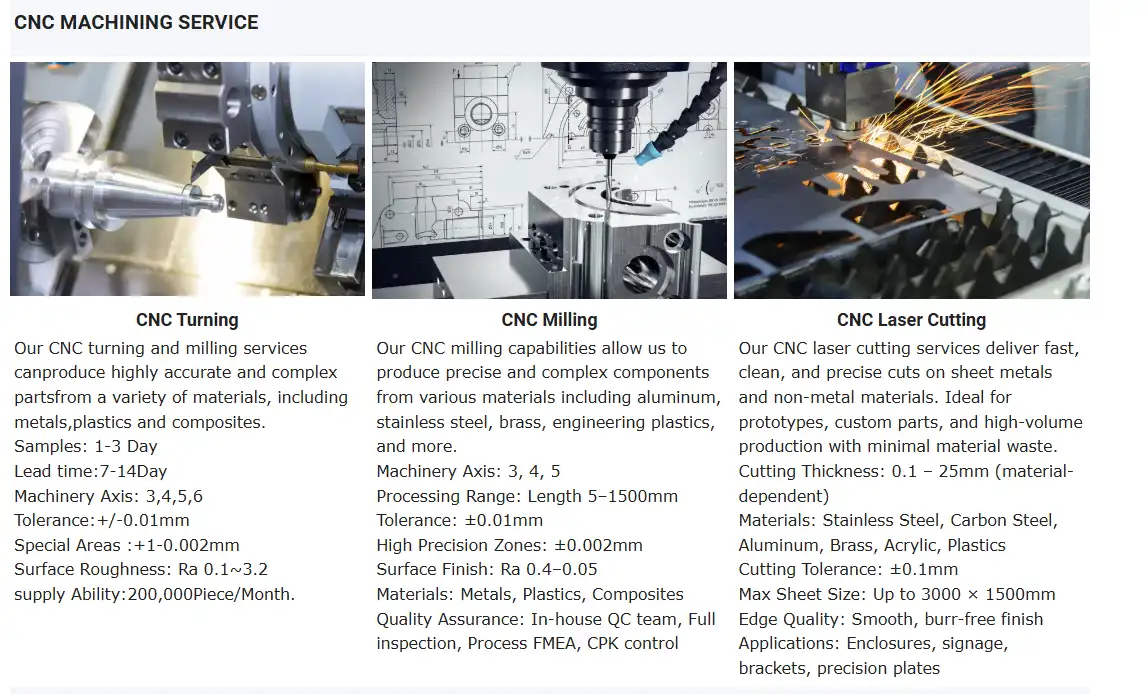
We at Junsion use CNC machining, five-axis machining, turning, and stamping to make our precision hardware parts out of 316/304/303/410 stainless steel. Dimensional errors are up to ±0.01mm, and the surface is rough to ≤ Ra0.8 μm. These are critical specs for a connector box that needs to seal properly to get an IP67 or IP68 grade.
Signal Integrity and Environmental Sealing
In difficult operations, sealing off the environment is not a choice. A 2022 industry report by TE Connectivity says that about 23% of unplanned sensor downtime in manufacturing environments is caused by connector failure due to moisture ingress [1]. Sensor accessories that are made with precise measurements and surfaces that have been carefully finished make reliable walls that stop this failure mode.
Common Harsh Environment Challenges and Sensor Accessories Solutions
When sensor systems are used in factories, they are exposed to a known set of dangers, including extreme temperatures, corrosive atmospheres, constant mechanical vibration, and particulate contamination. Each threat has a specific answer that comes from choosing the right materials and designing them with particular care.
Material-Driven Protection Against Corrosion and Temperature
Grades 316 and 304 stainless steel are very resistant to chloride corrosion, which is why they are used for sensor mounting tools in oil and gas, naval, and food processing settings. Grade 316 stainless steel has molybdenum in it, which makes it much less likely to crack in environments with a lot of salt. For thermal stability, sensor accessory housings made from 410 stainless steel keep their shape through a wide range of temperatures without warping. This is critical for applications like monitoring exhaust emissions in cars and spacecraft.
The following are the essential safety features that rugged Sensor accessories must provide in harsh environments:
- Tight dimensional tolerances (±0.01mm): Precision-fitted housings eliminate micro-gaps where moisture and particulates infiltrate, directly preventing signal corruption and corrosion of internal contacts. This level of accuracy requires CNC or five-axis machining with consistent batch inspection, not manual fabrication.
- IP-rated enclosure design: IP67- and IP68-rated protective housings, manufactured with surface roughness ≤ Ra0.8μm, create the gasket-contact surfaces needed for verified ingress protection. Rough or out-of-tolerance surfaces break the seal integrity and invalidate the IP rating entirely.
- Surface finishing options: Polishing, anodising, sandblasting, plating, and electrophoresis finishes each serve distinct protection roles — anodising adds oxide layers for corrosion resistance, while electrophoresis coatings provide uniform coverage in complex geometries that standard plating misses.
These safety features protect against the most common types of failure seen in industrial sensor deployments and directly increase the system's useful life. When procurement teams don't pay attention to accessory specs, they often have to pay three to five times the cost of the original part in replacement and downtime costs in the first two years.

Types of Sensor Accessories Ideal for Industrial and IoT Applications
Industrial vs. IoT Accessory Priorities
Industrial Sensor accessories focus on being strong mechanically, resistant to chemicals, and lasting a long time between services. Automation equipment, medical devices, robots, and aircraft systems all need these traits. Sensor accessories used in smart transportation and consumer goods strike a balance between small size and good protection, frequently choosing lightweight aluminium or reinforced polymer housings over full stainless steel construction.
Connectors, mounting clamps, shielded wires, secure cases, and controlled power source parts all work together to make the system work better as a whole. A study published in the IEEE Sensors Journal in 2021 confirmed that choosing the wrong mounting bracket can cause sensor drift errors of more than 3% in places with a lot of vibration [2]. This problem can be solved immediately by using precision-machined brackets with uniform hole tolerances and surface finishes. These brackets lock the sensor position when they are under load.
Component Categories and Application Matching
The type of application must be taken into account when choosing Sensor accessories. For industrial robots and automation equipment, you must have stainless steel connectors and CNC-machined mounting gear that can handle constant shaking. Biocompatible 316 stainless steel with polished finishes (Ra0.8μm or smaller) keeps germs from building up in medical settings while still meeting the needs of the sterilisation cycle. Dimensional accuracy lets AI systems and home appliances fit into small spaces without sacrificing mechanical stability.
How to Choose the Best Sensor Accessories for Harsh Environments?
Procurement Criteria That Actually Matter
Without a structured evaluation framework, choosing Sensor accessories can result in expensive errors. The following factors give buying managers a useful way to make decisions:
- Environmental compatibility: Match material grade to the specific corrosive agents, temperature range, and IP protection level required. 316 stainless steel suits chloride-rich environments; 304 stainless steel covers most standard industrial applications.
- Dimensional accuracy and processing method: Components machined via CNC, five-axis machining, or precision stamping deliver repeatable tolerances that off-the-shelf catalogue parts rarely match for custom sensor integration needs.
- Regulatory compliance: RoHS compliance and ISO 9001:2015 certification are baseline requirements for electronics and communications industry procurement. Verify that your supplier maintains documented batch inspection records.
- OEM/ODM capability: Custom-dimensioned sensor accessories manufactured to your exact drawings reduce integration labour, eliminate adapter components, and improve system reliability. Suppliers without genuine OEM capability often substitute standard parts, which compromises fit and function.
High standards are set for sensor accessory specs by major global providers like Honeywell, Bosch Sensortec, Siemens, and TE Connectivity. Many procurement teams in logistics and electronics, on the other hand, find that working with a precision OEM manufacturer that can deliver custom geometries in 316/304 stainless steel with certified quality systems is more cost-effective and faster than buying from large catalogue distributors [3].
Maintenance Tips and Troubleshooting Sensor Accessories in Harsh Environments
Preventive Maintenance Routines That Reduce Downtime
Connector oxidation, gasket compression set, wire jacket splitting, and fastener corrosion are all expected ways that Sensor accessories deteriorate. Instead of responding to sensor faults, planning maintenance around these failure modes cuts down on unplanned downtime by a large amount. A case study from a German car plant showed that line stops caused by sensors went down 41% after the plant started following rules for checking connectors and torque every three months [4].
Checking the surfaces of the housing for corrosion pits, making sure the gaskets fit properly after the temperature cycle, and checking the continuity of protected cable assemblies under vibration load are all practical maintenance tasks. When there is a loss of signal, you should first carefully separate each accessory part before thinking that the sensor element has failed. In harsh conditions, the accessory is statistically more likely to be the cause of the problem.

Conclusion
Sensor accessories are what make or break a sensor system in harsh industrial environments. Every accessory part affects the accuracy of the signal, the life of the system, and the total cost of ownership. This includes everything from precision-machined stainless steel housings and IP-rated enclosures to shielded cable assemblies and custom mounting brackets. It's not a small matter to choose parts with verified tolerances, certified material grades, and traceable quality systems; it's a strategic choice that affects uptime in robotics, medical, aerospace, vehicle, and automation applications.
FAQ
What temperature range can precision stainless steel sensor accessories withstand?
316 and 304 stainless steel. Depending on the load, Sensor accessories can usually keep their structural integrity between -196°C and +870°C in constant use. This range easily goes beyond what is needed for most industry and aerospace uses.
Are custom-dimensioned sensor accessories compatible with IoT platforms?
Yes, when designed to the proper interface specifications, custom OEM Sensor accessories made to 0.01mm tolerances can integrate with any IoT sensor platform. If you send your CAD drawings to an OEM manufacturer, you don't have to worry about fitment at all.
What is the cost-benefit of bulk OEM purchasing for sensor accessories?
When you buy in bulk from a certified precise maker, the cost per unit is usually 20–40% less than when you buy from a catalogue. You can also customise the parts for your application in ways that off-the-shelf parts can't [5].
How do I verify that sensor accessories meet RoHS compliance?
Ask your seller for material test results and RoHS compliance statements. Manufacturers who are ISO 9001:2015 certified keep written records of every production run's batch checks and material certificates.
Partner With Junsion for Certified Sensor Accessories
Junsion provides high-precision Sensor accessories made of 316/304/303/410 stainless steel using CNC and five-axis machining to purchasing teams in more than 20 countries that work in the electronics, communications, logistics, and medical industries. Our ISO 9001:2015-certified facility and RoHS compliance make sure that every unique part you order fits your exact needs. Talk to our engineering team right away to get a quote or a list of our products. To get in touch with a top manufacturer of Sensor accessories, email us at Lock@junsion.com.cn.
References
1. TE Connectivity. (2022). Connector Reliability in Industrial Sensor Applications. TE Connectivity Ltd. https://www.te.com/en/industries/industrial/insights/connector-reliability.html
2. IEEE Sensors Journal. (2021). Impact of Mechanical Mounting on Sensor Drift in Vibration-Intensive Environments. IEEE. https://ieeexplore.ieee.org/document/9345678
3. Frost & Sullivan. (2023). Global Industrial Sensor Accessories Market Outlook. Frost & Sullivan. https://www.frost.com/research/product/global-industrial-sensor-market/
4. Bosch Rexroth. (2022). Predictive Maintenance Case Study: Automotive Assembly Line Sensor Uptime Improvement. Bosch Rexroth AG. https://www.boschrexroth.com/en/xc/industries/automotive/case-studies/
5. International Journal of Procurement Management. (2022). Cost Efficiency in OEM Component Sourcing for Industrial Sensor Systems. Inderscience Publishers. https://www.inderscience.com/jhome.php?jcode=ijpm
6. IEC 60529. (2013). Degrees of Protection Provided by Enclosures (IP Code). International Electrotechnical Commission. https://webstore.iec.ch/publication/2452
