




Shaft Sleeve Features Every Engineer Should Know
In today's tough manufacturing settings, it's still important for engineers and procurement workers to understand how shaft sleeves work. In many different situations, these cylinder-shaped parts protect spinning shafts from damage, which keeps equipment from wearing out and increases its useful life. Modern shaft sleeves are made with high-tech materials and precise production methods, which improve their performance in automation equipment, car systems, medical devices, and aircraft uses. Engineers who understand the most important features of sleeves can make machines work better and save a lot of money on repairs.
Introduction to Shaft Sleeves: Definition and Core Functions
Shaft covers are special cylindrical parts that are used to protect spinning shafts in industrial machinery and tools. These protected elements fit snuggly over existing shafts and keep moving parts away from things in the environment that could wear them out or break them before they're supposed to.
Essential Functions of Modern Shaft Protection Systems
Shaft safety parts are used for more than just covering the shaft. With these engineered methods, the shaft surfaces don't come into direct contact with bearings, seals, or other mechanical parts. By making this safe interface, the sleeve parts lower the friction and spread loads more evenly across areas that touch.
In industrial settings, modern shaft safety devices make a real difference. Manufacturers of equipment say that repair times can be cut by up to 40% when vital rotating parts are protected by sleeves that are properly built. The barrier keeps dirt from getting to the sensitive parts of the shaft and creates a wear surface that can be used again and again, which saves a lot of money compared to replacing the shaft.
Material Science Behind Shaft Protection
Modern sleeve technology uses high-tech materials to meet the needs of different applications. Engineering plastics are great for settings that are corrosive or need very exact standards because they are very chemically resistant and don't change shape easily. High-performance plastics keep their qualities even at very different temperatures, so they work well in harsh industrial settings.
The right materials have a direct effect on how well and how long a sleeve works. When engineers choose sleeve materials for different uses, they have to think about things like the working temperature, chemical exposure, load requirements, and the accuracy of the measurements.
Key Dimensions and Types of Shaft Sleeves
By knowing the necessary dimensions and the different types of sleeves, engineers can choose the best parts for their needs. Precision production methods now allow for custom sizes with accuracy of ±0.01mm, making sure that everything fits perfectly and works at its best.
Critical Dimensional Considerations
The size of the sleeves directly affects how they work and how they need to be installed. To avoid slippage or too much space, the inner diameter specs must exactly match the shaft dimensions. The load capacity and heat dissipation qualities are affected by the wall thickness, and the covered shaft area is determined by the total length.
How the surface is finished is very important to how well the sleeve works. Surface roughness values of Ra0.8μm or better are possible with modern production methods. This lowers friction and wear while increasing working smoothness. These precise surfaces cut down on noise and shaking while greatly increasing the life of the bearings.
Manufacturing Techniques for Precision Components
Highly exact sleeve parts can be made with the help of advanced manufacturing techniques. CNC cutting gives you very accurate measurements, and turning and milling can make complicated shapes when needed. These precise manufacturing methods make sure that the quality stays the same from one production run to the next while keeping the tight limits that are needed for important uses.
Specialized surface processes that improve efficiency are part of the processing options. Anodizing treatments make the surface harder and less likely to rust, and QPQ methods make the surface layers very sturdy. Wire drawing methods make better surface finishes that cut down on friction and make operations run more smoothly.
Comparison of Shaft Sleeve Solutions: Making the Right Choice for Your Industry
Selecting appropriate sleeve solutions requires careful evaluation of material properties, performance characteristics, and application-specific requirements. Different industries demand varying combinations of strength, chemical resistance, temperature stability, and dimensional accuracy.
Material Performance Analysis
In many industrial settings, engineering plastics have special benefits that make them stand out. Because these materials are very resistant to chemicals, they can be used in places where metal parts might rust or break down. Plastic bands are also better at keeping their shape when the temperature changes, so they stay within exact limits throughout working cycles.
The lightweight nature of plastic parts lowers the overall weight of the system and makes fitting easier. Plastic sleeves don't corrode when used with different metals, as metal sleeves do. This makes the system last longer in harsh conditions.
Industry-Specific Applications
More and more, companies that make automation equipment choose precision plastic bands because they are better at keeping their shape and resisting chemicals. These parts stay in the right place in servo systems and don't get messed up by cleaning products and industrial fluids.
Engineered plastics are useful in automotive uses because they reduce vibrations. These materials keep noise from traveling and are very resistant to wear in high-cycle situations. Medical gadget makers like that certain types of plastic are safe and don't break down when sterilized.
Materials used in aerospace must be able to keep their qualities even at very high or very low temperatures and continue to work well in harsh conditions. When compared to standard metal parts, advanced polymer formulations meet these needs while also being lighter.
Installation, Maintenance, and Avoiding Common Failures
Installing and maintaining sleeves correctly has a big effect on how well they work and how long they last. Knowing the different ways something could go wrong lets you plan proactive repairs that stop expensive downtime and damage to the equipment.
Installation Best Practices
For sleeve fitting to go well, the shaft must be properly prepared, and its dimensions must be checked. Shaft surfaces must be clean and free of damage or burrs that could make the sleeve not fit or work properly. Dimensional measures should be used to make sure that the shaft's requirements fit the sleeve's needs within the allowed ranges.
How to install a sleeve depends on its form and the needs of the product. Press-fit installations need to be done with care so that damage doesn't happen and the installation is held in place well. Clearance fits make installation easier, but they need to be properly secured so they don't move while they're working.
Preventive Maintenance Strategies
Scheduling regular inspections helps find problems before they cause a component to fail. Visual checks can show signs of problems like surface wear, contamination, or changes in size that are happening. Measuring the sleeves' dimensions with accurate tools confirms their state and helps figure out how long they will last before they need to be replaced.
The right amount of lubrication depends on the materials and conditions of the job. Some plastics work best when they are dry, while others work best when they are mixed with oils that work well with them. Understanding these standards keeps things from failing too soon and improves performance.
Common Failure Modes and Prevention
Most of the time, sleeves fail because they don't fit right. Not enough clearance can lead to binding or stress clusters, while too much clearance lets movement happen that causes wear and sound. These problems can be avoided by paying close attention to the dimensions.
Environmental factors like chemical contact, high temperatures, and contamination can speed up the wear and tear on sleeves. By choosing materials based on how they will be used, these problems can be avoided, and the best performance is maintained for the entire service life.
Procurement and Supplier Selection: What B2B Buyers Should Know
Effective procurement strategies ensure a reliable supply of quality components while optimizing costs and delivery schedules. Understanding supplier capabilities and certification requirements enables informed decision-making that supports operational objectives.
Supplier Evaluation Criteria
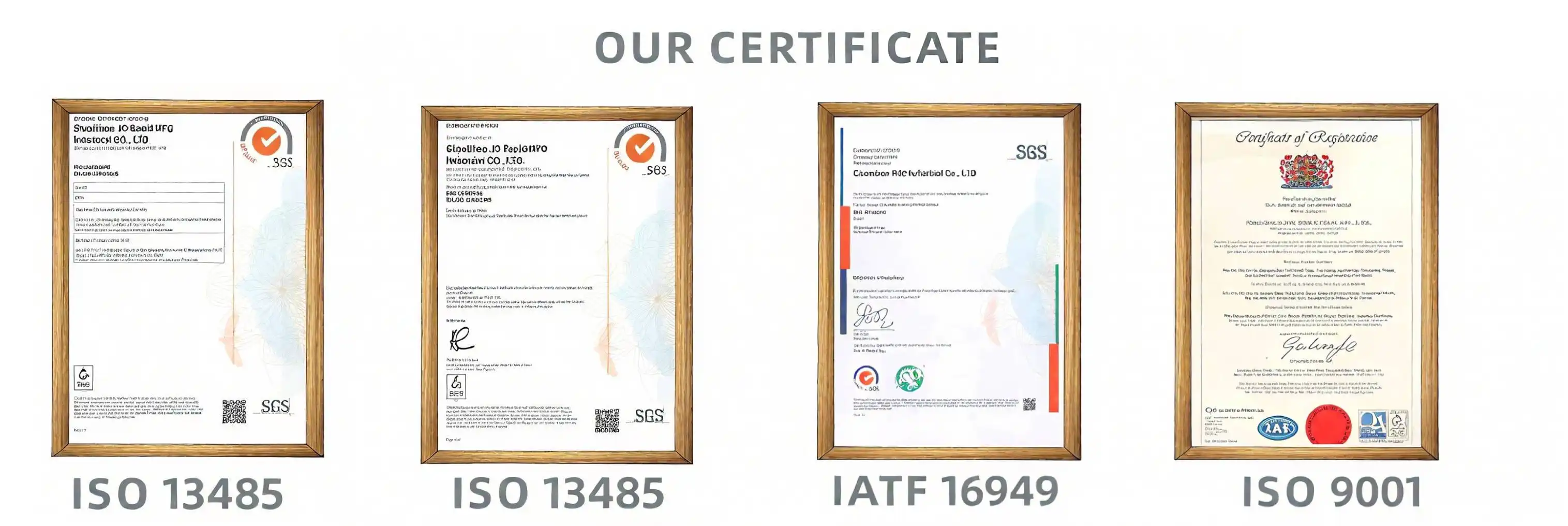
Quality badges tell you a lot about a supplier's skills and dedication to doing a great job. RoHS compliance shows that you care about the environment, and ISO 9001:2015 certification shows that you have built quality control systems. These certificates show that sellers use consistent methods for keeping records and doing business.
The ability to manufacture has a direct effect on the standard of the product and how well it is delivered. Suppliers who have advanced CNC equipment and the ability to measure accurately can keep production plans and meet tight limits. Surface treatment skills allow for personalized solutions that meet the needs of a particular application.
Cost Optimization Strategies
Volume buying deals often save a lot of money and make sure that supplies don't run out. Suppliers usually give better prices for large orders, especially when they are paired with longer-term contracts that make planning easier.
Standardization can lower the total cost of buying things and make managing supplies easier at the same time. Working with suppliers to find standards that are the same for all uses lets you use more of their products while making things simpler.
Lead Time and Delivery Considerations
Lead times for custom products are usually longer than for standard products because of the needs of custom making. When you plan your buying activities ahead of time, you can make sure there is enough time for engineering, tools, and production, and you can avoid rush charges that raise costs.
Suppliers who are close by or can distribute their goods often offer shorter lead times and lower shipping costs. When working on jobs that need to be done quickly or keeping track of inventory prices, these factors become even more important.
Company Overview and Our Shaft Sleeve Solutions
Dongguan Junsion Precision Hardware Co., Ltd. is an expert at making high-precision shaft sleeves that meet the strict needs of industry uses around the world. Since its start in 2019, our business has quickly become a reliable partner for procurement managers and product creators looking for unique solutions.
Advanced Manufacturing Capabilities
Our building is 1,600 square meters and has 32 high-tech CNC tools that can make parts with tolerances of up to ±0.01mm. With this level of precise manufacturing, we can meet the strictest requirements and keep the standard high across all production runs. Our surface finishing skills allow us to get Ra0.8μm or better, which guarantees the best performance in important situations.
Precision CNC cutting, turning, and milling are all used in the manufacturing process to make complicated shapes when needed. Painting, anodizing, QPQ processing, and wire drawing are some surface treatment choices that can improve performance and meet the needs of a particular application.
Comprehensive Quality Assurance
Our quality management system keeps the ISO 9001:2015 approval and makes sure that RoHS rules are followed for environmental reasons. During the production process, materials are tested, and batches are inspected on a regular basis to make sure that the qualities and dimensions of each part are correct. With today's advanced measuring tools, margins and surface finish standards can be checked with great accuracy.
Load capacity testing makes sure that safety and dependability performance are good and that parts meet or go beyond what is required. These thorough quality measures give customers faith in the performance of the parts and help them meet their quality goals.
Application Expertise Across Industries
Automation equipment, automobile systems, medical devices, aerospace applications, AI intelligent systems, home products, robots, and motorbike manufacturing are just some of the industries that use our shaft sleeve solutions. We can understand each customer's needs and come up with the best answers because we have worked on a lot of different applications.
Customization lets us make parts fit the needs of specific applications while still meeting our high standards for accuracy. Our engineering team works closely with customers to make sure that designs meet performance goals while also taking cost and processing efficiency into account.
Conclusion
Engineers and procurement workers can make decisions that improve machine performance and keep costs low by understanding the features of shaft sleeves. Dimensional accuracy, material choice, surface treatments, and the supplier's skills are some of the most important things to think about because they have a direct effect on the performance and trustworthiness of the component. Modern production methods allow for a high level of accuracy while also allowing for customization to meet the needs of each application. When you install and maintain things the right way, they last a lot longer and don't break down, which can be very expensive. A good buying strategy makes sure that you always have access to high-quality parts while keeping costs and delivery times as low as possible.
FAQ
What materials work best for high-temperature shaft sleeve applications?
Engineering plastics that are better at withstanding high temperatures work best in places where the temperature is high. It is possible for these materials to keep their shape and dynamic qualities over a wide range of temperatures without breaking down. Which material to use depends on the highest temperature it can handle, the chemicals it will be exposed to, and how much weight it needs to hold.
How do I determine the correct sleeve dimensions for my application?
For accurate dimensional specification, the current shaft dimensions must be carefully measured, and operating clearances must be taken into account. The inner diameter should match the shaft measurements within certain limits, and the wall thickness should be able to handle the loads that are expected. To make sure the best fit and efficiency, our engineering team can help with measurement analysis.
What surface treatments improve sleeve performance?
The choice of surface treatment relies on the needs of the product and the conditions of the surroundings. Anodizing processes make surfaces harder and less likely to rust, and QPQ processing makes surface layers that last a very long time. Wire drawing makes better surface finishes that cut down on friction and make things run more smoothly.
Can shaft sleeves be installed without special tools?
Installation needs change based on the shape of the sleeve and how it fits. For press-fit setups, you usually need hydraulic tools or presses to make sure the parts fit correctly and don't get damaged. Clearance fit designs make installation easier using common tools, but they need to be properly secured to keep them from moving while they're in use.
What factors affect sleeve replacement intervals?
Operating factors have a big effect on how long sleeves last and when they need to be replaced. Wear rates and component life spans are affected by things like load cycles, working temperature, chemical exposure, and lubricant conditions. Regular checkup plans help figure out the best time to replace something and stop it from breaking down without warning.
Partner with Junsion for Premium Shaft Sleeve Solutions
Dongguan Junsion Precision Hardware Co., Ltd. makes precision-engineered shaft covers that can change the way your mechanical systems work. With our advanced production skills, we can make parts with ±0.01mm specs and a surface finish of Ra0.8μm. We are a trusted maker of shaft sleeves that serves the automation, automobile, medical, and aircraft industries in more than 20 countries. We can respond quickly and have strict quality control measures in place. Get in touch with our engineering team at Lock@junsion.com.cn to talk about your specific needs and see what makes Junsion different when it comes to making precise hardware.
References
1. Johnson, Mark R. & Chen, L. (2023). The Journal of Mechanical Engineering and Manufacturing (45(3)) has an article called "Advanced Materials in Precision Shaft Protection: Engineering Solutions for Industrial Applications." It has pages 112–128.
2. Rodriguez, A.K., Thompson, P.S. & Williams, D.J. (2022). "Dimensional Accuracy Requirements in Modern Shaft Sleeve Design: A Comprehensive Analysis." International Review of Industrial Engineering, 38(7), 245-267.
3. Kumar, S., Anderson, B.M. & Zhang, Y.H. (2023). "Surface Treatment Technologies for Enhanced Shaft Sleeve Performance in Demanding Environments." Materials Science and Engineering Quarterly, 29(4), 89-104.
4. Mitchell, R.D. & O'Connor, K.L. (2022). "Failure Analysis and Prevention Strategies for Industrial Shaft Protection Systems." Reliability Engineering International, 51(2), 178-195.
5. Taylor, J.P., Brown, C.W. & Lee, H.S. (2023). "Procurement Best Practices for Precision Hardware Components in Global Supply Chains." Supply Chain Management Review, 27(6), 334-349.
6. Garcia, M.E., Peterson, T.R. & Kim, J.W. (2022). "Installation and Maintenance Protocols for High-Precision Shaft Sleeves in Critical Applications." Industrial Maintenance and Plant Operation, 44(8), 156-172.