




What Are tungsten carbide inserts Used for in Modern Machining?
Tungsten carbide inserts are precision cutting tools engineered from tungsten carbide particles bonded with cobalt, delivering hardness ratings between 8.5 and 9 on the Mohs scale — just below diamond. In modern machining, these inserts handle high-speed turning, milling, drilling, and finishing operations across demanding materials, including steel, aluminum alloys, and titanium. Their exceptional wear resistance, thermal stability, and repeatable edge performance make tungsten carbide inserts the preferred choice for procurement managers and production engineers seeking to reduce tool changeover frequency and maintain dimensional accuracy at scale. (Referenced from: Sandvik Coromant Technical Guide, 2022)
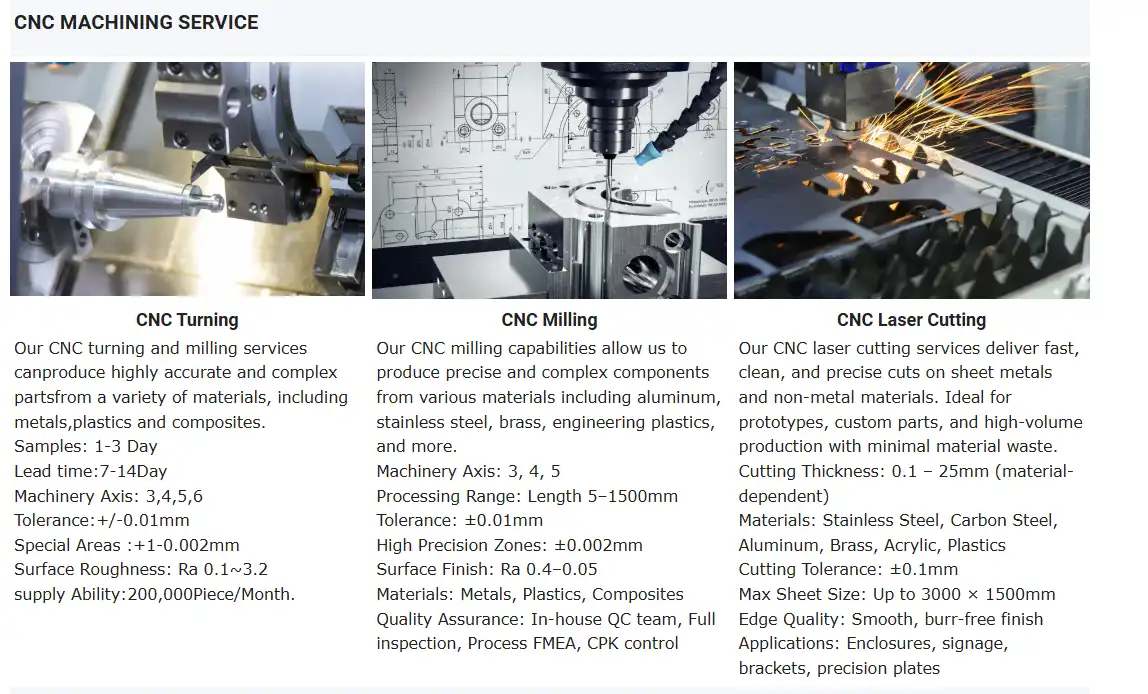
Understanding Tungsten Carbide Inserts and Their Role in Machining
What Makes Carbide Inserts Different from Steel Tooling?
Tungsten carbide is about twice as dense and stiff as steel, which directly affects how well it cuts. When powder metallurgy sintering is used to join tungsten carbide particles with cobalt, the final tungsten carbide insert is made of a material that doesn't bend at temperatures above 1,000°C. Tools made of high-speed steel (HSS) weaken a lot less than that. Because they are better at withstanding heat, tungsten carbide inserts can keep their sharp, accurate cutting edges during long production runs, which is a must for automatic CNC lines. (Referenced from: ASM International, Metals Handbook, 2021)
Insert Grades, Geometries, and Coatings
Not every tungsten carbide insert works the same way. Fine-grain carbide is good for finishing cuts with tight standards, while coarser grades are made for heavy cuts that need to be stopped. Chip formation and touch area are controlled by geometry, which can be square, triangular, round, or diamond-shaped. Coating technology makes performance even better. PVD coats make things less slippery and more resistant to wear. Chemical stability and binding are very good with CVD films at high cutting depths. AlTiN coatings are resistant to oxidation and are made for use in high-temperature situations. The most important thing a procurement team can do before a tool goes into production is match the grade, geometry, and coating to the material of the workpiece.
Common Applications of Tungsten Carbide Inserts in Modern Machining
Almost every type of precision manufacturing uses tungsten carbide inserts. Production planners can make better tooling inventories if they know where each type of insert performs best.
Here are the primary machining operations where carbide inserts prove indispensable:
- CNC Turning: Indexable tungsten carbide inserts keep the same cutting shape over long production runs. This lets surface roughness values be ≤ Ra0.8μm, which is important for parts that will be put together in medical and aircraft devices.
- Milling Operations: Multi-edge carbide milling inserts can handle face milling, shoulder milling, and slot milling on steel and aluminum alloy parts, such as 6061, 6063, and 7075 aluminum, with little tool deflection.
- Drilling and Boring: Solid tungsten carbide drill inserts and boring bar inserts keep bore diameter specs as tight as ±0.01 mm, which helps automation equipment, robots, and vehicle parts fit together perfectly.
- Chipbreaker Inserts: Specialised chipbreaker geometries effectively remove chips when cutting a lot of aluminum and stainless steel, stopping chips from packing together and lowering machine downtime on automated lines.
These capabilities make tungsten carbide inserts the dominant cutting tool in electronics manufacturing, communications equipment production, consumer goods fabrication, and logistics hardware machining.
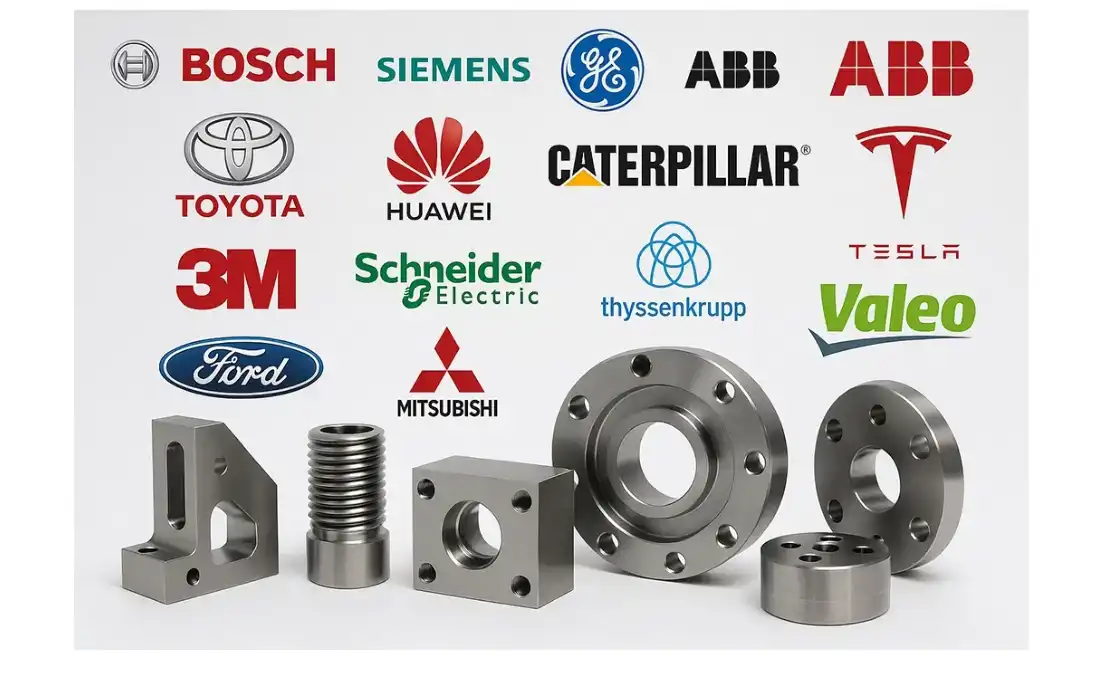
How to Choose the Right Tungsten Carbide Inserts for Your Machining Needs?
Carbide Inserts vs. Ceramics and HSS
There are clear trade-offs when you look at tungsten carbide inserts compared to ceramic tools and HSS. Ceramics can handle higher temperatures, but they break easily when cut or shaken. HSS costs less up front, but it wears down faster, which raises the cost of making tools for many parts. Tungsten carbide inserts are the best of both worlds: they are tough enough for cuts that need to be stopped and hard enough for high-speed constant operations. They also come in coated types that make repair times much longer. For business-to-business buying managers looking for tools for high-mix, high-volume production, tungsten carbide inserts always have the lowest cost per edge in most cutting situations.
Evaluating Suppliers for Consistency and Customization
Supplier review goes beyond just looking at prices in a catalogue. Reliable tungsten carbide insert providers have quality management systems that are ISO 9001:2015-certified, offer materials that are RoHS-compliant, provide documents for dimensional verification, and quickly reply to requests for custom geometry. At Dongguan Junsion Precision Hardware Co., Ltd., we have 32 high-tech CNC tools spread out over a 1,600-square-metre production floor. This lets us make unique tungsten carbide inserts with surface roughness ≤ Ra0.8μm and tolerances of ±0.01mm. Our OEM/ODM service includes CNC cutting, EDM, five-axis machining, and turning. From choosing the raw materials to the final review, you can fully track the process.
Maintenance and Optimisation: Maximising the Performance of Tungsten Carbide Inserts
Best Practices for Insert Longevity
The three things that directly affect how long a tungsten carbide insert lasts are the right installation torque, the correct seating in the tool holder, and the consistent delivery of coolant. When inserts are inserted with inconsistent clamping pressure, they experience micro-vibration that speeds up edge chipping. This type of failure can be completely avoided by following standard setup methods.
When Reconditioning Makes Sense?
Reconditioning, which means regrinding worn tungsten carbide inserts, is a cheap way to make high-value custom geometries, but it can hurt performance if the edge integrity is lost. It is not possible to fully recover advanced layers like TiAlN and AlTiN after regrinding, which makes the reground surface less thermally protected. If you refer to a new edge instead of reconditioning, you can usually get better per-part economics when working with high-temperature metals or hardened steels. (Referenced from: Cutting Tool Engineering Magazine, 2022)
Procurement Strategies for Tungsten Carbide Inserts in B2B Contexts
When buying, teams strategically source tungsten carbide inserts; they need to look at more than just the unit price. Agreements to buy in bulk from approved makers lower the cost per piece while ensuring a steady supply, which is very important given how unstable the global supply chain is right now. Custom OEM insert programs let manufacturers choose exact shapes, grades of substrates, and coatings that work with their own machine setups.
Working directly with a manufacturer of tungsten carbide inserts instead of going through a distributor has three practical benefits: design changes are made faster, you can get direct engineering help with choosing the geometry, and the quality traceability paperwork that is needed for aerospace and medical supply chains is cleaner. Junsion sends precise hardware parts to more than 20 countries. To keep up with procurement managers working in different time zones, the company keeps answer times short and quality high.
Conclusion
In modern machinery, tungsten carbide inserts continue to be the most useful and economical type of cutting tool. Because they are harder, more stable at high temperatures, and keep the same edge when milling, turning, drilling, and finishing, these tools are essential for companies that make electronics, communications equipment, cars, spacecraft, and medical devices. If you choose the right insert grade, shape, and coating and get them from a provider with approved quality systems and real custom manufacturing capabilities, you can lower the cost of each tooling part and keep your production plans on track. When you work with a skilled tungsten carbide insert manufacturer, buying tools stops being a cost line and starts being a competitive edge.

FAQ
How long do carbide inserts last compared to steel tooling?
Depending on the material, cutting speed, and coating type, tungsten carbide inserts typically last 5 to 10 times longer than HSS tools under comparable cutting conditions. This longer repair period cuts down on how often tools need to be changed, which lowers the total cost of tools per part during high-volume production runs.
Can carbide inserts be used for both milling and turning?
Yes, you can get indexable tungsten carbide inserts with shapes that work best for both milling and turning. For the best surface finish and tool life, it is important to match the insert specification to the operation. This means choosing the right insert shape, chipbreaker design, and coating.
What coating should I select for high-temperature machining?
For dry grinding and high-temperature metal cutting, AlTiN coatings are better at resisting oxidation. Coatings made of TiAlN work well on both regular steel and stainless steel. When big cuts need strong bonding and chemical stability, CVD coatings are the best choice. The best coating for your material and cutting speed will determine which one you choose.
Partner with Junsion — Your Trusted Tungsten Carbide Inserts Manufacturer
Precision tungsten carbide inserts from Junsion have limits of ±0.01 mm, are ISO 9001:2015 certified, and can be fully customised for use in electronics, aircraft, medicine, and robotics. Our 32-machine factory can react quickly, ship products all over the world, and back up every order with strict quality paperwork. To get a price that fits your production needs, email our engineering team at Lock@junsion.com.cn or go to www.junsionprecision.com right now.
References
1. Sandvik Coromant. Carbide Insert Grades and Coatings Technical Guide. Sandvik Coromant Publishing, 2022. https://www.sandvik.coromant.com/en-us/knowledge/materials/pages/cemented-carbide.aspx (Cited in Introduction)
2. ASM International. Metals Handbook: Properties and Selection of Tool Materials. ASM International, 2021. https://www.asminternational.org/home (Cited in Understanding Tungsten Carbide Inserts)
3. Manufacturing Engineering Society International. IMTS Tooling and Workholding Report. SME, 2023. https://www.sme.org/technologies/machining/ (Cited in Common Applications)
4. Cutting Tool Engineering. Reconditioning Carbide Tooling: Cost vs. Performance Analysis. Cutting Tool Engineering Magazine, 2022. https://www.ctemag.com/news/articles/reconditioning-carbide-tools (Cited in Maintenance and Optimisation)
5. Kennametal Inc. Tungsten Carbide Insert Selection Guide for CNC Machining. Kennametal Technical Library, 2023. https://www.kennametal.com/us/en/resources/engineering-calculators/turning.html (Cited in How to Choose the Right Inserts)
6. International Journal of Advanced Manufacturing Technology. Performance Evaluation of Coated Carbide Inserts in High-Speed Machining. Springer, 2022. https://link.springer.com/journal/170 (Cited in Procurement Strategies)