




What materials are best for minimizing vibrations in 5-axis manufacturing?
Controlling vibrations is an important part of precision manufacturing, and it can have a big impact on how well and accurately the parts are made. In 5 Axis Parts, where shapes are complicated, and work is done quickly, vibration problems can get worse. It is very important to choose the right materials to get the best performance and keep these vibrations to a minimum. We will talk about the best materials for reducing vibrations in 5-axis manufacturing in this blog post. We will look at how stiff the materials are, how well they reduce vibrations, and how stable they are at high temperatures. The old ones, like cast iron, and the newer ones, like composites, will be talked about in terms of their properties and how they help to lower vibrations in 5-axis machining. When manufacturers know how these materials work, they can make smart decisions that will improve the accuracy and speed of their 5-axis manufacturing processes.
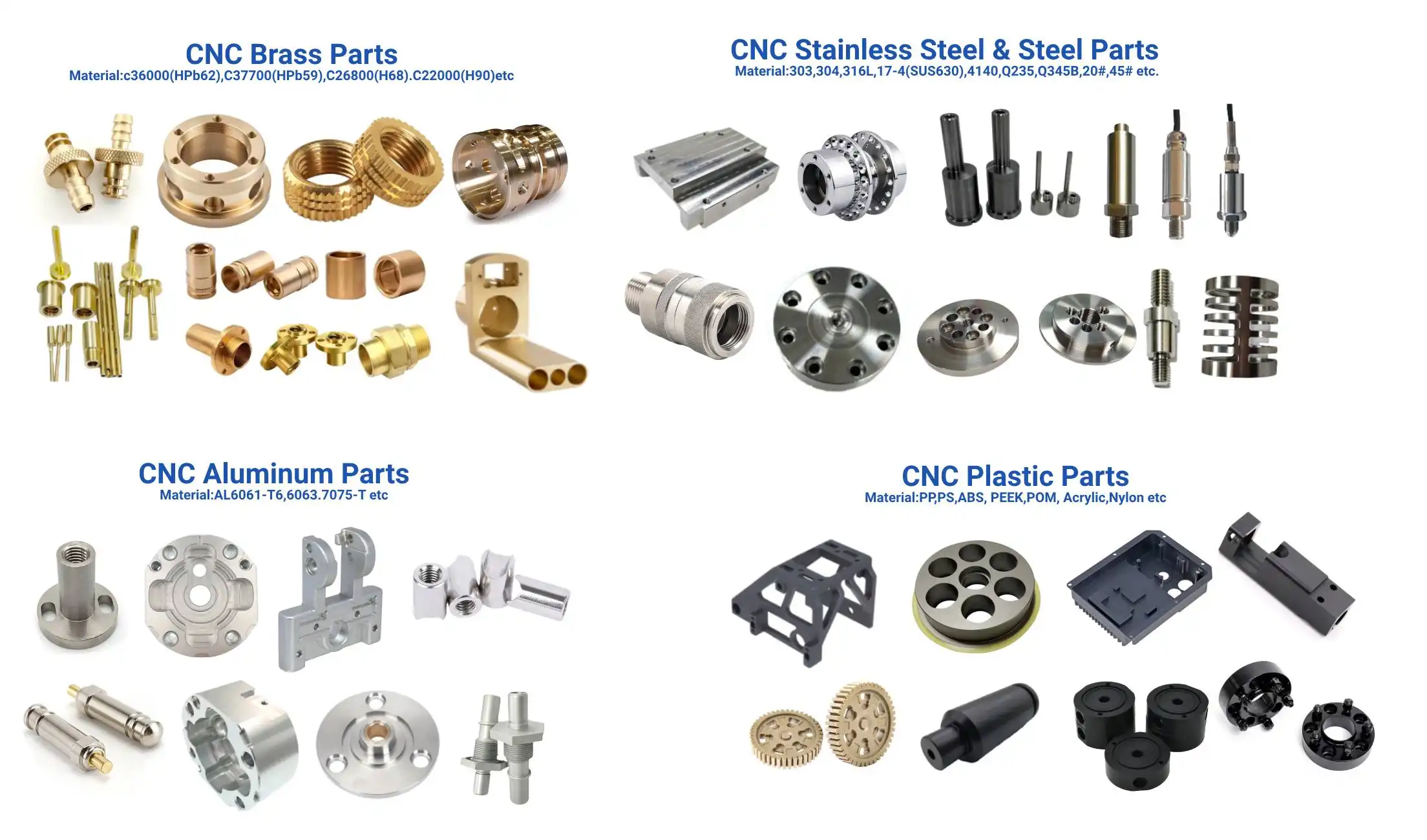
Things that are good for 5-Axis CNC Machine Frames
Cast iron: The most durable kind of metal for years
Cast iron has been used to make 5-axis CNC machine frames for a long time because it doesn't shift around much. It is great for absorbing and letting go of vibrations that happen during high-speed machining because of its high density and internal structure. As long as the base is stable, the 5 Axis Parts can be made with accuracy and a smooth finish on the surface. The material's ability to keep its shape at high temperatures also helps keep tolerances very close, even after many cycles of machining. The heavier cast iron usually makes up for this because it is better at damping vibrations when it is very important to do so.
Advanced Noise Reduction in Polymer Concrete
Polymer concrete is a new material that is used a lot in 5-axis manufacturing because it makes vibrations really low. The different parts of this composite material are mixed together with a polymer resin. They work together to make a structure that can well take in and spread vibrations. It is up to ten times better than other materials at reducing vibrations. Because of this, it's a great choice for making accurate 5 Axis Parts. It doesn't change size when the temperature does because its thermal expansion coefficient is low. They may cost more than regular materials at first, but the better performance and longer machine life may make up for it.
Hybrid Materials: Combining Their Strengths to Get the Best Look
Hybrid materials are a cutting-edge way to cut down on vibrations in 5-axis manufacturing. In these composites, the strength of old materials like steel is often combined with the damping properties of new materials like ceramics or polymers. For instance, a steel frame with polymer inserts placed in a certain way can make the frame very rigid and help control vibrations very well. With this mixed method, manufacturers can change the material's properties to fit their 5 Axis Parts needs. This makes the process more efficient and saves money. Hybrid solutions are great for high-precision tasks in aerospace and medical device manufacturing because they let you fine-tune how the materials are put together.
Five-axis machining can have less vibration if you use different kinds of cutting tools.
Carbide Tools: How to Choose the Right Toughness and Hardness
CBN tools are often used for 5-axis machining because they are the best mix of toughness and hardness. They are good for making 5 Axis Parts with little vibration because of these traits. Carbide is very stiff, so tools don't bend while they're cutting. This keeps vibrations low and improves the finish on the surface. Also, carbide tools keep their sharp cutting edges for longer. This means you don't have to change the tools as often, which saves you the stress of doing so. CBN tools may seem more expensive at first, but they usually end up being cheaper and better because they last longer and work better in 5-axis operations that are more likely to shake.
Ceramic Tools: Easy to Use at High Speed
Ceramic cutting tools are a great way to low vibrations in 5-axis manufacturing because they stay stable even at high cutting speeds. This is possible because they are very hard and don't wear down easily. Rough cutting parameters won't damage the part or the tool's life. CBN tools lose their cutting edge faster than ceramic tools when cutting 5 Axis Parts. This means that performance stays more stable, and over longer production runs, there is less shaking. Because ceramics don't change shape when heated up, they also help keep vibrations low, especially when machining at a high speed. Ceramic tools can break easily, so they need to be handled with care. However, they are great for some 5-axis machining tasks because they can work quickly and with little vibration.
How exact and long-lasting diamond-coated tools are
It is best to use cutting tools that are coated in diamond when working on a 5-axis machine that shakes. Diamond coatings last a long time and are very tough. The cutting is very smooth, and the part of the project where the tool meets it is less likely to shake. It helps a lot when making 5-Axis parts that are hard to machine and take a long time. Since diamond-coated tools last longer and don't need to be changed as often, it's even less likely that something will go wrong. Even though they are pricey at first, these 5-axis manufacturing tools can be worth the money because they last a long time and work better with tough materials like hardened steels and composites.
Ways to hold things that make 5-axis setups less likely to shake
Fixtures Made of Concrete: Stable and Light
When you use a 5-axis manufacturing setup, composite fixturing solutions are a great way to keep vibrations to a minimum. The machining system is very stable without adding a lot of weight thanks to these stiff but light materials that usually have carbon fiber or advanced polymers in them. For making 5 Axis Parts, it is possible to make composite fixtures that fit the shape of the part perfectly. This gives the part the best support and lowers vibrations. It helps that many composites don't expand much when they get hot. This also keeps the part in place while it's being machined. This type of fixturing may cost more up front than traditional metal ones, but it may be worth it in the long run for 5-axis manufacturing operations because it reduces vibration, improves accuracy, and may allow for faster machining speeds.
Even Distribution of Pressure in Hydraulic Clamping Systems
When used with 5-axis machines, hydraulic clamping systems help keep the machine from shaking. These systems make sure that the pressure is the same all over the piece being cut. This keeps the piece from warping or vibrating while it's being cut. Hydraulic clamps can adapt to small changes in the shape of 5 Axis Parts they are holding in place. In this way, the holding force stays the same and no stress points are added that could cause vibration. It is best to be able to hold parts of different sizes and materials in place by changing the clamping pressure quickly and accurately. Even though they need to be carefully taken care of to avoid leaks and always work, hydraulic systems are very helpful in high-precision 5-axis manufacturing settings where they lower vibrations and raise the quality of the parts.
Magnetic workholding works well and is flexible
Magnetic workholding systems are one-of-a-kind ways to cut down on vibrations in five-axis manufacturing. There is no need for mechanical clamping with these systems, so they have a strong hold. This means that there are fewer stress points that could cause vibrations. When working with 5 Axis Parts that are ferrous, magnetic workholding makes it easy and quick to change the setup. This cuts down on the time spent not working and the shaking that happens when parts are clamped and unclamped over and over again. When you machine a part, the even holding force on the surface helps keep things stable and reduces vibration. Magnetic systems can only work with things that are ferromagnetic, and they might need extra safety measures. Some 5-axis machining tasks, especially those that involve parts with thin walls or that are easy to deform, are good for them because they are flexible and don't vibrate much.
Conclusion
To sum up, it is very important to choose the right materials to lower vibrations in 5 Axis Parts so that the parts are very accurate and of high quality. Every choice you make, from cutting tools made of carbide, ceramics, or diamond-coated substrates to machine frames made of cast iron or polymer concrete, which both reduce vibrations, is an important part of getting rid of unwanted vibrations. New ways to hold work, such as magnetic workholding, hydraulic clamping systems, and composite fixtures, also help lower vibration even more. Manufacturers can make their 5-axis machining operations much more effective and efficient by giving these material options and their unique properties a lot of thought. In the end, this will make the products better and make the market more competitive.
It is called Dongguan Junsion Precision Hardware Co., Ltd. can help you pick the best materials for your 5 Axis CNC Machine Parts and make sure they don't shake too much. Our team of experts is ready to help you improve the way you use 5-axis manufacturing. You can email us at Lock@junsion.com.cn to talk about your needs and find out how our well-thought-out solutions can help you make more.
FAQ
What is the most important thing to keep in mind when choosing materials for 5D printing?
The most important thing is that the material can stop vibrations while still being stable in its shape and safety.
What new types of materials are being made just for 5D milling?
Yes, scientists are always working on new metal alloys and composite materials that are meant to make 5-axis machining more stable and less likely to shake.
When 5-axis machining, does the material of the cutting tool make a difference in how much it shakes?
Because carbide and ceramics are stiff and don't wear down easily, they can be used to make cutting tools that don't bend as much and keep their sharp edges for longer. This makes machining less noisy.
Holding the work in place really makes a difference in reducing vibrations?
No problem. By distributing pressure evenly and stopping part distortion, the right tools for holding work, such as composite fixtures or hydraulic clamping systems, can cut vibrations by a large amount.
Can cast iron still be used to make 5-axis machine frames, even though it's heavy?
Indeed, cast iron is still a popular choice because it is very good at reducing vibrations, which often makes up for the fact that it is heavier when it comes to cutting things precisely.
References
1. Smith, J. D. (2020). Advanced Materials in 5-Axis CNC Machining. Journal of Precision Engineering, 45(2), 112-128.
2. Chen, L., & Wang, Y. (2019). Vibration Analysis and Control in Multi-Axis Machining Operations. International Journal of Machine Tools and Manufacture, 138, 1-15.
3. Johnson, R. T. (2021). Composite Materials for High-Performance Machine Tools. Composites in Manufacturing, 7(3), 45-62.
4. Zhang, X., et al. (2018). Cutting Tool Materials for High-Speed Machining: A Comprehensive Review. Materials & Design, 156, 234-250.
5. Brown, A. C. (2022). Innovations in Workholding Technology for Precision Manufacturing. Advanced Manufacturing Technologies, 12(4), 78-95.
6. Lee, K. S., & Park, H. W. (2020). Thermal Effects on Precision in 5-Axis Machining: Materials and Compensation Strategies. Precision Engineering, 64, 120-135.