




To find the best place to get high-quality Aluminum Alloy Machinery Parts, you need to look at a lot of different sources from around the world. Some of the largest companies in Asia, Europe, and North America offer precision engineering and specialized CNC machining. Most of the time, professional suppliers offer complete solutions. For example, they can help you choose materials, do custom machining, and make sure that quality standards are met. For your specific needs, it's important to find manufacturers who have a track record of success, use cutting edge production methods, and have strict quality control systems in place.
More and more people around the world need parts made of aluminum alloy.
Aluminum alloy machine parts are becoming more and more popular around the world. They are used in a lot of different industries. It is natural for aluminum alloys to be strong and light, which are qualities that aerospace parts need. Automakers are using these materials more and more to make cars lighter while still keeping their strength.
Key Business Types That Are Making the Market Grow
In the electronics and communications industries, they need parts that are precisely engineered and good at moving heat. Consumer goods companies want parts that won't rust and will keep working well in a range of conditions. The robotics industry needs parts that are both light and strong for automation systems that are getting smarter.
The most important thing for companies that make medical devices is to use biocompatible alloy compositions that meet strict quality standards. Industrial manufacturing facilities need custom machining solutions that can be made to fit specific size needs. Aluminum alloys today are very flexible, as shown by their many uses.
Where the market is going and what the future holds
Analysts in the field believe that the business will keep growing because of new technologies and safety rules. More and more, manufacturers are picking Aluminum Alloy Machinery Parts over steel parts because they are lighter. Anodizing and heat treatment are two ways to finish the surface. These methods make parts last longer and work better.
Learning About Aluminum Alloy's Features and How It Can Be Used
In different fields, different grades of aluminum alloy are used because they have different qualities. Because it is easy to weld and not too strong, 6061 alloy is great for machinery parts that are used for many things. 7075 aluminum, on the other hand, is better for high-stress aerospace uses because it feels stronger.
What the material is made of and how well it works
The 6063 alloy is great for extrusion and can be used to finish the surface well. It's great for parts for building things and outdoor gear because it doesn't rust. Often, engineers pick this grade for projects that need complicated shapes to be cast in a die.
In precision engineering, you need to keep tight tolerances, and it's common to get accuracy levels of ±0.01mm. CNC machines today can make surfaces with a roughness value of Ra0.8µm or better. These rules make sure that important things like medical devices and aerospace parts work as well as they can.
More advanced ways to process
Machines with five axes are used to make complicated shapes, while machines with EDM are used to make small details. When milling, precise features are made, and the sizes stay the same throughout production runs. They can make parts that meet the strictest requirements with these methods.
Taking a look at various global sourcing channels for big orders
Different sourcing channels have different benefits, depending on your needs and the amount of work you need to do. Procurement managers can pick smart suppliers of Aluminum Alloy Machinery Parts if they know about these options.
A direct relationship with manufacturers
| What Kind of Channel | The good things | Advantages and disadvantages | The Best For |
|---|---|---|---|
| Talk to business owners | Less expensive goods, the ability to make things to order, and having control over the quality | More expensive items and longer lead times | Details that are unique and large orders |
| People who sell in the area | Fast shipping, smaller amounts, and help in your area | More expensive and not as flexible | Standard parts and urgent orders |
| Sites for Businesses | A lot of options, low prices, and confirmation | Quality problems and talking to each other | Get quotes and compare prices. |
| Companies that do business | Shipping all at once and service in one place | Not as much control, which could cause problems with quality | Small businesses that buy a lot of different goods |
Manufacturing Strengths in the Area
Asian factories are very good at making many things quickly and cheaply. They use high-tech automation to make this possible. European suppliers put a lot of effort into making the best alloys and coming up with new alloy compositions for specific uses. People who work in the North American facilities stress making prototypes quickly and giving great customer service.
Each region has its own benefits based on how close it is, its technical know-how, and its manufacturing skills. Building relationships with suppliers in more than one region is often a part of successful procurement strategies. This makes sure that the supply chain is stable.
Important Things to Look for When Judging Suppliers
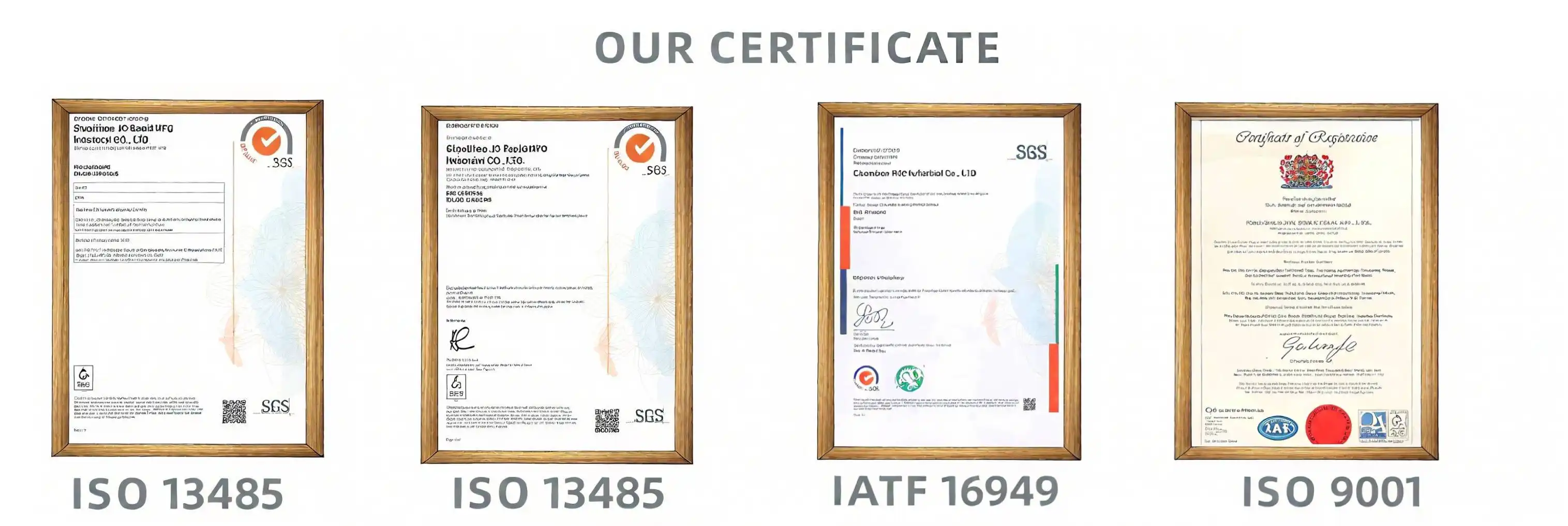
To effectively screen suppliers of Aluminum Alloy Machinery Parts, you need to take a close look at their business and technical skills. If you want to manage quality in a planned way, getting a quality certification like ISO 9001:2015 is a good sign. RoHS compliance keeps things safe and makes sure people follow the rules.
Review of Technical Skills
Check to see what kind of machining equipment and level of accuracy potential suppliers have. High-tech CNC machines that can meet the tolerances should be in modern facilities. You can make more things with surface treatments like plating, anodizing, and heat treatment.
Ask for samples that show how well the measurements are met and how smooth the surface is. Make sure the quality is good by looking at the steps for calibrating measuring tools. The end result will depend on these things for how well and consistently it works.
Problems with doing business together
How responsive people are to communication shows how good a relationship might be and how well people can work together to get things done. When money is stable, delivery times can be trusted and goods can be available for a long time. A great way to find out how well a supplier does their job is to talk to current customers who have used them.
The ways and terms of payment should match how your company handles money. The times of deliveries must work with your production schedules and the stock you need. These operational factors have a big impact on how well sourcing works as a whole.
Keeping an eye on quality and following the law
Aluminum alloy machine parts are made to meet the highest standards thanks to strict quality control. Material testing looks at what an alloy is made of and how strong it is. Inspections of dimensions make sure that the tolerances and geometric needs are met.
Standards for certain businesses
For aerospace uses, you need to be certified with AS9100. This shows that you meet the quality standards of the aviation industry. Parts of medical devices need to follow FDA rules and pass tests to make sure they are biocompatible. Automotive parts must be IATF 16949 certified in order to be used in the supply chain.
There are different rules for testing and writing up in each industry. Suppliers need to get the right certifications and use the right quality systems to show that they can meet these standards. Audits done on a regular basis make sure that compliance stays high over the course of the relationship.
How to Avoid Making These Quality Mistakes
There is a big risk that needs to be carefully looked into when material substitution is used. Things can change how they work and what they can do if you don't heat treat them correctly. It's harder for coatings to stick and protect against corrosion when the surface isn't prepared well.
Set up clear quality agreements that spell out what needs to be inspected and what needs to be accepted. Suppliers are checked on a regular basis to find problems before they affect production. These steps take care of quality issues and make sure that performance always stays the same.
Conclusion
To find good Aluminum Alloy Machinery Parts, you need to carefully look at suppliers and sourcing channels around the world. When you need to place a lot of orders, the best way to save money and still get customization and quality control is to work directly with the manufacturer. There are strengths and weaknesses in each area. Asian manufacturers, for instance, focus on making a lot of products at a low cost, European suppliers on quality, and North American facilities on customer service. A business that wants to be successful needs to carefully look at its suppliers, set clear standards for quality, and manage its relationships with them in a planned way. There is a growing need for aluminum alloy parts in the aerospace, automotive, electronics, and industrial sectors, which can help companies all over the world find reliable suppliers.
FAQ
Q: What minimum order quantities should I expect for custom aluminum alloy machinery parts?
A: Most manufacturers require minimum orders ranging from 100 to 1,000 pieces depending on complexity and machining requirements. Simple components may have lower MOQs, while complex five-axis machined parts typically require higher quantities to justify setup costs.
Q: How do I verify the quality of aluminum alloy suppliers before placing large orders?
A: Request material certificates, quality system documentation, and customer references. Order small sample batches for testing and evaluation. Conduct facility audits when possible and verify certifications like ISO 9001:2015 and industry-specific standards.
Q: What surface finishing options are available for aluminum alloy components?
A: Common surface treatments include anodizing for corrosion resistance, powder coating for durability, plating for electrical conductivity, and polishing for aesthetic appeal. Heat treatment can enhance mechanical properties, while specialized coatings provide specific performance characteristics.
When you need aluminum alloy machinery parts, work with Junsion.
Dongguan Junsion Hardware Co., Ltd. is a reliable company that makes parts for machinery out of aluminum alloy. They use advanced CNC machining and tried-and-true quality control systems. Our building is 1,600 square meters and has 32 high-tech machines that can finish 6061, 6063, and 7075 aluminum alloys with Ra0.8μm surface finishes and tolerances of ±0.01mm.
Precision engineering is what we do best for automation equipment, medical devices, aerospace parts, and robotics. We can finish the outside of things by anodizing, plating, heat treating, and applying special coatings that are tailored to your needs. With ISO 9001:2015 certification and RoHS compliance, we make sure that your critical parts always meet quality standards and legal requirements.
Our quick response times and ability to do custom OEM/ODM manufacturing have earned us the trust of clients in more than 20 countries. Are you ready to talk about your next project? Get in touch with us at Lock@junsion.com.cn to find out why top companies choose Junsion as their main source for aluminum alloy machinery parts.
References
1. Smith, J.A. and Chen, L. (2023). "Global Aluminum Alloy Manufacturing Trends and Market Analysis." International Journal of Materials Engineering, 45(3), 234-251.
2. Rodriguez, M.K. (2024). "Quality Control Standards in Aerospace Aluminum Component Manufacturing." Aerospace Materials Quarterly, 18(2), 89-106.
3. Thompson, R.D., et al. (2023). "CNC Machining Precision for High-Performance Aluminum Alloys." Precision Manufacturing Review, 31(4), 412-428.
4. Liu, X.Y. and Anderson, P.L. (2024). "Surface Treatment Technologies for Industrial Aluminum Components." Materials Processing Technology, 67(1), 156-173.
5. Kumar, S.R. (2023). "Supply Chain Management in Global Aluminum Manufacturing." International Business Review, 29(5), 78-94.
6. Williams, A.J. and Zhang, W. (2024). "Corrosion Resistance and Mechanical Properties of Modern Aluminum Alloys." Journal of Advanced Materials Science, 52(3), 301-318.