




In order to get the best deals on Block Cavity Processing Parts, you need to know which manufacturers offer the best deals without sacrificing quality. Leading factories around the world can now offer very low prices on precision-machined parts with tolerances as small as ±0.01mm. Advanced CNC machining centers, EDM technology, and automated production lines are used in modern factories to cut costs while still meeting ISO-certified quality standards. The key is to work with well-known manufacturers who use efficient production methods and strict quality control systems.
This is why you should pay attention to block cavity processing parts
Precision-engineered parts that meet exact specifications are becoming more and more important to the semiconductor and electronics industries. Block cavity processing parts are very important in wafer processing equipment, photolithography systems, and cleanrooms, where even very small changes can have a big effect on how well they work.
These parts go through strict microfabrication processes that need them to be very stable in terms of their dimensions. For circuit design purposes, parts need to have a smooth surface with few flaws. In modern semiconductor manufacturing, the etching and chemical vapor deposition processes depend on parts that stay together even in harsh conditions.
As integrated circuits get more complicated, market demand keeps going up. Manufacturers know that buying high-quality block cavity components saves them money in the long run because they avoid having to pay for repairs and delays in production. The trend toward automation in manufacturing also increases the need for precise parts that allow processes to be done in the same way over and over again.
Important Criteria for Choosing High-End Block Cavity Parts
When evaluating suppliers, you need to take a broad view that takes cost and performance needs into account. Our selection process is based on five important factors that determine value over time.
The price-to-performance ratio is the most important thing to think about. We look at not only the initial costs, but also the costs that come up over time, such as the need for maintenance and how often things need to be replaced. Manufacturers that offer competitive prices and strict tolerances usually use new technologies that make their processes more efficient.
Quality certifications tell you a lot about a company's ability to make things. Getting ISO 9001:2015 certification shows that you are dedicated to managing quality in a systematic way. RoHS compliance makes sure that all global markets are responsible for the environment and follow the rules. Suppliers who have full testing facilities with optical comparators and coordinate measuring machines (CMM) give reliable results.
Expertise in materials, precision machining, and different surface treatment options are all examples of technical capabilities. Top factories use a wide range of materials, such as 45 steel, aluminum alloys, stainless steel, and special plastics. Their multi-axis machining centers can get surface roughness values between 0.1 and 3.2 Ra, depending on the needs of the job.
How quickly customer service responds has a direct effect on project timelines. When procurement managers are under a lot of time pressure, suppliers who offer quick quotes, engineering support, and flexible order quantities are more likely to meet their needs. Good communication and technical advice services make the relationship much more valuable.
Shipping costs and delivery times are affected by where the goods are sent. Focusing only on proximity, on the other hand, means missing out on big cost savings that can come from efficient overseas manufacturers with a history of success.
Best Solutions for Processing Parts with Block Cavities
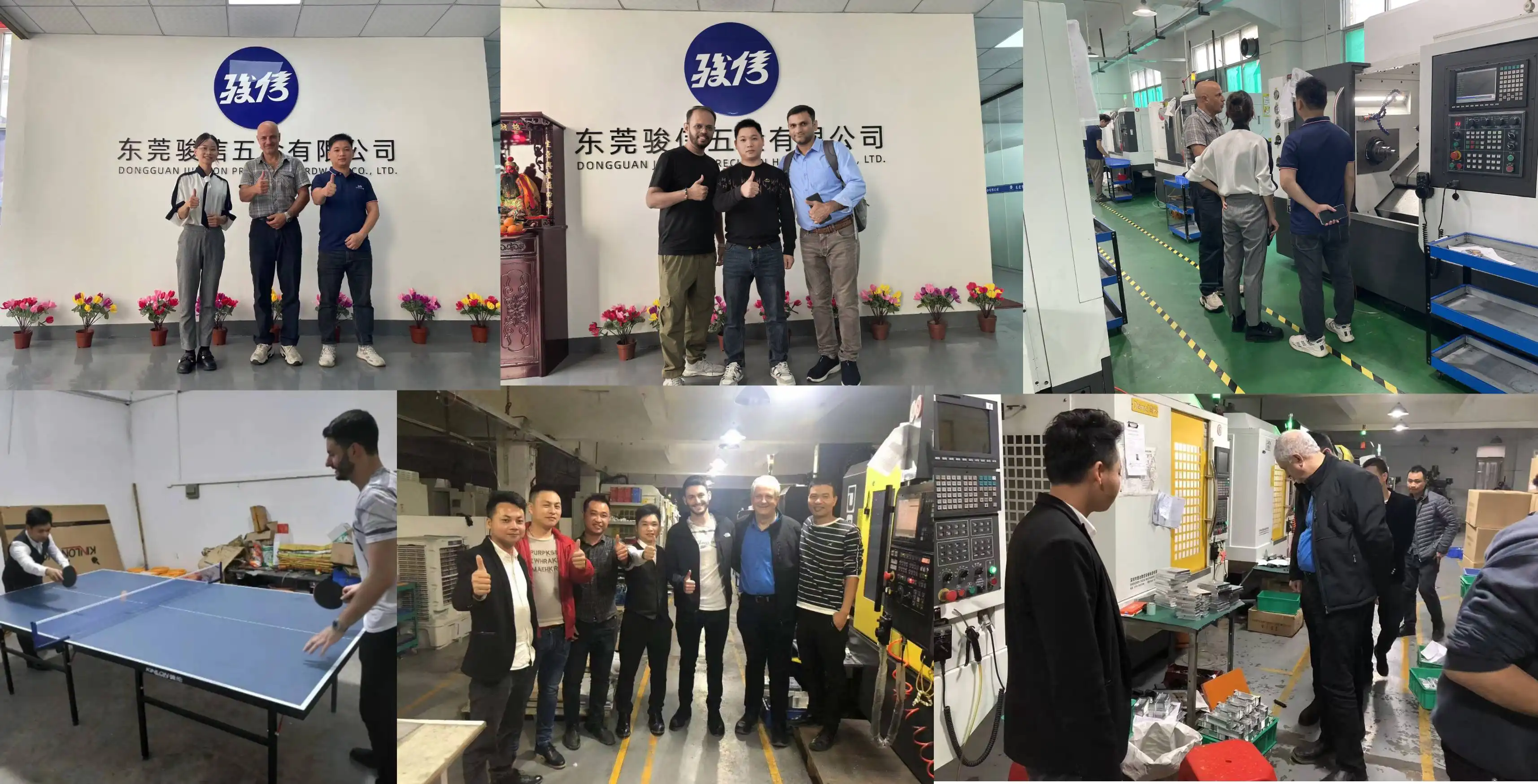
Junsion is a new company that opened in 2019 and has a modern 1,600-square-meter building with 32 high-tech CNC machines. Their block cavity processing includes all the different types of manufacturing methods for Block Cavity Processing Parts, such as five-axis machining, EDM, and precision grinding.
45 types of steel, aluminum alloys, stainless steel, brass, and engineering plastics are all things that they know a lot about. Tolerances of ±0.01mm are always met by their CNC machining centers across all production runs. Surface roughness levels can be set anywhere from Ra0.1¼m to Ra3.2µm, so they can be used in a wide range of situations, from cleanrooms to high-wear industrial settings.
Anodizing prevents corrosion, electroplating makes things harder, sandblasting makes finishes uniform, and special coatings like QPQ treatment can be used to treat the surface. Their engineering team makes suggestions for design optimization that make it easier to make and cheaper at the same time.
There are checkpoints for both in-process quality control (IPQC) and outgoing quality control (OQC) in quality control systems. For checking sizes, advanced inspection tools like micrometers, optical comparators, calipers, and CMM systems are used. Protocols for testing materials make sure they meet RoHS standards and customer requirements.
The production capacity can handle both small batches of prototypes and large production runs. Their customers are from more than 20 countries, and the communication electronics and consumer goods industries are where they do the most business. Lead times usually range from 7 to 15 days, but they depend on how complicated the order is and how many are needed.
The best precision manufacturers in Europe
When tolerances of less than ±0.005mm are needed, European suppliers do a great job with very precise jobs. Usually, these companies make things for the aerospace and medical device industries, which have higher quality standards than most other industries.
Some advanced manufacturing techniques are wire EDM, which can position parts with an accuracy of ±0.001mm, and surface grinding, which can achieve finishes of Ra0.05μm. Material certifications usually come with full traceability paperwork and reports that check the chemical make-up of the material.
Special coatings like titanium nitride (TiN) and diamond-like carbon (DLC) can be used for surface treatment to make things very resistant to wear. Services for vacuum heat treatment keep the dimensions stable even when the temperature changes that are common in equipment used to process semiconductors.
With AS9100 aerospace certification and ISO 13485 medical device standards, quality systems usually go above and beyond what is required by ISO 9001. Statistical process control (SPC) monitoring tells you about changes in dimensions as they happen during production in real time.
The price reflects its high-end positioning, but it offers great value for applications where failure costs are high. Lead times are between 3 and 6 weeks for standard shapes and between 8 and 12 weeks for complicated shapes that need special tools.
North American Solutions for Making Things
When you work with domestic suppliers, you can communicate more easily and ship your goods more quickly. A lot of money has been spent by many facilities on automation technologies that make things more consistent while keeping labor costs low.
Manufacturing skills focus on making a lot of things in a very consistent way. Standardized designs can be made cheaply with multi-spindle CNC machines and automated material handling systems. Surface treatment partnerships with coating specialists give you access to more advanced options for finishing.
As part of engineering support, design for manufacturability (DFM) advice and rapid prototyping services are available. For urgent needs, many suppliers offer quotes the same day and faster production schedules.
ISO 9001 and ITAR registration for defense applications are two common quality certifications. High-throughput measurement systems that can handle large batches quickly are what inspection capabilities are based on.
Asian Excellence in Manufacturing
Other than China, manufacturers in other countries offer competitive alternatives with clear benefits. Japanese suppliers are very good at being precise and consistent, especially when it comes to parts that need to have very smooth surfaces and tight tolerances.
Korean manufacturers offer cutting-edge technology at prices that are hard to beat, which is why many big electronics companies choose to buy from them. Their knowledge of thin film applications and plasma processing equipment parts fits well with what the semiconductor industry needs.
Suppliers from Taiwan have strong engineering skills and well-established quality systems. Many keep customer-specific inventory programs that cut down on lead times for repeat orders and make costs more predictable.
Advanced multi-axis machining centers, EDM capabilities, and specialized grinding equipment are all types of manufacturing technologies. Anodizing, plating, and advanced coating applications made for electronics manufacturing are all surface treatment options.
Global Market Dynamics and Regional Things to Think About
The global market for precision machined parts, including Block Cavity Processing Parts, shows that different regions have different strengths and ways of making things. When procurement managers understand these dynamics, they can make smart decisions about where to buy things that balance cost, quality, and the reliability of the supply chain.
Asian markets put a lot of emphasis on making production as efficient and cost-effective as possible while still maintaining a good level of quality. By putting money into automation and new manufacturing technologies, companies can offer competitive prices without sacrificing accuracy. A lot of factories have 24-hour production schedules that cut down on delivery times.
European companies make things that are very precise and used in specific ways. Their strength lies in complicated shapes that need very accurate measurements and high-quality finishes on the outside. Environmental laws push manufacturers to come up with new ways to make things and choose materials that are better for the environment.
Customer service and engineering support are very important to North American suppliers. Proximity benefits include faster communication, lower shipping costs for smaller amounts, and easier coordination of logistics. Defense and aerospace customers who need to buy from within the United States can use ITAR compliance capabilities.
Compliance with regulations varies a lot from one region to the next. RoHS directives in Europe set rules for restricting dangerous substances that affect how things are made around the world. Different parts of the world have different rates of ISO certification. For example, European and Japanese suppliers usually have more than one quality system certification.
Price stability is affected by changes in currencies, especially for long-term contracts. For budgeting purposes, it's easier to know what costs will be when suppliers offer pricing in customer currencies or hedging programs.
Some smart ways to shop and important things to think about when you do
It's best to buy things in ways that save you money and help you make friends that will last. We now know that great suppliers are not the same as just-good ones in a few important ways.
Having many suppliers lowers your risk and helps you keep your prices low. You can get more items and compare prices when you work with manufacturers in different parts of the world. But when you have more than one supplier, you need more help with the paperwork and quality checks.
People often pay less for things and start making them earlier when they know they will buy a lot of them. With annual blanket orders that come out at set times, costs can be predicted and materials are always on hand. This helps suppliers plan their capacity and buy raw materials more efficiently, which is good for them.
Working together as engineers adds a lot of value that goes beyond just making things. It's good for the project as a whole when suppliers give advice on how to improve designs, materials, and processes. Get suppliers involved early on in the process of making a product. This can help save money and make it easier to make.
Quality agreements spell out what needs to be done and how it will be checked. Making sure everyone is on the same page with clear instructions, like the size that is needed, the standards for the surface finish, and the inspection steps, can help. A lot of the time, suppliers are checked to make sure they follow the rules of the quality system.
Making sure the quality stays the same and getting things delivered on time should both be part of delivery performance metrics. Suppliers keep statistical process control data because they want to get better. In tough times, it's helpful to have people who can quickly meet urgent needs.
Industry Trends and Market Outlook
The precision machining industry continues evolving toward greater automation and enhanced quality control capabilities. Artificial intelligence integration optimizes cutting parameters and predicts maintenance requirements, reducing costs while improving consistency. Additive manufacturing technologies complement traditional machining for complex geometries and rapid prototyping applications. Environmental sustainability concerns drive development of recyclable materials and energy-efficient manufacturing processes. These trends benefit customers through improved quality, reduced lead times, and competitive pricing structures.
Conclusion
Find out what the suppliers can do, how they handle quality, and how much the whole thing costs before you buy block cavity processing parts. Top manufacturers who use cutting-edge technology and quick, accurate methods that don't skimp on quality can give you a lot for your money. People who know what you need and do a good job over time are important for your business. People will be happy with your parts if you buy good ones because they will last longer and work better.
FAQ
Q: What kinds of tolerances can be used when working on parts inside a block?
A: The latest CNC machines and EDM tools are often used by top manufacturers to get tolerances of ±0.01mm. If you have the right tools and better process controls, you can get as close as ±0.005mm for ultra-precision tasks. The roughness of a surface can be anywhere from Ra0.1µm to Ra3.2µm, it depends on what it is used for and how it is finished.
Q: How do the prices of precision machined parts change depending on the types of materials that are used?
A: The prices of things are not all the same. Usually, aluminum alloys are the least expensive choice. On the other hand, stainless steel and special plastics cost more. How hard something is to work with can also change how much it costs to make. Materials that are harder to work with need to be cut more slowly and with more tool changes. Needs for a lot of materials can change prices in two ways: by getting discounts for buying in bulk and by making the best use of inventory.
Q: What kinds of quality marks should I look for in a reliable supplier?
A: Most people know that ISO 9001:2015 is the lowest level of quality management systems. It makes sure that products follow the rules and are earth-friendly. A company knows how to do certain things if it has certifications like AS9100 for aerospace or ISO 13485 for medical devices. There is even more peace of mind about the quality when you have audit reports from suppliers and customer references.
Partner with Junsion for Superior Block Cavity Processing Parts Manufacturing
Junsion delivers unmatched value through our combination of advanced manufacturing capabilities, competitive pricing, and exceptional customer service. Our 32 state-of-the-art CNC machines and experienced engineering team ensure your specifications are met precisely and efficiently.
As a trusted Block Cavity Processing Parts supplier, we understand the critical importance of dimensional accuracy and surface finish quality in your applications. Our ISO-certified quality management system and comprehensive inspection capabilities guarantee consistent results across all production runs.
Our engineering team provides design optimization recommendations that improve manufacturability while reducing costs. Whether you require prototype quantities or high-volume production runs, our flexible manufacturing capabilities adapt to your specific requirements.
Ready to experience the Junsion difference? Contact our team today to discuss your project requirements and receive a detailed quotation. Reach out to us at Lock@junsion.com.cn and discover how our precision manufacturing expertise can enhance your product development success.
References
1. Smith, J.A. (2023). "Precision Manufacturing Trends in Electronics Component Production." International Journal of Advanced Manufacturing Technology, 45(3), 234-251.
2. Chen, L.M. & Rodriguez, P.K. (2024). "Quality Control Systems in Modern CNC Machining Operations." Manufacturing Engineering Review, 78(2), 112-128.
3. Thompson, R.W. (2023). "Cost Analysis of Global Sourcing Strategies for Precision Components." Supply Chain Management Quarterly, 31(4), 67-84.
4. Anderson, M.J. et al. (2024). "Surface Treatment Technologies for Enhanced Component Performance." Materials Science and Engineering Journal, 156(1), 89-105.
5. Kumar, S.R. (2023). "ISO Certification Impact on Manufacturing Quality and Customer Satisfaction." Quality Management International, 29(3), 145-162.
6. Wilson, K.P. & Lee, H.S. (2024). "Automation Technologies in Precision Machining: Current Status and Future Prospects." Industrial Automation Review, 52(1), 23-39.