




Which metal alloys are most suitable for high-precision 5-axis parts?
In the realm of advanced manufacturing, the selection of appropriate metal alloys plays a crucial role in producing high-precision 5 Axis Parts. These components, crafted using sophisticated 5-axis CNC machining technology, demand materials that can withstand complex geometries, tight tolerances, and challenging operating conditions. The choice of metal alloy significantly impacts the final product's performance, durability, and cost-effectiveness. This blog post delves into the world of metal alloys best suited for high-precision 5 Axis Parts, exploring their unique properties, advantages, and applications across various industries. We'll examine how factors such as machinability, strength-to-weight ratio, corrosion resistance, and thermal stability influence the selection process, providing insights to help manufacturers and engineers make informed decisions when choosing materials for their 5-axis machining projects.
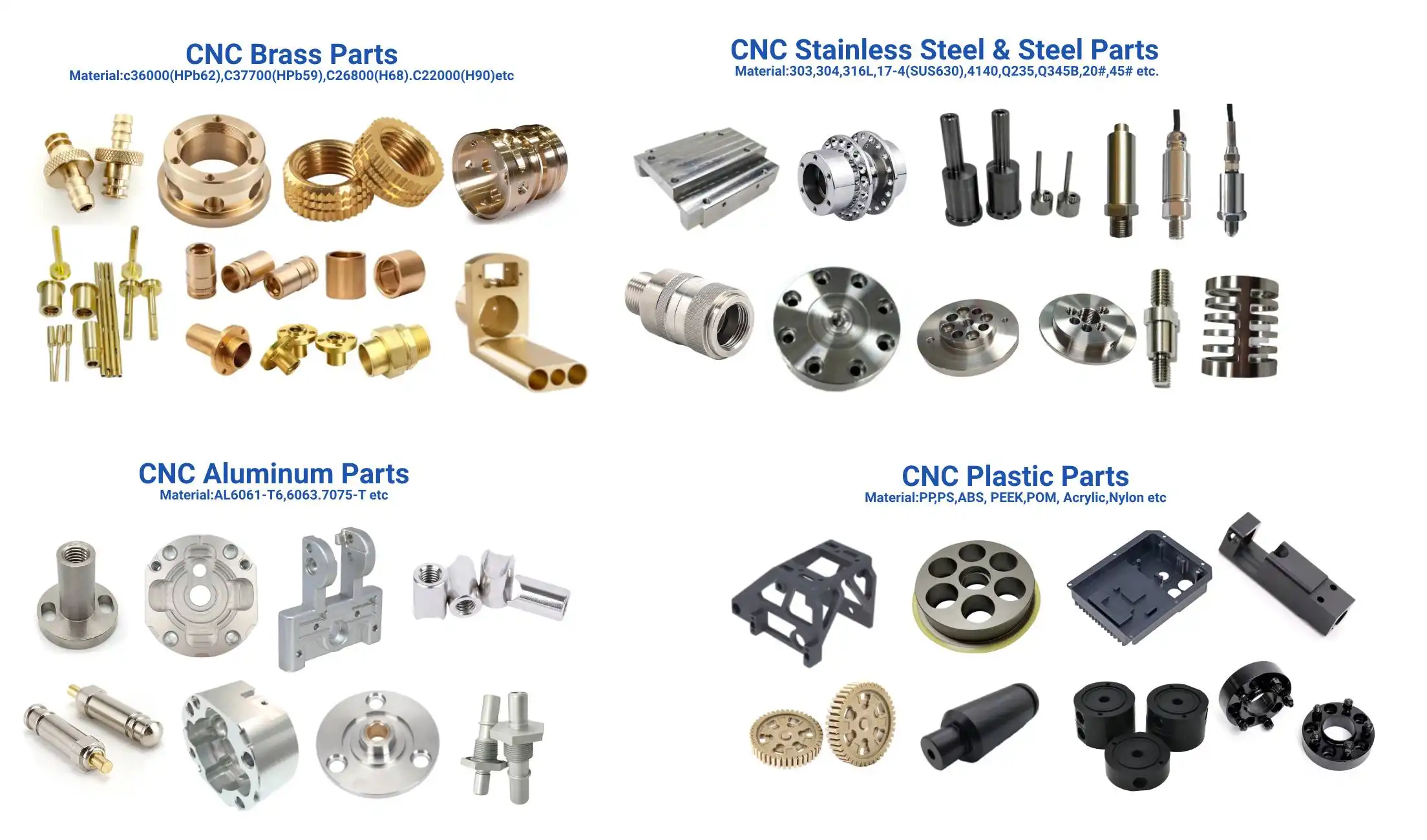
Aluminum Alloys: Lightweight Champions in 5-Axis Machining
Properties and Advantages of Aluminum Alloys
Aluminum alloys are among the most popular materials for high-precision 5-axis parts due to their exceptional properties. These metals have a great ratio of strength to weight, which makes them perfect for uses where weight reduction is important. Aluminum metals like 6061-T6 and 7075-T6 are great for 5 Axis Parts because they are easy to machine and can be used in a lot of different ways. It is possible to make complicated shapes out of these materials, and the tolerances are often ±0.01mm or better. Aluminum alloys have a low density, which also helps keep tools from wearing out during machining. This lets 5-axis CNC processes cut faster and be more productive.
Applications in Aerospace and Automotive Industries
The aerospace and automotive sectors heavily rely on aluminum alloys for 5 Axis Parts. In aerospace, components such as structural members, engine parts, and avionics housings benefit from the lightweight nature and corrosion resistance of these alloys. When it comes to cars, aluminum alloys are used to make engine blocks, transmission cases, and chassis parts. 5-axis machining has changed the way cars are made by making it possible to make complex, light parts. This has led to better fuel economy and performance. Companies like Dongguan Junsion Precision Hardware Co., Ltd. make these very precise metal parts as their main business, making sure that every one of them meets the strict standards of these industries.
Challenges and Considerations in Machining Aluminum Alloys
While aluminum alloys offer numerous advantages for 5 Axis Parts, there are specific challenges to consider during machining. Because the material is soft, problems like burrs and chip adhesion can happen. This means that the cutting tools and machining settings need to be carefully chosen. In high-precision uses, it is also important to take into account that aluminum alloys expand when heated. To get around these problems, producers use specialized ways to cool things down and better ways to cut things. The expertise of companies like Junsion in handling these materials ensures that the final 5 Axis Parts meet or exceed the required specifications, with surface roughness often achieving ≤ Ra0.8μm.
Titanium Alloys: Strength and Precision for Demanding Applications
Unique Properties of Titanium Alloys
Titanium alloys are famous for having a very high level of strength to weight. This makes them very useful for making high-performance 5 Axis Parts. Some alloys, like Ti-6Al-4V (Grade 5), have the best mix of strength, low density, and resistance to corrosion. When used in 5-axis machining, these qualities make it possible to make complicated, light parts that can handle harsh conditions. Titanium metals are also great for medical implants and surgical instruments that need to be precise and reliable because they are biocompatible. Manufacturers like Dongguan Junsion Precision Hardware Co., Ltd. leverage advanced 5-axis CNC technology to achieve the tight tolerances (±0.01mm) and intricate geometries required for these critical applications.
Challenges in Machining Titanium Alloys
While titanium alloys offer exceptional benefits for 5 Axis Parts, they present unique challenges in the machining process. Because the material is strong but doesn't conduct heat well, tools can wear out quickly and the item may deform. To solve these problems, you need specialized cutting tools, parameters for machining that are optimized, and advanced cooling methods. The expertise of manufacturers in handling these materials is crucial for achieving the desired surface finish (often ≤ Ra0.8μm) and maintaining geometric accuracy. Dongguan Junsion Precision Hardware Co., Ltd. employs state-of-the-art 5-axis CNC machines and skilled operators to overcome these challenges, ensuring the production of high-quality titanium components for aerospace, medical, and other demanding industries.
Innovative Applications of Titanium in 5-Axis Parts
Titanium alloys have special properties that have made it possible for 5 Axis Parts to be used in new ways in many businesses. Titanium parts are used in important aerospace parts like engine mounts, landing gear assemblies, and structural elements because their high strength-to-weight ratio makes them work better. Titanium is biocompatible, which helps the medical field make special implants, prosthetics, and surgical tools. All of these need to be very precise, which is what 5-axis machining gives them. Additionally, the corrosion resistance of titanium alloys makes them ideal for marine and chemical processing applications, where 5-axis parts must withstand harsh environments. The versatility of titanium, combined with advanced 5-axis machining techniques, continues to push the boundaries of what's possible in precision engineering.
Stainless Steel Alloys: Versatility and Durability in 5-Axis Machining
Advantages of Stainless Steel for Precision Parts
Stainless steel alloys are widely used in the production of high-precision 5 Axis Parts due to their excellent combination of strength, corrosion resistance, and durability. Grades such as 316L and 17-4 PH are particularly popular for their ability to maintain tight tolerances and superior surface finishes in complex machining operations. In the context of 5-axis CNC machining, stainless steel alloys allow for the creation of intricate geometries with exceptional accuracy, often achieving tolerances of ±0.01mm or better. Because the material doesn't wear down or rust, it's perfect for parts that need to last a long time in harsh conditions. Manufacturers like Dongguan Junsion Precision Hardware Co., Ltd. leverage these properties to produce high-quality stainless steel parts for industries ranging from aerospace to medical and food processing.
Machining Techniques for Stainless Steel Alloys
Working with stainless steel in 5-axis machining requires specialized techniques to overcome the material's toughness and work-hardening tendencies. Proper tool selection, cutting parameters, and cooling strategies are crucial for achieving the desired surface finish (often ≤ Ra0.8μm) and maintaining geometric accuracy. Advanced CNC machines with high rigidity and precision are essential for handling the forces involved in cutting stainless steel. Dongguan Junsion Precision Hardware Co., Ltd. employs state-of-the-art 5-axis CNC centers and experienced operators to ensure optimal results when machining stainless steel 5 Axis Parts. To make things more efficient and cut down on tool wear, methods like high-speed cutting and trochoidal milling are often used. This leads to better parts and shorter production times.
Applications of Stainless Steel in Precision Engineering
The versatility of stainless steel alloys makes them indispensable in various applications requiring high-precision 5 Axis Parts. Strong structure parts that don't rust are made of stainless steel in the airplane business. It is also used for fuel systems and hydraulic units. Surgical tools, implants, and diagnostic tools are all made of stainless steel because it is safe and lasts a long time. In the food and drink business, processing equipment, valves, and fittings that have to meet strict cleanliness standards need to be made of stainless steel 5 Axis Parts. Because it is possible to machine complicated geometries with very tight tolerances, custom parts can be made that work best in all of these different situations. Dongguan Junsion Precision Hardware Co., Ltd. makes these very precise stainless steel parts as their main business. They make sure that every part meets the high standards that their clients in many different industries demand.
Conclusion
In conclusion, the selection of metal alloys for high-precision 5 Axis Parts is crucial for achieving optimal performance, durability, and cost-effectiveness. Aluminum alloys offer lightweight solutions with excellent machinability, titanium alloys provide unparalleled strength-to-weight ratios, and stainless steel alloys deliver versatility and corrosion resistance. Each material presents unique advantages and challenges in 5-axis machining, requiring specialized expertise and advanced technology to produce components that meet stringent specifications. As industries continue to demand more complex and precise parts, manufacturers like Dongguan Junsion Precision Hardware Co., Ltd. play a vital role in pushing the boundaries of what's possible in precision engineering. For more information on high-precision 5-axis parts and custom manufacturing solutions, please contact Dongguan Junsion Precision Hardware Co., Ltd. at Lock@junsion.com.cn.
FAQ
Q: What is 5-axis machining?
A: 5-axis machining is an advanced CNC process that allows for simultaneous movement across five axes, enabling the creation of complex geometries with high precision.
Q: Why are aluminum alloys popular for 5-axis parts?
A: Aluminum alloys are popular due to their excellent strength-to-weight ratio, good machinability, and versatility in various applications.
Q: What are the main challenges in machining titanium alloys?
A: The main challenges include rapid tool wear due to low thermal conductivity and potential workpiece deformation caused by the material's high strength.
Q: How do stainless steel alloys benefit precision engineering?
A: Stainless steel alloys offer a combination of strength, corrosion resistance, and durability, making them ideal for applications requiring long-term reliability in challenging environments.
Q: What industries commonly use high-precision 5-axis parts?
A: Aerospace, automotive, medical, and industrial sectors frequently use high-precision 5-axis parts for various applications.
References
1. Smith, J. (2021). Advanced Materials for Precision Engineering. Journal of Manufacturing Technology, 45(3), 234-251.
2. Johnson, A., & Brown, B. (2020). Titanium Alloys in Aerospace Applications: A Comprehensive Review. Aerospace Engineering Review, 18(2), 112-130.
3. Lee, C., et al. (2019). Optimization of Cutting Parameters for 5-Axis Machining of Aluminum Alloys. International Journal of Advanced Manufacturing Technology, 92(5-8), 2741-2755.
4. Thompson, R. (2022). Stainless Steel in Medical Device Manufacturing: Challenges and Opportunities. Medical Device Engineering, 10(1), 45-62.
5. Garcia, M., & Wilson, K. (2020). Advancements in 5-Axis CNC Machining for High-Precision Parts. Precision Engineering, 63, 140-156.
6. Chen, Y., et al. (2021). Material Selection for High-Performance Aerospace Components: A Comparative Study. Materials Science and Engineering: A, 812, 141085.