




Why Are Brass Dowel Pins Widely Used in Machinery?
Brass Dowel Pins are the popular choice for mechanical applications due to their high corrosion resistance, good machinability, and non-magnetic qualities, which are important for precise assembly. These cylindrical fasteners are dimensionally stable in humid and chemically aggressive settings, offering structural integrity when accurate alignment is crucial. They are the choice of procurement managers who need dependable and long-lasting alignment solutions for electronics, communications, and automation equipment because of their superior electrical conductivity and ability to tolerate difficult industrial environments.

Understanding Brass Dowel Pins and Their Key Benefits
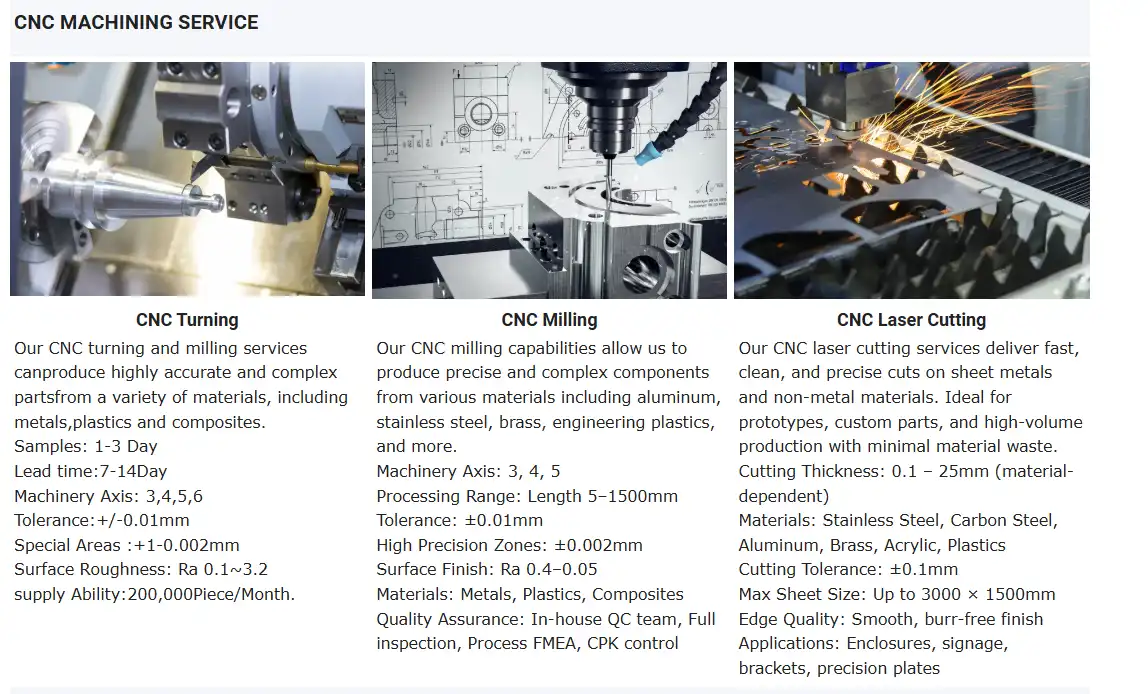
Brass dowel pins are cylindrical fasteners made from brass alloys. They are used in demanding industrial applications for accurate dimensional stability. These alignment pins are available in customised dimensions with tolerances up to ±0.01 mm and surface roughness ≤ Ra0.8μm to meet the severe requirements of contemporary industrial assembly. Junsion manufactures dowel pins to ISO 9001:2015 standards and RoHS compliance with modern CNC machining, EDM, turning, and five-axis machining to provide repeatable quality in every component.
Core Material Advantages
Their composition of brass alloy gives them intrinsic corrosion resistance better than ordinary steel counterparts in areas exposed to moisture, salt spray, and chemical agents. This characteristic increases service life by a large distance, therefore lowering the replacement frequency and maintenance expense. The material’s machinability enables producers to quickly generate unique dimensions with tight tolerances to meet specialised OEM needs without long lead times. Brass experiences less oxidation and maintains surface integrity over the product lifespan, unlike ferrous metal.
Electrical and Magnetic Properties
Brass dowel pins have excellent electrical conductivity, which makes them useful in electronics manufacturing and telecommunications equipment where static discharge control is important. Their non-magnetic properties do not interfere with sensitive sensors, navigation systems, and medical devices. These components are routinely delivered to customers in the field of AI intelligent equipment, where magnetic neutrality assures the precision of the operation. These qualities make brass dowel pins a critical component for precise assembly processes across a range of industries.
Real-World Applications
In the consumer electronics industry, procurement teams employ these pins to align circuit board assembly where even tiny misalignments result in product failure. Brass dowel pins are used in logistics and storage systems to hold together the components of the modular racking, ensuring structural integrity under dynamic stresses. They are included in gearbox housings and engine assemblies by automotive manufacturers, where they enjoy dimensional stability over temperature cycles. Because of biocompatibility and resistance to sterilisation, medical device makers will call for different brasses in aligning surgical instruments.
Comparing Brass Dowel Pins With Other Materials: Steel, Stainless Steel, Nylon, and Aluminum
Material selection significantly affects assembly reliability, cost efficiency, and long-term performance. Understanding how brass compares to other materials allows procurement professionals to make data-driven choices that align with their operational objectives.
Brass Versus Steel
The standard steel dowel pins are harder and more wear-resistant, making them appropriate for heavy load applications and repeated motion. They are best suited for structural applications where shear strength is important. But the steel’s vulnerability to corrosion means it must be protected with coatings or kept in controlled settings, which adds to complexity and expense. Brass Dowel Pins are inherently corrosion-resistant and do not need any further surface treatment for most purposes. “Brass is a less expensive option when you look at the overall life-cycle costs,” he said. “In humid or marine environments, steel deteriorates quickly.”
Brass Versus Stainless Steel
Stainless steel dowel pins are as strong and corrosion-resistant as regular steel, but they can also stand up to severe chemical conditions and high-temperature applications. They are stable in harsh situations and are suitable for the aerospace and petrochemical industries. But machining stainless steel is more difficult and adds to prices and lead times. Brass has equivalent corrosion resistance, is a fraction of the work to machine, permits quicker customisation, and lowers production prices. If you don't care so much about ultimate tensile strength, but want a good bang for the buck, brass is a good choice.
Brass Versus Nylon
Nylon dowel pins are used in situations where electrical insulation, vibration dampening, and low weight are necessary. They are good shock load absorbers and are used to prevent the galvanic corrosion of dissimilar metals. However, the dimensional stability of nylon with a change in temperature and moisture is limited, which restricts its applicability in precise applications. Brass Dowel Pins are dimensionally stable in various environments and retain alignment over the whole service period. Its metal origin gives it a structural strength that plastic alternatives cannot match when it comes to bearing loads.
Brass Versus Aluminum
Aluminium dowel pins are also much lighter, which is useful in aerospace and robotics applications where the reduction of mass is a consideration in design. The material has low density and is therefore ideal for high-speed equipment where inertia has to be kept to a minimum. There are stronger aluminium alloys such as 6063, 7075, and 6061. We use the same CNC and five-axis machining procedures to make quality aluminium parts as we do to make brass with similar tolerances. Brass counters with greater machinability, higher wear resistance, and better corrosion protection in maritime conditions. The trade-off is between weight saving and operational durability;
Why Brass Dowel Pins Are the Preferred Choice in Machinery: A Rational Value Elaboration
Parts for industrial applications must continue to work reliably, even under harsh operating circumstances. Brass Dowel Pins meet these needs with a mix of material qualities and production accuracy that leads to substantial operational advantages.
Performance in Corrosive Environments
Machinery at coastal sites, chemical processing plants, and outdoor facilities is subjected to corrosive chemicals that attack traditional fasteners. Brass is a combination of copper and zinc. The copper-zinc mix generates a protective patina that stops further corrosion of the underlying material. This property of self-protection reduces the requirement for periodic coating renewal or replacement schedules because of material deterioration. We have provided brass alignment pins to logistics equipment manufacturers whose systems are subjected to uncontrolled humidity conditions. These components will retain dimensional precision, whereas steel counterparts must be replaced every eighteen months.
Machinability and Customization Efficiency
Procurement managers are often confronted with non-standard sizes for meeting special design criteria. Brass processes at far greater speeds than stainless steel, lowering manufacturing time and allowing quick prototyping. Our CNC facilities manufacture precise brass pin dowels with tolerances of ± 0.01mm, perfect for the demanding tolerances of automation equipment and robotic assembly. The benefit of machinability speeds up product development cycles because engineering teams may iterate on concepts without long production lead times. The material’s chip-breaking capabilities result in less wear on the tool and economical manufacturing even for small batch orders.
Dimensional Stability and Assembly Reliability
Thermal expansion coefficients directly affect the precision in the alignment of assemblies under temperature fluctuations. Brass has a known behaviour in thermal expansion and may be relied upon to provide the same interference fit within the normal ranges of temperature encountered in industrial machines. This stability avoids the loosening or binding phenomena that jeopardise the integrity of the assembly. We have seen that OEM customers in the home appliances market especially seek brass variations for components that are subject to cyclical heating, where dimensional uniformity guarantees long-term product durability. The ductility of the material enables it to bend slightly during installation without breaking. This allows for small deviations in assembly while still achieving functional alignment.
Validation Through Industry Adoption
Brass dowel pins are a favourite of prominent manufacturers, and for good reason – they have a proven track record in the real world. Some automotive gearbox manufacturers have seen fewer warranty claims related to alignment difficulties after switching some assemblies from steel to brass pins. Electronics manufacturers have reported higher production yield rates employing brass alignment pins for multi-layer circuit board assemblies where magnetic interference from ferrous materials had been a source of quality problems. These industrial experiences provide confidence that brass dowel pins are a strategic investment in product quality and operational efficiency.
Procurement Guide: How to Source High-Quality Brass Dowel Pins for Industrial Use
Cost efficiency and quality assurance are equally important, and sourcing methods must ensure the stability of the supply chain without impacting the performance of the components. Procurement experts take into account the following when selecting a supplier and placing an order.
Evaluating Minimum Order Quantities and Customization Capabilities
Many precision hardware vendors have minimum order quantities that may be in excess of current project needs, locking up funds in inventory. The procurement team's ability to know how flexible suppliers are with batch sizes helps them line up order patterns with production schedules. The level of customisation varies greatly from manufacturer to manufacturer. Suppliers with CNC, EDM and five-axis machining can handle complicated geometries and precise tolerances, while those offering traditional machining may limit design alternatives. We have a 1600 square metre facility with 32 state-of-the-art CNC machines. This means we can produce bespoke brass dowel pins with responsive manufacturing and no prohibitive minimum volumes. The capability meets the needs for prototype development and volume production in a variety of industries.
Assessing Quality Certifications and Standards Compliance
ISO 9001:2015 accreditation implies that a factory has systematic quality management practices in place, which reduces the opportunity for batch-to-batch variance. RoHS compliance certifies components fulfil environmental safety requirements necessary to export to regulated markets. Procurement managers should require suppliers to undertake frequent tests of materials and dimensional accuracy tests using calibrated measuring equipment. At Junsion, we use air gauging devices and laser micrometres to check diameter tolerances to ensure each batch fits the stipulated specifications. Load capacity testing ensures that pins can bear the shear stresses that are predicted without undergoing plastic deformation. This prevents field failures that might harm brand reputation.
Pricing Strategies and Total Cost Analysis
Unit pricing is simply one factor in the entire acquisition cost. Lead times affect inventory carrying costs and flexibility in production scheduling. When project deadlines are tight, it might be worth paying more for suppliers with faster turnaround times. Eliminating additional processing steps might be achieved by using costly surface treatment alternatives such as polishing, anodising, or plating. To ensure our customers obtain ready-for-installation components, we provide a variety of finishing services including sandblasting, blackening, electrophoresis, QPQ and wire drawing. Bulk pricing structures should have substantial volume discounts without requiring excessive inventory build-up. Detailed quotes that break down the material, processing, and finishing prices may be used to guide negotiation and budget planning.
Logistics Considerations and Supply Chain Reliability
The location of your suppliers is important since it affects shipping prices, transit times, and communication efficiency. Local suppliers may be back up and running quicker, but at greater cost per unit. Foreign manufacturing could be less expensive, but with longer lead times. The dependability of distribution is a function of the supplier’s inventory management procedures and manufacturing capability. If you work with manufacturers that have capacity, you won't have the backorder difficulties that affect your assembly schedules. We keep stock of the most common brass alloy materials and can react to urgent requests with reduced lead times. We have developed logistical relationships to assure on-time delivery to over 20 countries.

Practical Tips for Using Brass Dowel Pins in Machinery and Precision Assembly
Correct installation and maintenance procedures will optimise the functional life of brass dowel pins, while assuring constant assembly correctness. The following recommendations deal with frequent problems that arise in the course of implementation.
Installation Best Practices
To get the exact interference fit, careful preparation of the hole and skill in driving in the pin are necessary. Drill or ream holes to specified tolerances, maintaining roundness and perpendicularity to mating surfaces. Deburr the edges of the holes to avoid interference which would result in misleading seating circumstances. Interference fittings should be installed with minimal lubrication on the pin surface to reduce insertion force and avoid galling. Use arbour presses or hydraulic fixtures, rather than impact tools, which may distort the pin or harm surrounding material. Check seating depth using depth micrometres or go/no-go gauges; the pin must be flush or at the prescribed protrusion.
Tool Selection for Optimal Results
Special tooling is required to insert and remove pins without damaging the component or the surrounding assembly. Drift punches with equal diameters distribute the insertion force uniformly across the face of the pin and avoid distortion. Magnetic pickup tools are handy for manipulating tiny pins during assembly, but they don’t work well with brass because of its non-magnetic qualities. Vacuum pickup tools or precise tweezers provide more control. To withdraw press-fit pins with no threaded removal features, you would need to use properly placed drift punches or bespoke extraction jigs that exert force without harming the assembly. Threaded removal holes, if indicated, permit easy removal with slide hammers or threaded removal tools.
Maintenance and Inspection Schedules
The routine inspection processes identify wear or corrosion before it fails to operate. Visual inspection detects surface pitting or material loss indicative of chemical assault. Dimensional inspection using callipers or micrometres indicates that the pin holds the stated diameter tolerances, especially in situations with cyclic stresses. Units such as those used in coastal areas or chemical processing plants should be inspected at greater frequencies. Dimensional wear and visible corrosion indications should be part of the replacement criterion. We advise that inspection results should be recorded in order to create baseline degradation rates which may be used to plan predictive maintenance and minimise unexpected downtime.
Versatile Application Examples
In addition to the principal machinery alignment, brass dowel pins provide auxiliary roles that promote operating efficiency. In retrofit projects, corrosion-resistant fasteners are used to replace compromised steel components with brass pins without requiring design changes. Brass is machinable, enabling fast iteration and the production of unique alignment solutions that speed product development. Prototype Assemblies: Brass dowel pins are used even in furniture, for high-end goods needing robust construction with aesthetic consistency. This flexibility offers strategic value to the need for brass pin inventory to be maintained for a variety of manufacturing needs.
Conclusion
Brass Dowel Pins combine corrosion resistance, machinability, and dimensional stability in such a convincing way that they establish themselves as vital components in precision equipment. Their non-magnetic characteristics and electrical conductivity meet the needs of specialised electronics and medical applications, and they are economically viable for bulk procurement due to their cost efficiency compared to stainless steel. Their proven performance in extreme settings minimises lifetime costs, with long service intervals and low maintenance needs. Effective sourcing techniques include strong quality certifications, ability to customise, and dependable logistical networks. Proper installation and maintenance allow these components to work at their maximum capacity in a wide range of industrial applications, from automation equipment to aircraft assembly.
FAQ
1. What size ranges and tolerances are available for brass dowel pins?
Brass Dowel Pins are available in diameters ranging from 1mm to 50mm, with standard lengths extending from 5mm to 300mm. Custom dimensions accommodate specialized applications requiring non-standard geometries. Tolerance grades typically range from h6 to m6 ISO limits, with precision manufacturers achieving ± 0.01mm dimensional accuracy. Surface roughness specifications vary based on application requirements, with high-precision variants delivering ≤ Ra0.8μm finishes suitable for tight interference fits. Procurement managers should specify both dimensional tolerances and surface finish requirements to ensure components meet assembly needs.
2. How does brass corrosion resistance compare to steel in practical applications?
Brass exhibits superior corrosion resistance compared to uncoated steel in nearly all environments, particularly those involving moisture, salt exposure, or chemical agents. The copper-zinc alloy forms a protective oxide layer that prevents progressive material degradation, while steel requires protective coatings or controlled environments to prevent rust formation. In accelerated salt spray testing, brass dowel pins maintain dimensional integrity beyond 1,000 hours, whereas uncoated steel shows significant corrosion within 72 hours. This performance difference translates to extended service life and reduced replacement frequency in real-world installations.
3. Can brass dowel pins be customized for specialized OEM requirements?
Customization capabilities represent a key advantage when sourcing from manufacturers equipped with advanced machining technology. Brass Dowel Pins can be produced in non-standard diameters, lengths, and geometric configurations to match unique design specifications. Surface finish options including polishing, plating, and various coating processes accommodate aesthetic or functional requirements. At Junsion, we utilize CNC, EDM, turning, and five-axis machining to deliver customized components with tight tolerances, supporting OEM clients across automation equipment, medical devices, aerospace applications, and robotics sectors with fast turnaround times.
Partner With Junsion for Premium Brass Dowel Pins
Machinery manufacturers and procurement teams seeking reliable brass dowel pin supplier partnerships will find Junsion delivers the precision, responsiveness, and quality assurance critical to successful production operations. Our ISO 9001:2015 certified facility produces customized brass and aluminum alloy components with tolerances reaching ± 0.01mm and surface finishes ≤ Ra0.8μm, meeting the demanding requirements of automation equipment, medical devices, aerospace systems, and consumer electronics. We offer comprehensive surface finishing options including anodizing, plating, and polishing, delivering installation-ready components that eliminate secondary processing steps. Our 32 advanced CNC machines and diverse processing capabilities enable rapid customization without prohibitive minimum order quantities, supporting both prototype development and volume production needs. Contact our engineering team at Lock@junsion.com.cn to discuss your specific application requirements, request technical datasheets, or obtain custom quotations with competitive bulk pricing for brass dowel pins tailored to your industrial sector.
References
1. Oberg, Erik, et al. Machinery's Handbook: A Reference Book for the Mechanical Engineer, Designer, Manufacturing Engineer, Draftsman, Toolmaker, and Machinist. 31st Edition. Industrial Press, 2020.
2. Davis, J.R., editor. Copper and Copper Alloys: ASM Specialty Handbook. ASM International, 2001.
3. Bickford, John H. Introduction to the Design and Behavior of Bolted Joints: Non-Gasketed Joints. 5th Edition. CRC Press, 2018.
4. Parmley, Robert O. Illustrated Sourcebook of Mechanical Components. McGraw-Hill Professional, 2000.
5. American Society of Mechanical Engineers. ASME B18.8.2: Dowel Pins - Metric Series. ASME International, 2018.
6. Budinski, Kenneth G., and Michael K. Budinski. Engineering Materials: Properties and Selection. 10th Edition. Pearson, 2015.