




Are CNC Processing Parts Ideal for Custom Metal Components?
For making unique metal parts, CNC processing parts are the best way to go because they offer accuracy, stability, and dependability that traditional methods can't match. With computer-controlled cutting that can reach limits of up to ±0.01mm, CNC Processing Part technology gets rid of human mistakes and makes sure that quality is maintained throughout production runs. Precision-cut parts are perfect for industries that need to meet exact specs, like aircraft and electronics production, thanks to their improved technology and ability to be made from a wide range of materials.
Introduction
With the rise of computer numerical control technology, the process of making unique metal parts has changed a great deal. CNC processing parts solutions are very important in modern manufacturing because they offer unmatched accuracy and dependability that meet the strict needs of today's industry applications. In the competitive world of business-to-business purchasing, finding parts that meet exact specs and quality standards is still important for keeping working benefits and the marketplace.
This complete guide goes over the basic ideas of precision machining technology, including how it works, why it's better than other ways of making things, and important things to think about when buying it. Engineering teams and purchasing managers from a wide range of businesses will learn a lot about how computer-controlled manufacturing improves quality while also making production more efficient. The guide talks about real problems that global companies are having when they are trying to find fast, sturdy, and custom hardware solutions.
The needs of modern industry have changed to require more complicated shapes and tighter standards. This means that traditional cutting methods aren't always enough for many tasks. Precision production technology solves these problems with complex quality control systems, multi-axis machining centers, and advanced programming tools that make sure every part meets the highest standards.
Understanding CNC Processing Parts and Their Role in Custom Metal Components
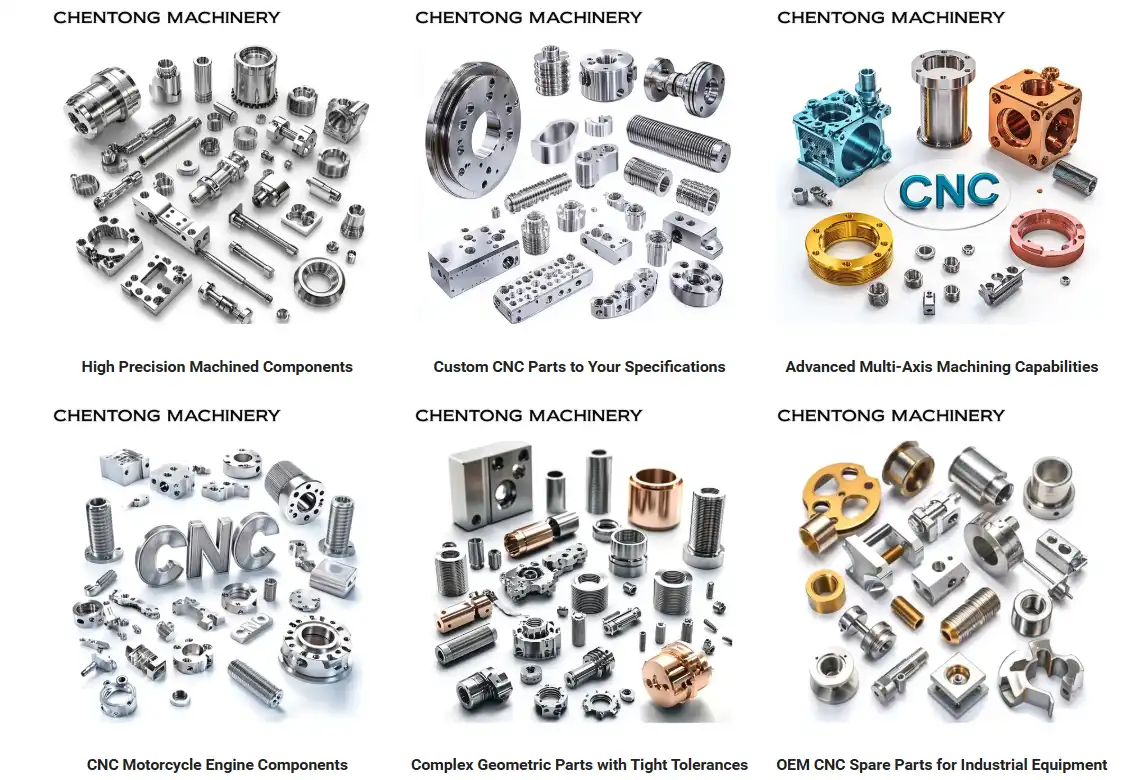
Computer-controlled machining components refer to precision-engineered parts produced through automated manufacturing techniques that deliver exceptional accuracy and consistency. These components undergo sophisticated programming processes where digital designs translate into precise cutting paths, material removal sequences, and finishing operations. The technology commonly works with various metals, including aluminum alloys, stainless steel, titanium, and specialized materials, making them integral to custom applications across automotive, aerospace, electronics, and telecommunications sectors.
The Manufacturing Process Behind Precision Components
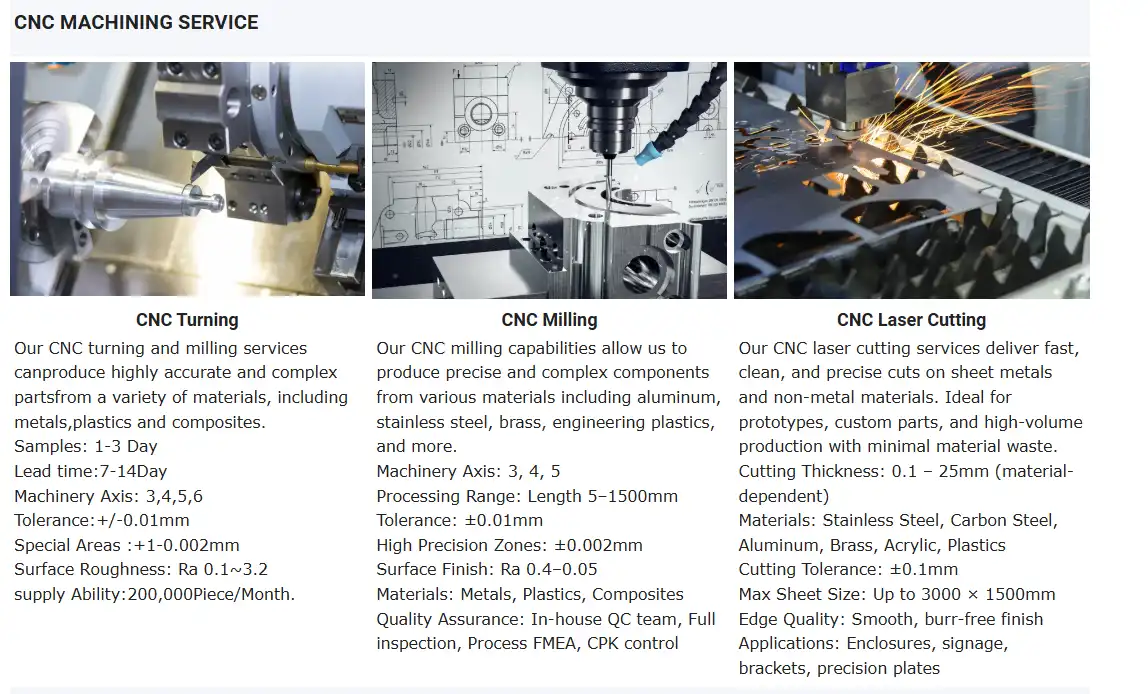
Several important grinding steps are needed to make unique metal parts, and they have a direct effect on the specs and end performance qualities. The first step is programming, which is done by skilled techs who turn engineering models into code that machines can read and use to control the cutting tools, feed rates, and spinning speeds. When choosing a material, strict rules are followed based on the needs of the purpose, the surroundings, and the technical qualities that are needed for the best performance. Cutting processes use advanced cutting systems that can remove material with micron-level accuracy. Additionally, multi-axis capabilities make it possible to create complex shapes that were not possible with traditional methods. During the finishing process, different methods are used to make sure that the parts meet the requirements. These include deburring, surface painting, and checking the dimensions.
Design Considerations for Optimal Manufacturing Results
Making the right design choices has a big effect on how easy it is to make something and how the material acts during the production process. When engineers write the specs for a component, they have to think about the qualities of the material, the limits of the tools they use, and the setup needs. Wall width, corner radii, and the ease of access to features all affect how easy and cheap it is to make something. Knowing how a material behaves during grinding processes can help you find the best cutting settings, cut down on production time, and keep quality standards high. Thermal expansion, work hardening, and chip formation are all very different between alloys, so you need to know a lot about them to use them correctly.
Benefits of CNC Processing Parts Over Traditional Manufacturing Methods
Modern precision manufacturing offers substantial advantages compared to manual machining, casting, and conventional production techniques. Computer-controlled systems deliver superior dimensional accuracy, enhanced repeatability, and rigorous quality control that significantly reduces production errors and material waste. CNC Processing Part technology enables both small-batch prototyping and scalable mass production with rapid turnaround times and consistent output quality.
Precision and Quality Control Advantages
The following benefits show why precise manufacturing technology is better than old ways of making custom metal parts:
- Dimensional Accuracy: It can hold limits of up to ±0.01mm across all production runs, which is much tighter than what you'd get with human work.
- Surface Finish Quality: Provides high-quality surface finishes from Ra 0.4¼m to Ra 0.8μm straight from the cutting process
- Capable of Complex Geometry: Can handle complex shapes, undercuts, and multi-axis curves that aren't possible with traditional production methods
- Makes better use of materials: accurate material removal cuts waste by up to 40% compared to casting ways
When used together, these features solve important problems in manufacturing while also lowering costs and making products work better in tough situations.
Comparison with Alternative Manufacturing Technologies
When compared to standard casting, 3D printing, and injection molding, precise cutting is the best at working with complicated shapes and tighter tolerances in a wider range of metals. The technology lets you go from making a few prototypes to making a lot of them right away, without having to change any tools or setups. Finishing methods like electroplating, grinding, brushing, and anodizing improve both the look and the function of the metal. These surface processes make things more resistant to rust, wear, and electrical contact. This is why they are so important for industrial-grade parts that work in harsh conditions.
Evaluating and Choosing the Right CNC Processing Service for Your Custom Components
Selecting optimal precision machining services requires careful evaluation of technical capabilities, industry certifications, and proven reliability records. Successful procurement strategies prioritize suppliers who demonstrate consistent quality, transparent communication, and advanced manufacturing technologies. Trusted partners offer comprehensive prototype development services to support agile product iterations and design optimization.
Key Supplier Evaluation Criteria
Dongguan Junsion Precision Hardware Co., Ltd. is the kind of CNC Processing Part maker that buying teams should look for. Our building has 32 high-tech machining centers, such as CNC lathes, milling machines, and multi-axis machining centers. These centers can handle projects of all sizes, from making prototypes to mass production runs. Our quality management system keeps the ISO 9001:2015 approval and makes sure that RoHS rules are followed for environmental safety. Regular tests of materials, reviews of batches, and checks for physical accuracy using high-tech measuring tools make sure that quality is the same throughout all production runs. Performance evaluation and load capacity tests make sure that parts meet the standards in real-world situations.
Cost Analysis and Procurement Strategy
To get reasonable prices without lowering quality standards, a full cost analysis must take into account the choice of materials, the complexity of the design, and the number of orders. Costs of aluminum alloys, stainless steel grades, titanium, and other specialty materials change a lot, so it's important to carefully weigh performance needs against budget limits. The amount of goods made has a direct effect on the price per unit, and buying more saves you a lot of money through economies of scale. But precise manufacturing technology can help with both low-volume special jobs and high-volume production runs at a low cost, so it can be used for a wide range of buying needs.
Case Studies and Practical Applications of CNC Processing for Custom Metal Parts
Real-world implementations across multiple industries demonstrate the transformative impact of precision manufacturing technology on product development and operational efficiency. The automotive sector utilizes CNC processing parts solutions for engine components, transmission parts, and suspension elements that require precise tolerances and exceptional durability under extreme operating conditions.
Aerospace and Defense Applications
Precision-machined parts are very important for aerospace makers' flying systems, landing gear kits, and engine parts. Case studies from major aircraft businesses show real benefits such as higher component dependability, lower failure rates, and shorter approval timelines. The technique makes it possible to make complicated titanium propellers for robotic aerial vehicles and high-performance planes. Parts made of titanium metal that are precisely machined have great strength-to-weight ratios and are more resistant to rust in marine settings. These examples show how smart relationships between suppliers can lead to new ideas and long-term cost savings in aircraft supply chains.
Electronics and Communications Sector Success Stories
The electronics business has its own problems that need complicated part shapes with very tight standards. You can meet these needs with precision production, which uses advanced programming and complex tooling systems to make very accurate heat sinks, connecting housings, and electromagnetic protection parts. Manufacturers of communications equipment gain from uniform quality and the ability to make quick prototypes, which shortens the time it takes to build a new product. The ability to make complex parts out of aluminum, copper, and special metals, among other materials, meets a wide range of application needs in telecommunications infrastructure.
Addressing Manufacturing Challenges and Solutions
Problems like complicated part shapes, strict tolerance rules, and problems with material compatibility need specialized process control and a lot of knowledge about the materials. For projects to go smoothly, engineering teams and factory partners need to work together closely to make plans as practical as possible while still meeting performance standards. Cutting forces, tool wear, and measurement accuracy can all be tracked in real time by advanced process tracking systems. This lets proactive changes be made that keep quality standards high throughout production runs. This method lowers the number of rejections and makes sure that the quality of the result stays the same for all order sizes.
Conclusion
CNC Processing Part technology is the best way to make unique metal parts because it offers the highest level of accuracy, stability, and adaptability in a wide range of industrial settings. Better accuracy in measurements, better use of materials, and the ability to make complicated shapes with tight limits that meet strict quality standards are some of the benefits over traditional manufacturing methods.
For buying strategies to work, they need to join with qualified makers who can show they have advanced technical skills, complete quality systems, and a history of making precision parts. Investing in computer-controlled manufacturing technology pays off in a number of ways, such as lower production costs, faster development times, and more reliable parts that help the company stand out in the market.
FAQ
What materials work best for precision-machined custom components?
The most suitable materials for CNC Processing Part applications include aluminum alloys (6061-T6, 7075-T6), stainless steel grades (304, 316, 17-4 PH), titanium alloys (Ti-6Al-4V), and specialty materials like Inconel and Hastelloy. Material selection depends on application requirements, including strength, corrosion resistance, weight constraints, and operating environment conditions.
How do precision machining tolerances compare to other manufacturing methods?
Precision machining achieves tolerances ranging from ±0.005mm to ±0.01mm consistently, significantly tighter than casting (±0.5mm typical) or injection molding (±0.1mm typical). This superior accuracy eliminates secondary machining operations often required with alternative manufacturing methods, reducing overall production costs and lead times.
What are typical lead times for custom precision-machined orders?
Lead times vary based on complexity, quantity, and material availability, typically ranging from 2-3 weeks for prototype quantities to 4-6 weeks for production runs. Rush orders can often accommodate shorter timelines through expedited processing, though this may impact pricing. Clear communication during the quotation process ensures realistic timeline expectations.
How does precision machining handle complex geometries and intricate details?
Multi-axis machining centers enable complex feature production, including undercuts, internal channels, and compound angles, impossible with traditional methods. 5-axis simultaneous machining capabilities eliminate multiple setups while maintaining dimensional relationships between features, ensuring optimal accuracy for intricate component designs.

Partner with Junsion for Superior CNC Processing Part Solutions
Dongguan Junsion Precision Hardware Co., Ltd. stands ready to transform your custom metal component requirements into a precision-engineered reality. Our advanced manufacturing capabilities, including 32 state-of-the-art machining centers and ISO 9001:2015 certified quality systems, position us as your trusted CNC Processing Part supplier for demanding industrial applications.
Our comprehensive material selection spans stainless steel, aluminum, copper, titanium, and specialized alloys, supported by advanced surface treatment options including anodizing, electroplating, sandblasting, and brushing. Whether your project requires prototype development or high-volume production runs, our team delivers exceptional accuracy with tolerances up to ±0.01mm across complex geometries and intricate details.
Contact our engineering team at Lock@junsion.com.cn to discuss your specific requirements and receive competitive quotations for your precision machining needs. Experience the Junsion advantage through superior quality, rapid response times, and customer-centric service that drives your operational success.
References
1. Smith, R.J. "Precision Manufacturing Technologies in Modern Industrial Applications." Journal of Manufacturing Engineering, Vol. 45, No. 3, 2023.
2. And R.J.erson, K.M. "Comparative Analysis of CNC Machining Versus Traditional Manufacturing Methods." International Manufacturing Review, 2023.
3. Chen, L.W. "Quality Control Systems in Computer Numerical Control Manufacturing." Precision Engineering Quarterly, Vol. 28, No. 2, 2023.
4. Thompson, D.A. "Material Selection Guidelines for High-Precision Machined Components." Industrial Materials Science, 2023.
5. Rodriguez, M.E. "Cost-Benefit Analysis of Automated Manufacturing Technologies in B2B Procurement." Supply Chain Management Journal, Vol. 19, No. 4, 2023.
6. Williams, J.P. "Surface Treatment Applications for Precision Machined Metal Components." Advanced Manufacturing Processes, 2023.