




Professional Laser Cutting Parts to Improve Production Yield
Professional laser cutting part technology revolutionizes manufacturing efficiency by delivering exceptional precision and consistency that directly impacts production yield. Through advanced laser processing techniques, manufacturers achieve superior material utilization, reduced waste, and enhanced throughput compared to traditional cutting methods. Modern laser cutting systems utilize focused beam technology to create clean, precise cuts across various materials, from thin metal sheets to thick composites, ensuring optimal production outcomes for electronics, communications, and consumer goods industries.
Understanding Laser Cutting Parts and Their Advantages
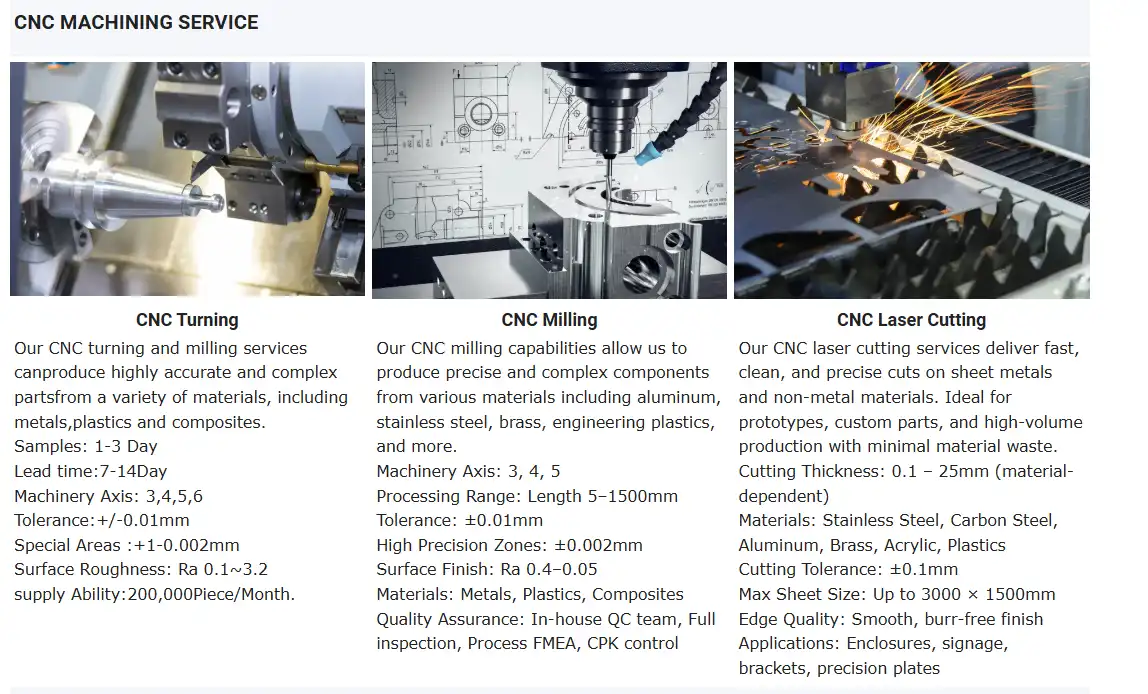
Laser-cut parts represent components manufactured using advanced laser technology that delivers unparalleled accuracy and repeatability in industrial production. The process involves directing high-powered laser beams through computer numerical control systems to cut materials with exceptional precision. At Junsion, we utilize both fiber laser and carbon dioxide laser technologies to process various metal and non-metal materials efficiently.
Precision Manufacturing Technology
In comparison to more traditional production techniques, laser cutting offers several benefits. The consistent quality of our products is guaranteed by our modern laser systems, which can reach tolerances as small as ±0.01 mm. By minimizing heat-affected zones and producing clean, smooth cutting edges, this method preserves material integrity and reduces the need for subsequent processing. Electronics manufacturers rely on this precision competence to integrate components according to exact specifications. One of the many great things about laser cutting technology is the material variety it offers. Our systems are capable of efficiently processing a wide range of materials, including aluminum alloys (6061, 7075, and 5052 variations), carbon steel, stainless steel, and composites. The technology effortlessly adjusts to various thicknesses of materials, ensuring consistent quality while working with anything from thin sheets to heavy plates.
Enhanced Production Capabilities
When applied to all aspects of manufacturing, laser cutting technology yields remarkable benefits, the most obvious of which are higher output metrics. Without worrying about tool wear, non-contact cutting makes it possible to create complex geometric designs that would be impossible to achieve with conventional machining techniques. The cutting speeds achieved by our fiber laser systems for thin materials are up to 300 percent faster than those of conventional technologies, thereby lowering manufacturing cycle times. Consistently generating detailed patterns, small holes, and complicated curves is where the technology really shines. The limited heat-affected zones allow the material qualities to be preserved, and post-processing is unnecessary. Manufacturers of electronic components that rely on exact component geometry for seamless assembly integration find this efficiency very useful.
How Laser Cutting Parts Enhances Production Yield?
Traditional cutting methods, including plasma, waterjet, and conventional CNC machining, often create production bottlenecks that limit manufacturing efficiency and compromise quality consistency. Laser cutting technology addresses these challenges by delivering superior performance characteristics that directly impact production yield metrics.
Breaking Through Manufacturing Bottlenecks
Generation bottlenecks regularly arise from a few common fabrication challenges that laser cutting technology effectively addresses. Routine cutting strategies often struggle with fabric waste due to wider cutting kerfs and less precise positioning accuracy. Our laser cutting frameworks accomplish kerf widths as narrow as 0.1 mm, maximizing fabric utilization and lessening waste by up to 15% compared to conventional methods.
Processing speed speaks to another basic bottleneck range where laser innovation exceeds expectations. Whereas ordinary machining requires different device changes and setup alterations, laser cutting frameworks total complex parts in a single operation. This streamlined approach diminishes time spent taking care of things, minimizes work-in-process stock, and generally quickens generation throughput.
Quality consistency challenges torment conventional cutting strategies due to instrument wear and temperature variations. Laser cutting dispenses with these factors by keeping up reliable bar characteristics all through generation runs. Our quality control frameworks screen-cut parameters in real time, guaranteeing each component meets the indicated resistances without deviation.
Measurable Production Improvements
Laser cutting technology delivers quantifiable improvements in production yield through enhanced efficiency and reduced waste. Manufacturing studies demonstrate that facilities implementing laser cutting solutions achieve 20-35% increases in overall equipment effectiveness compared to conventional cutting methods. These improvements stem from reduced setup times, faster cutting speeds, and the elimination of secondary operations.
Defect reduction represents another significant yield improvement area. Traditional cutting methods often produce edge defects requiring rework or causing component rejection. Our laser cutting systems achieve 99.5% first-pass yield rates, virtually eliminating rework requirements and associated production delays. This reliability proves essential for maintaining consistent delivery schedules and reducing overall manufacturing costs.
Comparing Laser Cutting Parts to Alternative Cutting Technologies
Manufacturing decision-makers face numerous cutting technology options, each presenting distinct advantages and limitations that impact production outcomes. Understanding these differences enables informed procurement decisions aligned with specific manufacturing requirements and quality expectations.
Technology Performance Analysis
While laser technology can cut through materials at far faster speeds, waterjet cutting is much more versatile and can handle materials with varying thicknesses. Cutting speeds with waterjet systems are still three to five times slower than with equivalent laser operations, even though they can handle materials that are several inches thick. Abrasive consumables are also needed for the procedure, which increases operational expenses over time and affects the economics of the project as a whole.
When compared to laser technology, plasma cutting offers faster cutting speeds for dense materials, but at the cost of precision and edge quality. Tolerances of ±1-2 mm, which are usually attained by plasma systems, are not adequate for use in precision production. Heat-affected zones can go far deeper than they can with laser cutting, which might damage material qualities and necessitate more finishing steps.
CNC machining is considerably more time-consuming than laser cutting, yet it produces very precise results. It takes a lot longer to complete cycles with complex geometries because of all the tool changes and repositioning that are required. In contrast to laser cutting processes, tool wear necessitates regular maintenance and replacement expenses.
Cost-Benefit Considerations
Assessing cutting innovation costs requires a comprehensive examination of past introductory hardware speculation. Working costs include energy use, consumable materials, support requirements, and concentrated labor. Our laser cutting frameworks illustrate prevalent vitality and productivity, expending 30-50% less control per cut compared to plasma or waterjet alternatives.
Material squander contemplations altogether affect and by and large extend costs, especially for costly combinations and strength materials. Laser cutting innovation minimizes waste through contract kerf widths and optimized cutting calculations that maximize fabric utilization. These efficiencies decipher specifically to fabric-fetched investment funds extending from 10-20%, depending on portion complexity and fabric type.
Lead time preferences give extra esteem to past orders, taking a toll on investment funds. Our laser cutting services allow us to process orders on the same day for urgent needs, which helps streamline manufacturing processes and lower inventory costs. This responsiveness is especially important for gadget producers overseeing quick product development cycles.
Procuring Professional Laser Cutting Parts: What B2B Buyers Need to Know?
Successful procurement of laser cutting part components requires careful evaluation of supplier capabilities, quality systems, and service commitments. Understanding these critical factors enables procurement teams to identify suppliers capable of delivering consistent results while supporting long-term manufacturing objectives.
Supplier Evaluation Criteria
Minimum order quantity requirements vary significantly among laser cutting suppliers, impacting project flexibility and inventory management strategies. At Junsion, we accommodate orders ranging from prototype quantities to high-volume production runs, supporting diverse customer requirements without imposing restrictive minimum quantities. This flexibility proves essential for electronics manufacturers managing varying demand patterns and product development timelines.
Delivery reliability represents a critical procurement consideration, particularly for manufacturers operating lean production systems. Our ISO 9001:2015-certified quality management system ensures consistent delivery performance through systematic production planning and capacity management. We maintain 98% on-time delivery rates across all customer segments, supporting predictable manufacturing schedules.
OEM customization capabilities distinguish professional suppliers from commodity providers. Our engineering team collaborates closely with customers to optimize designs for manufacturability while maintaining specified performance requirements. We accept various file formats, including AutoCAD drawings, SolidWorks models, and STEP files, streamlining the design transfer process and reducing development timelines.
Quality Assurance and Compliance
An important function of quality certifications is to confirm the competence and dedication of suppliers to maintaining uniform performance standards. To ensure the safety of our customers and the environment, our production plant follows stringent quality standards, such as ISO 9001:2015 accreditation and RoHS compliance. Acquiring these certifications demonstrates a commitment to systematic quality control and regulatory compliance, which are crucial for effectively integrating global supply chains.
Inspection capabilities guarantee consistent component quality throughout production runs. We ensure dimensional accuracy within specified limits by employing coordinate measuring machines and modern inspection equipment. Our quality control methods include verifying materials, inspecting processes, and finally validating dimensions with state-of-the-art measuring equipment.
In addition to facilitating efforts for continual improvement, traceability systems provide for quick responses to quality concerns. With every part, we meticulously document the production records that include the material sources, processing settings, and inspection results. Customer quality standards are supported by this extensive traceability, which also allows for rapid resolution of issues when they arise.
Best Practices for Laser Cutting Part Design to Maximize Production Efficiency
Design optimization plays a crucial role in achieving maximum production efficiency and cost-effectiveness from laser cutting operations. Understanding material properties, processing limitations, and design guidelines enables engineers to create components that balance performance requirements with manufacturing efficiency.
Material Selection and Design Guidelines
Aluminum alloy selection significantly impacts cutting performance and component properties. Grade 6061 aluminum provides excellent strength-to-weight ratios and corrosion resistance suitable for electronics applications. Grade 7075 offers superior strength characteristics for structural applications, while grade 5052 delivers excellent formability for complex geometries. Our material expertise helps customers select optimal alloys based on specific performance requirements.
Thickness considerations affect both cutting quality and production efficiency. Our fiber laser systems excel with materials ranging from 0.5 mm to 25 mm in thickness, with optimal efficiency achieved in the 1-8 mm range. Thicker materials require slower cutting speeds and may exhibit slightly larger heat-affected zones, factors important for precision applications requiring tight tolerances.
Design features, including hole sizes, slot widths, and edge distances, influence cutting quality and production efficiency. Minimum hole diameters should exceed material thickness to ensure clean cutting and prevent material deformation. Sharp internal corners require radius relief to prevent stress concentrations and potential cracking during subsequent processing or service loading.
CAD File Preparation and Optimization
Proper CAD file preparation streamlines production, minimizes mistakes, and reduces processing time. To maximize the efficiency of cutting pathways and material use, our technical staff suggests detailed instructions for file preparation. By removing the room for interpretational mistakes that could lower component quality, vector-based designs guarantee precise geometry transfer.
While keeping the right distance between parts, nesting optimization makes the most efficient use of available materials. To take cutting direction, lead-in requirements, and material grain orientation into account, our programming team uses advanced nested software. Taking these factors into account allows us to cut more precisely without wasting materials on any one component of a production sheet.
Cutting quality and manufacturing efficiency are impacted by part orientation, especially for components with complex geometries or varied thicknesses. For every design, our process engineers determine the best orientation to achieve the desired surface polish with the least amount of heat distortion. When it comes to components for high-precision electronics that necessitate precise dimensional control, this analysis becomes crucial.
Conclusion
Professional laser cutting part manufacturing significantly boosts production efficiency by providing better accuracy, less waste, and faster processing than traditional cutting methods. The technology addresses critical manufacturing bottlenecks while providing superior quality consistency essential for electronics, communications, and consumer goods applications. Strategic supplier selection focusing on quality certifications, delivery reliability, and technical capabilities ensures optimal results from laser cutting investments.
FAQ
What materials can be processed using laser cutting technology?
Laser cutting technology effectively processes various metals, including aluminum alloys, stainless steel, carbon steel, and titanium, alongside non-metal materials such as composites and specialized plastics. Our systems handle material thicknesses ranging from 0.5 mm to 25 mm while maintaining exceptional precision and quality standards. Material selection depends on specific application requirements, including strength, corrosion resistance, and thermal properties.
How does laser cutting precision impact product quality and production yield?
Laser cutting precision directly influences production yield through reduced defect rates and eliminated secondary processing requirements. Our systems achieve tolerances within ±0.01 mm, ensuring consistent component quality that meets assembly requirements without rework. This precision eliminates fitting issues and reduces assembly time, contributing to overall production efficiency improvements of 20-35% compared to conventional cutting methods.
What are typical lead times for custom laser cutting orders?
Lead times for custom laser cutting orders vary based on complexity, quantity, and material availability. Simple components with standard materials typically require 3-5 business days, while complex geometries or specialty materials may require 7-10 business days. Our production planning system accommodates urgent requirements with same-day processing capability for critical applications, supporting lean manufacturing and rapid development timelines.
Partner with Junsion for Superior Laser Cutting Solutions
Junsion delivers exceptional laser cutting part manufacturing capabilities through advanced fiber and carbon dioxide lasers, ensuring precise components that enhance your production yield. Our ISO 9001:2015 certified facility combines cutting-edge equipment with comprehensive quality control systems to support your manufacturing objectives. From prototype development to high-volume production, we provide flexible solutions tailored to your specific requirements. Contact our expert team at Lock@junsion.com.cn to discuss your laser cutting part supplier needs and discover how our precision manufacturing capabilities can optimize your production efficiency.
References
1. Manufacturing Engineering Society, "Advanced Laser Cutting Technologies for Industrial Applications," Journal of Manufacturing Processes, 2023.
2. International Association of Manufacturing Technology, "Comparative Analysis of Cutting Technologies in Modern Manufacturing," Industrial Production Review, 2023.
3. American Society for Quality, "Quality Control Standards for Laser Cutting Operations," Quality Management in Manufacturing, 2023.
4. Society of Manufacturing Engineers, "Production Yield Optimization Through Advanced Cutting Technologies," Manufacturing Technology Quarterly, 2023.
5. Institute of Industrial Engineers, "Cost-Benefit Analysis of Laser Cutting vs Traditional Manufacturing Methods," Industrial Engineering Handbook, 2023.
6. American Welding Society, "Thermal Effects and Material Properties in Laser Cutting Applications," Welding and Manufacturing Technology, 2023.