




Are Tapered or Standard Dowel Pins Better?
What you need to know about your application determines whether curved or normal dowel pins are best. Tapered dowel pins work great in permanent systems that need to be able to lock together on their own and have high vibration resistance, which makes them perfect for use in aircraft and automobiles. Standard dowel pins, on the other hand, work better when things need to be put together and taken apart more often. They offer steady precision alignment for activities that require a lot of upkeep. In precision manufacturing, both types are very important, and knowing what makes them different helps procurement managers make decisions that improve assembly performance while keeping prices low.
Understanding Tapered and Standard Dowel Pins
The main differences between standard and curved dowel pins are how they are shaped and what they are meant to be used for. These precision parts show two different ways to make sure that production units are mechanically aligned correctly.
Design Characteristics and Material Options
Tapered dowel pins have a slightly cone-shaped form and a taper ratio of 1:50. This makes it easier for systems to lock themselves together. This shape improves the accuracy of the line and the strength of the hold by gradually engaging during installation. The cylindrical shape spreads stress more equally along the pin's length, lowering stress levels in certain areas that could cause it to break before it's supposed to.
Standard dowel pins, which are also called straight or cylindrical pins, have the same width all the way along their length and rely on close spec fits to stay in place. The staying power of these pins comes from interference fit principles. This is when the pin diameter is slightly larger than the hole diameter. This creates mechanical retention by stretching the material around the pin.
Both types of pins are usually made from hardened steel, stainless steel, or alloy steel. They come in different sizes that meet international precision standards like ISO 2338 and DIN 6325. The choice of material has a big effect on how resistant it is to rust and how long it lasts. These properties are very important in harsh industrial settings where materials are often exposed to water, chemicals, or very high or low temperatures.
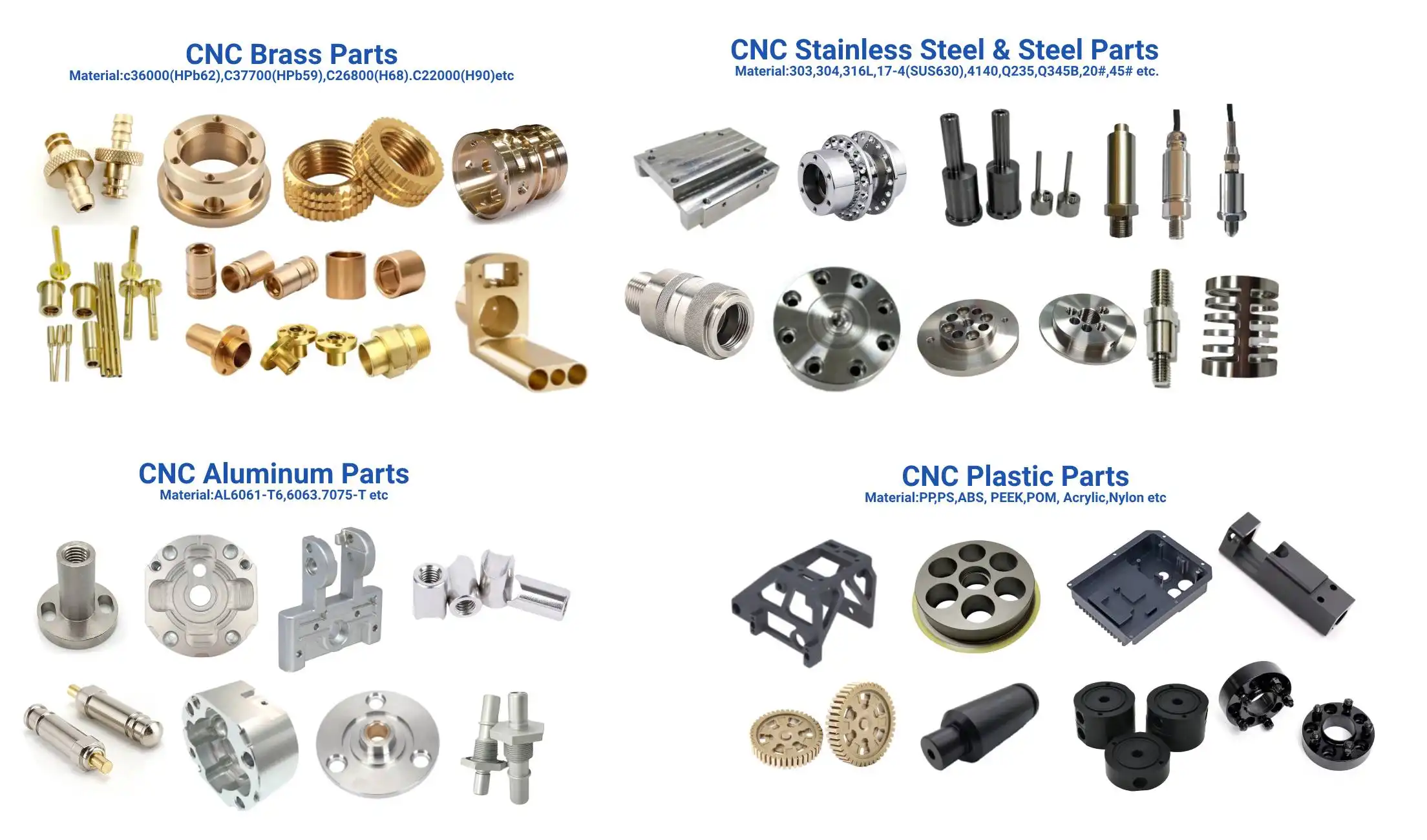
We make precision dowel pins at Dongguan Junsion Precision Hardware Co., Ltd. using cutting edge CNC grinding methods that allow for margins of up to ±0.01mm. We offer 45 different types of materials, such as steel, stainless steel, aluminum alloy, and brass. We choose each one based on its unique use and the area it will be in.
Manufacturing Precision and Quality Standards
To make sure that dowel pins fit and work properly in assembly systems, the process of making them needs to be very precise. Modern CNC turning operations allow for precise control of the thickness and improvement of the surface finish. Heat treatment processes improve mechanical qualities like hardness and resistance to wear.
Surface treatments, such as grinding, anodizing, electroplating, and blackening, are very important to the performance of pins. These treatments make the pins more resistant to rust and reduce friction during installation. Our wide range of surface cleaning options ensures peak performance in a wide range of working conditions.
Key Performance and Application Considerations
The differences in performance between standard and tapered dowel pins include a number of important factors that have a direct effect on the efficiency of the assembly and the amount of upkeep that needs to be done. Engineers can choose the right pin types that meet business needs and performance standards when they know about these differences.
Installation Methods and Tooling Requirements
Because they connect more gradually, tapered pins are better at locking themselves, which makes them perfect for places with a lot of shaking where it's hard to keep things perfectly aligned. During installation, the pin is pushed into place until the taper gets the proper interference fit. This makes a strong connection that doesn't come loose under dynamic loading conditions.
Standard pins work best when they need to be precisely aligned over and over again during assembly and removal. Their uniform diameter makes it easy to enter and remove them using standard tools, which means less equipment is needed and less complicated upkeep. This makes them very useful in situations where parts need to be taken apart from time to time for repair or inspection.
Different pin types have very different installation methods, which affects the tools that are needed and how often they need to be serviced. When installing tapered pins, you usually need to use press fitting techniques, which require special tools that can apply controlled force. Standard pins usually work with easier ways to place them, which means that repair workers don't have to buy as many tools or go through as much training.
Industry Applications and Load Considerations
Manufacturing businesses depend on dowel pins for important adjustment tasks in a wide range of situations. Tapered pins are used in engine block alignment systems during the building of cars because they need to be placed precisely for the best performance. Both types of pins are used in the aircraft business, based on the job. Standard pins are used in serviceable parts, while tapered pins are used in lasting structural systems.
Dowel pins are also used in electronics manufacturing to make sure that circuit boards, connectors, and housing parts are all lined up correctly. Maintaining positioning accuracy at the micron level has a direct effect on how well and how reliably a product works in these tough situations.
When choosing pins, load conditions play a big role. Both steady and dynamic loading situations are taken into account. The self-locking shape of tapered pins makes them better at resisting pulling forces than standard pins, which rely on friction and interference fit to facilitate load transfer.
Comparative Analysis for Procurement Decisions
When choosing dowel pin options that combine performance needs with cost concerns, procurement professionals have to look at a number of factors. In order to make a choice, you have to look at all of your options, understand how costs work, and build relationships with suppliers that will help you reach your long-term business goals.
Cost-Performance Evaluation Framework
The budget includes both the original cost of buying something and the long-term costs of running it, such as repairs, replacements, and the possible effects of failure. Standard pins usually have lower start-up costs because they are easier to make. On the other hand, tapered pins may be a better deal in situations where their better holding power shortens repair times or stops expensive alignment failures.
Through big savings and lower administrative costs, bulk purchasing methods can greatly lower the cost of buying things. By forming relationships with dependable providers, you can get access to technical know-how and customization options that meet the needs of specific applications while keeping costs low.
Choosing the right materials has a direct effect on both how well they work and how much they cost. Stainless steel pins are very expensive, but they don't rust and can be used in tough settings. There are choices made of carbon steel that are cost-effective for normal uses where environmental exposure is restricted. Aluminum metal pins are used in specific situations where lightweight solutions are needed without sacrificing accuracy in alignment.
Supplier Partnership and Quality Assurance
Quality standards like ISO 9001:2015 and RoHS compliance make sure that products sold around the world are always of the same high quality and follow all the rules. These standards give buyers trust in the skills of suppliers and help meet the goals of buying risk management.
To get the best lead time, you need to carefully evaluate your suppliers and plan your capacity so that they are always available during times when production is growing. Suppliers can quickly adapt to changing demand trends while still meeting quality standards thanks to advanced planning tools and flexible production capacity.
Technical help skills are important qualities that a seller should have that go beyond just delivering products. Consulting services for engineers help choose the best pins for each job, and debugging help keeps production running as smoothly as possible when alignment problems happen.
How to Choose the Right Dowel Pin for Your Needs?
To choose the right dowel pin options, you need to carefully look at the needs of the application, the surroundings, and the limitations of the system. This decision process helps engineers and buying managers make sure that product specs are in line with how things are actually made.
Application Assessment Methodology
Alignment accuracy standards set the stage for choosing which pins to use. Applications that need setting accuracy down to the micron level may need high grade pins with better tolerance control. Standard industrial applications, on the other hand, can use standard precision levels without losing usefulness.
Load parameters include both size and direction factors that affect how pin stress is distributed and how they fail. When there is dynamic loading, like vibration or cyclic forces, tapered pins work best because they self-lock. When there is steady loading, either type of pin can work based on the needs.
Extreme temperatures, chemical contact, and high or low humidity are all examples of environmental hazards that can change the choice of material and the need for surface treatment. Corrosive conditions require building out of stainless steel or special coatings that keep working well over long periods of time.
Long-term Performance Optimization
Tolerance compliance stops wear-related damage that can make alignment less accurate over time. Choosing the right pins makes sure that the gaps stay within acceptable limits for the expected service life. This keeps the quality of the production at a high level while reducing the need for upkeep.
Maintenance ease affects the choice of pin type in situations where regular replacement or service is expected. Standard pins are usually better in places that need a lot of care because they are easier to remove and require simpler tools.
Failure outcome analysis helps figure out the right levels of safety and dependability for important tasks. Failures with high consequences might call for more exact pin specs or redundant alignment systems that can place things in case something goes wrong.
Junsion Precision Hardware: Your Trusted Dowel Pin Manufacturing Partner
Dongguan Junsion Precision Hardware Co., Ltd. is a well-known company that makes precision dowel pins and other custom hardware parts of the highest quality. Our company, which was founded in 2019, uses cutting-edge production techniques and thorough quality control systems to make sure that the goods it sells are the best on the market and meet the strict standards of global industrial markets.
Advanced Manufacturing Capabilities
Our modern factory has 32 high-tech CNC tools spread out over 1,600 square meters of production space. This makes it possible to make exact tapered and standard dowel pins. Advanced processing methods, such as CNC turning, five-axis machining, EDM, and grinding, make sure that all product requirements are met with the same level of quality and accuracy in size.
When choosing a material, you can choose from 45 different types of steel, stainless steel, aluminum alloy, brass, and other metals that are specially made for each purpose. Before going into the production process, each material goes through a strict quality check to make sure it meets the requirements for makeup, mechanical properties, and surface features.
Surface treatments like anodizing, electroplating, sanding, sandblasting, and special finishes can improve both the way something looks and how well it works. Our expert team works with clients to suggest the best surface treatments based on the factors of the area and the level of performance needed.
Quality Assurance and Compliance Standards
Through structured process control and efforts to make things better all the time, our ISO 9001:2015-certified quality management system makes sure that the quality of our products stays high. RoHS compliance proof helps us get into global markets and shows that we care about the earth and following the rules.
To keep tolerances of up to ±0.01mm across all production amounts, dimensional accuracy testing uses high-tech measuring tools and statistical process control methods. Regular validation and testing processes make sure that measurements are accurate and can be tracked throughout the whole manufacturing process.
Material testing procedures check the mechanical properties, chemical makeup, and surface features using both approved in-house labs and partnerships with other labs. These thorough testing methods give customers faith in the performance and dependability of the product in a wide range of application settings.
Conclusion
Ultimately, the choice between standard and tapered dowel pins relies on the needs of the application, the surroundings, and the goals of the operation. Tapered pins work best in fixed systems that need high holding strength and resistance to shaking, while standard pins work best in situations that need to be put together often and accurately every time. Both types of pins are important in modern manufacturing, and knowing what makes them different helps you make smart purchasing choices that improve assembly performance while keeping costs in mind. In order to choose the right pins, you need to carefully consider the alignment precise needs, load factors, environmental exposures, and long-term upkeep needs to make sure they work at their best for the entire planned service life.
FAQ
What are the main advantages of tapered dowel pins over standard pins?
Because they are shaped like cones, tapered dowel pins are better at locking themselves in place and won't come loose when there is shaking or dynamic loading. The progressive engagement process spreads stress out more widely, which lowers stress concentrations and raises the general reliability of the joint. Because of these qualities, tapered pins are perfect for fixed systems in places with a lot of vibration, like aircraft and automobiles.
How do I determine the correct pin size and tolerance for my application?
The hole width, the material's qualities, and the holding power needed all affect the choice of pin size. As a general rule, you should choose pins with the right interference fit based on the material's elasticity and the load conditions you expect. Tolerance standards should match the level of accuracy needed for the assembly, taking into account the cost and manufacturing skills. Talking to expert suppliers can help you figure out the best pin specs.
Can tapered and standard pins be used interchangeably in the same application?
Interchangeability depends on the needs of the product and the method used to prepare the holes. Standard pins use straight holes with controlled diameter limits, while tapered pins need holes that have been reamed and have taper angles that match. Changing pin types usually means changing the holes, which can affect how the parts are put together. When engineers look at changing pin types, they make sure that they are compatible and will work well.
Partner with Junsion for Premium Dowel Pin Solutions
Junsion Precision Hardware offers top-notch services for making dowel pins that are suited to your unique business needs. Our advanced CNC capabilities, wide range of materials, and ISO 9001:2015-certified quality systems guarantee dependable performance in tough situations. Our technical know-how and quick reaction times help you reach your buying goals, whether you need tapered pins for permanent systems or standard pins for designs that are easy to maintain. Get in touch with our engineering team at Lock@junsion.com.cn to learn more about unique solutions from a reliable dowel pin maker that is dedicated to quality and new ideas in precision hardware parts.
References
1. "Mechanical Fastening Systems in Manufacturing: Design Principles and Applications," published in the 2023 issue of the International Journal of Manufacturing Engineering.
2. The Society of Manufacturing Engineers published a technical report in 2022 called "Precision Alignment Components: Material Selection and Performance Optimization."
3. In the 2023 book Automotive Manufacturing Technology Handbook, "Dowel Pin Applications in Automotive Assembly Systems,"
4. "Quality Standards for Precision Hardware Components: ISO and DIN Specifications," was published in 2022 by the International Standards Organization.
5. "Cost-Effective Procurement Strategies for Industrial Fasteners and Alignment Components," Supply Chain Management Quarterly, 2023.
6. Materials Science and Engineering Review published a paper in 2022 called "Surface Treatment Technologies for Enhanced Corrosion Resistance in Precision Hardware."