




Custom Metal Hardware: What Should Buyers Look For?
When sourcing custom metal hardware, procurement managers face a crowded market where specifications, certifications, and supplier reliability all intersect. The right precision hardware component can determine whether an assembly line runs smoothly or a medical device meets regulatory approval. This guide cuts through the noise, helping buyers in electronics, communications, and logistics industries evaluate materials, manufacturing processes, finishing options, and supplier credentials—so every purchasing decision delivers measurable value and zero compliance surprises.
Understanding Custom Metal Hardware: Definitions and Types
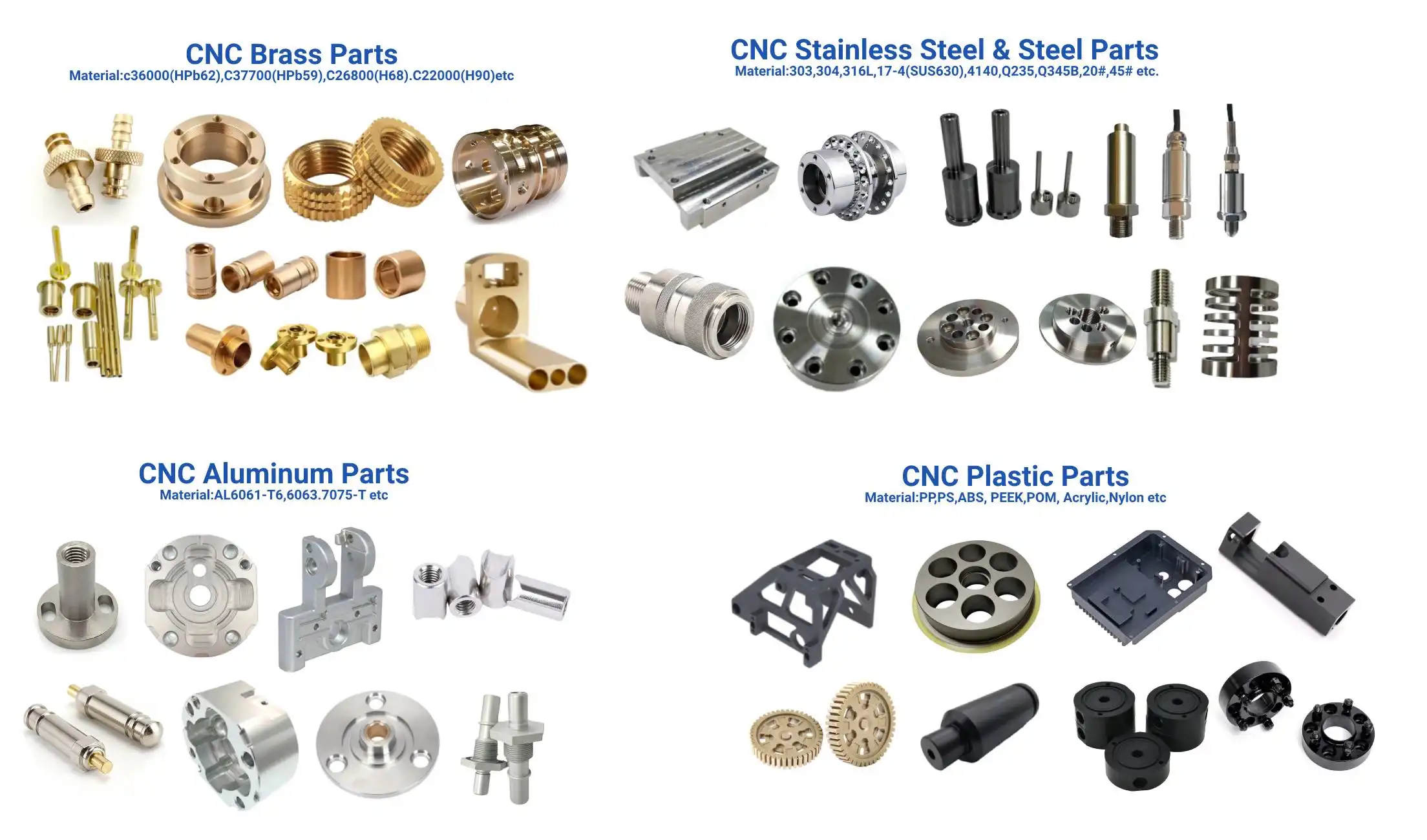
Custom metal hardware is different from general off-the-shelf parts because it is made to the exact specs of the buyer. Standard hardware works for many uses, but precision metal components have specific needs when it comes to size, material, and performance that mass-produced options just can't meet.
There is a useful range of raw materials. Grades 304 and 316 stainless steel are most common in places where rust is a problem, like medical devices and automation equipment near the ocean. Grade 303 stainless steel is better for making complicated parts that are turned. Grade 410 stainless steel is a martensitic type that has the right amount of hardness for machine parts that are likely to wear out quickly. Aluminum is still the best metal for reducing weight, but copper, carbon steel, and titanium are better for certain structural and electrical needs.
CNC precision parts, turned components, stamped metal parts, custom fasteners, and low-volume prototype hardware are all common types of products. Automation equipment, aerospace assemblies, AI-powered devices, home appliances, cars, and robotics platforms all use these parts. The global market for precision-machined components was worth USD 69.5 billion in 2023, according to Grand View Research. It is expected to grow at a CAGR of 5.8% until 2030, mostly due to demand in the medical and electronics industries [1].
Key Factors to Consider When Selecting Custom Metal Hardware?
The first step in structured buying is to match the working setting to the properties of the materials. A part that will be exposed to salt spray in coastal logistics facilities needs a different metal than a part that will be inside a consumer electronics base. When you use the F-1 criteria screening method, you look at the environment, the load capacity, the dimensional tolerance, and the aesthetic needs of the product before comparing quotes from different suppliers.
Material Strength and Corrosion Resistance
When it comes to tensile strength, stainless steel grades do better than aluminum. For example, 316 stainless steel has a strength of about 580 MPa, while common 6061 aluminum alloy only has 310 MPa (ASM International, 2022) [2]. But aluminium's lower density (2.7 g/cm³ vs. 8.0 g/cm³) makes it unbeatable in fields like aerospace and robotics, where every gram matters. Buyers should think about these trade-offs along with the cost of maintenance and the total cost over the product's lifetime, not just the initial unit price.
Dimensional Tolerance and Surface Finish Standards
Tolerance standards have a direct effect on the choice of cutting method and the cost per unit. Tolerances of ±0.01 mm and a surface roughness of Ra0.8 μm or less are absolute requirements for high-precision systems used in medicine or space. Components that don't meet these standards cause repair costs that are much higher than any savings from a cheaper purchase price.
Supplier Certifications and Compliance
If a product has ISO 9001:2015 approval, it means that the quality management system is recorded. If it has RoHS compliance, it means that the product does not contain any restricted hazardous substances. Compliance with REACH and certification to AS9100 (for aircraft applications) add to the trustworthiness of a product. Purchasing managers should ask for up-to-date certificates and compare them to the supplier's actual production scope, not just marketing materials.
The Custom Metal Hardware Manufacturing Process Explained
Knowing how the custom metal hardware manufacturing process works keeps buyers from setting unrealistic standards for wait times and helps them figure out where costs come from. At Junsion, the production process is organised into six steps.
The first step in the process is order confirmation. This is where engineering teams look over CAD drawings (2D or 3D files are best) along with material requirements, tolerances, surface treatment choices, and target quantities. The next step is a design review, which looks at how easy it is to make and marks any geometric features that would make the machining process take longer than it needs to. After prototyping, approval models are made before production on a large scale starts.
Fabrication techniques include CNC precise machining, multi-axis turning, five-axis machining for complicated shapes, and stamping for high-volume flat components. When you need to handle multiple toolpaths at the same time, like with aircraft brackets and robotic joint gear, five-axis machining is very useful. Surface finishes are added after the shape has been formed. Here are the core finishing options available at Junsion:
- Polishing gets surfaces to a mirror or satin finish and brings the surface roughness down to well below Ra0.8μm, which is very important for medical instrument parts that need to keep the risk of bio-contamination as low as possible.
- Anodising adds an electrochemically linked oxide layer to aluminum parts, which makes them more resistant to corrosion and lets you tell products apart by colour in consumer electronics systems.
- Electroplating and electrophoresis deposit metal or polymer coatings that improve electrical conductivity or make complex geometries, like those found in AI-intelligent device enclosures, uniformly covered.
- Sandblasting makes a smooth, matte surface that helps paint stick and gives hardware for home appliances a professional look and feel.
- Powder coating creates a thick, impact-resistant organic layer that can be used on parts of vehicles and storage gear for shipping that are subject to mechanical wear and tear.
All of these finishing choices take into account corrosion resistance, wear resistance, and how the hardware looks—ensuring it works successfully in a wide range of situations. Quality control checks the accuracy of the dimensions and consistency of the surface at every stage of production using 2.5D optical projectors, hardness testers, and salt spray tanks.
Comparing Custom Metal Hardware Options: What Fits Your Needs?
When picking between material types and finishing methods for custom metal hardware, you have to make sure that the function of the part fits the surroundings. The main trade-offs that buyers usually have to deal with are shown below.
Stainless Steel vs. Aluminum — Grades 304, 316, 303, and 410 of stainless steel are stronger, more resistant to heat, and less likely to rust over time. This makes them the best choice for medical tools, flight fasteners, and industrial automation parts. Aluminum is good for robotics and consumer electronics structures that need to be light but still have mild structural loads.
Heavy-Duty vs. Lightweight Hardware — Stamp-formed stainless steel parts are good for transport and vehicle uses where heavy loads are present, while CNC-turned aluminum components work best in AI-intelligent device systems where accuracy is more important than strength.
Finishing Durability — Powder coating and electroplating are the most lasting ways to protect metal in high-humidity or outdoor settings. Anodising works well for electronics used inside. The best way to use sandblasting in harsh environments is as a step before another finish.
Dongguan Junsion Precision Hardware Co., Ltd. has a 1,600-square-metre factory with 32 high-tech CNC machines. These machines can quickly switch between different types of materials and finishing processes during the same production run, which is helpful for OEM buyers who manage multiple SKU product lines.
Procurement Guide: How to Buy Custom Metal Hardware Efficiently?
Getting exact metal parts quickly and easily cuts down on total landing costs and gets rid of costly delays. Buyers should check providers against three basic criteria: they should have valid ISO 9001:2015 certification, proof that they follow RoHS rules, and proof that they have exported to target markets before. Since it started in 2019, Junsion has sent precision hardware parts to more than 20 countries. This gives new clients a way to find references.
Minimum order amounts and wait times depend on how complicated the shape is and what kind of surface treatment is needed. The most effective way to check for accuracy in measurements and finish quality is still to ask for prototype samples before placing a large order. Before production starts, the payment terms, shipping details, and technical support after the sale should all be confirmed in writing. This includes technical support such as warranty coverage and engineering consultation.
When someone asks for a quote, sending full CAD drawings with material grades, tolerance callouts, and surface treatment specifications speeds up the process and cuts down on the number of times the design has to be changed. When buyers send in all the necessary paperwork, they usually get faster responses and more accurate prices.
Conclusion
To choose the right custom metal hardware maker, you need to make sure that their material powers, machining precision, finishing choices, and compliance records all match the needs of your application. When buyers think about these things, they lower the chance of buying something and get better lifetime value. With tolerances of ±0.01 mm, a surface roughness of Ra0.8 μm, and a full range of stainless steel grades and finishing processes, Junsion makes precision-engineered parts for fields where failure is not an option, like medical instruments, robotic systems, and aerospace assemblies.
FAQ
What materials are commonly used in custom metal hardware?
The most common types of stainless steel are 304, 316, 303, and 410. Each has a different level of strength, machinability, and protection to corrosion. Aluminium, copper, carbon steel, and titanium all meet special needs for weight, conductivity, or wear.
What tolerances can precision metal components achieve?
Modern CNC and five-axis machines can regularly achieve dimensional accuracy of ±0.01 mm and surface roughness levels of Ra0.8 μm or less, which are standards needed in medical, aerospace, and robotics applications.
How long does production typically take?
Lead times are based on how complicated the parts are and how many are ordered. Prototype models are usually ready a few days after the plan is approved. At the quote stage, buyers should check with their suppliers directly to make sure they understand the exact deadlines.
Is RoHS compliance standard?
As a minimum, reputable precision hardware manufacturers keep RoHS-compliant materials in stock. This is especially important for electronics and consumer goods that are sent to markets in North America and Europe.
Can I request samples before placing a bulk order?
Yes, asking for prototype samples before mass production is highly suggested and is common practice at quality-focused suppliers. This way, buyers can see for themselves how accurate the measurements are and how smooth the surface is.
Partner With Junsion for Precision Custom Metal Hardware Solutions
Junsion makes unique metal hardware from start to finish, with tolerances of ±0.01 mm, full compliance with RoHS and ISO 9001:2015, and surface treatments that range from anodising to electrophoresis. Junsion is a reliable custom metal hardware seller with customers in over 20 countries. They offer quick responses, strict quality control, and OEM/ODM options. To get a price right away, email Lock@junsion.com.cn with your CAD drawings and specs or go to https://www.junsionprecision.com/.
References
1. Grand View Research. (2023). Precision Machined Components Market Size, Share & Trends Analysis Report. https://www.grandviewresearch.com/industry-analysis/precision-machined-components-market
2. ASM International. (2022). ASM Handbook Volume 2: Properties and Selection—Nonferrous Alloys and Special-Purpose Materials. https://www.asminternational.org/shop/online-resources/asm-handbooks-online/
3. International Organization for Standardisation. (2015). ISO 9001:2015 Quality Management Systems—Requirements. https://www.iso.org/standard/62085.html
4. European Chemicals Agency. (2023). RoHS Directive: Restriction of Hazardous Substances in Electrical and Electronic Equipment. https://echa.europa.eu/regulations/rohs
5. Society of Manufacturing Engineers. (2021). Fundamentals of CNC Machining and Multi-Axis Fabrication. https://www.sme.org/technologies/machining/
6. National Institute of Standards and Technology (NIST). (2022). Surface Roughness Measurement and Standards in Precision Manufacturing. https://www.nist.gov/topics/manufacturing