




Top 7 Benefits of Custom Nylon Parts for OEM Equipment
When it comes to original equipment manufacturers' (OEM) equipment, custom nylon parts offer demonstrable benefits in the areas of electronics, automotive, logistics, and industrial automation. In a single-material solution, these polymer components that have been precision-engineered combine mechanical strength, chemical resistance, and design versatility. There is a growing reliance on nylon components among procurement managers and product developers all over the world. This is due to the fact that nylon components reduce weight, cut lifetime costs, and meet stringent regulatory standards such as ISO and RoHS. Nylon components routinely outperform many metals and alternative polymers in challenging operational settings. As a result, they are a strategic procurement choice for worldwide OEM supply chains. Nylon components can be sourced as CNC-machined components or as injection-moulded assemblies.
Exceptional Durability and Mechanical Strength
In addition to being able to withstand high-tension loads without breaking, nylon components are designed to withstand contact without becoming worn out. Nylon 6/6 has compressive strengths that range from 70 to 85 MPa, according to the Modern Polymers Handbook from the year 2000. This is higher than the compressive strengths of many common polymers and on par with some forms of aluminium, despite the fact that it is far lighter. For each and every work that Junsion does, material grades such as Nylon 6, Nylon 6/6, Nylon 12, and glass-filled nylon are taken into careful consideration. Through the utilisation of CNC machining, five-axis machining, and precision milling, the tolerances are maintained at a level of ±0.01 mm, and the surface roughness is maintained at 0.8 μm.
There is a discernible reduction in the number of unplanned downtime and maintenance intervals that occur when procurement teams request nylon parts that are made to order. This endurance immediately correlates to lower overall lifetime costs and longer equipment service life in automation equipment and automotive assembly, both of which are environments in which fatigue cycles occur on a regular basis.
Superior Temperature and Chemical Resistance
The temperature range that nylon polymer parts are able to maintain their shape throughout is typically from -40 degrees Celsius to +120 degrees Celsius for regular grades, and much higher when glass is included for support. Common solvents, oils, fuels, hydraulic fluids, and other things that eat away at metals over time do not react with them. They are not affected by these substances. When it comes to under-hood assembly in automobiles, industrial conveyor systems, and electrical housings that are going to be cleaned, precision nylon parts are the ideal option.
In comparison to acetal and PVC, which are two other prominent alternatives, nylon is more resistant to aliphatic hydrocarbons and weak acids, as stated in the Plastics Technology Handbook (Manas-Zloczower, 2009). For purchasing teams that are in charge of supply lines in markets that have diverse climates, this chemical resilience reduces the number of times that parts need to be replaced as well as the expenses associated with warranties.
Lightweight Yet High-Performance Solution
When it comes to commercial applications, the fact that nylon parts are sturdy despite their weight is one of the most valuable characteristics that they possess. Aluminium has a density of 2.70 grams per cubic centimetre, whereas steel has a density of 7.85 grams per cubic centimetre. The density of nylon 6/6 is approximately 1.14 grams per cubic centimetre. When it comes to transportation, robotics, and home appliance assembly, the utilisation of machined Nylon parts rather than metal brackets or bushings results in a reduction in dynamic loads, a reduction in energy consumption, and ease of installation.
The total weight savings of this piece of equipment add up to a significant amount. A nylon gear or bushing may save a few grams, but when that savings is piled up over hundreds of assemblies in a production run, it significantly reduces the Total Cost of Ownership (TCO). This is because the savings are carried over from one assembly to the next. Using their five-axis machining capability, Junsion is able to create intricate lightweight geometries with the same ±0.01 mm accuracy that is required for high-tolerance OEM assemblies.
Flexibility in Design and Manufacturing Processes
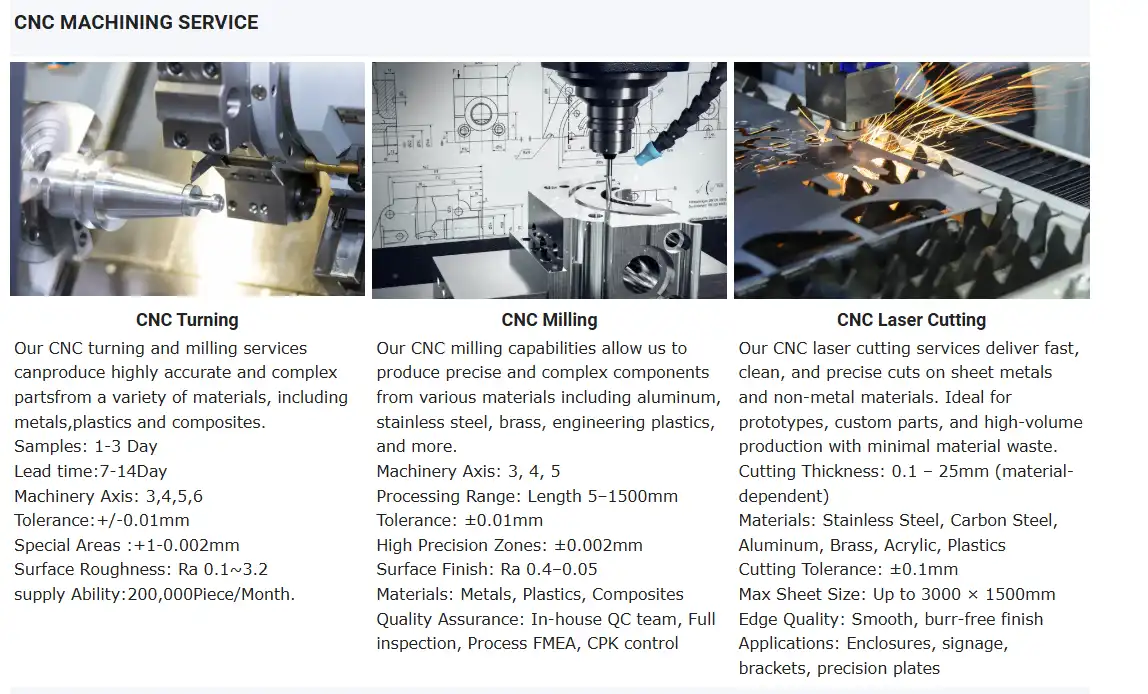
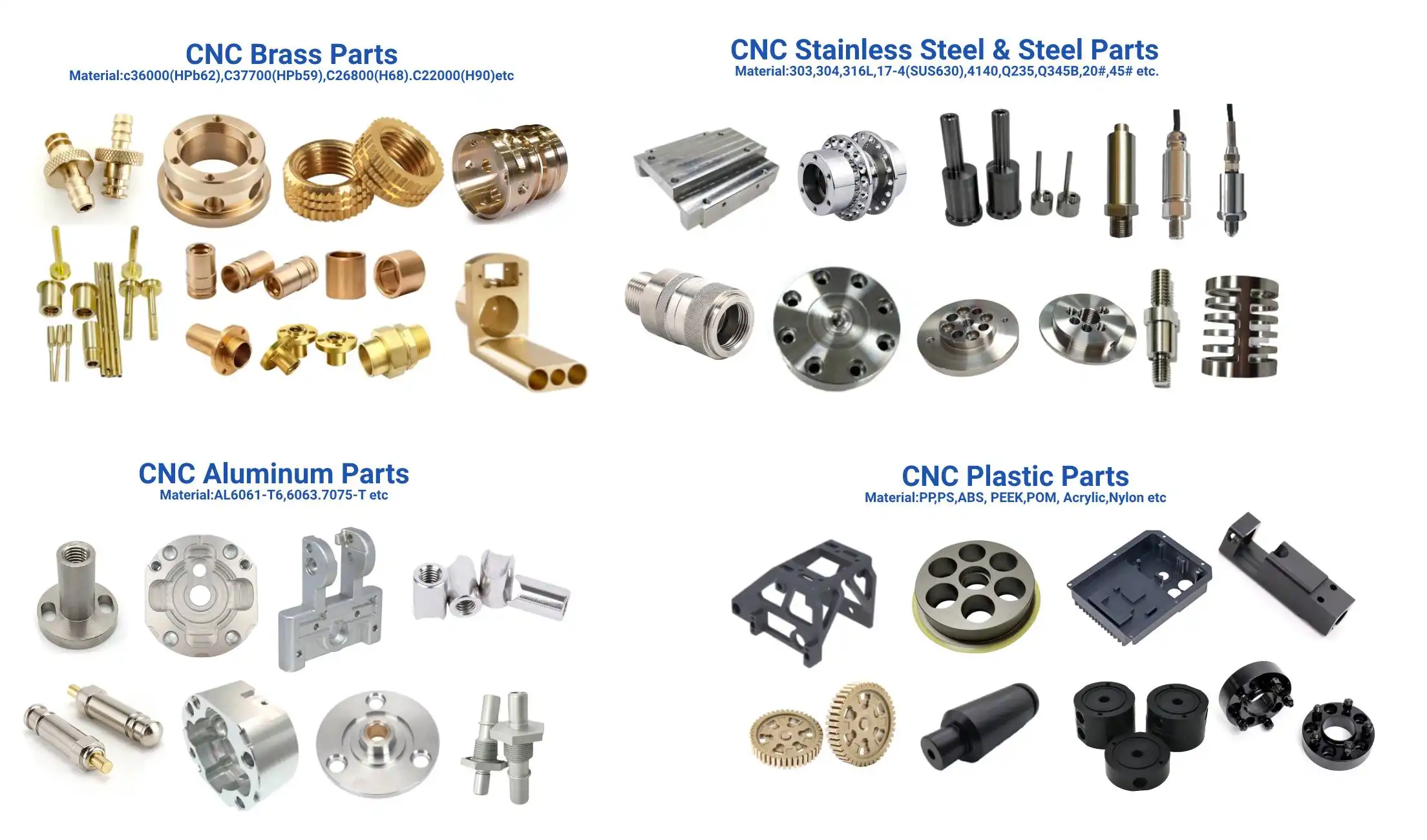
These days, making Nylon parts isn't limited to making simple shapes. CNC turning, five-axis machining, E-turning, and precision milling are all used together at Junsion to make parts with complex internal channels, tight-tolerance bores, and surfaces with many curves. With options like polishing, painting, sandblasting, plating, blackening, electrophoresis, QPQ, and wire drawing, the surface of each part can be finished in a way that meets OEM requirements for both function and appearance.
Here are the core manufacturing capabilities. Junsion brings to custom nylon component production:
- CNC Machining & Five-Axis Processing: Achieves complex 3D profiles with tolerances held to ±0.01 mm, suitable for gear blanks, bushings, and structural brackets used in automation equipment and vehicles.
- Rapid Prototyping Support: Engineering teams collaborate on 2D/3D CAD drawings, material selection, and design optimisation before committing to tooling, compressing the design iteration cycle.
- Scalable Batch Production: From prototype quantities to large OEM runs, in-process quality control (IPQC) and 100% critical dimension inspection ensure consistency at every volume tier.
These capabilities directly address the procurement challenge of moving from design approval to volume delivery without quality deviation. Junsion's 32 advanced CNC machines and 1,600 m² facility in Dongguan, Guangdong, support concurrent projects across multiple industries, including electronics, communications, and consumer goods.
Cost-Effectiveness and Value Addition
Nylon components have cheaper raw material prices, require less machining time for many geometries, and generate fewer scrap losses than stainless steel or aluminium components. In addition, nylon components yield fewer scrap losses. When lifecycle costs are taken into consideration, the total cost advantage becomes significantly greater. This is because nylon has diminished lubrication requirements as a result of its inherent low-friction qualities, fewer replacement cycles, and cheaper shipping costs as a result of its reduced weight.
Additionally, customised nylon components simplify the process of inventory management. Instead of stocking many standard parts that approximate a design need, procurement teams can specify exact-fit components that consolidate part numbers and eliminate store overhead. This allows for a more efficient use of storage capacities. This inventory optimisation is especially helpful for manufacturers of logistics and electronics who are responsible for managing complicated bills of materials across multiple production sites around the world.
Enhanced Corrosion Resistance and Environmental Stability
Nylon polymer outperforms PVC, rubber, and acetal in resistance to moisture absorption cycling and environmental aging. While nylon does take some moisture, precision-machined components from Junsion account for dimensional limits that keep fit and function across humidity differences. For outdoor automation equipment, vehicle-mounted assemblies, and home appliances operating in humid or chemically active environments, nylon's corrosion immunity is a decisive advantage over ferrous metals.
Junsion's materials meet RoHS and REACH standards, and the quality control system is ISO 9001:2015 certified. These certifications ensure procurement managers in regulated markets — especially in North America and Europe — that sourced nylon components meet environmental and safety compliance requirements without an extra third-party verification load.
Seamless Integration with OEM Supply Chain and Custom OEM Services
Partnering with an expert nylon parts maker removes friction from the buying cycle. Junsion offers joint engineering support from initial drawing review through material selection, surface finish specification, and first-article inspection. Transparent prices, adjustable MOQs, and reliable delivery to more than 20 countries reduce the sourcing risk that procurement managers face when qualifying new component providers.
The production workflow — material inspection, CNC machining, IPQC, surface treatment, final inspection, and controlled packaging — ensures that every shipment of Nylon parts meets the dimensional and surface quality agreed at order placement. Advanced measurement tools, including 2.5D projectors and hardness testers, back every outgoing inspection.
Conclusion
When compared to other materials, custom nylon components offer a compelling combination of mechanical performance, chemical resistance, weight efficiency, and design freedom. Few other materials can match this combination at a cost that is comparable. Genuine procurement problems can be resolved with designed nylon parts, which can be used for everything from precision bushings in automation equipment to structural brackets in automobiles and enclosures in household products. With the elimination of doubt and the improvement of supply chain confidence, sourcing from a competent manufacturer that possesses robust quality systems, demonstrated process skills, and regulatory compliance is essential. It is possible for procurement managers and product producers to make decisions regarding where to obtain polymer components with the assistance of the seven benefits that are listed here.
FAQ
What nylon grades does Junsion offer for custom OEM components?
Junsion sells glass-filled nylon, Nylon 6, Nylon 6/6, and Nylon 12. Each grade is chosen based on the application's needs for mechanical load, temperature range, and chemical exposure.
What tolerances and surface quality can Junsion achieve on machined nylon parts?
It can hold dimensional tolerances of ±0.01 mm and get surface roughness values of ≤ Ra 0.8 μm for milling, CNC turning, and five-axis machining.
Are Junsion's nylon components RoHS and ISO compliant?
Yes. All the materials used are in line with RoHS and REACH rules, and the factory has a quality management system that is ISO 9001:2015 certified and does a 100% critical dimension inspection.
What surface finishes are available for precision nylon parts?
Finishes like sanding, painting, anodising, sandblasting, plating, blackening, electrophoresis, QPQ, and wire drawing are all options, based on what you need for function and looks.
How do I submit a design for a custom nylon component quote?
Please send Lock@junsion.com.cn detailed 2D or 3D CAD drawings, along with material specifications, tolerance requirements, the surface finish you want, and the number of items you want to make.
Partner with Junsion for Precision Nylon Parts Manufacturing
Junsion is a reliable company that makes Nylon parts and sells quality parts that are ISO 9001:2015-certified and RoHS-compliant to OEM clients around the world. As long as the surface is smooth (Ra 0.8 μm) and there are no errors larger than ±0.01 mm, we can make Nylon parts that are exactly what you want. Send in your CAD models and project needs right away. To get a quote, email us at Lock@junsion.com.cn or go to https://www.junsionprecision.com/.
References
1. Harper, C. A. (2000). Modern Plastics Handbook. McGraw-Hill. Referenced in Section 1 for nylon 6/6 tensile strength data. https://www.mhprofessional.com/modern-plastics-handbook-9780070267145-usa
2. Manas-Zloczower, I. (2009). Mixing and Compounding of Polymers: Theory and Practice. Hanser. Referenced in Section 2 for nylon chemical resistance comparisons. https://www.hanserpublications.com/Products/978-1-56990-451-5.aspx
3. Rosato, D. V., & Rosato, M. G. (2012). Injection Moulding Handbook (3rd ed.). Springer. Referenced in Section 4 for injection moulding and CNC process capabilities. https://link.springer.com/book/10.1007/978-1-4615-4597-2
4. Brydson, J. A. (1999). Plastics Materials (7th ed.). Butterworth-Heinemann. Referenced in Section 6 for nylon's environmental and moisture resistance properties. https://www.sciencedirect.com/book/9780750641326/plastics-materials
5. International Organization for Standardisation. (2015). ISO 9001:2015 Quality Management Systems — Requirements. ISO. Referenced in Sections 6 and 7 for quality certification standards. https://www.iso.org/standard/62085.html
6. European Chemicals Agency. (2023). RoHS Directive and REACH Regulation Compliance Guidelines. ECHA. Referenced in Section 6 for RoHS and REACH regulatory compliance. https://echa.europa.eu/regulations/reach/understanding-reach