




How Do Custom Camera Parts Compare to Standard Parts?
Procurement managers have to make a tough choice when looking at camera parts for industrial uses: do they want custom camera parts or standard alternatives? Custom camera parts are precisely engineered parts that are made to exact specs using high-tech methods such as EDM, CNC machining, and five-axis processing. Tolerances of ±0.01mm and surface roughness ≤Ra0.8μm are possible with these custom solutions, which makes it easy to integrate them into specific image systems. Standard parts, on the other hand, are mass-produced to generic specs, so they are always available but can't be changed much. Which of these choices you make has a direct effect on how well the product works, how much it costs to own, and how it stands out from competitors in the tech, communications, and consumer goods industries.
Introduction
The imaging business needs parts that are both technically accurate and cost-effective. As camera technology improves, B2B clients like buying managers, product developers, and OEM engineers have to make more difficult sourcing choices. Whether you choose custom-made parts or off-the-shelf alternatives affects everything from how long it takes to make a sample to how you plan to maintain it over time. This in-depth guide looks at the main differences between customised and standard camera hardware, including how they are made, what effects they have on the supply chain, and how they are used in real life. We made this analysis to help procurement professionals figure out important things like design flexibility, quality assurance protocols, and total lifecycle costs. Knowing these differences helps you choose a better vendor, lower your risks, and make sure your goals are aligned with your vendors. The tips in this article will help you decide when it's worth spending money on customised solutions and when standard ones will do. This is true whether you're putting parts into inspection equipment, scientific tools, or broadcast systems.
Understanding Custom Camera Parts and Standard Parts
What Defines Custom Camera Components
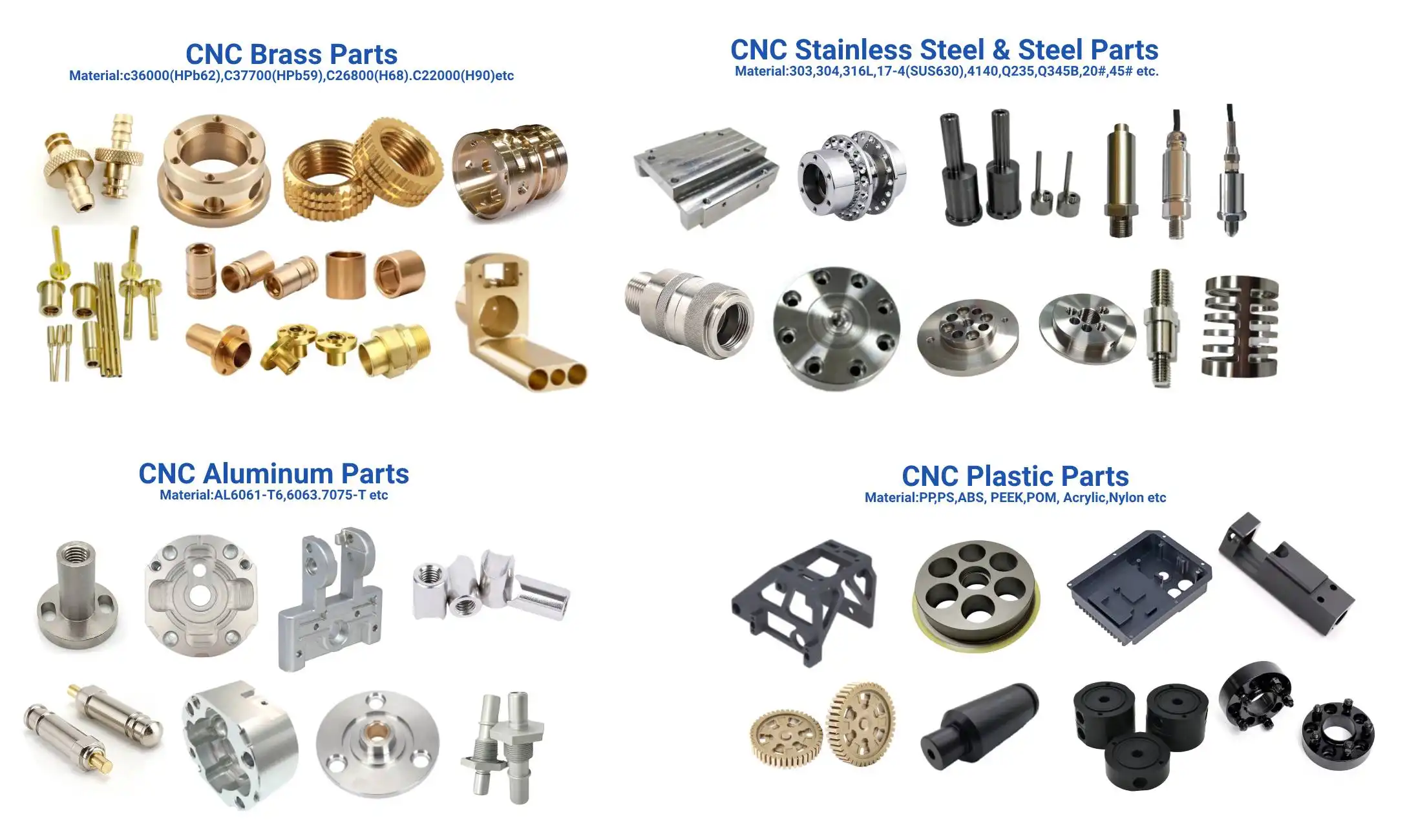
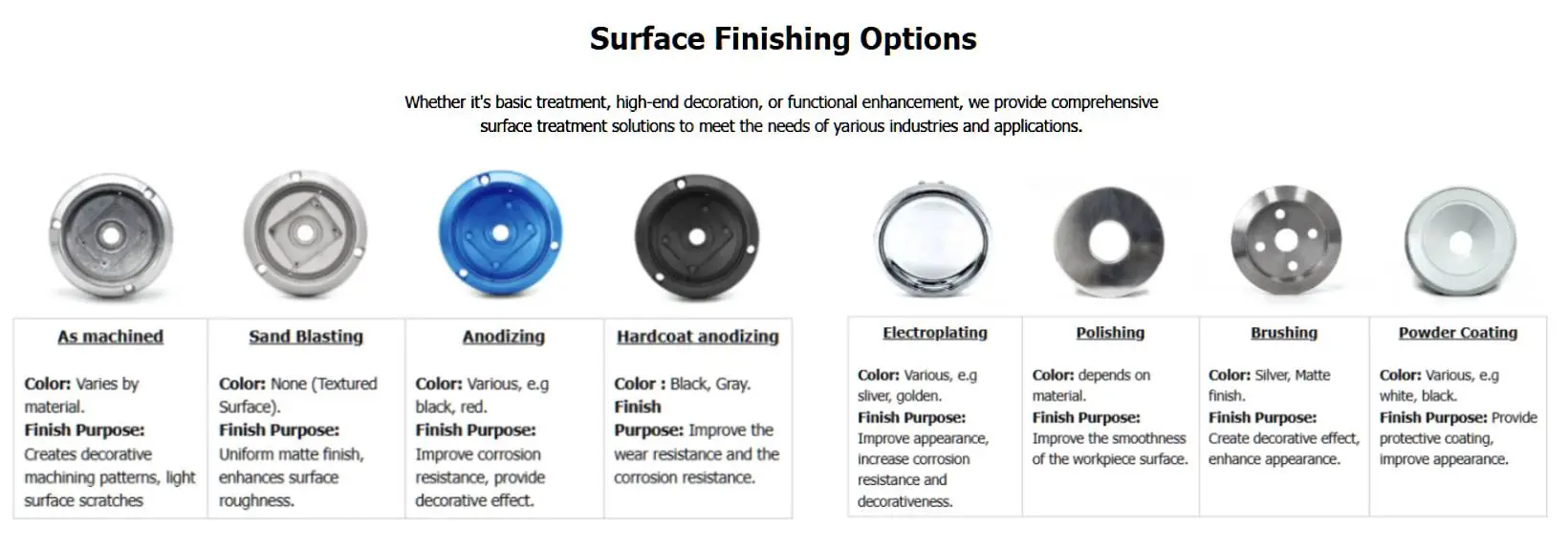
Tailored camera parts are engineered solutions that are made to meet the individual needs of each client instead of universal standards. Lens mounts, sensor holds, camera housings, shutter mechanisms, focus rings, filter threads, and tripod mounts are some of these precise parts. These parts are made from different materials, such as aluminium alloy, stainless steel, brass, and special plastics, which are chosen based on performance and environmental needs. CNC turning, five-axis machining, EDM, hobbing, and grinding are used in the manufacturing process to achieve the level of accuracy in dimensions that standard output can't match. Custom solutions are different because they can be made to fit non-standard geometries and unique designs. Dongguan Junsion Precision Hardware Co., Ltd. has 32 high-tech CNC machines spread out over 1,600 square meters. These machines can make parts with tolerances as tight as ±0.01mm. Surface processes like anodising, sandblasting, plating, blackening, and QPQ improve how well something resists corrosion, wear, and light. These processes take raw machined parts and turn them into useful parts that can work in harsh conditions and keep their mechanical and optical integrity.
Characteristics of Standard Camera Parts
Standard components are mass-produced things that Custom camera parts are made to meet industry standards set by groups such as ISO and ANSI. Because they are made in large quantities, these off-the-shelf parts can work with a lot of different camera systems and brands. Standard lens mounts, like the Canon EF or Sony E-mount, use global standards. This lets lenses be used with other cameras, but it limits new design ideas. Using standard tools and established supply lines, the production method puts cost-effectiveness over customisation. Standard parts lower per-unit costs and get rid of design lead times, but they make it harder for products to stand out. When procurement teams buy standard components, they get them right away and know how much they will cost, but they can't make them work better for certain uses. This trade-off works well in situations where generic specifications meet the practical Custom camera parts needs, and the competitive edge comes from things other than the uniqueness of the component.
Classification Based on Technical Requirements
Camera components are classified into mechanical, optical, and electromechanical categories, each presenting distinct customization opportunities. Mechanical parts like focus rings and tripod mounts primarily address structural and ergonomic needs. Optical components, including lens elements and filter threads, demand extreme precision to prevent aberrations. Electromechanical assemblies such as shutter mechanisms integrate moving parts with tight tolerances to ensure consistent operation across millions of cycles. Understanding these classifications helps procurement professionals assess which components justify custom manufacturing. High-stress mechanical interfaces, specialized optical paths, and unique form factors typically benefit most from tailored solutions. Conversely, low-load structural elements and non-critical hardware often perform adequately as standard items, allowing budget allocation toward components where customization delivers measurable performance gains.
Key Differences Between Custom and Standard Camera Parts
Performance and Precision Advantages
Custom-engineered camera components deliver performance characteristics unattainable through standard manufacturing. Precision tolerances of ±0.01mm enable tighter mechanical interfaces, reducing play in lens mounts and eliminating focus shift during lens attachment. Surface roughness specifications of Ra0.8μm or better minimize light scattering in optical paths, directly improving image contrast and resolution. These specifications matter critically in scientific imaging, industrial inspection, and broadcast applications where optical performance translates to measurable business outcomes. Material selection further differentiates custom solutions. While standard parts typically use cost-optimized alloys with generic properties, custom manufacturing allows specification of materials like aerospace-grade aluminum or titanium alloys. These materials provide superior strength-to-weight ratios, thermal stability, and corrosion resistance. Our manufacturing capabilities at Junsion include working with stainless steel for marine environments, brass for electromagnetic compatibility, and specialized plastics for weight-sensitive applications. This material flexibility enables optimization for specific operating conditions that standard components cannot address. Durability testing reveals significant performance gaps.
Design Flexibility and Innovation Potential
The primary advantage custom manufacturing offers is design freedom. Product developers working on proprietary camera systems require components that integrate seamlessly with unique mechanical architectures. Standard parts impose design constraints, forcing engineers to compromise optical layouts or mechanical configurations to accommodate available components. Custom solutions eliminate these limitations, allowing camera designs optimized for performance rather than component availability. We encounter this advantage repeatedly when supporting OEM clients. A recent project involved developing lens mounts for a specialized industrial inspection system requiring a non-standard flange distance. Standard mounts would have compromised the optical design, necessitating additional corrective elements that increased cost and degraded performance. Custom-manufactured mounts solved this challenge, enabling optimal optical design while maintaining mechanical robustness. This flexibility accelerates innovation and enables product differentiation in competitive markets. Prototyping benefits substantially from custom manufacturing capabilities.
Cost Considerations and Total Ownership Analysis
Initial pricing appears to favor standard components, with per-unit costs reduced through mass production economies. However, the total cost of ownership analysis reveals a more nuanced picture. Custom components eliminate compatibility workarounds, reducing assembly labor and secondary operations. Products designed around optimized custom parts often require fewer components overall, simplifying supply chains and reducing inventory carrying costs. Lead time impacts also affect cost comparisons. Standard parts offer immediate availability but limited specifications. Projects requiring non-standard features face delays sourcing alternatives or redesigning products around available components. Custom manufacturing involves longer initial Custom camera part lead times—typically 3-6 weeks for initial production—but eliminates costly design compromises. Our clients consistently report that upfront investment in custom tooling yields savings across product lifecycles through reduced warranty claims, simplified servicing, and improved end-user satisfaction. Risk mitigation represents another cost dimension. Standard component manufacturers discontinue products regularly, forcing redesigns and requalification.
Manufacturing and Supply Chain: Custom vs Standard Camera Parts
Custom Component Production Workflows
Our tech team and clients work together on detailed designs before they start making precision camera parts. This step turns functional needs into specifications that can be made. It does this by choosing the right materials, tolerances, and surface treatments for the job. We use Design for Manufacturability (DFM) research to make designs as efficient as possible for production while still meeting performance standards. This collaborative method finds problems before they are machined, which cuts down on prototype changes and speeds up the time it takes to get a product to market. For production, our 32 CNC tools do tasks in a certain order. Roughing processes remove large amounts of material first, then precision milling, turning, and grinding are used to get to the final sizes. Five-axis machining is needed for complex geometries, which means that continuous contouring can't be done with three-axis tools. EDM can work with hard materials and small, complex shapes like deep, narrow holes or radii. Every step is done according to the rules set out in ISO 9001:2015 for quality control, and measurements are checked at key points.
Supply Chain Dynamics and Lead Times
Standard part delivery networks are very different from supply chains for custom manufacturing. Standard parts go through established routes and are kept in stock at different levels. This allows for next-day delivery but limits the flexibility of specifications. Custom parts are made to order, which means that production starts when a customer places an order. This method gets rid of the costs of keeping inventory on hand, but it also increases lead times, which can be anywhere from three to six weeks based on the complexity and volume of orders. Another difference in the supply line is the minimum order quantity (MOQ). Standard parts can be bought in single units, but in order for custom manufacturing to be profitable, minimum numbers are usually needed to spread out the costs of tooling and setup. At Junsion, we help our clients set reasonable MOQs that strike a balance between keeping track of inventory and making production more efficient. Large OEM clients can benefit from blanket purchase orders with planned releases, which make sure that parts are available and help keep working capital in check. When you make something to order, your ties with your suppliers become more important.
Quality Assurance and Certification Standards
Quality control protocols differ significantly between custom and standard manufacturing. Standard parts undergo periodic batch testing with statistical sampling, relying on process control to maintain consistency. Custom components, produced in smaller volumes with unique specifications, require more comprehensive inspection. Each production run at our facility includes dimensional verification using coordinate measuring machines (CMM) with micron-level accuracy. Critical features undergo 100% inspection, while non-critical dimensions follow sampling plans appropriate to volume and risk. Certification requirements shape manufacturing approaches. Our ISO 9001:2015 certification ensures systematic quality management across all operations, from material receipt through final shipment. RoHS compliance addresses environmental and safety concerns, particularly critical for consumer electronics applications. These certifications provide assurance to procurement teams that components meet regulatory requirements and industry standards. We maintain complete traceability through production, enabling root cause analysis if quality issues emerge and demonstrating due diligence for regulated industries.
Practical Applications and Industry Use Cases
Professional-Grade Camera Systems
High-end camera manufacturers increasingly specify custom components to differentiate products in competitive markets. Cinema cameras demand lens mounts with exceptional mechanical stability to support heavy optics while maintaining precise flange distances. Standard mounts introduce play that becomes apparent when operators swap lenses repeatedly during production. Custom-engineered mounts with tighter tolerances eliminate this play, ensuring consistent focus and reducing on-set delays. The resulting reliability justifies premium pricing and builds brand reputation among professional cinematographers. Thermal management represents another area where customization delivers value. High-resolution sensors generate substantial heat, requiring camera housings designed for efficient heat dissipation. Standard housings follow generic thermal designs inadequate for high-power sensors. Custom camera bodies integrate heat pipes, optimized fin geometry, and thermal interface materials matched to specific sensor heat loads. These thermal solutions prevent performance throttling and extend sensor lifespans, particularly valuable in continuous-operation applications like surveillance or industrial monitoring.
Industrial Inspection and Scientific Imaging
Machine vision systems in manufacturing environments present unique requirements poorly addressed by standard camera parts. Inspection systems often require cameras positioned in confined spaces with specific mounting orientations. Custom camera bodies enable compact form factors with integrated mounting features, eliminating external brackets that add bulk and vibration sensitivity. These optimized packages integrate seamlessly into production lines, reducing installation complexity and improving measurement repeatability. Optical customization becomes essential in specialized imaging applications. Multispectral imaging systems require precise positioning of multiple sensors with exacting angular relationships. Standard camera bodies cannot accommodate the necessary sensor positions, forcing compromises in optical design. Custom sensor holders position imaging elements with micron-level accuracy in three-dimensional space, enabling optimized optical performance. This precision directly impacts measurement accuracy in applications ranging from agricultural analysis to pharmaceutical inspection. Scientific research applications demand stability across extended periods.
OEM Integration and Product Differentiation
Original equipment manufacturers leverage custom camera components to Custom Camera Parts create distinctive products in commodity markets. Consumer camera manufacturers differentiate through ergonomic innovations enabled by custom body designs. Non-standard grip profiles, button placements, and display integrations require custom housings that standard components cannot provide. These design elements become brand identifiers, creating customer loyalty and justifying premium pricing in competitive segments. Integration density improves dramatically with custom components. Standard parts include mounting features and interfaces serving diverse applications, resulting in larger footprints than application-specific designs require. Custom components eliminate unnecessary features, reducing size and weight while maintaining functionality. This optimization matters critically in mobile devices, drones, and wearable cameras, where size and weight directly impact usability. We work closely with OEM clients to identify opportunities for integration, combining multiple standard Custom Camera parts into single custom components that reduce assembly costs while improving reliability.
How to Make Informed Procurement Decisions Between Custom and Standard Parts
Evaluation Criteria for Component Selection
Successful procurement decisions balance multiple competing factors. Quality considerations include dimensional accuracy, material properties, and surface finish specifications. Standard parts meet generic quality baselines adequate for many applications, but cannot achieve the precision custom manufacturing delivers. Procurement teams should quantify quality requirements explicitly, specifying tolerances, surface characteristics, and material grades necessary for acceptable performance. This clarity enables objective comparison between custom and standard alternatives. Price analysis must extend beyond unit costs to total ownership expenses. Calculate costs, including design modifications to accommodate standard parts, secondary operations for compatibility, inventory carrying expenses, and warranty claims from performance shortfalls. Custom components typically show higher unit prices but reduce these indirect costs. Develop lifecycle cost models incorporating expected production volumes, service intervals, and obsolescence risks.
Supplier Evaluation and Partnership Development
The quality and dependability of handmade parts depend on what the supplier can do. Check out possible manufacturers' equipment, quality certifications, technical know-how, and production capacity before hiring them. The powers of the machine should match or exceed the needs of the components. Using three-axis equipment to try to make complex five-axis shapes doesn't give the best results. Quality certifications, like ISO 9001:2015, show that management processes are organised, and certifications that are specific to a business show that the person has specialised knowledge. The quality of engineering help, DFM feedback, and material knowledge are all signs of technical skills. Assessing production capacity keeps growth from hitting bottlenecks. When suppliers aren't big enough, prototype numbers may go smoothly, but when production ramps up, capacity limits become clear. Visit possible suppliers to find out what equipment is available, how the building is set up, and how the business runs. Manufacturers who are well-organised keep their facilities clean, organised, and able to see the quality control methods they use. These operational factors are better at predicting dependability than pricing or marketing materials alone.
Risk Mitigation Strategies
Diversifying the supply chain makes it less vulnerable to problems with a single source. Custom component manufacturing builds stronger relationships with suppliers than buying standard parts. Having two sources for key components protects against problems with capacity, quality, or business failure. Build ties with backup suppliers and check out other manufacturers even when your main suppliers do a good job. This planning makes it possible to act quickly if sources have problems. Protecting intellectual property requires careful discussion of contracts. Custom component designs are important works of art that should be protected. Make sure that agreements include rules about privacy, that suppliers can't make similar parts for rivals, and that it's clear who owns the tools and technical documents. Because of these contractual protections, suppliers can't become rivals or leak confidential designs without being careful.
Conclusion
Choosing between custom camera parts and standard parts has a big impact on how well a product works, how long it takes to build, and how it stands in the market. Custom solutions offer the highest level of accuracy, design freedom, and optimisation for specific uses, while stock parts are ready to ship right away and cost less per unit. Professionals in procurement need to carefully consider all of these choices, taking into account things like quality standards, lifetime costs, the way the supply chain works, and long-term goals. Both methods are often used together in successful sourcing strategies, specifying custom parts when they offer measurable benefits and using standard parts when they are sufficient. This well-balanced approach makes the best use of development tools, makes reliable products, and keeps costs low. As the imaging industry continues to move toward more specialised applications, customisation becomes more and more important. This makes supplier relationships and technical skills very important when buying things.
FAQ
1. How much more do custom camera parts cost compared to standard components?
Custom components typically cost 30-70% more per unit than equivalent standard parts due to tooling expenses and smaller production volumes. However, the total cost of ownership analysis often shows smaller differences when accounting for design optimization, reduced secondary operations, and improved reliability. Projects requiring significant design modifications to accommodate standard parts frequently find custom solutions cost-competitive when considering engineering time and product compromises.
2. What lead times should I expect for custom camera component orders?
Initial custom orders typically require 4-6 weeks from purchase order to delivery, including material procurement, machining, surface treatment, and quality inspection. Complex geometries or specialized materials may extend timelines to 8-10 weeks. Repeat orders generally ship within 2-3 weeks since tooling exists and manufacturing processes are established. Rush services can reduce lead times by 30-40% with premium pricing.
3. Can custom parts integrate with existing camera systems?
Absolutely. Custom components are frequently designed for compatibility with established camera platforms. We manufacture custom lens mounts matching industry-standard specifications while incorporating client-specific features. Sensor holders, filter threads, and accessory mounts routinely integrate with existing camera bodies. Providing detailed interface requirements during design ensures seamless compatibility between custom components and standard elements within hybrid systems.
Partner with Junsion for Superior Custom Camera Parts Manufacturing
The imaging industry demands precision that separates exceptional products from adequate alternatives. Dongguan Junsion Precision Hardware Co., Ltd. delivers custom camera parts manufactured to exacting specifications, combining advanced CNC capabilities with comprehensive material expertise. Our 32-machine facility produces lens mounts, camera housings, sensor holders, and specialized components with tolerances reaching ±0.01mm and surface finishes meeting Ra0.8μm standards.
We serve OEM manufacturers, research institutions, Custom Camera Parts, and technology innovators requiring reliable custom camera parts suppliers committed to quality and responsive service. Our ISO 9001:2015 certification and RoHS compliance assure that your components meet regulatory requirements, while our engineering team collaborates throughout development to optimize designs for manufacturability and performance. Whether you need prototype quantities for testing or production volumes for market launch, our scalable capabilities support your business objectives. Contact our technical team today to discuss your custom camera component requirements. Reach us at Lock@junsion.com.cn to begin a conversation about how precision manufacturing advances your imaging system performance. Let Junsion become your trusted partner in delivering camera components that exceed expectations.
References
1. Chen, W., & Rodriguez, M. (2022). "Precision Manufacturing Techniques for Optical Components in Industrial Imaging Systems." Journal of Manufacturing Science and Engineering, 144(8), 081-095.
2. Hoffmann, K., & Schultz, R. (2021). "Cost Analysis Methodologies for Custom Versus Standard Component Procurement in Electro-Optical Systems." International Journal of Production Economics, 237, 108-142.
3. Nakamura, T., et al. (2023). "Material Selection and Surface Treatment Effects on Camera Component Longevity in Harsh Environments." Precision Engineering, 79, 234-249.
4. Williams, A. J., & Thompson, S. (2021). "Supply Chain Risk Management in Custom Manufacturing: A Case Study Approach." Supply Chain Management Review, 25(4), 44-52.
5. Zhang, L., & Kumar, P. (2022). "Design for Manufacturability in Precision Camera Components: Tolerance Analysis and Optimization." Computer-Aided Design, 148, 103-256.
6. European Machine Vision Association. (2023). "Technical Standards for Camera Mount Interfaces and Mechanical Components in Industrial Vision Systems." EMVA Standard 1288-4.2, Brussels.