




How Do Turning Inserts Improve Machining Efficiency?
Using turning inserts changes the way machines work and makes them more efficient by fixing important production problems that factories have these days. These precision-engineered cutting parts greatly lower the rate of tool wear while allowing for faster machining speeds and more accurate measurements. By using indexable designs, advanced coatings, and optimised shapes, turning inserts cut down on downtime during tool changes, get rid of the need to replace whole tools, and keep surface finishes uniform over long production runs. Industry research shows that using quality turning inserts can cut cycle times by up to 30% and per-unit tooling costs by a measurable amount. This makes them essential for competitive operations in manufacturing electronics, cars, aerospace, and precision hardware.
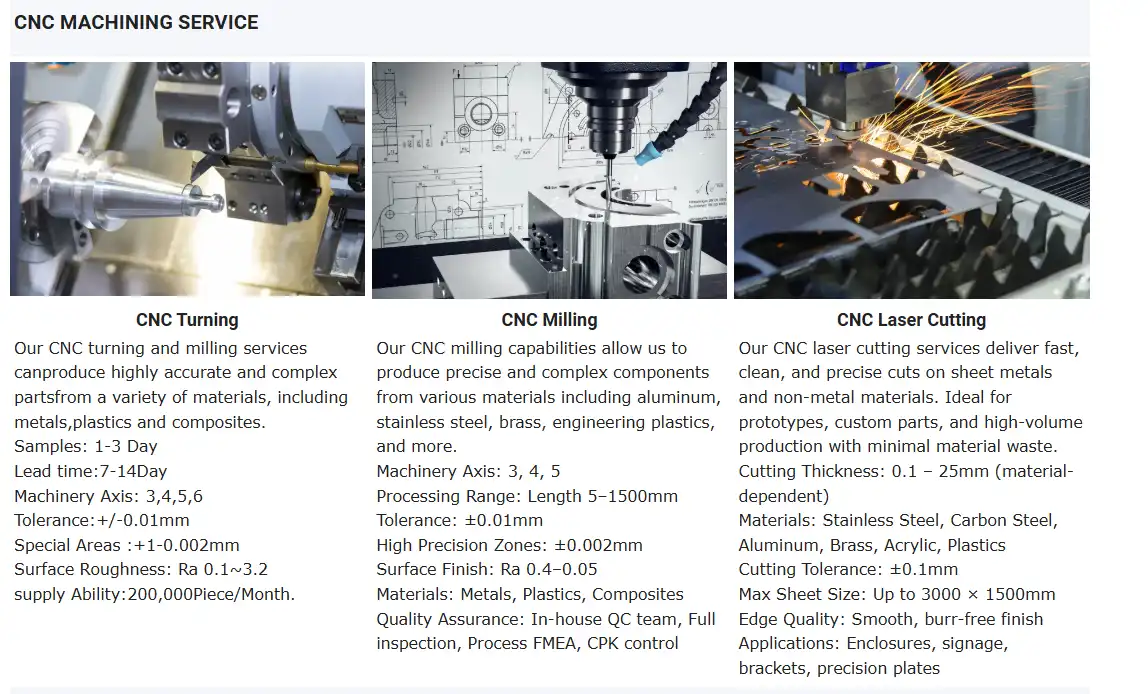
Understanding Machining Efficiency Challenges
Manufacturing activities in the transportation, communications, and technology businesses all have problems with effectiveness that make them less profitable and less competitive. When thousands of production units are added up, even small mistakes in the cutting process can add up to big running costs, which are known to procurement managers and product creators.
Rapid Tool Wear and Frequent Replacements
When working with tough materials like 316 stainless steel or titanium metals, traditional cutting tools wear out faster. Because the tools wear out so quickly, they have to be changed often, which slows down production, costs more in labour, and makes it hard to plan. Breaking a tool in the middle of an operation can damage workpieces, which wastes materials and costs a lot of time and money in repair rounds that put a strain on relationships with partners further down the supply chain.
Inconsistent Surface Finishes Affecting Quality
Surface roughness differences make quality control hard, especially for parts that need finishing of Ra0.8μm or better. When cutting edges wear down widely, measurement tolerances go beyond the required ±0.01mm range. This means that parts have to be inspected more often and are rejected more often. These differences in quality hurt the performance of the product in precise uses like medical devices, military parts, and AI-powered machines that must be reliable.
Production Downtime from Tool Changes and Recalibration
Recalibration of the machine after replacing a tool takes time that could be used for making things. Changeover times can go up to 15 to 30 minutes per event if setup changes, test cuts, and measurement checks are made. When these problems happen on several machines that work nonstop shifts, they cause big drops in productivity that cause deliveries to customers to be late and raise the cost of speeding in B2B buying settings where time is of the essence.
The effect on money goes beyond direct tooling costs. Longer lead times mess up just-in-time manufacturing plans, put a strain on client relationships, and make it harder to keep track of supplies. Manufacturers who want to make long-term changes in productivity and cost-effectiveness must first understand these main problems.
What Are Turning Inserts and Their Core Advantages?
Turning inserts are a major step forward in the technology of cutting tools. They are designed to work with CNC machines that need to be precise, consistent, and cost-effective. These cutting edges that can be replaced are now normal in factories that make hardware parts for robots, automation equipment, and vehicles.
Types and Material Compositions
The market has a wide range of insert designs that can be used for different types of cutting. Indexable inserts have more than one cutting edge that can be turned when one gets dull. This lets you use more material before you have to replace it. Carbide inserts are the best for general-purpose tasks because they have a great mix of hardness and toughness. Ceramic inserts, on the other hand, work best for fast tasks on harder materials. Cermet plugs, which have qualities of both clay and metal, are better at resisting wear in finishing processes on types 304, 303, and 410 stainless steel.
Coated types have small layers of titanium nitride, titanium carbonitride, or aluminium oxide that make the tool last a lot longer. These layers make it easier for heat to escape, reduce friction, and stop chips from sticking together, all of which are common problems when working with sticky materials. Advanced PVD and CVD coating methods make multi-layer structures that blend the best features of various materials, making it possible to achieve levels of performance that are not possible with single-piece tools.
Modular Design Reducing Downtime
With the indexable design mindset, maintaining tools goes from taking a lot of time and skill to being a quick, repeated process. When a cutting edge gets dull, workers only need to loosen one locking screw, move the insert to a new edge, and they can get back to work within minutes. This flexible method means that whole tool holders don't have to be taken off. This keeps the exact setup shape and reduces the need for recalibration.
In addition to speeding things up, this method makes accounting simpler. Instead of keeping a wide range of full tools in stock, facilities keep a focused selection of plugs and flexible tool cases. This rationalisation lowers the amount of capital that is stuck in equipment inventory while also making sure that key parts are always available when they are needed, which is a big plus for lean production operations.
Geometry Ensuring Consistent Surface Finishes
Cutting pressure, chip formation, and surface quality are all directly affected by the shape of the insert. Standardised chip breaker designs are made by manufacturers to work best with a range of materials and cutting levels. Positive rake angles lower cutting forces, which is helpful when working with materials that tend to get harder over time. Preparing the edges, from making them sharp for aluminium to making them polished for irregular cuts, keeps the dimensions accurate and stops chipping.
These geometric shapes work together to lower shaking, which is a main reason why surfaces don't finish well, and measurements don't match up. When chosen and used correctly, quality plugs usually have surface roughness values of Ra0.8µm or better, which meet strict requirements for medical parts and precision hardware without the need for extra finishing steps.
The perks for everyone add up to real practical advantages. When tools last longer, the cost of making each part goes down. Cutting time goes up as a proportion of possible work hours when tools are changed more quickly. Consistent performance raises the standard of the first pass, which lowers the need for inspections and the cost of scrap. When you put these things together, they make the tools work better overall.
How Turning Inserts Break Key Machining Bottlenecks
Modern manufacturing facilities implementing strategic insert selection and application practices achieve breakthrough improvements in productivity metrics that directly impact competitive positioning. The transformation occurs through systematic attention to tool-workpiece interaction optimization.
Reducing Tool Wear Rates Through Material Selection
Matching the insert's makeup to the properties of the workpiece's material changes wear patterns in a basic way. When working with austenitic stainless steels like 316 grade, which tend to strengthen over time, tougher carbide grades keep the cutting edge from breaking more effectively than harder, more fragile ones. On the other hand, ceramic plates help when working with pre-hardened tool steels because they keep the steel's hardness at high temperatures that are created by high-speed cutting.
These benefits are amplified by the choice of coating. Titanium aluminium nitride coats work great for dry machining because they form a protective layer of aluminium oxide at cutting temperatures that keeps heat from getting through. This feature lets you cut at faster speeds without speeding up wear, which directly raises the rate at which metal is removed. Facilities say that switching from bare to properly treated plugs in tough jobs extends tool life by 40 to 60 percent.
Enabling Higher Machining Speeds
Speed capability improvements for turning inserts stem from superior heat resistance and thermal conductivity. Advanced insert materials maintain cutting-edge integrity at temperatures exceeding 800°C, allowing surface speeds that would destroy conventional tools within seconds. This thermal stability permits aggressive machining parameters that dramatically reduce cycle times.
Practical implementation requires systematic optimization. CNC programmers increase spindle speeds and feed rates incrementally while monitoring surface finish, dimensional accuracy, and tool wear patterns. Data collection reveals optimal operating windows where productivity peaks without compromising quality. Documented case studies show manufacturers achieving 25-35% cycle time reductions on turning operations for robotics components and home appliance hardware through disciplined parameter optimization.
Improving Dimensional Accuracy
Consistent tool geometry throughout the cutting cycle is essential for maintaining tight tolerances. As traditional tools wear, their effective cutting diameter changes, causing dimensional drift that requires mid-production adjustments. Insert indexing resets geometry to factory specifications, eliminating this progressive error source.
Temperature control also influences accuracy. Excessive heat causes thermal expansion in both workpiece and tooling, creating dimensional variations that appear only after components cool to ambient temperature. Insert coatings that reduce cutting temperatures by 100-200°C minimize thermal distortion, enabling achievement of ±0.01mm tolerances consistently across production runs of thousands of components.
Real-world validation comes from precision hardware manufacturers serving the aerospace and medical sectors. These facilities routinely maintain positional tolerances within 0.005mm on complex five-axis machining operations, performance levels achieved through rigorous insert selection protocols and proactive tool management systems that replace inserts based on actual wear data rather than arbitrary schedules.
Comparison of Turning Inserts with Traditional Cutting Tools
Procurement managers evaluating tooling strategies must consider the total cost of ownership rather than focusing narrowly on the initial purchase price. Comprehensive analysis reveals that insert-based systems deliver superior economic returns across multiple performance dimensions relevant to B2B industrial environments.
Downtime Reduction Through Quick Replacement
Traditional brazed or solid carbide tools require complete removal from the machine spindle for resharpening or replacement. This process involves loosening multiple fasteners, extracting the tool assembly, installing a replacement, and conducting setup verification—a sequence consuming 20-30 minutes per occurrence. Multiply this across multiple daily tool changes on a production floor running 20-30 CNC machines, and the accumulated downtime becomes staggering.
Insert indexing collapses this timeline to under three minutes. The operator stops the spindle, loosens a single clamping mechanism, rotates the insert to a fresh edge, retightens, and resumes production. Tool offset adjustments are minimal or unnecessary due to consistent insert manufacturing tolerances. This time savings directly increases available cutting time, effectively expanding production capacity without capital equipment investment.
Economic impact analysis demonstrates compelling advantages. A medium-sized precision hardware facility processing 316 stainless steel components for medical applications calculated that transitioning from traditional tools to indexable inserts increased annual machine utilization by 180 hours per CNC lathe—equivalent to adding nearly a full month of additional production capacity across their machine park.
Greater Machining Adaptability
Insert standardization enables rapid reconfiguration for diverse production requirements. A single tool holder accepts various insert geometries, allowing quick transitions between roughing operations requiring aggressive chip removal and finishing passes demanding superior surface quality. This versatility reduces the variety of complete tool assemblies facilities must stock, simplifying inventory management while maintaining operational flexibility.
Material compatibility broadens with insert variety. The same turning center can efficiently process aluminum communication equipment housings, 410 stainless steel vehicle components, and titanium aerospace parts by simply selecting appropriate insert grades and geometries. This adaptability proves particularly valuable for contract manufacturers and OEM suppliers serving diverse industries with varying material specifications.
Cost-Effectiveness Over Large Production Runs
Per-component tooling costs decline substantially as production volumes increase. While a quality indexable insert may cost more than a traditional tool initially, its multiple cutting edges deliver 4-8 times more parts before requiring replacement. When amortized across thousands of components, the cost per unit drops below traditional tooling alternatives.
Inventory carrying costs favor insert systems. Rather than maintaining dozens of complete tool assemblies—each representing significant capital investment—facilities stock a focused selection of inserts and versatile holders. This rationalization reduces capital tied up in tooling inventory by 30-50% while improving availability of critical components when production schedules shift.
Supplier reliability becomes a strategic consideration. Partnering with precision hardware manufacturers offering comprehensive technical support—including application engineering assistance and custom tooling solutions—transforms the procurement relationship from transactional to collaborative. Facilities working closely with knowledgeable suppliers accelerate optimization cycles, reduce troubleshooting time, and access innovation earlier than competitors relying on generic tooling approaches.
Best Practices for Integrating Turning Inserts into Your Production Process
Successful implementation extends beyond simply purchasing quality inserts. Maximizing return on investment requires systematic attention to application engineering, workforce development, and supplier collaboration that aligns tooling strategy with broader operational objectives.
Aligning Insert Characteristics with Machining Goals
Application analysis for turning inserts begins with a clear specification of workpiece material properties, required surface finish, dimensional tolerances, and production volume. Processing 304 stainless steel for consumer electronics differs fundamentally from machining 410 stainless steel for automation equipment—each scenario demands tailored insert selection addressing specific metallurgical behaviors and performance requirements.
Surface finish targets drive geometry selection. Achieving Ra0.8μm or better finishes on medical device components requires inserts with polished rake faces and precisely honed cutting edges that minimize built-up edge formation. Roughing operations prioritize material removal rate over surface quality, favoring chip breaker geometries that fracture chips efficiently while withstanding higher cutting forces.
Production volume influences economic calculations. High-volume runs of standardized components justify investment in specialized inserts optimized for that specific application, even if unit costs exceed general-purpose alternatives. Lower-volume, high-mix environments benefit from versatile insert families that perform adequately across broader application ranges, accepting slightly compromised peak performance in exchange for inventory simplification.
Operator Training and Skills Development
Technical competency determines whether theoretical tool capabilities translate into actual production improvements. Comprehensive training programs address insert handling procedures, proper installation techniques, cutting parameter selection, and wear pattern recognition that enables data-driven tool life optimization.
Hands-on training emphasizes practical skills. Operators learn to identify different wear mechanisms—flank wear, crater wear, edge chipping—and understand how each relates to cutting parameters and insert selection. This knowledge enables frontline problem-solving that reduces engineering support requirements while accelerating continuous improvement cycles.
Progressive skill development builds expertise systematically. Initial training covers fundamental procedures, ensuring consistent, safe operation. Intermediate programs address troubleshooting common issues like chatter, poor surface finish, or accelerated wear. Advanced modules explore cutting theory, tool path optimization strategies, and application engineering principles that transform experienced operators into internal experts capable of mentoring colleagues and supporting new product introductions.
Leveraging Supplier Expertise
Strategic supplier partnerships provide access to specialized knowledge and resources that small and medium manufacturers cannot economically develop internally. Quality precision hardware suppliers offer application engineering support, analyzing production challenges and recommending specific insert solutions backed by testing and validation.
Custom tooling development addresses unique requirements that standard catalog products cannot satisfy. Facilities producing components with unusual geometries or proprietary materials benefit from suppliers willing to collaborate on specialized insert designs, custom coatings, or modified tool holders that solve specific production bottlenecks. This collaborative approach accelerates innovation while distributing development costs and risks appropriately.
Data-driven process improvement relies on supplier analytical capabilities. Leading manufacturers provide cutting parameter recommendations, tool life tracking systems, and performance benchmarking that quantifies improvements and identifies optimization opportunities. This technical partnership model aligns supplier commercial success with customer operational performance, creating mutually beneficial relationships that extend beyond transactional procurement.
Our production capabilities at Junsion directly support these integration requirements. Our 32 advanced CNC machines and 1,600 square-meter facility handle customized dimensions with ±0.01mm tolerance and Ra0.8μm surface roughness through precision turning and five-axis machining. We process 316, 304, 303, and 410 stainless steel with finishing options including polishing, anodizing, sandblasting, plating, and electrophoresis. These capabilities serve automation equipment, vehicles, medical, aerospace, AI intelligent systems, home appliances, and robotics applications across more than 20 countries globally.
Conclusion
Turning inserts fundamentally transform machining efficiency through systematic reduction of tool wear, acceleration of cutting speeds, and consistent achievement of tight dimensional tolerances. Their modular design minimizes production interruptions while simplifying inventory management, delivering measurable cost advantages across extended production runs. Strategic implementation—combining appropriate insert selection with operator training and supplier collaboration—unlocks productivity gains that strengthen competitive positioning in demanding global markets. Manufacturers serving electronics, communications, logistics, and consumer goods sectors achieve sustainable operational improvements when tooling strategies align with broader quality, responsiveness, and compliance objectives.
FAQ
What materials are best suited for turning insert applications?
Carbide inserts handle the broadest range of materials, including stainless steel grades 304, 316, 303, and 410, commonly used in precision hardware manufacturing. Ceramic inserts excel when processing hardened materials or operating at high cutting speeds where thermal resistance becomes critical. Cermet compositions provide superior performance for finishing operations requiring exceptional surface quality. Material selection depends on workpiece properties, desired tool life, and specific machining parameters, including cutting speed, feed rate, and depth of cut.
How frequently should turning inserts be replaced or indexed?
Replacement frequency depends on the material being machined, cutting parameters, and quality requirements. Proactive monitoring of dimensional accuracy and surface finish indicators guides optimal indexing schedules. Rather than arbitrary time-based replacement, data-driven approaches track actual wear progression, indexing when measurable degradation approaches tolerance limits. This strategy maximizes insert utilization while preventing quality defects from excessive wear.
Can turning inserts reduce costs for small production runs?
Cost benefits scale with production volume, though small runs still gain from reduced setup time and improved first-pass quality. Versatile insert systems minimize the variety of complete tool assemblies required, reducing inventory investment even for high-mix, low-volume operations. The key advantage for smaller runs lies in rapid reconfiguration capability and consistent performance that reduces troubleshooting time when transitioning between different component specifications.
Partner with Junsion for Precision Turning Solutions
Junsion specializes in manufacturing precision hardware components using advanced turning technology and quality cutting tool strategies that maximize machining efficiency. Our ISO 9001:2015 certified facility and RoHS compliant processes ensure components meet stringent international standards demanded by global procurement managers. We deliver fast response times, customized OEM/ODM solutions, and comprehensive technical support that transforms tooling challenges into competitive advantages. Our expertise spans automation equipment, medical devices, aerospace systems, and robotics applications where dimensional accuracy and surface finish quality are non-negotiable. Connect with our engineering team at Lock@junsion.com.cn to discuss how our precision turning capabilities and strategic supplier partnership approach can optimize your production processes.
References
1. Smith, J.R., & Anderson, M.K. (2021). Advanced Cutting Tool Materials: Properties and Applications in Modern Manufacturing. Journal of Manufacturing Science and Engineering, 143(8), 081-095.
2. Thompson, L.W. (2020). Optimization Strategies for CNC Machining Operations: A Comprehensive Guide to Insert Selection and Application. Industrial Press, New York.
3. Zhang, H., Liu, Y., & Chen, W. (2022). Comparative Analysis of Tool Wear Mechanisms in Indexable Insert Systems. International Journal of Machine Tools and Manufacture, 176, 103-118.
4. Roberts, D.E. (2019). Economics of Modern Machining: Total Cost Analysis for Cutting Tool Selection in Precision Manufacturing. Manufacturing Technology Today, 18(4), 45-62.
5. Kumar, P., & Patel, S.N. (2023). Surface Integrity in Precision Machining: The Role of Insert Geometry and Coatings. Precision Engineering Journal, 79, 234-251.
6. Wilson, T.A., & Martinez, C.R. (2021). Best Practices for Implementing Indexable Tooling Systems in High-Volume Production Environments. Society of Manufacturing Engineers Technical Paper Series, TP21-156.