




How to Choose a Reliable CNC Semiconductor Parts Manufacturer?
To find a trustworthy CNC Semiconductor Parts maker, you need to carefully look at their production skills, quality certifications, and ability to make precise parts. Tolerances of up to ±0.01mm are common in the semiconductor business, which makes choosing the right maker very important for your production success. Advanced cutting technologies and strict quality control systems are used by a reliable provider to make sure consistent delivery of chip handling parts, etching tool parts, and test socket assemblies. When procurement managers know about important evaluation factors like ISO compliance and material knowledge, they can find partners who can meet strict requirements for chip manufacturing while still being cost-effective and reliable with deliveries.
Defining Reliability in CNC Semiconductor Parts Manufacturing
Understanding Precision Requirements in Semiconductor Applications
When making electronic parts, reliability depends on getting the tiny specs right, which has a direct effect on how well the device works. Modern CNC Semiconductor Parts are very important in chip transfer systems, plasma etching tools, and temperature control kits, where being able to accurately measure the parts is key to their success. Tolerances for these precision-engineered parts are usually measured in microns, and the surface finish must meet certain standards to keep chip manufacturing processes from getting messed up.
As the chip business moves toward smaller shapes and higher integration rates, the need for more precise manufacturing has grown. The sides of the vacuum chamber parts must stay very clean so that particles don't get on them, and heat sink sections need to have exact thermal conductivity properties to handle rising power densities. When sourcing teams look at possible manufacturing partners, knowing these application-specific needs helps them set reasonable performance goals.
Material Selection and Performance Standards
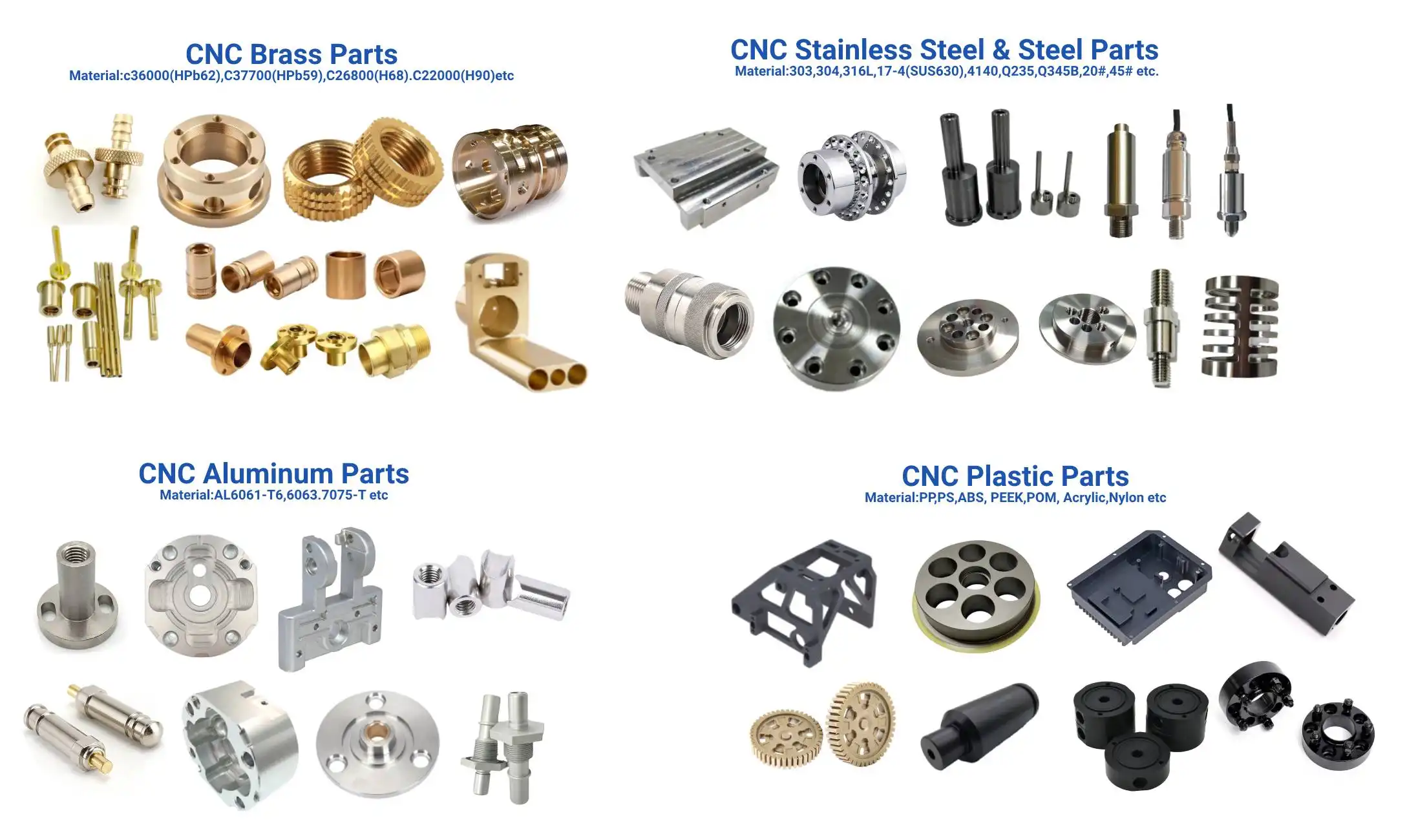
Extreme conditions, such as toxic chemicals, high temperatures, and the need for an ultra-high vacuum, are common in places that make semiconductors. Manufacturers you can trust know how to choose the right materials, like high-purity aluminum alloys (6061-T6, 7075), stainless steel grades (316L, 304), titanium alloys, and high-performance plastics like PEEK and POM. The choice of material has a direct effect on how long a part lasts and how well it works with other processes.
Material approval is very important when parts come into contact with semiconductor chips or work in cleanrooms. RoHS compliance makes sure that the world is safe, and SEMI guidelines make sure that electronic equipment works with other equipment. Manufacturers who keep detailed records of material tracking and licensing show that their businesses are mature enough to make reliable chip components.

Key Criteria to Evaluate When Choosing a CNC Semiconductor Parts Manufacturer
Advanced Manufacturing Capabilities and Technology Infrastructure
Technology infrastructure and advanced manufacturing skills
It's necessary to look at both the complexity of the tools and the process control systems when judging the manufacturing skills. Leading makers use cutting-edge CNC machine tools that can work on five axes at the same time. This makes it possible to make parts with complex shapes that are needed for semiconductor uses. Advanced visual checking systems and coordinate measuring machines (CMMs) make sure that measurements are checked at all stages of production.
The following technological skills set trusted makers of chip components apart:
• Multi-axis CNC machining centers with temperature adjustment systems that keep the accuracy even during long production runs. This is very important for keeping the tight tolerances needed in test socket assemblies and parts that handle wafers.
• Advanced manufacturing techniques, such as cutting tools made specifically for semiconductor-grade materials, make it possible to handle titanium metals and high-performance plastics quickly and without damaging the surface.
• Integrated quality control systems with real-time tracking and statistical process control that make sure the quality of parts is the same from batch to batch and fail rates are kept as low as possible.
• Manufacturing settings that can be used in a cleanroom and have controlled air flow to keep parts from getting dirty during cutting and assembly, which is especially important for vacuum chamber parts.
These advances in technology for CNC Semiconductor Parts show that a company wants to meet the standards of the chip business while keeping production as efficient as possible. Complex custom machining projects and fast prototyping for new product development are made possible by advanced capabilities.
Quality Assurance and Certification Standards
Certification compliance is one of the most important ways to tell how reliable a manufacturing process is and how far along it is. ISO 9001:2015 certification shows that you use an organized approach to quality management, while industry-specific certifications like SEMI standards show that you know a lot about semiconductors. Manufacturers should keep up-to-date copies of all certificates and show that they are always getting better by having regular checks.
Quality control rules need to take into account the special problems that come up when making semiconductor components. As part of this, materials that come in are inspected, work is watched while it's being done, and the final check is made with precise measuring tools. Reliable providers use full tracking systems that make it easy to find any quality problems right away. These systems also help with continuous improvement projects by analyzing data and putting corrective actions into place.
Cost Structure Transparency and Delivery Performance
Total cost of ownership is more than just the original price. It includes things like consistent quality, reliable shipping, and help after the sale. Clear pricing should take into account the cost of materials, the difficulty of the job, the need for surface cleaning, and the steps taken to ensure quality. Volume price choices can have a big effect on budgets for purchases, especially for OEM uses that need to buy a lot of things.
How well deliveries go has a direct effect on planning output and managing supplies. Reliable makers give accurate lead time estimates based on their current capacity and keep backup plans for when demand changes unexpectedly. Communication tools should let managers know about the state of production in real time, so they can handle the supply chain more effectively.
Addressing Common Challenges in CNC Semiconductor Parts Manufacturing
Material Processing and Tooling Optimization
Working with materials that are good for semiconductors is very difficult and requires special skills and tools. Titanium metals are often used in corrosion-resistant situations, but they don't conduct heat well, which means that tools wear out quickly and the work may become harder. To get around these problems while keeping the quality of the surface, successful makers use high-pressure water systems, improved cutting settings, and specialized equipment strategies.
When cutting high-performance plastics like PEEK, it's important to keep an eye on the temperature to keep them from breaking down. To keep the dimensions stable, manufacturers must find a good mix between cutting speeds, feed rates, and chip removal. Knowing about these problems that are unique to a material helps buyers judge the skills of suppliers and spot possible production risks.
Contamination Control and Surface Quality Management
When making semiconductors, very high standards of cleanliness are needed throughout the whole process. Machining fluids, tool wear particles, and external toxins are all things that can cause contamination. Reliable makers use a wide range of methods to keep contamination under control, such as filtered air systems, special cleaning methods, and keeping an eye on contamination levels during the whole production process.
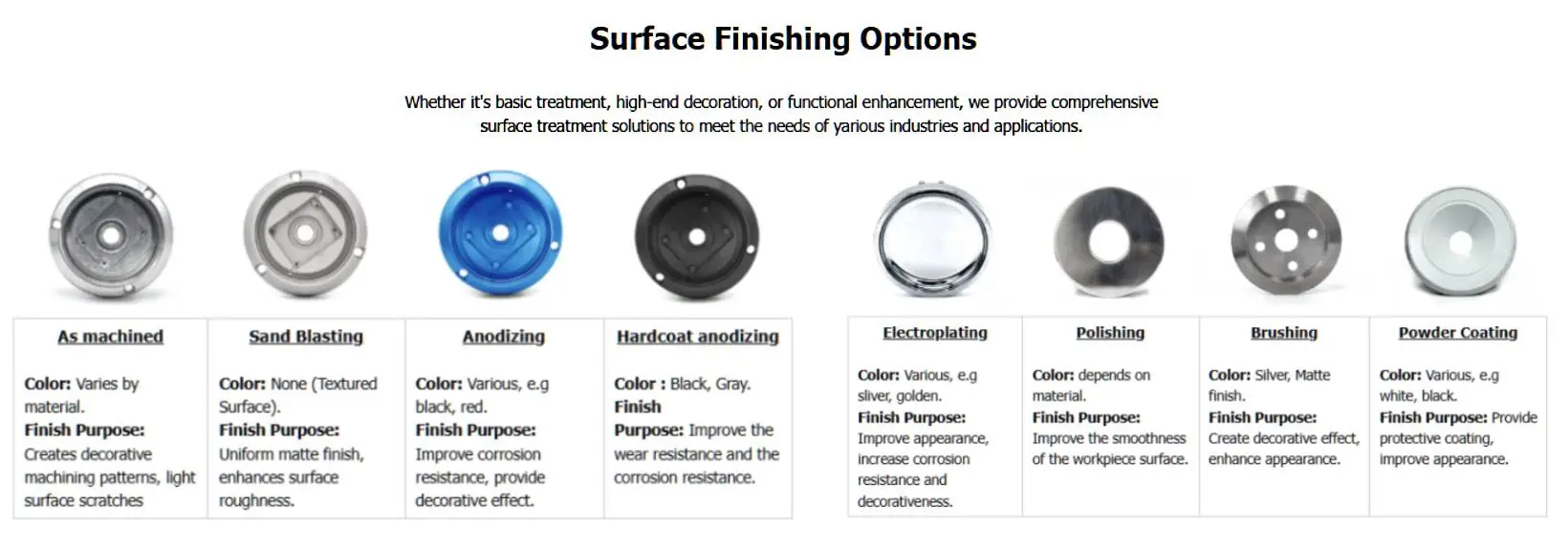
The choice of surface treatment has a big effect on how well and how long a component works. Anodizing makes aluminum parts more resistant to rust and harder on the outside, while electroless nickel plating makes the layer thickness regular on shapes that aren't simple. Passivation makes stainless steel more resistant to rust, and plasma spray coating makes areas that are resistant to heat and wear. By knowing about these cleaning choices, you can have more informed conversations with possible sellers about the best surface specs.
Scaling Consistency and Process Control
Keeping quality consistent while increasing output is one of the hardest parts of making CNC Semiconductor Parts. Reliable providers have strong process control systems that keep the accuracy of the dimensions and the quality of the surface even when the production volume changes. This includes standard ways to set up the machine, change tools, and check for quality at regular intervals during production runs.
Implementing statistical process control lets you find changes in the process before they affect the quality of the part. Modern makers use real-time tracking systems to keep an eye on important factors like tool wear, dimensional drift, and surface finish features. These systems help plan preventative maintenance and allow process improvement all the time by making decisions based on data.
Comparing and Selecting the Best CNC Semiconductor Parts Supplier
Technological Assessment and Capability Matching
To evaluate a supplier, you need to carefully compare their technology skills to the needs of a specific application. In order to do this, the specs of the tools, the skills of the process, and the quality systems must be looked at. Things like production capacity and shipping performance must also be taken into account. Through building trips and reviewing paperwork, thorough supplier audits should check both professional skills and the growth of the organization.
Capability matching means meeting the skills of a seller with the needs of a particular project. For custom OEM uses, advanced technical help and the ability to make fast prototypes may be needed. On the other hand, process consistency and cost optimization are more important for high-volume production. Understanding these differences helps you choose a better provider and lowers the risks of the project.
Geographic Considerations and Supply Chain Optimization
Geographic closeness can greatly impact communication efficiency, supply times, and total transportation costs. Global buying often saves money, but local providers may be faster to respond and give better professional help. To find the right balance between these factors, you need to carefully look at the total cost of ownership, which includes things like shipping, keeping goods, and reducing supply chain risk.
When handling custom CNC Semiconductor Parts projects that need close teamwork during the planning and development phases, communication skills become even more important. Language hurdles and differences in time zones can make it hard to stick to project deadlines and have expert conversations. Checking the contact and technical support systems of suppliers is a good way to make sure that project management goes smoothly during the whole manufacturing process.
Performance Metrics and Evaluation Criteria
Setting up numeric evaluation criteria makes it possible to compare and choose suppliers in an objective way. Quality measures (such as failure rates and customer returns), delivery performance (such as on-time delivery and consistent wait times), and cost competitiveness (such as clear pricing and total cost of ownership) should all be part of the KPIs. Data on past performance is very helpful for understanding how reliable a source is and how to make things better all the time.
Case study research gives you more information about what a provider can do and how they solve problems. Looking at related projects and customer reviews can help you trust what a seller says and find problems that might arise with the way their products work together. This way of evaluating helps people make better decisions and lowers the chance that suppliers will have performance problems during key production times.
Building a Long-Term Partnership with Your CNC Semiconductor Parts Manufacturer
Collaborative Development and Innovation Support
Support for collaborative development and new ideas
Strategic partnerships are more than just business deals; they also include joint efforts to create new products and ideas. Collaborative providers offer useful technical advice during the planning process by suggesting materials, improving the manufacturing process, and finding ways to cut costs. This partnership method shortens the time it takes to build a product while using the knowledge of suppliers to make parts work better and be easier to make.
As chip technologies continue to move toward smaller shapes and more complicated designs, funding for innovation becomes more and more important. When sellers put money into new manufacturing methods and keep good relationships with material providers, they can give customers early access to new features. These relationships give businesses an edge over their competitors by letting them use new technologies and production methods more quickly.
Communication Systems and Technical Support
Long-term relationships for CNC Semiconductor Parts work best when there is a good communication infrastructure in place so that there are regular expert talks, reports on the state of projects, and problem-solving before they happen. Reliable providers have expert support teams that are familiar with how semiconductors are used and what each customer needs. This knowledge lets us quickly answer complex questions and helps with efforts to keep getting better by working together to solve problems.
Documentation tools should make it easy to find information and meet the needs of quality management. This includes certificates for materials, process paperwork, and quality records that help with regulatory compliance and meeting customer audit standards. Modern providers offer web-based access to information about production state, quality, and technical paperwork. This makes contact easier and cuts down on routine work.
Continuous Improvement and Market Adaptation
Structured programs for ongoing growth that look for ways to improve things and make them better in a planned way are good for long-term relationships. This includes regular reviews of performance, projects to cut costs, and projects to improve processes that are good for everyone. Partnerships that work well show measurable improvements over time in quality, service performance, and cost-effectiveness.
Suppliers can react well to changing technology needs and industry trends when they have the ability to adapt to the market. Because the chip business changes so quickly, it needs suppliers who can quickly change their manufacturing methods and skills to support new uses. During times of market change, partners who stay up to date on industry trends and make smart investments in developing their skills have a strategic edge.
Conclusion
To find a trustworthy CNC Semiconductor Parts maker, you need to carefully look at their technical skills, quality control systems, and willingness to work with you. Because the chip industry needs a lot of accuracy and technology is always changing, it needs suppliers who can combine advanced manufacturing with full quality control and a dedication to always getting better. Successful supplier relationships include more than just delivering the parts. They also include ongoing technical help, joint development, and strategic partnership benefits that improve the company's long-term competitive position.
FAQ
What materials are commonly used for CNC semiconductor parts manufacturing?
High-purity aluminum alloys (6061-T6, 7075) provide excellent machinability and corrosion resistance for wafer handling components. Stainless steel grades (316L, 304) offer superior chemical resistance for etching tool applications. Titanium alloys deliver exceptional corrosion resistance and biocompatibility for specialized applications. High-performance plastics, including PEEK and POM, provide electrical insulation and chemical resistance for specific semiconductor processes.
How do CNC parts compare to injection molded alternatives in semiconductor applications?
CNC Semiconductor Parts offer superior dimensional accuracy and tighter tolerances compared to injection-molded components, making them essential for precision applications. CNC machining enables complex geometries and custom modifications impossible with injection molding. While injection molding may provide cost advantages for high-volume simple geometries, CNC machining delivers the precision and material flexibility required for critical semiconductor applications.
What certifications should I verify when selecting a semiconductor parts manufacturer?
ISO 9001:2015 certification demonstrates systematic quality management implementation. SEMI standards compliance indicates specialized semiconductor industry knowledge. RoHS certification ensures environmental compliance and material safety. Additional industry-specific certifications may be required depending on application requirements and customer specifications.
How can I ensure consistent quality across production batches?
Reliable manufacturers implement statistical process control systems with real-time monitoring and documentation. Standardized setup procedures and quality checkpoints ensure repeatability across production runs. Advanced suppliers provide batch traceability and quality documentation supporting customer quality management requirements while enabling rapid identification of any quality issues.
What surface treatments enhance semiconductor component performance?
Anodizing improves corrosion resistance and surface hardness for aluminum components exposed to aggressive environments. Electroless nickel plating provides uniform coating thickness on complex geometries while enhancing wear resistance. Passivation treatments enhance stainless steel corrosion resistance in chemical processing applications. Plasma spray coating delivers thermal and wear-resistant surfaces for high-temperature applications.
Partner with Junsion for Superior CNC Semiconductor Parts Manufacturing
Dongguan Junsion Precision Hardware Co., Ltd. stands as your trusted CNC Semiconductor Parts supplier, combining advanced five-axis machining capabilities with stringent quality control systems. Our ISO 9001:2015 certified facility delivers components with tolerances up to ±0.01mm, supporting wafer handling systems, etching equipment, and thermal management applications across global semiconductor operations. With comprehensive material expertise spanning high-purity aluminum alloys, stainless steel, titanium, and high-performance plastics, we provide complete OEM manufacturing solutions tailored to your specifications. Contact Lock@junsion.com.cn today to discuss your semiconductor component requirements and experience our commitment to precision, quality, and delivery excellence.
References
1. Johnson, M.K. "Precision Manufacturing Standards in Semiconductor Equipment Design." Journal of Manufacturing Technology, Vol. 45, 2023.
2. Chen, L.W. "Material Selection Criteria for Semiconductor Processing Equipment Components." Advanced Materials Engineering, Issue 12, 2023.
3. Rodriguez, A.P. "Quality Management Systems in Precision Component Manufacturing." Industrial Quality Review, Vol. 38, 2023.
4. Thompson, R.J. "CNC Machining Optimization for Semiconductor Industry Applications." Manufacturing Process Engineering, Vol. 29, 2023.
5. Williams, S.A. "Supply Chain Management in High-Technology Manufacturing Sectors." Global Supply Chain Review, Issue 8, 2023.
6. Kumar, V.S. "Surface Treatment Technologies for Semiconductor Equipment Components." Surface Engineering Technology, Vol. 52, 2023.