




Turning Inserts for Steel: What Should You Know?
When you're cutting steel parts, turning inserts are the most important part of the process because they connect your cutting tool to the workpiece. This has a direct effect on how accurate, efficient, and cost-effective your work is. These cutting edges can be replaced and are made from high-tech materials like carbide, ceramics, or cubic boron nitride. They are made to handle high temperatures and high pressures during steel-turning operations. When purchasing managers look for reliable ways to make things like robots, medical devices, aerospace parts, and automation equipment, they need to know how to choose and use these parts to cut down on downtime, make tools last longer, and improve the quality of the surface finish.

Understanding Turning Inserts for Steel: Basics and Types
What Are Turning Inserts and Why They Matter
When it comes to cutting metal, turning inserts are a big improvement over standard solid tool bits. These indexable cutting edges are attached to tool cases using mechanical clamping systems. This lets workers quickly move or replace worn edges without taking the whole tool unit off the machine. This way of thinking about design cuts down on setup time and waste while keeping the cutting shape constant. When dealing with steel, whether it's 304 stainless steel for medical uses or 410 stainless steel for car parts, choosing the right insert has a direct effect on the accuracy of the measurements, the roughness of the surface, and the speed of production.
The main benefit is that they are good at making money. Instead of resharpening whole cutting tools, machinists just adjust the insert to a new edge or change it completely. This keeps the machine running as much as possible. These kinds of adaptability are needed for modern CNC turning jobs, especially when keeping tolerances of ±0.01 mm or getting surface roughness values of ≤ Ra0.8 μm across different steel grades.
Material Composition and Performance Characteristics
Because they are so hard and don't change shape when heated, carbide plugs are the most common way to machine steel. For most carbon and metal steels, tungsten carbide with a cobalt binder is the best combination of hardness and wear protection. Cubic boron nitride (CBN) plugs work better than other materials when meeting sharpened steel parts in aircraft or robot applications because they keep the cutting edges sharp at temperatures over 1000°C.
For high-speed shaping processes on steel, ceramic plugs are another choice. Their lack of chemical activity stops built-up edges from forming, which is a common problem when working with stainless steel types like 316 or 303. The choice of material is directly related to the steel's toughness, its ability to be machined, and the surface finish that is needed. Teams in charge of buying things need to think about these qualities of materials, along with covering technologies that make them work better.
Common Insert Geometries and Their Applications
The names of inserts are based on ISO standards, and letters like CNMG, TNMG, and DCMT show certain geometric properties. The CNMG design has a rhombic shape and an angle of 80 degrees, which makes the cutting edges strong enough for standard steel turning. TNMG inserts have a triangular shape with three useful ends, which makes them the most cost-effective choice for high-volume production settings.
DCMT inserts have a rhombic shape with a 55-degree angle built in. This makes them perfect for finishing and shaping tasks that need complex shapes. Chipbreaker patterns built into these shapes stop chips from forming, stopping long, stringy chips that can damage object surfaces or pose safety risks. When making precise metal parts for AI systems or home products, choosing the right shape is important for both safety and accuracy in the dimensions.

Criteria for Selecting the Right Turning Inserts for Steel
Matching Insert Specifications to Steel Grades
The chemical composition, hardness, and machinability rating of different steel grades vary significantly. Low‑carbon steels (typically <0.3% carbon content) are relatively easy to machine but produce stringy chips that require effective chipbreaker geometries on turning inserts to break chips into manageable segments. Medium‑carbon steels demand inserts with stronger cutting edges to withstand higher cutting forces. High‑carbon and tool steels are the most challenging to machine, often requiring polished carbide or CBN inserts to achieve acceptable tool life. Matching insert grade and geometry to the specific steel composition is essential for optimizing productivity while controlling tooling costs.
Stainless steel families make things more complicated. Austenitic grades, such as 304 and 316, strengthen through work, so they need positive rake angles and sharp cutting edges to keep cutting forces as low as possible. Martensitic types, like 410 stainless steel, are easier to work with, but you still need to be careful when choosing the parameters. We at Dongguan Junsion Hardware Co., Ltd. know how important it is to choose the right inserts when using modern CNC and five-axis machining methods to cut these materials to exact specifications and get the right surface finish.
Operational Parameters and Machine Compatibility
Cutting speed, feed rate, and depth of cut are the three most important parameters that determine how well an insert works. For roughing, strong insert shapes with large nose radii are usually used, which allow for higher feed rates and cutting levels to get rid of as much material as possible. For finishing passes, you need inserts with smaller nose radii and careful edge preparation to get the surface roughness you need, which is usually between 0.4 and 0.8 µm for medical and aircraft uses.
The stiffness of the machine has a big effect on which inserts to use. For machine tools that are older or not as rigid, inserts with harder edge shapes and slower cutting speeds help keep chatter and shaking to a minimum. Modern CNC machines that are stiffer can handle higher speeds and rougher parameters, making the most of the abilities of improved covered inserts. How the coolant is delivered—flood, high-pressure, or through-tool—also impacts how well and how long an insert works, especially when working with heat-sensitive stainless steels.
Economic Considerations and Supply Chain Reliability
The cost of a tool is more than just the price it was bought for. It also includes how long it lasts, how much time it saves, and how consistent the quality is. Premium inserts with advanced finishes may cost more up front, but they last longer and have a better surface finish, which lowers the cost of each part and the number of operations that need to be done. Instead of just looking for the lowest unit price, procurement managers need to look at the overall cost of ownership.
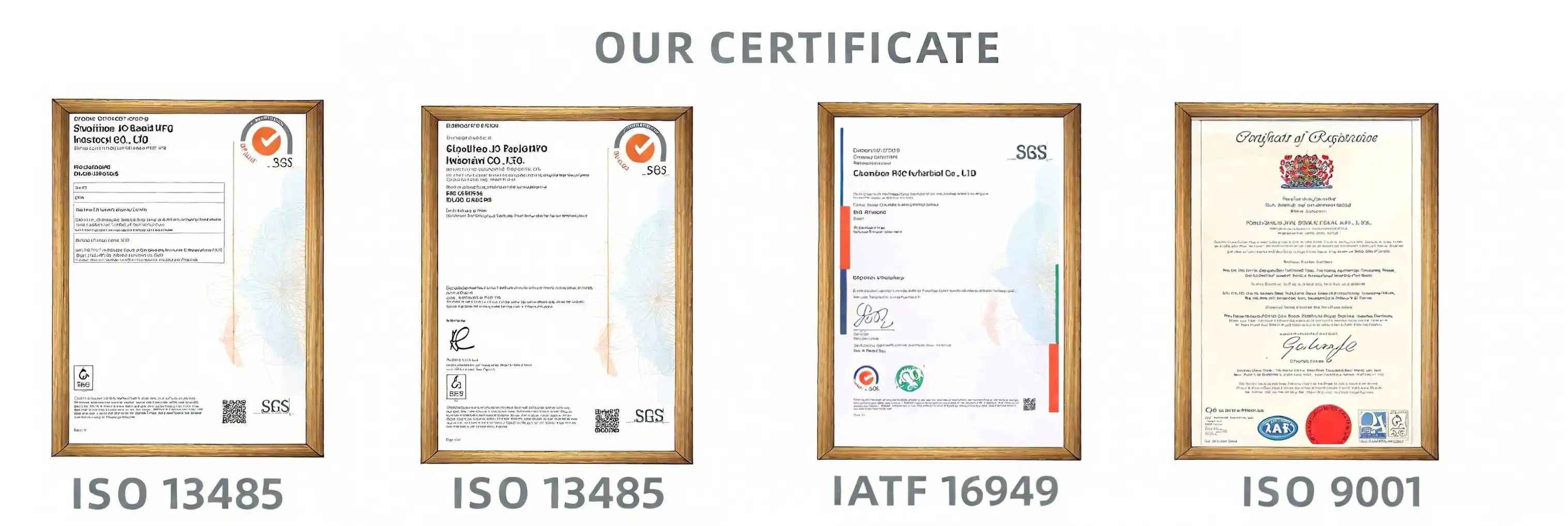
For settings with constant production, supply chain dependability is very important. Established companies with global marketing networks make sure that products are always available and that customers can get expert help. Junktion is dedicated to providing high-quality hardware parts that meet international standards, as shown by our ISO 9001:2015-certified quality management system and RoHS compliance. Our 32 high-tech CNC machines and 1,600-square-meter building in Dongguan allow us to quickly meet customer needs, which means your production plans won't be affected.
Common Challenges in Turning Steel and How Inserts Solve Them
Tool Wear Mechanisms and Mitigation Strategies
When hard carbide particles in steel workpieces slowly wear away at the cutting edge of the insert, this is called "abrasive wear." This type of wear gets worse at faster cutting speeds and when working with steels that have strengthening elements like vanadium or chromium. These problems can be solved with modern PVD and CVD coating technologies that put down very hard layers of titanium nitride (TiN), titanium carbonitride (TiCN), or aluminum oxide (Al₂O₃) on the insert base. When compared to parts that aren't treated, these coats make tools last 200 to 400% longer.
When the chip and insert come into chemical contact at high temperatures, depressions form on the rake face. This is called crater wear. This effect is especially noticeable when working with stainless steel and the chip-to-tool contact temperature is over 800°C. Advanced coating structures with aluminum oxide top layers keep heat in and chemicals stable, which greatly lowers the rate at which craters form. When making parts for industrial equipment or car uses that need long production runs, these finishing systems make it possible to measure and increase efficiency.
Heat Management and Built-Up Edge Prevention
Managing temperature is a big problem in steel-turning processes. Making too much heat speeds up the wear and tear on tools and workpieces, and it can also cause mechanical changes that affect the qualities of the material. Effective chipbreaker shapes help chips move away, which lowers the amount of heat that builds up at the cutting edge. Manufacturers of inserts make chipbreaker shapes that work best with certain types of materials and machine settings. This makes sure that chips break up into workable pieces that move heat away from the cutting zone.
Built-up edge (BUE) happens when material on the workpiece bonds to the cutting edge of the insert under high pressure and heat. The material then breaks off, hurting both the tool and the workpiece surface. This problem often happens when working with austenitic stainless steel, but it can be avoided by choosing the right inserts. Cutting forces and heat are lowered by sharp edges with positive rake angles, and stickiness is lowered by special coats. Junsion's experience making 316, 304, and 303 stainless steel parts for medical and aircraft uses has helped us learn more about these effects, which lets us suggest the best casting methods for difficult materials.
Maintaining Dimensional Accuracy Under Production Conditions
Achieving ±0.01 mm tolerances across production runs with turning inserts requires consistent tool performance and minimal thermal variation. Cutting forces increase over time due to progressive tool wear, generating additional heat that can cause dimensional drift. Monitoring tool wear through scheduled inspections or adaptive control systems enables replacement or indexing of inserts before measurement accuracy degrades beyond specification limits. This proactive tool management strategy is especially critical for precision aerospace, medical, and semiconductor components, where machining tolerance directly affects part functionality and assembly fit.
A small but important part of physical stability is the insert edge preparation. Honed or chamfered edges are stronger and don't allow microchipping, which can show up as surface flaws or differences in size. Paying close attention to edge preparation is a must when making precise hardware parts for AI systems or robots, where positional accuracy has a direct effect on assembly and usefulness. Our quality control procedures include using advanced measuring tools to check the accuracy of dimensions. This makes sure that all production runs of parts meet the required limits.
Best Practices for Using Turning Inserts in Steel Applications
Optimizing Cutting Parameters for Different Steel Grades
Cutting speeds for low-carbon steel are usually between 250 and 400 surface feet per minute (SFM) when carbide inserts with the right finishes are used. The feed rates, which range from 0.008 to 0.020 inches per turn, make sure that production and surface finish needs are met. When talking about stainless steel families, these factors change a lot. For example, austenitic types need slower speeds (150–250 SFM) to control work-hardening and keep tools from wearing out too quickly.
The depth of the cut relies on what the process is supposed to do. For roughing passes, depths of 0.10 to 0.200 inches may be used to remove large amounts of material while allowing for slightly rougher surface finishing. When finishing something, the depth is usually limited to 0.010 to 0.030 inches because surface quality and accuracy in measurements are more important. When making parts for consumer electronics or communication devices that need to look good and feel good to the touch, these finishing factors become very important for determining quality.
Systematic Tool Monitoring and Replacement Protocols
Using planned tool life management keeps quality consistent and stops catastrophic tool failure. Setting standard goals for tool life through initial tries makes it possible to make accurate replacement plans. Monitoring programs keep track of how many parts are made per cutting edge and change standards based on quality metrics and wear patterns that are seen. This method, which is based on data, cuts down on unexpected downtime and makes the best use of tool costs.
Protocols for visual inspection find early warning signs before changes in size or quality of the surface happen. A good way to tell if something is worn is to look for flank wear, which shows up as a bright band on the insert's clearing face. As per industry standards, inserts should be indexed or replaced when wear hits 0.015 inches for finishing tasks or 0.030 inches for roughing tasks. When working with stainless steels, where crater wear is most common, measuring the depth of craters can give you more information.
Leveraging Technical Support and Training Resources
A lot of the time, going above and beyond stated specs is needed to get the best results from an insert. Reliable providers have expert support teams that can look at problems with cutting and suggest the best ways to fix them. This consultative method is very helpful when working with tough materials or meeting strict requirements, like the custom sizes and close standards needed for medical devices or aircraft parts.
Future Trends and Innovations in Turning Inserts for Steel
Advanced Coating Technologies and Material Science
Coating technology for turning inserts continues to advance through nano‑layered architectures combining multiple materials with complementary properties. These sophisticated coatings feature alternating layers just nanometers thick, creating interfaces that deflect cracks and enhance toughness while maintaining exceptional hardness. Aluminum chromium nitride (AlCrN) coatings demonstrate superior oxidation resistance at elevated temperatures, extending tool life in high‑speed steel machining applications where thermal stability is critical. Adopting these advanced coating technologies can significantly improve machining economics by reducing insert consumption and changeover downtime, particularly in high‑volume production environments.
Diamond-like carbon (DLC) coatings represent another frontier, offering extremely low friction coefficients that reduce cutting forces and heat generation. While traditional diamond coatings react adversely with ferrous materials, DLC variants engineered for steel machining show promising results in reducing built-up edge formation on stainless steel grades. These innovations enable higher productivity through increased cutting speeds while maintaining dimensional accuracy and surface quality.
Smart Tooling and Industry 4.0 Integration
Sensor-embedded cutting tools represent a transformative development, enabling real-time monitoring of cutting forces, temperature, and vibration signatures. This telemetry data feeds predictive algorithms that detect anomalous conditions indicative of tool wear or process instability. Automated systems respond by adjusting cutting parameters or triggering tool replacement before quality degradation occurs, moving from reactive to predictive maintenance paradigms.
Machine learning algorithms trained on extensive machining datasets identify optimal parameter combinations for specific material-insert pairings, accelerating process development and reducing trial-and-error experimentation. Digital twin technologies simulate machining operations virtually, predicting tool life and surface finish outcomes before committing to production runs. These capabilities prove particularly valuable when developing processes for new component designs or material specifications, reducing time-to-production and improving first-pass yield rates.
Sustainability and Environmental Considerations
Manufacturing industries face increasing pressure to reduce environmental impacts while maintaining productivity and quality standards. Coated carbide inserts offer inherent sustainability advantages through extended tool life, reducing raw material consumption and disposal volumes compared to regrinding solid tools. Recycling programs recover valuable tungsten and cobalt from spent inserts, closing the material loop and reducing dependence on primary mining operations.
Coolant management strategies increasingly emphasize minimum quantity lubrication (MQL) systems that deliver micro-droplets of lubricant directly to the cutting zone, drastically reducing fluid consumption compared to flood coolant methods. Advanced insert coatings enable dry or near-dry machining conditions, eliminating coolant-related disposal costs and workplace exposure concerns. When producing components for environmentally conscious sectors like medical devices or consumer electronics, these sustainable manufacturing practices align with corporate social responsibility objectives.
Conclusion
Understanding the nuances of insert selection, application parameters, and performance optimization empowers procurement managers and production engineers to elevate steel machining operations. The convergence of advanced materials, coating technologies, and digital integration creates unprecedented opportunities for productivity enhancement and cost reduction. Strategic partnerships with suppliers demonstrating technical expertise, quality assurance, and responsive support become competitive differentiators in increasingly demanding manufacturing environments. As steel machining requirements grow more complex across automation equipment, medical devices, aerospace systems, and emerging AI applications, informed tooling decisions directly impact manufacturing success.
FAQ
What factors most significantly influence insert lifespan when machining steel?
Insert longevity depends on the interplay between material selection, coating type, cutting parameters, and workpiece characteristics. The carbide grade must match steel hardness, while coating architecture provides thermal and chemical protection. Cutting speed exerts exponential influence—doubling speed can halve tool life. Feed rate and depth of cut also impact wear rates, though less dramatically. Stainless steel grades with work-hardening tendencies accelerate wear through increased cutting forces. Coolant delivery effectiveness moderates these factors by managing thermal loads. Systematic parameter optimization, balancing productivity against tool life, yields optimal economic outcomes across production volumes.
How do I determine the best insert type for hardened versus mild steel?
Hardened steel (typically above 45 HRC) demands cubic boron nitride or ceramic inserts capable of maintaining edge integrity at elevated hardness levels. Carbide inserts, even with premium coatings, wear rapidly when addressing hardened materials. Mild steel accepts standard carbide grades with general-purpose coatings, prioritizing chipbreaker design for effective chip control. Geometry selection shifts from robust edges for mild steel roughing to precision edges for hardened steel finishing. Consulting the insert manufacturer's specifications matched to the measured workpiece hardness prevents tool failure and quality issues. Junsion's expertise across diverse steel grades positions us to recommend optimal solutions aligned with your specific application requirements.
Partner with Junsion for Precision Machining Excellence
Junsion stands ready to support your steel component manufacturing challenges through precision hardware solutions engineered for demanding applications. Our ISO 9001:2015 certified facility in Dongguan has 32 advanced CNC machines that provide customized dimensions with tolerances of ±0.01 mm and surface finishes of ≤ Ra0.8 μm for 316, 304, 303, and 410 stainless steel materials. We use CNC turning, five-axis machining, and finishing techniques like polishing, anodizing, sandblasting, plating, and electrophoresis to meet specifications for automation equipment, vehicles, medical devices, aerospace, AI intelligent systems, home appliances, and robotics. As an experienced turning insert supplier serving over 20 countries, we combine rapid response capabilities with rigorous quality assurance and RoHS compliance. Contact our technical team at Lock@junsion.com.cn to discuss your precision component requirements and discover how our manufacturing expertise translates into your operational success.
References
1. Stephenson, D.A. & Agapiou, J.S. (2016). Metal Cutting Theory and Practice (3rd Edition). CRC Press.
2. Trent, E.M. & Wright, P.K. (2000). Metal Cutting (4th Edition). Butterworth-Heinemann.
3. Sandvik Coromant (2019). Modern Metal Cutting: A Practical Handbook. AB Sandvik Coromant.
4. Shaw, M.C. (2005). Metal Cutting Principles (2nd Edition). Oxford University Press.
5. Kalpakjian, S. & Schmid, S.R. (2014). Manufacturing Engineering and Technology (7th Edition). Pearson Education.
6. ASM International. (2018). ASM Handbook Volume 16: Machining. ASM International Materials Park.