




Water Cooling Fittings for Custom Loops: A Buyer’s Guide
The construction of a bespoke water cooling loop necessitates the use of fittings that have been meticulously built to guarantee optimal performance and leak-proof operation. The radiators, pumps, reservoirs, and blocks that make up your liquid cooling system are all connected by water cooling fittings, which are essential connection points. To choose the appropriate components, it is necessary to have a solid understanding of the materials, thread specifications, compatibility requirements, and quality standards present. For procurement managers and engineers who are looking for dependable cooling solutions for consumer products, communication systems, and electronic devices that require advanced thermal management, this comprehensive handbook analyzes crucial issues that those individuals should take into account.
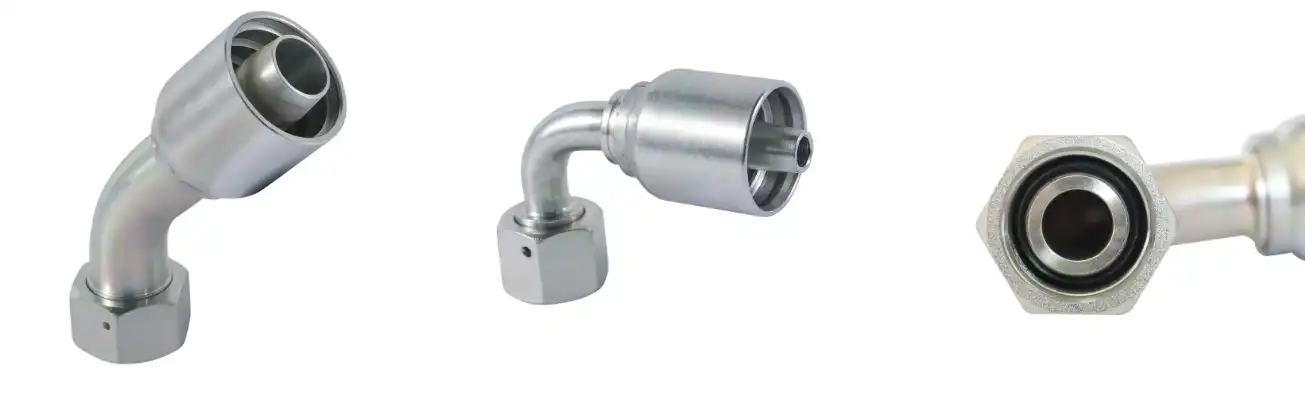
Understanding Water Cooling Fitting Types and Materials
As far as specialized liquid cooling systems are concerned, compression fittings are considered to be the gold standard. Using dual O-ring seals that compress against the walls of the tube, these precision-machined components generate connections that are both secure and reliable. When compared to alternatives made of aluminum, the brass structure offers higher durability and resistance to corrosion. The G1/4 threading standard has become the industry standard, which ensures that all manufacturers are compatible with one another.
Using mechanical grip and clamps, barbed fittings offer an alternate means of attachment and are hence useful. Although they are more cost-effective, they need to be installed with caution in order to minimize coolant loss. The barbed design provides an internal grip on the tubing, while the external clamps ensure that the connection is secure. When it comes to stiff applications, these fittings are an excellent choice because they do not require frequent separation.
Through the use of quick-detach fittings, system maintenance and component replacement can be completed more quickly. When the connectors are disconnected, the spring-loaded mechanisms that are featured in these unique connectors automatically seal. To ensure that the manufacturing process is leak-proof even when subjected to pressure, strict tolerances are required. However, despite the greater initial costs, this convenience is beneficial to a wide variety of industrial applications.
Selecting the appropriate material has a tremendous impact on both durability and performance. Due to its exceptional resistance to corrosion and its ability to be machined, brass is a great material for applications that need accuracy. The manufacturing process for stainless steel must be more advanced than that of other materials because of its better strength. Some applications make use of specific alloys, such as combinations of copper and nickel, in order to improve thermal characteristics and meet the requirements of marine environments.
Precision Manufacturing Requirements for Industrial Applications
For the purpose of ensuring adequate sealing and compatibility, Water Cooling Fittings require an extreme level of dimensional accuracy. O-ring grooves and threaded parts require tolerances of ±0.01mm to satisfy the requirements. A consistent production of complicated geometries that are required for specialized applications can be achieved through the utilization of CNC machining capabilities.
The quality of the surface finish has a direct impact on the aesthetics and performance of the sealing. Roughness levels of Ra0.8μm or above are required to guarantee smooth contact surfaces for the O-ring. Finishing procedures such as polishing, anodizing, and electroplating are examples of advanced finishing processes that improve corrosion resistance while simultaneously satisfying beauty criteria.
During quality control methods, it is necessary to evaluate the correctness of the thread pitch, the dimensions of the seal groove, and the surface integrity. Throughout the production process, the use of sophisticated measurement tools enables the verification of essential specifications. Certificates of conformity with RoHS standards and environmental rules are obtained through the certification of materials.
Manufacturing flexibility allows for the fulfillment of OEM criteria that are specific to certain applications. Machining in five axes makes it possible to create complex angle connections, which are necessary for installations with limited space. The EDM processing method generates complex internal channels that are tailored to meet specific flow needs. There are many different finishing options available to satisfy both aesthetic and functional requirements.
Thermal Management Considerations for Electronic Systems
To optimize the flow of coolant, it is necessary to have a comprehensive understanding of the pressure drop characteristics of various types of fittings. In most cases, compression fittings present just a slight restriction on flow when they are sized appropriately. By maintaining a consistent internal diameter, smooth coolant flow may be maintained while simultaneously lowering the need for pumps.
When mounting a CPU Water Cooling Fitting, accurate mounting pressure and even contact across die surfaces are required specifications. The positioning of fittings has an effect on the flow patterns of coolant within the block. When routing is done correctly, air pockets are prevented from forming, which would otherwise affect cooling performance. Choosing a thread sealant requires taking into consideration the temperature ranges and the compatibility of the coolant.
Fittings that are angled are frequently required for GPU water block installations because of the orientation constraints of the card. It may be necessary to use low-profile designs or customized routing techniques to accommodate space constraints. For the purpose of minimizing pressure drops and ensuring acceptable flow rates, careful planning is required when there are multiple connection points.
Radiator connections need to be able to accommodate thermal expansion while still maintaining the integrity of the seal. There are a variety of mounting configurations available for single-pass and multi-pass applications. The proper distribution of coolant across radiator cores is ensured by the selection of the appropriate fittings. The long-term reliability of a system is validated through temperature cycling testing under operational settings.
Quality Standards and Compliance Requirements
Obtaining ISO certification displays a dedication to maintaining quality management methods that are consistent. In order to achieve compliance with ISO 9001:2015, written procedures for the design, production, and testing processes are required. Audits conducted on a regular basis ensure that quality standards are being constantly adhered to throughout the production process.
Controlling the presence of hazardous chemicals in electronic components and accessories is a requirement of RoHS compliance. The certification of materials is required to provide evidence of compliance with surface treatments, sealants, and brass. Verification of performance in a variety of temperature and humidity conditions is accomplished by environmental testing.
To validate the integrity of the fitting under both operational and fault conditions, pressure testing is performed. The burst pressure ratings have to be higher than the system maximums while yet maintaining enough safety margins. For the purpose of simulating the effects of long-term temperature cycling on seal performance and thread integrity, cyclic testing is performed.
Through the utilization of calibrated measurement apparatus, dimensional inspection processes ascertain the accuracy of essential criteria. The monitoring of production consistency and the identification of possible quality issues are both aspects of statistical process control. The capacity to efficiently respond to any quality issues that may develop is made possible by batch traceability.
Cost Optimization Strategies for Volume Procurement
Through the use of volume pricing systems, higher order volumes are rewarded while quality requirements are maintained. Price stability for ongoing projects can be achieved through the use of long-term supply agreements. It is possible to reduce the complexity of inventory and the expenses of procurement by standardizing across product lines.
When it comes to high-volume applications that require particular geometries, it may be the case that custom tooling investments are required. In addition to assuring quality consistency, dedicated production runs reduce the costs associated with setting up. When it comes to foreign delivery, an optimization of packaging can help decrease shipping costs.
The planning of lead times takes into account the requirements of custom production as well as the procedures for quality testing. There is a possibility that rush orders will incur additional costs owing to the faster processing requirements. Through consistent communication, delivery dates can be brought into alignment with project timetables and the requirements of inventory management.
The total cost of ownership takes into account not only the initial purchase price but also the associated costs of installation, maintenance, and replacement. It is possible that higher-quality fittings could justify a premium cost by reducing the amount of maintenance that is required and by extending the service life. As a result of increased efficiency, performance optimization can bring about a reduction in cumulative system costs.
Integration Challenges and Solutions
The process of verifying compatibility ensures that components from different manufacturers are able to fit together correctly. Variations in the thread pitch might lead to problems with sealing or harm to an individual component. Within mixed-metal systems, the galvanic corrosion potential is influenced by the compatibility of the materials.
Due to the limited amount of space available, electronic enclosures require meticulous design of the location and routing of fittings. The use of angle fittings makes it possible to make connections in restricted spaces while preserving the integrity of the seal. The use of modular designs makes it easier to access maintenance or adjustments in the future.
For assembly methods to be considered, torque standards and seal installation must be taken into consideration. On the other hand, insufficient torque may allow leakage, while over-tightening might cause damage to the threads or crush the O-rings. Documentation of training guarantees that all teams work in accordance with the same installation procedures.
Performance under real-world operational situations is validated through the process of system testing. Testing for leaks ought to be carried out at the highest possible system pressure, with the essential safety precautions being taken. In order to guarantee sufficient cooling capability for thermal loads, flow rate verification is performed.
Conclusion
Successful custom loop implementation requires careful consideration of Water Cooling Fitting, materials, and manufacturing quality. Precision-engineered components ensure reliable operation while meeting strict dimensional and performance requirements. Quality standards and compliance verification protect long-term investments in cooling infrastructure.
Procurement strategies should balance initial costs with total ownership expenses and performance requirements. Volume purchasing and standardization opportunities can reduce overall project costs while maintaining quality standards. Professional manufacturing partners provide technical expertise and quality assurance for critical applications requiring dependable thermal management solutions.
Partner with Junsion for Premium Water Cooling Fitting Manufacturing
Dongguan Junsion Hardware delivers precision-engineered water cooling fitting solutions that meet the demanding requirements of modern electronic systems. Our advanced CNC capabilities and strict quality controls ensure dimensional accuracy within ±0.01mm tolerances. Contact our engineering team at Lock@junsion.com.cn to discuss your custom cooling connector requirements and experience our rapid response times and comprehensive OEM support.
References
1. Thompson, Michael. "Advanced Materials in Liquid Cooling Systems: Engineering Guide for Industrial Applications." Thermal Management Engineering Journal, 2023.
2. Chen, Sarah K. "Precision Manufacturing Techniques for High-Performance Cooling Fittings." International Journal of Manufacturing Technology, 2024.
3. Rodriguez, David A. "Quality Standards and Testing Protocols for Electronic Cooling Components." Electronics Thermal Management Review, 2023.
4. Liu, Jennifer M. "Cost Optimization Strategies in Thermal Management Procurement." Industrial Engineering and Supply Chain Management, 2024.
5. Anderson, Robert P. "Integration Challenges in Custom Liquid Cooling Systems for Electronics." Advanced Cooling Technologies Quarterly, 2023.
6. Kumar, Pradeep S. "Material Selection and Corrosion Resistance in Cooling System Components." Materials Science and Engineering Applications, 2024.