




What Is Shaft Sleeve and How Does It Work in Machinery?
A shaft sleeve is a protective cylinder that goes over a spinning shaft in mechanical systems. It keeps the shaft's surface from coming into contact with things like bearings, seals, and corrosive surroundings. These parts work by making a layer on the shaft that is "sacrificial" or "renewable" and soaks up damage and wear. This keeps the shaft from needing expensive fixes or replacements. By spreading out practical stress and keeping the shaft from coming into direct contact with rough materials or chemicals, shaft sleeves help tools last longer and keep working the same way across a wide range of industrial settings.

Understanding Shaft Sleeves: Definition and Functions
When I talk to procurement managers about precision hardware, we often get to talking about parts that quietly change how reliable equipment is. Shaft sleeves are a prime example of this kind of important but undervalued part of industrial gear. These cylinder-shaped parts slide onto spinning shafts to make a protective barrier that keeps the shaft from coming into direct contact with operating elements that could be damaged.
Core Functions of Protective Sleeves
The main job of these parts is to protect and improve efficiency. The main job is to protect against wear; the sleeve surface has to withstand friction, abrasion, and contact that would damage the shaft directly otherwise. Resistance to corrosion adds another level of value, especially in places where chemicals, water, or high or low temperatures could damage the shaft. By offering a replaceable barrier, these parts make upkeep easier by turning complex shaft replacement into simple sleeve renewal.
Another big benefit is that it makes repairs easier. When equipment's shaft gets damaged near the seal, putting a cushion over the damaged area makes it work normally again without having to repair the shaft. This method cuts down on downtime and repair costs by a huge amount, which is a big deal for operations managers who keep an eye on the total cost of ownership.
Industrial Applications Across Sectors
These safety parts are used a lot in industrial pumps, especially where the seal meets the rotating part, where high fluid pressure and speed make conditions tough. Sleeves keep the shafts of compressors in factories intact while they are constantly cycling loads on and off. These parts are used in electric motors on assembly lines for consumer goods to make bearings last longer and prevent breakdowns caused by vibration. When sleeves are chosen correctly, they provide the security and accuracy of alignment that gearbox assemblies need in transportation automation systems.
In the car industry, where temperature changes and vibrations happen all the time, parts need to be able to keep their shape even when they're under a lot of stress. Manufacturers of medical devices require covers to have very smooth surfaces. Often, they want roughness levels of 0.4μm or higher to make sure that the devices can be used in sterile settings without getting contaminated.
Types of Shaft Sleeves and Material Selection
Choosing the right types and materials of shaft sleeves has a direct effect on how well equipment works and how often it needs to be serviced. When making a choice, it's important to think carefully about operational factors, the surroundings, and spending limits.
Material Categories and Characteristics
In high-load situations where mechanical strength and temperature protection are important, metal sleeves are usually the best choice. 304, 316, and 420 types of stainless steel are very resistant to corrosion, which makes them good for use in food processing equipment, drug manufacturing, and naval uses. Carbon steel is a cost-effective material for general industrial use where it won't be exposed to much corrosion. Bronze metals are great for pump uses where reducing friction is important because they work well with bearings and are naturally lubricious.
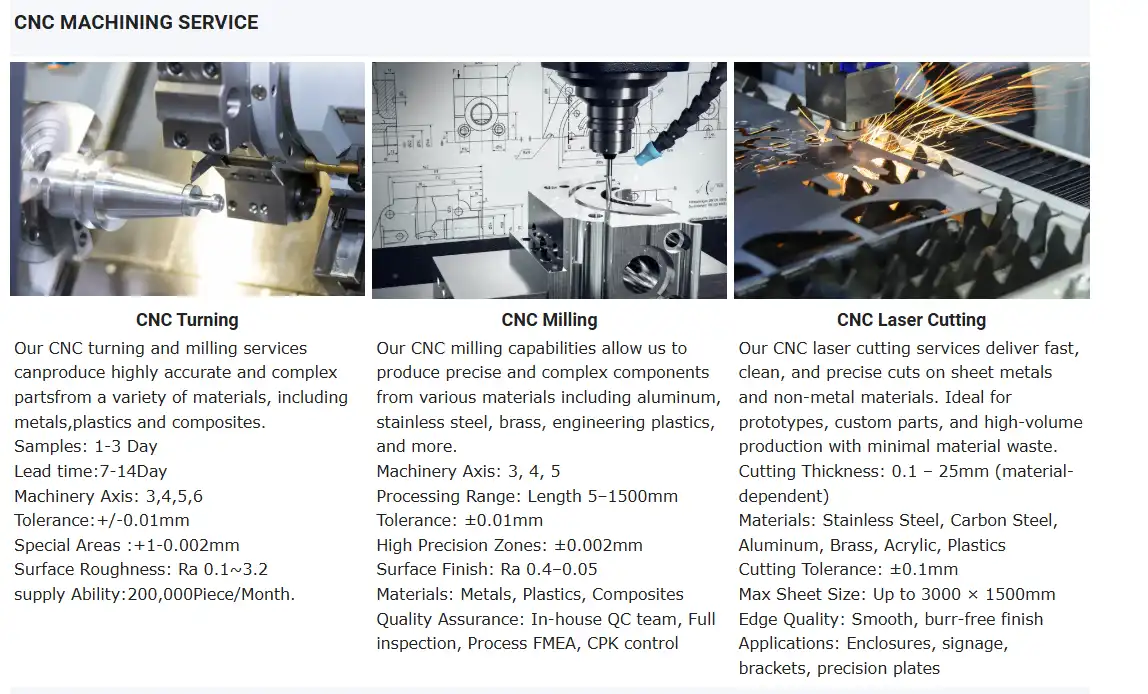
Plastics have special benefits that make them useful in certain situations. Engineering plastics like PEEK, nylon, and PTFE are more resistant to chemicals than many metals, and you don't have to worry about galvanic rusting with them. When it comes to making technology and communications gear, these materials are great because they keep electricity from getting through and are light. Precision machining of industrial plastics can produce a surface finish that is truly exceptional. At Dongguan Junsion Precision Hardware, our CNC production skills regularly deliver roughness values at Ra 0.8μm or better, with dimensional tolerances held to ±0.01mm.
Composite materials blend different qualities of different materials to create unique performance profiles. Fiber-reinforced polymers have high strength-to-weight ratios that make it possible to come up with new design ideas for robots and aircraft. These high-tech materials don't wear out when they're loaded and unloaded many times, and their dimensions stay the same across a wide range of temperatures.
Comparing Performance Characteristics
When choosing between corrosion-resistant and wear-resistant qualities, the best mix depends on the application setting. For tools used in chemical processes, the best corrosion protection is needed, which leads to choosing materials like stainless steel or fluoropolymers. In mine activities, abrasive slurry pumps put wear protection first, so hardened steel or ceramic-composite sleeves are good options.
When people are talking about buying things, the difference between sleeves, collars, and fixed parts can be difficult to understand. Sleeves cover the shaft continuously over long distances and usually connect to seals or bearings. Collars are shorter pieces that determine a specific axial position or offer safety in a particular area. Repair shaft sleeves are designed to fit over broken shaft parts and can be installed by pressing them into place or using adhesive.
How Shaft Sleeves Work and Installation Best Practices?
Understanding how shaft sleeves work helps repair teams make sure that parts last as long as possible and that equipment is reliable. Each of these protection parts works in a way that complements the others to keep the shaft's integrity.
Operational Mechanisms
The job of protection goes beyond just building walls. Sleeves spread out and absorb practical stresses that would otherwise build up at key places on the shaft surface. When placed correctly with the right interference fit, they make a single structural part that can handle both bending loads and torsion stress. The point where the sleeve meets the seal makes an exactly controlled surface that keeps the seal's effectiveness throughout the service life of the part.
When working with moving parts, you need to pay close attention to the surface finish and the accuracy of the measurements. For proper load spread and alignment, bearing systems need shaft diameters that stay the same. Surface roughness levels for seal systems must stay within certain ranges to keep sealing working well and avoid premature wear. At Junsion, our precise machining methods consistently give these important parameters, which support the best performance of our equipment.
Installation Guidelines
Preparing the area well is the first step in a proper fitting. Cleaning gets rid of dirt and other things that could make you less fit or cause stress points. Before assembly starts, dimensions are checked to make sure that the shaft, sleeve, and other parts that fit together are compatible. Choosing the right installation method relies on the type of sleeve. For example, controlled force must be applied during press-fit installations to avoid damage to the components. Threaded or hydraulically expanded sleeves require different steps.
Some common installation mistakes are not properly preparing the surface, using the wrong interference fit standard, and not aligning the parts correctly during assembly. These mistakes can lead to equipment failing too soon, seals leaking, or major damage. Using the right assembly tools, like arbor presses, hydraulic pullers, and precise measuring tools, makes sure that parts are placed and aligned correctly.
Maintenance and Longevity
Visual checks for wear patterns, rust signs, and surface damage should be part of regular inspection plans. Dimensional measures keep track of how fast things wear down, which lets you plan repair before they break. To reduce friction as much as possible without attracting dirt, lubrication methods must match the standards of the tools and the properties of the sleeve material.

Selection and Procurement Considerations for Shaft Sleeves
When making procurement choices for shaft sleeves, you have to weigh a lot of different factors that affect both short-term prices and long-term benefits. When choosing parts, professional buying teams look at technical specs, the supplier's skills, and the total cost of ownership.
Critical Decision Criteria
It is very important that the materials used are compatible with each other. Chemical reactions between the material of the sleeve and the operating fluids can speed up degradation or cause catastrophic failure. Specifications for sizes call for accuracy, especially in situations where small errors can affect the performance of seals or the positioning of bearings. Resistance qualities, such as the ability to withstand wear, corrosion, and high temperatures, must meet or go beyond what is needed for the purpose, with enough room for error.
Specialized standards are often based on needs that are unique to an application. When making electronics, automation tools may put an emphasis on electrical insulation qualities and cleanliness standards. There are strict rules about approval and traceability documents for aerospace parts. Applications that use medical devices need biocompatibility testing and validation documents to show that they are in line with regulations.
Brand Evaluation and Supplier Selection
OEMs with a long history, such as SKF, Timken, Parker, and Nachi, built their names on reliable quality and thorough expert support. A lot of the time, their parts come with a lot of application tech tools and global distribution networks that make getting replacements easy and quick. These benefits come at a higher cost, which could be a problem for apps that need to stay within their budgets.
Generic options and custom makers can help you save money while still meeting quality standards. To carefully evaluate these sources, you need to look at their production skills, quality control systems, and certification compliance. The ISO 9001:2015 certification shows that the quality is being controlled in a planned way, and the RoHS compliance shows that the product is environmentally friendly and follows the rules. Customer service quality, such as how quickly technical help responds, how reliable lead times are, and how well problems are solved, has a big effect on total value that goes beyond the price of the parts.
Procurement Channels and Strategies
Accessing standard parts is easy with online sites that offer clear prices and fast delivery. Industrial wholesalers have local stock, can offer expert advice, and have built ties that make it easier to meet urgent needs. Custom makers make it possible to optimize for specific uses by customizing the size, material, and surface treatment.
Buying in bulk lowers the cost per unit while making sure that there is enough overstock for upkeep tasks. By committing to a higher volume, you can often get a better price, faster production, and better technical help, which can add more value. By working together to make products and improve the supply chain, strategic partner relationships give businesses an edge over their competitors.
Shaft Sleeve Challenges and Advanced Design Considerations
Even though the ideas behind these parts are pretty simple, shaft sleeves have problems that need careful engineering answers. Understanding common failure modes and new design methods helps you choose and use components more effectively.
Common Operational Challenges
Wear and tear is still the most common problem, especially in high-speed situations or places where there is sharp contamination. As wear happens, it makes measurements less accurate, makes seals less effective, and finally needs to be replaced. Wear rates and service times are greatly affected by the choice of material, how it is treated on the outside, and how it is oiled.
Damage from corrosion happens faster in places with harsh chemicals, a lot of humidity, or where metals that are not the same are touching each other. Galvanic rust between the materials of the sleeve and the shaft can lead to problems that were not expected, even if the right materials were chosen for fluid compatibility. Surface treatments like anodizing, electroplating, and special coats lower the risk of rust by creating barriers and changing the way electrons behave.
Fatigue failures happen when there are repetitive loads where stress concentration points start crack spread. Faulty fitting that causes stress risers or dimensional gaps speeds up the wear and tear process. Improvements to the design, such as large joint radii, smooth surface changes, and better interference fits, make the structure less likely to wear out.
Design Principles and Engineering Considerations
Precise measurement specifications make sure that the part fits and works correctly throughout its entire lifecycle. Tolerance selection combines the ability to put things together with the needs of operations. Tighter tolerances improve performance but make manufacturing more difficult and cost more. The standards for the surface finish are based on practical needs, such as seal compatibility, friction reduction, and resistance to corrosion.
The working temperature, the amount of pressure, and the chemical interactions all affect the choice of material and design features. For uses that need to keep important clearances, materials that don't expand much at high temperatures may be needed. Conditions of pressure affect the required wall width and the material's strength. Chemical exposure determines which corrosion-resistant materials to use and how to apply protection coatings.
Innovation and Industry Trends
New developments in material science have led to the creation of industrial plastics that are better at withstanding heat, wear, and chemicals. These materials make it possible for challenging uses that used to need metal parts to work better. Coating methods that use diamond-like carbon, ceramic, and nanocomposite layers greatly improve the surface properties without changing the properties of the source material.
As production technology changes, it brings better accuracy through advanced CNC machining, additive manufacturing, and automatic checking systems. These features allow for tighter tolerances, more complicated shapes, and more consistent quality. Increasing demand in the energy sector for uses like electric car propulsion systems and renewable power generation is pushing designers and manufacturers to keep coming up with new ways to make sleeves.
Conclusion
In conclusion, for many different types of industrial uses, shaft sleeves play an important protective role that makes machines last longer, costs less to maintain, and works more reliably. The efficiency and service times of a component depend on the material used, the accuracy of the measurements, and the right way it is installed. When choosing these important parts, procurement workers should look at both the technical specs and the supplier's abilities. New materials, improved coatings, and precise production technologies keep making applications more flexible and meeting more and more strict operating needs. Strategically choosing parts from sellers who know what they're doing lowers the total cost of ownership while still making sure that the equipment works well and is reliable.
FAQ
What distinguishes shaft sleeves from shaft liners?
Protective functions of shaft sleeves and liners are similar, but they are installed and used in different ways. Sleeves are separate circular parts that fit over shafts and hold them in place with interference fit, set screws, or glue. Liners are usually thin-walled plugs or coatings that are sprayed on or bonded to the shaft directly using chemical deposition, thermal spray, or mechanical bonding. Sleeves make it easy to change and install parts, while liners make integration smooth with little effect on the dimensions. The right choice between these methods is based on the application's maintenance accessibility needs, size limitations, and speed requirements.
How frequently should industrial pump shaft sleeves undergo maintenance inspection?
How often maintenance checks for shaft sleeves are done relies on how hard the job is, the surroundings, and how important the equipment's function is. In general, industrial pumps should be inspected visually every three months and measured dimensionally once a year. If you have harsh working conditions like abrasive fluids, toxic chemicals, or very high or low temperatures, you should check your equipment every month. Continuous condition monitoring through sound analysis and temperature tracking is helpful for critical process equipment that breaks down and causes safety risks or big production loses. Setting up standard measures during installation lets you do trending analysis, which finds patterns of wear and tear and figures out the best time to replace something.
Can custom shaft sleeves be manufactured to precise machinery specifications?
Custom production of shaft sleeves lets you get the best results for your specific needs, like non-standard sizes, special materials, and custom surface processes. Precision cutting at places like Dongguan Junsion Precision Hardware can achieve tolerances of ±0.01 mm and surface roughness of Ra 0.8μm or better. Custom specs are made to deal with problems that only happen in certain situations, like high temperatures, harsh chemicals, or special bearing surfaces. As part of the customization process, engineers work together to look over the application factors, material choices, and production method to make sure of the best performance and cost-effectiveness of the part.
Partner with Junsion for Precision Shaft Sleeve Solutions
Dongguan Junsion Precision Hardware Co., Ltd. can meet your needs for precision shaft sleeve solutions with its advanced production skills and helpful customer service. Our cutting-edge building has 32 CNC tools that work very precisely with a wide range of materials, such as industrial plastics, stainless steel, aluminum alloys, and special composites. Our team has the technical knowledge and production accuracy that your projects need, whether you need standard shaft sleeve parts or fully customized solutions designed for tough uses in automation equipment, car systems, medical devices, or aerospace assemblies. Since we've been making shaft sleeves for a long time and have ISO 9001:2015 approval and RoHS compliance, you can be sure that the quality will be maintained throughout production. We also send to over 20 countries around the world. Get in touch with our expert team at Lock@junsion.com.cn, echo@junsion.com.cn, or evelyn@junsion.com.cn to talk about your needs and find out how our precision-engineered parts can improve the performance and stability of your equipment.
References
1. Budynas, Richard G. and Nisbett, J. Keith. "Shigley's Mechanical Engineering Design, 11th Edition." McGraw-Hill Education, 2019.
2. Khonsari, Michael M., and Booser, E. Richard. "Applied Tribology: Bearing Design and Lubrication, 3rd Edition." John Wiley & Sons, 2017.
3. Bhandari, V.B. "Design of Machine Elements," 4th Edition. McGraw-Hill Education, 2017.
4. Neale, Michael J. "The Tribology Handbook, 2nd Edition." Butterworth-Heinemann, 2001.
5. American Society of Mechanical Engineers. "ASME B16.5: Pipe Flanges and Flanged Fittings—Standards for Mechanical Components." ASME International, 2020.
6. International Organization for Standardization. "ISO 3448: Industrial Liquid Lubricants—ISO Viscosity Classification." ISO Standards, 2021.