




What Are Lathe POM Parts and Their Key Advantages?
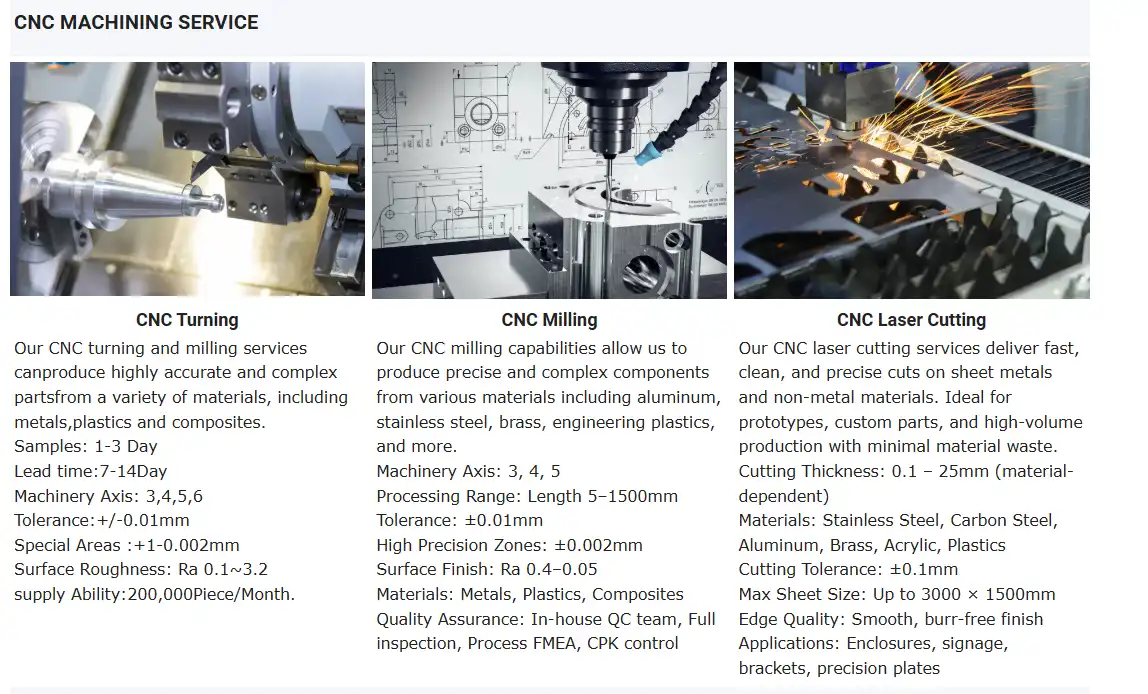
Lathe POM parts are precisely cut parts made from Polyoxymethylene (POM), an industrial plastic known for being very strong, stable in shape, and having a low friction coefficient. These parts—including bushings, gears, spacers, guides, and washers—are very important to turning machinery because they are more resistant to wear and more chemically stable than traditional metal options. Because of the way its molecules are structured, POM parts can keep their tight specs even when they are under constant working stress. This makes them essential for industries that need accuracy and dependability. When made correctly using advanced CNC methods, mill POM parts can have limits of ±0.01 mm and surface roughness values of ≤Ra0.8μm. These are standards that have a direct effect on how accurately they are machined and how long they last.
Understanding Lathe POM Parts: Definition, Types, and Materials
What Defines POM as an Engineering Material
In terms of function, polyoxymethylene is an acetal plastic with a solid structure that offers great stiffness and flexibility. The tensile strength of the material is usually between 60 and 70 MPa, and its bending stiffness is more than 2,800 MPa. Because of this, POM parts can be used instead of brass, copper, and even some steel parts when weight savings and resistance to rust are important. Most hydrocarbons, alcohols, and neutral chemical conditions are chemically resistant. However, strong acids and oxidising agents can break down the polymer over time.
Common Types of Lathe Components Made from POM
Different POM-based machine parts are made by different companies to meet unique operating needs. Bushings keep spinning shafts and fixed housings from rubbing against each other, which extends the life of equipment by reducing metal-on-metal contact. Gears transfer circular force with little slack, which keeps the positional accuracy even when complicated cutting operations are being done. Spacers make sure that parts are placed correctly within systems, and guide tracks and slides make linear movement smooth. Washers spread out loads and keep surfaces from getting damaged when tightening is done. To get the precise dimensions needed for lathe use in the electronics, automobile, medical device, and home appliance industries, each type of part goes through its own set of manufacturing steps, such as turning, grinding, and cutting.
Material Characteristics Compared to Alternatives
POM is different from metals because it has a much lower density (about 1.41 g/cm³), which means it has less friction and is easier to work with when installing. Because the material is naturally lubricious, it doesn't need to be oiled from the outside in many situations. This cuts down on upkeep times and the risk of contamination. POM is more stable in terms of its shape than nylon when it comes to changes in temperature and exposure to moisture. Unlike PTFE, which is very resistant to chemicals but not very stiff, POM is a good compromise between chemical safety and mechanical strength, making it ideal for load-bearing uses. The material cuts smoothly and doesn't leave burrs. It can also have surface processes like grinding and plating applied to it to improve its look and functionality.
Key Functions and Benefits of Lathe POM Parts
Precision-engineered POM parts change how well a machine works in a number of ways that work together. These parts talk about some of the most important problems procurement managers face when they try to keep running costs low while improving the efficiency of tools.
Friction Reduction and Wear Resistance
Because of the way its molecules are arranged, POM has a naturally slippery surface that keeps friction coefficients low, around 0.2 to 0.35, compared to steel. This natural lubricity lowers the amount of heat that is generated during operation, which stops thermal expansion that can damage machine standards. The high crystallinity of the material makes it resistant to wear because it stops sharp particles from getting embedded and the surface from breaking down. Testing demonstrates that properly manufactured POM bushings can outlast traditional bronze components by 40-60% in dry-running conditions, directly extending maintenance cycles and reducing unplanned downtime.
Chemical Stability Across Industrial Environments
Cutting fluids, coolants, hydraulic oils, and occasional chemical splashes can contact machine components in manufacturing environments. Mineral oils, greases, petrol, and mild alkaline solutions are common in machine shops, yet lathe POM parts maintain dimensional stability when exposed to these substances. This chemical resistance prevents swelling, cracking, or dimensional changes that would compromise precision fits. Components retain their mechanical properties during continuous operation at temperatures ranging from -40°C to +90°C, making them suitable for both climate‑controlled facilities and unconditioned workshops with variable thermal conditions.
Vibration Dampening and Noise Reduction
Metal parts can send waves through machinery structures, which can make operating noise louder and possibly affect accuracy. The viscoelastic features of POM soak up vibrating energy, which lowers resonance transmission by 30–45% compared to metal parts of the same size. This calming effect makes workplaces quieter and keeps sensitive electrical control systems from being affected by vibrations. Less shaking also extends the life of bearings and makes the surface finish on made parts better.
Weight Optimisation and Energy Efficiency
When you replace metal parts with POM versions, the spinning mass goes down by up to 85%. This means that less energy is needed to speed up and slow down machine wheels and tracks. When automatic processes are used, lower inertia speeds up cycle times, which increases output without lowering accuracy. The lighter weight makes upkeep tasks easier to do by hand, which makes replacing parts less stressful on the body. In uses with a lot of start-stop cycles or quick changes in direction, energy use goes down in a measurable way.
All of these benefits meet the needs of buying managers who want quick response times, quality security, and parts that meet strict safety standards. When bought from companies that use ISO 9001:2015-certified methods and materials that are RoHS-compliant, POM parts work reliably and meet quality standards around the world.
Maintenance, Common Issues, and Troubleshooting of Lathe POM Parts
Recommended Maintenance Protocols
Visual checks should be done regularly while the machine is down for planned repair. Check the surfaces of the parts for discolouration, crazing, or strange wear patterns that could mean they are not aligned properly or are being loaded too much. To clean POM parts, use light detergents and soft brushes. Don't use rough cleaners or solvents like acetone, as they can damage the polymer matrix. Unlike metal parts that need to be oiled on a regular basis, most POM parts don't need to be oiled. However, using suitable synthetic oils every once in a while can extend life in high-load situations. Use accurate measuring tools to keep an eye on the security of the dimensions and replace parts when the errors go beyond ±0.02 mm of the standard specs.
Identifying Common Degradation Patterns
Material breakdown usually shows up as surface crazing, which is small crack networks that form when stress builds up, or chemicals don't mix well. Any discolouration from amber to brown means that the POM was exposed to temperatures higher than its constant service temperature. Dimensional creep happens when parts are loaded for long periods of time beyond their design limits, which can be seen by their lasting distortion. Stress risers are created at sharp edges or when pressing parts into housings that are too small when they are installed incorrectly. UV light or long-term contact with strong oxidisers in the environment speeds up the ageing process, especially in parts that are not protected by housings.
Troubleshooting Framework for Performance Issues
When the accuracy of the lathe drops, it's important to check POM parts for possible causes. Using measured micrometres and gauge blocks, compare the real sizes to the specs. Check to see if the bushing kits that should keep specific interference fits have any play or too much space between them. Listen for changes in the rhythms of working noise. Grinding or squeaking sounds mean there isn't enough space or contamination. Check the surfaces that are joining for embedded trash or score marks that show wear from abrasion. Using infrared thermometers to measure temperature shows that there is too much friction because of a mismatch or overloading. It is important to quickly replace any parts that look fishy, because worn-out POM parts can damage more expensive metal parts by creating uneven wear patterns.
Comparison and Selection Guide: Lathe POM Parts vs Alternatives
Performance Comparison with Metal Components
While traditional brass and copper bushings have great bearing qualities, they are more expensive to make and can rust in damp places. Steel parts are the strongest, but they are also the heaviest and need to be oiled all the time to keep them from rusting. POM performs as well as or better than metal in low- to moderate-load situations, and there are no worries about rusting. Because the material lubricates itself, it saves a lot on upkeep labour costs. However, metal parts are still needed for uses where the temperature stays above 90°C or where the impact load is higher than POM's yield strength of about 65 MPa.
POM versus Alternative Engineering Plastics
Nylon alternatives absorb ambient moisture, causing swelling that compromises precision fits—a significant drawback for machining applications requiring tight tolerances. PTFE offers superior chemical resistance and lower friction coefficients but lacks the structural rigidity required for load‑bearing components and exhibits cold flow under sustained stress. Acetal copolymers provide slightly better chemical resistance than homopolymer POM but sacrifice some mechanical strength and thermal stability. PEEK is a better choice for aggressive environments, but it costs 8‑10 times more than lathe POM parts and is economically justified only when operating conditions exceed POM’s performance limits.
Cost-Benefit Analysis for Procurement Decisions
The initial cost of buying POM parts is usually somewhere between the cost of regular plastics and the cost of speciality metals. The total cost of ownership should take into account longer service times, no longer needing to be oiled, less energy use from smaller mass, and less work for support staff. When you compare POM to traditional metal parts, lifecycle research shows that the ROI is within 12 to 18 months for moderate-duty uses. Custom production lets you make the best use of a part's shape for its intended purpose, which could mean getting rid of multiple standard parts through combined designs.
Selection Criteria and Certification Standards
When looking at providers, give more weight to companies that can show proof of ISO 9001:2015 approval and RoHS compliance. Ask for material approvals that say the POM plastic is new and not a mix of recovered materials that has different qualities. Check that the company can do the CNC grinding, turning, milling, and cutting that is needed to get surface finishes of Ra0.8μm and tolerances of ±0.01mm. Use coordinate measuring tools to check the correctness of the measurements on sample parts. Talk about the choices for customisation for non-standard sizes or built-in features that make building easier. Ask for rapid ageing test data that simulates real-world situations so that you can correctly guess how long a service will last.
Procurement Guide for Lathe POM Parts: How to Buy and What to Expect
Supplier Assessment and Selection
The first step in finding trusted partners is to look at their technical and industrial facilities. Reliable providers have their own production sites that are fully equipped with cutting-edge CNC machines that can keep standards very tight across multiple production runs. Full-service makers are different from sellers of normal catalogue items because they can change the sizes, specs, and finishes on the surface. Check to see if the quality management system is ISO certified, and ask for proof of the testing procedures, such as measuring the surface finish, checking the dimensions, and being able to track the materials used. Responding to technical questions from suppliers shows that they have the engineering help that is needed when choosing parts for specific uses.
Pricing Structures and Volume Considerations
Unit pricing for precision‑machined lathe POM parts is determined by order quantity, material cost, and manufacturing complexity. Parts with numerous features requiring secondary operations and tight geometric controls are significantly more expensive than simple turned bushings with standard specifications. Volume pricing typically provides substantial savings at break points of approximately 100, 500, and 1,000 pieces. For non‑standard designs, custom tooling charges may apply but are quickly amortised over modest production quantities. To facilitate price comparisons across suppliers, request itemised quotations that specify material grades, manufacturing methods, inspection protocols, packaging, and any additional handling requirements.
Customisation Options for Specialised Applications
Advanced makers can meet specific size needs, change the way materials are made, and add design features that work together. Customisation goes beyond simple size and can include unique shapes like undercuts, internal threads, or complicated curves that can be made with multi-axis cutting. Surface processes like coating, anodising, and sanding improve electrical qualities, wear resistance, or the way something looks. You can choose a material based on its homopolymer or copolymer grade or add things that make it more stable in UV light or better at releasing static electricity. Work with engineering teams during the design process to make sure that the shape of each part is optimised so that it can be manufactured while still meeting its useful needs. Validation can happen with prototype production before committing to production tools and large orders.
Logistics and Delivery Expectations
To buy things internationally from production hubs, you need to know about shipping times and methods. Custom POM parts usually take between two and four weeks to make, but this depends on how complicated they are and how busy the factory is right now. Express production choices can meet pressing needs, but they cost more. Shipping methods balance cost and speed of delivery. Sea freight is the cheapest way to send large orders that don't need to be delivered right away, while air courier services can get samples and small amounts to customers within days. The packaging rules should keep precision parts safe from damage and contamination while they're being shipped. Set up clear Incoterms that spell out where duty shifts and how much it costs. Build ties with providers and keep a good stock of regularly ordered options so that you can quickly fill repeat orders.
Warranty and After-Sales Support
Full supplier partnerships include more than just delivering parts; they also include expert help and performance promises. Standard warranties cover flaws in the way the product was made and measurements that don't match up. Within 30 to 90 days of delivery, you can usually get a replacement or a refund. Advanced providers offer application engineering help that makes it easier to choose the right parts and put them correctly. Having quick access to technology teams is very helpful when fixing unexpected speed problems or looking for ways to make the design better. Check how committed a seller is by seeing how quickly they respond to pre-sale questions, how willing they are to provide samples, and how easy it is for them to provide specific technical paperwork like material data sheets, inspection reports, and handling suggestions.
Conclusion
Selecting appropriate lathe POM parts directly impacts operational efficiency, maintenance costs, and machining precision across electronics, communications, consumer goods, and logistics applications. The material's combination of mechanical strength, dimensional stability, and chemical resistance creates compelling advantages over traditional metal components in properly matched applications. Successful procurement requires understanding material properties, evaluating supplier capabilities, and specifying appropriate tolerances and surface finishes. Partnering with certified manufacturers offering customisation options, quality assurance protocols, and responsive technical support ensures components meet exacting operational requirements while delivering favourable total cost of ownership.
FAQ
How do I determine if POM is suitable for my specific lathe application?
Evaluate operational parameters, including maximum continuous temperature (should not exceed 90°C), chemical exposure (verify compatibility with specific substances), and mechanical loads (POM suits low-to-moderate stress applications). Contact engineering teams at manufacturers like Junsion to discuss your requirements and receive application-specific recommendations based on material properties and manufacturing capabilities.
What tolerances can realistically be achieved with machined POM components?
Advanced CNC manufacturing achieves dimensional tolerances of ±0.01 mm with surface roughness values reaching Ra0.8μm or better. These specifications match requirements for precision lathe components in demanding applications. Tighter tolerances may be feasible for critical dimensions through specialised manufacturing processes and enhanced inspection protocols.
How do I properly install POM components to maximise service life?
Avoid press-fitting with excessive interference that creates internal stresses leading to premature cracking. Clean mating surfaces thoroughly to prevent abrasive contamination. Use appropriate installation tools, preventing edge damage. Follow manufacturer specifications for fit tolerances—typically light interference or transition fits. Avoid overtightening fasteners that could crush or distort polymer components.
Partner with Junsion for Precision Lathe POM Parts Manufacturing
Dongguan Junsion Hardware Co., Ltd. specialises in custom-manufactured lathe POM parts engineered to meet the exacting standards procurement managers demand. Our 1,600 square-meter facility houses 32 advanced CNC machines capable of achieving ±0.01 mm tolerances and Ra0.8μm surface finishes across customised dimensions. We employ precision turning, milling, and cutting techniques, offering surface treatments including anodising, sandblasting, and plating. As an ISO 9001:2015 certified and RoHS-compliant lathe POM parts manufacturer, we serve electronics, automotive, medical device, and appliance industries across more than 20 countries. Our engineering team provides rapid response to technical inquiries and customisation requests, ensuring components precisely match your machinery specifications. Contact our engineering team at Lock@junsion.com.cn to discuss how Junsion can optimise your supply chain for precision hardware components with the same reliability you expect from a trusted carbide milling insert supplier.
References
1. McKeen, Laurence W. "The Effect of Temperature and Other Factors on Plastics and Elastomers." William Andrew Publishing, 2015.
2. Domininghaus, Hans. "Plastics for Engineers: Materials, Properties, Applications." Hanser Publications, 2012.
3. Erhard, Gunter. "Designing with Plastics: The Fundamentals." Hanser Gardner Publications, 2006.
4. Shah, Vishu. "Handbook of Plastics Testing and Failure Analysis." John Wiley & Sons, 2007.
5. Crawford, R. J. "Plastics Engineering: Manufacturing and Data." Butterworth-Heinemann, 2002.
6. Strong, A. Brent. "Plastics: Materials and Processing." Pearson Education, 2005.