




What Industries Rely on Sensor Accessories the Most?
Sensor accessories are critical components across industries where measurement accuracy and operational reliability provide competitive differentiation. In manufacturing and robotics environments, mounting brackets and signal conditioners protect data integrity. The automotive industry requires connectors and protective housings for temperature and pressure sensing applications. Healthcare processes demand miniature, clean room‑compatible accessories for patient monitoring systems. Energy generation sectors, particularly renewable facilities, rely on ruggedized mounting systems capable of withstanding harsh environmental conditions. Logistics and consumer goods companies increasingly integrate these accessories to enhance IoT device functionality. By understanding which industries depend most heavily on these components, procurement managers can identify reliable sources for custom, high‑precision hardware that meets rigorous compliance standards such as ISO 9001:2015 and RoHS.
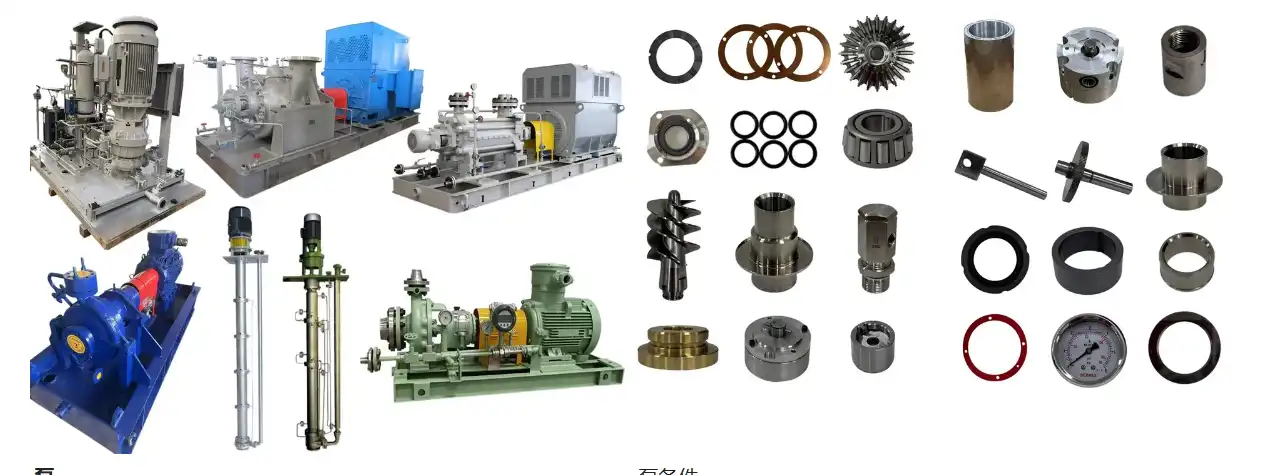
Key Industries Utilizing Sensor Accessories
Precision-engineered supporting parts are an important part of modern industry environments that make them work. These parts connect what a monitor can do with what it needs to do in the real world. Different industries have different patterns of dependence that are shaped by practical goals and environmental problems.
Manufacturing and Automation
Intelligent tracking tools have changed how production sites all over the world work. This revolution is made possible by sensor devices, which include stable attachment options and signal processing gear that maintains measurement accuracy. Customized clamps made from 316 or 304 stainless steel with specs of up to ±0.01 mm are used on assembly lines to make sure that the parts don't move and stay the same size over time. Enclosures made with CNC machines keep sensitive electronics safe from external contaminants while still letting repair teams get to them easily. Automated quality control units depend on these tools to keep output steady. Surface finishes like electropolishing and anodizing keep metal from rusting in damp places.
Oil and Gas Sector
Some of the toughest conditions you can imagine are found in extraction and processing activities. Extreme temperatures, chemicals that break down metal, and constant mechanical stress are all things that equipment has to deal with. For mounting gear in offshore platforms, it needs to be made of 410 stainless steel and have special surface processes like plating and electrolysis to keep it from breaking down in saltwater. When used in drills, pressure sensor devices are put through a lot of tests to make sure they can handle loads of more than 10,000 PSI. The industry depends on these parts for more than just their performance—safety rules require multiple tracking systems in places where a broken part could cause a disaster. Five-axis machining is used to make custom sensor devices that have the physical complexity needed for tight-fitting areas on oil rigs.
Automotive Applications
More and more pressure is being put on automakers to add improved driving aid systems and pollution limits. Temperature sensors that monitor how well a catalytic converter is working need safety housings with a surface roughness of 0.8 µm to keep exhaust gas from getting inside. Precision pressing is needed to make sure that the placement of proximity sensor pieces in parking aid systems is always within a few millimeters. As more people buy electric cars, this dependence grows even stronger. Battery management systems use a lot of heat sensors, and each one needs plugs and mounts that are made to automobile standards. Parts that meet IATF 16949 standards are required by modern production lines. This is in line with general quality management rules. These devices are put through tests that simulate years of use in just a few months.
Healthcare and Medical Devices
The highest level of accuracy is needed in patient tracking tools. Blood oxygen monitors use tiny connections made of safe 303 stainless steel that have been cleaned to a mirror shine to make sterilization easier. Ventilator pressure sensors come with fitting tools that make replacing them quick and effortless in critical care settings. Full tracking is required in the medical device business. Each part has to have a lot number that can be linked to material approvals and measurement inspection records. In this field, manufacturers often apply special coatings to sensor devices through controlled anodizing processes. These coatings make the surfaces resistant to being cleaned with chemicals over and over again. Healthcare procurement managers look for providers that are certified to ISO 13485 and offer fast development for custom OEM solutions.
Energy and Renewable Systems
Across solar farms and wind turbine installations, thousands of monitoring points require specialized Sensor accessories. Manufacturers producing sensor components for photovoltaic arrays utilize grinding and specialty finishing processes to create UV‑resistant devices that maintain electrical conductivity. For wind turbine nacelles—subjected to constant vibration and temperature fluctuations—mounting hardware machined via precision turning and CNC processes must hold extremely tight tolerances to ensure reliable sensor positioning. Smart grid systems connecting equipment to IoT networks depend on carefully engineered connector kits, as signal integrity rests on properly designed interface components. Within the renewable energy sector, demand is growing for custom‑sized accessories capable of accommodating non‑standard mounting configurations, particularly when retrofitting older installations with new monitoring capabilities.

Understanding Sensor Accessories and Their Industrial Applications
To successfully integrate tracking systems, you need to know a lot about the ecosystems that support them. These parts are more than just connections; they include whole circuits that decide how reliable the whole thing is.
Component Categories and Functions
Industrial sensor devices can be used for several different tasks. Mounting gear, like screw plugs, clamp systems, and magnetic bases made to specific load rates, keeps things stable mechanically. Electrical connections make sure that signals get sent while keeping their IP67 or IP68 grades for entry protection. Protecting delicate devices from electromagnetic radiation and physical damage is what enclosures are for. With cable glands and pipe fittings, you can make sealed paths that keep wetness out. Each group deals with a different type of failure that could affect the quality of data or the safety of the tools. When buying, teams understand these differences; they can choose the right answers for each business situation.
Performance Enhancement Mechanisms
Quality tools have a direct effect on the accuracy of measurements in a number of ways. In high-frequency settings, vibration-dampening mounts cut down on signal noise. Temperature monitors work better when they have thermally conductive surfaces. Precision orientation supports making sure that optical sensors stay calibrated for a long time. When used in places with a lot of electrical noise, cable systems with twisted-pair protection block electromagnetic interference. Because these performance factors add up, a well-designed extension system can make sensor sensitivity much better than with basic setups.
Environmental Adaptation Strategies
When working in harsh conditions, you need tools that are made to work in those circumstances. For use underwater, pressure-compensated housings made from metals that don't rust are needed. Ceramic insulation and refractory metal bolts are used for high-temperature burner tracking. For placements in clean rooms, parts must have proven particle loss rates below ISO Class 5 limits. Chemical processing plants need materials that can stand up to certain acids and solvents. When purchasing things, people have to match the requirements for accessories to the levels of environmental exposure, taking into account both single problems and the overall stress that the environment can cause.
Choosing the Right Sensor Accessories for Your Industry
Strategic component selection requires balancing multiple technical and commercial considerations. Effective decision-making frameworks account for both immediate requirements and long-term operational costs.
Compatibility Assessment
The most critical decision factor for Sensor accessories is matching components to sensor types. Thermocouple installations require compensation connectors that maintain specific thermoelectric properties. Strain gauge applications demand mounting surfaces with controlled thermal expansion characteristics. Optical sensors need alignment fixtures that withstand physical impacts without losing calibration. Creating compatibility matrices that map accessory families to sensor types greatly assists procurement managers. This systematic approach reduces field installation errors and accelerates system commissioning timelines. When standard catalog items cannot meet application requirements, custom OEM manufacturing becomes necessary to ensure proper fit, function, and long‑term reliability.
Durability and Material Selection
Total cost of ownership is directly related to how long a part lasts. Different types of stainless steel have different levels of rust resistance. For example, the 316 alloy works better in sea environments, while the 410 alloy protects well enough and costs less for controlled environments. Surface finishing methods have a big effect on how things wear. Polishing makes surfaces smooth, which makes it harder for particles to stick to them. Painting creates walls that keep chemicals from getting through. Anodizing creates rust layers that make metals more resistant to weathering while keeping their exact dimensions. Procurement teams should ask for data from accelerated life testing that shows how well an item works under realistic operational stress.
Compliance and Certification Requirements
By following the rules, you can avoid expensive production delays and legal problems. RoHS compliance makes sure that parts don't contain too many of the substances that aren't allowed on European markets. If a company has ISO 9001:2015 approval, it means they have recorded quality-control processes. Medical device parts have to follow rules that are specific to their industry, such as FDA 21 CFR Part 820. ATEX approval is now needed for systems in areas that could explode. As new safety research comes out, standards change, so procurement managers need to stay up to date on the rules that apply. Formal deals should be made with suppliers about compliance paperwork and batch tracking as part of supplier partnerships.
Wired Versus Wireless Solutions
Connectivity design affects how hard it is to install and how flexible it is to use. Wired sensor devices offer a stable power supply and signal lines that aren't affected by noise, making them perfect for long-term installs in places with bad electricity. Wireless options get rid of the need for cables and allow for quick changes, but they need to be maintained with batteries and can cause problems with RF interference. Local cable groups and wireless gateway links are used together in hybrid methods to balance reliability with rollout freedom. This choice will have an impact on how the infrastructure changes over time. Wired systems are less likely to become outdated, while wireless designs can easily adapt to new tracking needs.
Installation, Maintenance, and Troubleshooting of Sensor Accessories
Operational reliability depends equally on component quality and implementation practices. Systematic approaches to installation and upkeep maximize equipment availability while minimizing lifecycle costs.
Best Practices for Installation
Accurate measurements depend on the fitting being done right. Torque levels that stop both thread galling and loosening are needed for threaded joints. Usually, these levels are 70–80% of the bolt's proof load. Precision gauge blocks or laser systems must be used to check that alignment fixings are positioned within the design limits. To keep conductors from getting worn out, the cable route should avoid sharp turns with minimum radius requirements. Applying dielectric grease to electrical lines can help prevent rusting in damp places. Documentation during installation sets a standard for assistance in the future. At approval, teams should take pictures of finished parts and write down their measurements.
Preventive Maintenance Protocols
Inspections that happen on a regular basis find problems before they break down. A visual inspection can find rust in the connectors, cracks in the case, and damage to the wire insulation. Thermal imaging shows resistance to warmth at electrical joints, which means the links aren't working as well as they should. Vibration analysis finds structural failure or loosened attachment hardware. Cleaning methods get rid of built-up contaminants that could stop sensors from working properly or speed up rusting. The amount of time between maintenance checks depends on how hard the environment is. In harsh environments, monthly checks are enough, while once-a-year checks are enough in controlled environments. Predictive analytics can find common failure modes across groups of equipment when repair records are kept track of.
Common Failure Modes and Solutions
Connector corrosion represents the most frequent accessory failure mechanism, particularly in outdoor installations. Symptoms include intermittent signals and increased contact resistance. Solutions involve improved environmental sealing through upgraded gland assemblies and application of conformal coatings. Mechanical fatigue manifests as cracked mounting brackets or fractured cable conductors. Root causes include inadequate vibration isolation or thermal cycling stress. Remediation requires redesigning mounting systems with compliant interfaces absorbing mechanical energy. Signal degradation from electromagnetic interference appears as noisy readings or baseline drift. Troubleshooting involves systematic isolation testing, identifying coupling pathways, followed by shielding improvements or routing modifications.
Leading Sensor Accessories Brands and Suppliers for B2B Procurement
Strategic sourcing requires understanding the supplier landscape and differentiating between commodity providers and specialized manufacturing partners. Procurement success depends on aligning vendor capabilities with application requirements.
Major Industrial Manufacturers
Global brands like Honeywell and Bosch dominate standardized accessory markets through extensive distribution networks and broad product portfolios. Siemens offers integrated solutions combining sensors and accessories optimized for industrial automation platforms. Texas Instruments provides signal conditioning modules supporting diverse sensor types. These manufacturers excel in high-volume applications where standardization reduces unit costs. Their products undergo rigorous testing and carry comprehensive compliance certifications. Procurement from major brands suits applications prioritizing supply continuity and established reliability data over customization flexibility.
Specialized Custom Manufacturing
Complex applications often exceed standard product capabilities, requiring custom-engineered solutions. Specialized manufacturers employ advanced processing techniques, including five-axis machining, precision stamping, and controlled-atmosphere brazing. They offer material expertise spanning stainless steel grades, exotic alloys, and engineered polymers. Custom sensor accessories benefit from collaborative development processes where engineers iteratively refine designs through prototyping and testing cycles. This approach delivers components precisely matched to application constraints, though it requires longer lead times and higher initial investment. The value proposition centers on performance optimization and lifecycle cost reduction through tailored solutions.
Evaluating Supplier Capabilities
Due diligence extends beyond product specifications to assess organizational capabilities. Manufacturing capacity determines the ability to scale production to meet demand fluctuations. Quality management systems certified to ISO 9001:2015 indicate documented process controls and continuous improvement cultures. Technical support resources, including application engineers and testing facilities, enable collaborative problem-solving. Geographic proximity affects shipping costs and responsiveness to urgent requirements. Financial stability matters when establishing long-term partnerships—suppliers must maintain operations throughout multi-year equipment lifecycles. Procurement teams should conduct facility audits evaluating equipment capability, workforce expertise, and quality control infrastructure before finalizing vendor selections.
Conclusion
Industries ranging from automotive manufacturing to renewable energy increasingly depend on precision-engineered sensor accessories to achieve operational excellence. These components transform basic sensing capability into reliable monitoring systems through careful attention to mechanical stability, electrical integrity, and environmental protection. Successful procurement requires understanding application-specific requirements, evaluating material properties against operational stresses, and selecting suppliers offering both technical expertise and quality assurance. Strategic partnerships with manufacturers capable of custom OEM solutions provide competitive advantages in demanding applications where standard products cannot deliver required performance levels. As industrial automation advances and IoT integration deepens, sensor accessories will continue evolving in sophistication and criticality across all major industrial sectors.
FAQ
What lifespan can I expect from quality sensor accessories?
Properly specified and maintained accessories typically provide 5-10 years of service in standard industrial environments. Lifespan varies significantly with exposure conditions—marine atmospheres and chemical processing reduce durability, while controlled indoor installations may exceed 15 years. Material selection and surface finishing dramatically influence longevity. Stainless steel components with appropriate protective coatings resist corrosion far better than basic carbon steel alternatives. Procurement decisions should balance initial cost against replacement frequency and downtime expenses.
How do I determine compatibility between sensors and accessories?
Compatibility assessment begins with mechanical interface verification—thread types, mounting patterns, and dimensional tolerances must align precisely. Electrical considerations include voltage ratings, current capacity, and signal impedance matching. Environmental ratings like IP codes and temperature ranges must meet or exceed application requirements. Manufacturers typically provide compatibility matrices or application guides. When documentation proves insufficient, consulting with engineering support teams or requesting sample testing resolves ambiguity before committing to large-scale procurement.
Can custom accessories improve system performance beyond standard options?
Custom-engineered sensor accessories frequently deliver measurable performance improvements in demanding applications. Tailored vibration isolation reduces signal noise in high-frequency measurement systems. Optimized thermal interfaces accelerate sensor response times. Application-specific geometries enable installation in space-constrained environments impossible with catalog products. The value justification depends on production volumes and performance criticality—high-volume manufacturing and safety-critical applications benefit most from customization investments.
Partner with Junsion for Precision Sensor Accessories Manufacturing
Dongguan Junsion Hardware Co., Ltd. specializes in manufacturing precision components that support demanding industrial applications, including custom sensor accessories fabricated to exacting specifications. Our 1,600 square-meter facility houses 32 advanced CNC machines capable of five-axis machining, turning, and stamping operations. We produce components from 316, 304, 303, and 410 stainless steel with tolerances reaching ±0.01 mm and surface roughness achieving Ra 0.8 μm or better. Our finishing capabilities span polishing, anodizing, sandblasting, plating, and electrophoresis, enabling comprehensive customization.
Quality assurance underpins every manufacturing stage through our ISO 9001:2015-certified management system and RoHS-compliant processes. We serve the automation equipment, medical device, aerospace, and robotics industries with fast-response prototyping and scaled production. As a trusted sensor accessories supplier, Junsion delivers customized solutions addressing unique mounting, protection, and integration challenges that standard catalog products cannot satisfy.
Procurement managers seeking reliable partners for precision hardware components benefit from our technical expertise and commitment to dimensional accuracy. Our engineering team collaborates throughout development cycles, optimizing designs for manufacturability while maintaining performance specifications. Contact our specialists at Lock@junsion.com.cn to discuss your sensor accessory requirements and discover how custom manufacturing delivers competitive advantages in your specific application context.
References
1. Johnson, M. R., & Peterson, K. L. (2021). Industrial Sensor Integration: Hardware and Accessory Selection for Automated Systems. Manufacturing Engineering Press.
2. Chen, W., & Rodriguez, A. (2020). "Material Selection Criteria for Sensor Mounting Hardware in Harsh Environments," Journal of Industrial Engineering, Vol. 45, No. 3, pp. 112-128.
3. Thompson, S. E. (2022). Precision Manufacturing Techniques for Electronic Component Accessories. Technical Publishing International.
4. National Institute of Standards and Technology. (2019). "Quality Standards for Instrumentation Hardware in Process Control Applications," NIST Special Publication 800-183.
5. Anderson, P. J., & Liu, H. (2023). "Life Cycle Cost Analysis of Sensor Accessories in Automotive Manufacturing," International Journal of Production Research, Vol. 61, No. 8, pp. 2456-2472.
6. European Committee for Standardization. (2020). Guidelines for Sensor Accessory Specification in Industrial Automation Systems, EN 50178:2020 Standards Document.