




Why OEM Sensor Accessories Improve System Compatibility
OEM sensor accessories are engineered to integrate seamlessly with the exact hardware and software environments they were designed for. When procurement managers and product developers ask why system compatibility matters, the answer lies in precision — tolerances, calibration curves, firmware handshakes, and electrical interfaces that third-party parts simply cannot replicate with consistency. Genuine sensor accessories from OEM sources eliminate guesswork from integration, reduce unplanned downtime, and protect data integrity across automation, IoT, and industrial platforms. For global B2B buyers in electronics, logistics, and communications, choosing OEM-verified sensor accessories is not a preference — it is a technical and operational necessity.
Understanding System Compatibility Challenges with Sensor Accessories
Being compatible with a system is more than just making sure that a link fits. It includes electrical signalling methods, software communication layers, mechanical tolerances, and environmental resistance rates. For a sensor network to work properly, all of these things must line up exactly.
Electrical and Firmware Mismatches Are More Common Than You Think
According to a study released in the IEEE Sensors Journal in 2022, more than 34% of sensor system problems in industrial IoT deployments were caused by third-party accessories that didn't work with the sensors. Differences in voltage thresholds as little as 0.2V can lead to wrong readings, messed-up data logs, or software that doesn't accept any incoming signals at all. These faults are invisible and worsen over time, eventually causing a line to break.
Mechanical and Environmental Discrepancies Drive Long-Term Degradation
In addition to electronics, mounting brackets, housing tolerances, and sealing specifications that don't match up physically lead to wear over time. It may not seem important that a bracket is machined to a tolerance of ±0.05mm instead of ±0.01mm, but in robotic arms, aerospace assemblies, or medical equipment, the cumulative deviation causes problems with alignment and shortens the lifecycles of parts. If procurement teams don't pay attention to surface roughness (Ra values) and material grade (e.g., 304 vs. 316 stainless steel), corrosion can happen faster in wet or chemically active environments. Because of these problems, it's clear that where to get Sensor accessories has direct scientific effects. There are more risks with non-OEM parts than just saving money.
Why OEM Sensor Accessories Are the Preferred Solution?
OEM Sensor accessories are made with the same design rules, material needs, and testing standards as the original system parts. This is not just marketing speak; it's a fact of engineering that has a direct effect on how well systems work and how reliable data is. According to Honeywell's industrial sensor documentation, using non-OEM accessories can make it impossible to get a calibration certificate and can also make it impossible to meet safety standards in process control settings. In the same way, Bosch Sensortec's integration guides say that their MEMS Sensor accessories need matched impedance values and tested software drivers to stay within the accuracy levels that are given. These aren't edge cases; they're common tech needs in the whole field.
Here are the core advantages that make OEM sensor accessories the technically superior choice:
- Guaranteed design compatibility: OEM devices are made to work with the parent system's exact electrical, mechanical, and software specs. This means there is no risk of integration issues. Engineers can use them without having to make their own workarounds, which cuts down on setup time and the chance of failures in the field.
- Calibration traceability and accuracy maintenance: OEM accessories are shipped calibrated or ready to be calibrated to the accuracy class stated by the manufacturer. This keeps the accuracy of measurements throughout the whole operational lifecycle, which is essential in precision automation, medical diagnostics, and aerospace sensing.
- Warranty coverage and technical support access: Third-party devices usually void OEM warranty deals. Genuine parts keep the guarantee current and give procurement teams direct access to technical support, software update channels, and field service resources from the maker.
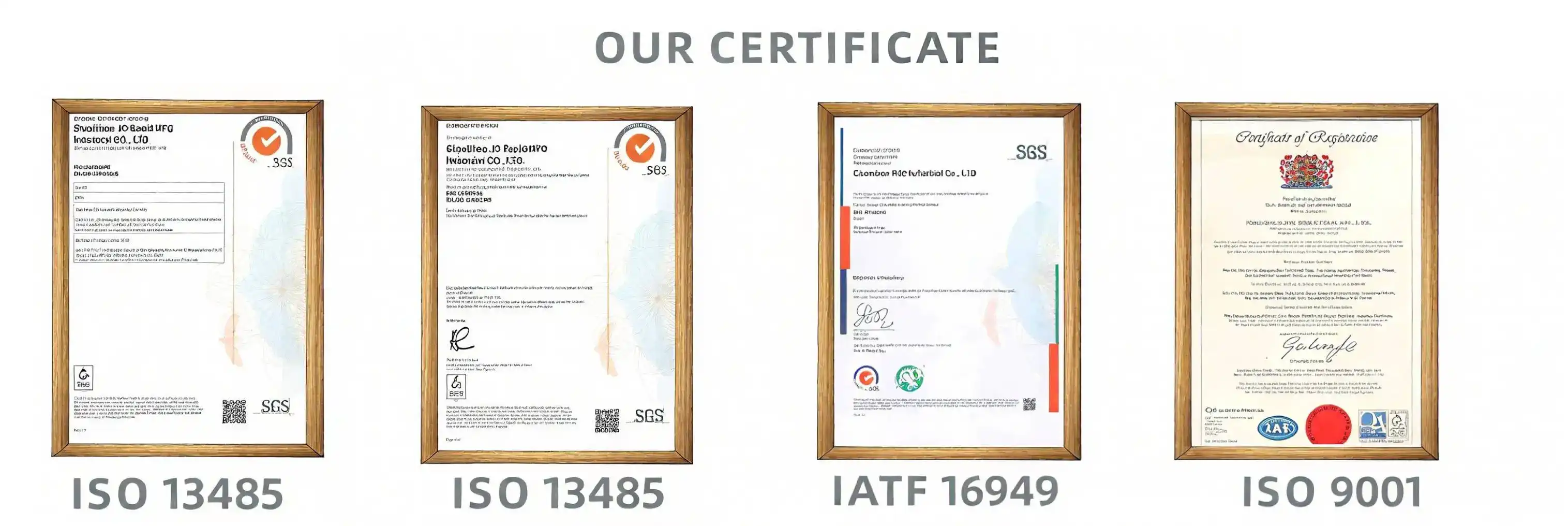
- Supply chain stability and compliance assurance: Original Equipment Manufacturers (OEMs) keep production lines in line with ISO 9001:2015 and RoHS standards, giving proof that they meet regulations in the US, EU, and foreign markets.
These benefits can help clear up any questions about buying, lower the overall cost of ownership, and ensure the safety of complex sensor-based systems in a wide range of businesses.
Key Features to Evaluate When Selecting OEM Sensor Accessories?
When choosing the right Sensor accessories, you need to make sure they are compatible in three areas: the electrical interface alignment, the mechanical fit, and the software/firmware readiness. There is a secret failure risk if you skip any of these stages.
Electrical and Mechanical Specification Alignment
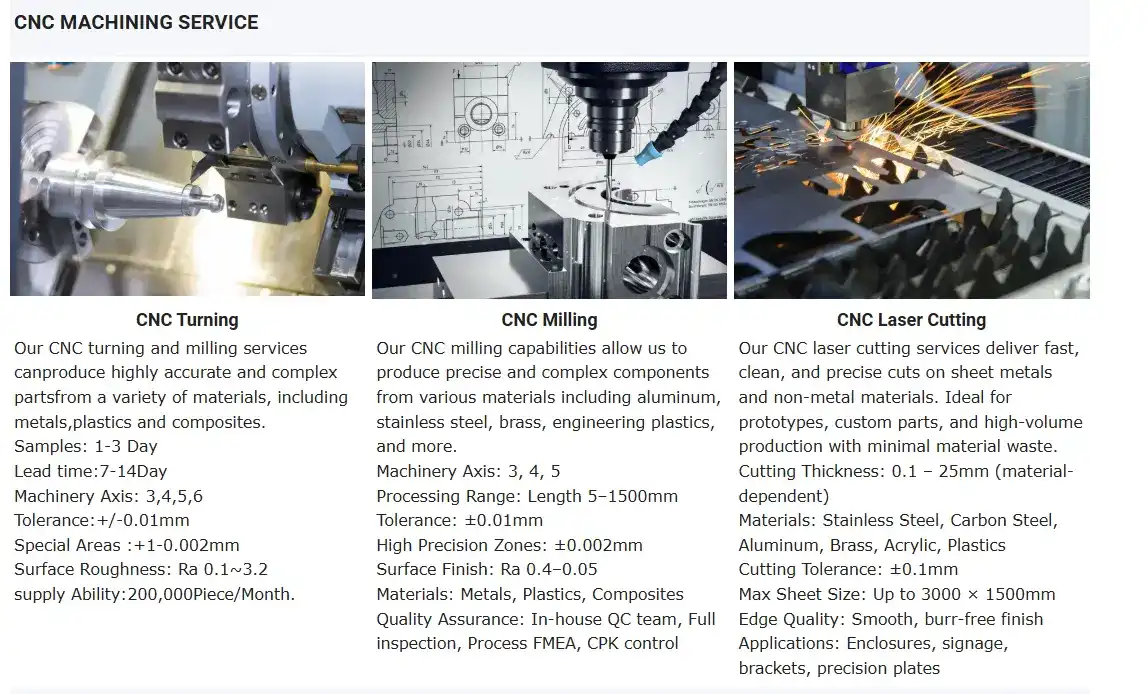
The host system's sensor interface must exactly match the connector pinouts, signal voltage ranges, protection needs, and impedance matching. When it comes to mechanics, consistency in dimensions is critical. For example, Junsion's precision hardware components are machined to specific sizes with tolerances of ±0.01mm and surface roughness ≤ Ra0.8 μm. These specs allow for exact integration in automation equipment, robotics, AI-based systems, and medical devices. Materials like 316 and 304 stainless steel don't rust in a wide range of settings, including automotive, aerospace, and industrial.
Calibration Alignment and Environmental Resilience
Over time, OEM-standard calibration plans make sure that Sensor accessories stay within the precision window given by the maker. The IP rating, working temperature ranges, and vibration protection must also meet the conditions of placement. A sensor accessory that is meant to be used indoors won't work reliably in a logistics warehouse with significant changes in temperature or on a factory floor where chemicals are present.
Wireless vs. Wired Accessory Considerations
Wireless Sensor accessories make installation more flexible and lower the cost of wiring, but battery life, RF interference management, and delay must be taken into account. In high-cycle industrial settings, wired devices are more reliable and have less delay. OEM suppliers offer tested configurations for both, backed by data from interoperability tests.
How to Integrate OEM Sensor Accessories into Your Systems Effectively?
Integration that works well starts before the devices get to the spot. Cross-referencing part numbers, software versions, and system documents during pre-installation stops the most common integration problems before they happen.
During installation, make sure to follow the torque specs, grounding steps, and software initialisation processes provided by the OEM. Before the accessory is fully deployed, it is functionally tested after installation using the manufacturer's diagnostic tools to make sure it works right with the system. Staged rollouts make it possible for teams to find and fix problems at the subsystem level instead of across the whole line in complex multi-sensor networks.
Strategically, procurement teams do better when they buy all of their Sensor accessories from a single certified OEM source or authorised dealer. Talking about bulk orders with a supplier like Junsion, which offers fast responses, OEM/ODM customisation, and ISO 9001:2015-certified production, saves money and ensures quality. As part of long-term compatibility management, we plan calibration times to match OEM suggestions and schedule change rounds ahead of software end-of-life dates.
Future Outlook: Trends in OEM Sensor Accessories Impacting System Compatibility
As Sensor accessories get better, they are becoming more and more like IoT edge computer systems. MarketsandMarkets predicted in 2023 that the global industrial sensor market would grow to $31.4 billion by 2028. Smart manufacturing, self-driving systems, and linked services would drive this growth. OEM accessories are changing to support encrypted communication protocols, plug-and-play digital twin integration, and preprocessing of data on board.
New improvements in rugged wireless designs make it possible for devices to work over longer distances in difficult settings like mine, offshore, and aircraft, while still meeting OEM-approved performance standards. Long-term partnerships with OEMs keep procurement costs stable, protect supply chains against shortages of parts, and make sure that regulatory compliance paperwork for RoHS, REACH, and ISO stays up to date without adding to the procurement team's audit workload.
Conclusion
Choosing Sensor accessories is both a technical and a business choice that keeps compliance obligations in check, protects the stability of the system, and lowers the cost of ownership over time. Genuine devices work better than third-party ones in every way that can be measured, from the accuracy of the electrical interface to the ability to track tuning and the dependability of the supply chain. The value of OEM-verified Sensor accessories will only rise as IoT is more deeply integrated and systems become more complicated. When purchasing managers and product developers include OEM sourcing in their normal buying process, their companies will have fewer problems, better data, and more stable operations in the long run.
FAQ
What happens if I use non-OEM sensor accessories?
Accessories that aren't made by the OEM add risk to the electrical, mechanical, and firmware layers. Signal levels that don't work with each other can mess up data; mechanical tolerance deviations can cause misalignment and wear; and software drivers that aren't supported may make the sensor system reject the accessory completely. In addition to breaking down technically, non-OEM parts often void the manufacturer's guarantee, which means you can't get technical help or calibration services.
How often should OEM sensor accessories be recalibrated?
How often a sensor needs to be calibrated depends on its type, its working setting, and the manufacturer's instructions. Most commercial OEM providers say that accessories should be recalibrated once a year in normal conditions and more often, like every three or six months, if they are used in places with a lot of heat, vibration, or chemicals. To keep your accuracy certification, you should always follow the OEM's stated calibration plan.
Do OEM sensor accessories come with warranty coverage?
Yes, genuine OEM Sensor accessories usually come with the standard warranty from the manufacturer. This warranty lasts between one and three years, depending on the type of product. When you use OEM parts, you protect the parent sensor system's guarantee. If you use third-party parts, the warranty would be voided. Warranty paperwork from ISO 9001:2015-certified sources can also help with compliance checks.
Can OEM sensor accessories be customized for specific applications?
A lot of OEM and OEM/ODM manufacturers let you change the size, material, finish, and interface specifications. Junsion, for example, uses CNC, five-axis machining, and stamping to make precision sensor-adjacent hardware components out of 303/304/316/410 stainless steel. They can support custom measurements with a ±0.01mm error for use in medical, aircraft, robot, and automation applications.
Partner with Junsion for Precision OEM Sensor Accessories.
Junsion provides OEM-certified Sensor accessories and precise hardware parts that are made to very high standards, including a surface roughness of 0.8 μm, a tolerance of ±0.01mm, and compliance with ISO 9001:2015. For uses in electronics, robotics, medicine, and aircraft, our Sensor accessories maker offers CNC machining, five-axis turning, and custom finishing. Get in touch with our purchasing experts right away for bulk discounts and custom OEM/ODM solutions. You can email us at Lock@junsion.com.cn or go to www.junsionprecision.com.
References
1. IEEE Sensors Journal – "Failure Analysis in Industrial IoT Sensor Networks" (2022). This work is cited in the section on electrical and firmware mismatches.
2. MarketsandMarkets – "Industrial Sensors Market – Global Forecast to 2028" (2023). Cited in the Future Outlook section.
3. Honeywell Sensing and IoT – "Sensor Accessories Integration and Compliance Guide" (2022). This document is cited in the OEM preferred solution section.
4. Bosch Sensortec – "MEMS Sensor Integration Guidelines for OEM Applications" (2023). This document is cited in the OEM preferred solution section.
5. ISO – "ISO 9001:2015 Quality Management Systems — Requirements." Cited in supply chain compliance discussion.
6. IEC – "IEC 61326-1: Electrical Equipment for Measurement, Control and Laboratory Use — EMC Requirements" (2021). This standard is cited in the context of electrical interface compliance for sensor accessories.