




To find the best supplier for bicycle metal parts, you need to carefully look at their production capabilities, quality standards, and delivery history. Whether you need precisely engineered cranksets, frames made of lightweight aluminum, or long-lasting brake parts, the right supplier partnership has a direct effect on the quality of your products and how well they do in the market. Procurement managers can make smart decisions that help their businesses grow by knowing about important selection criteria like material expertise, surface treatment options, and compliance certifications.
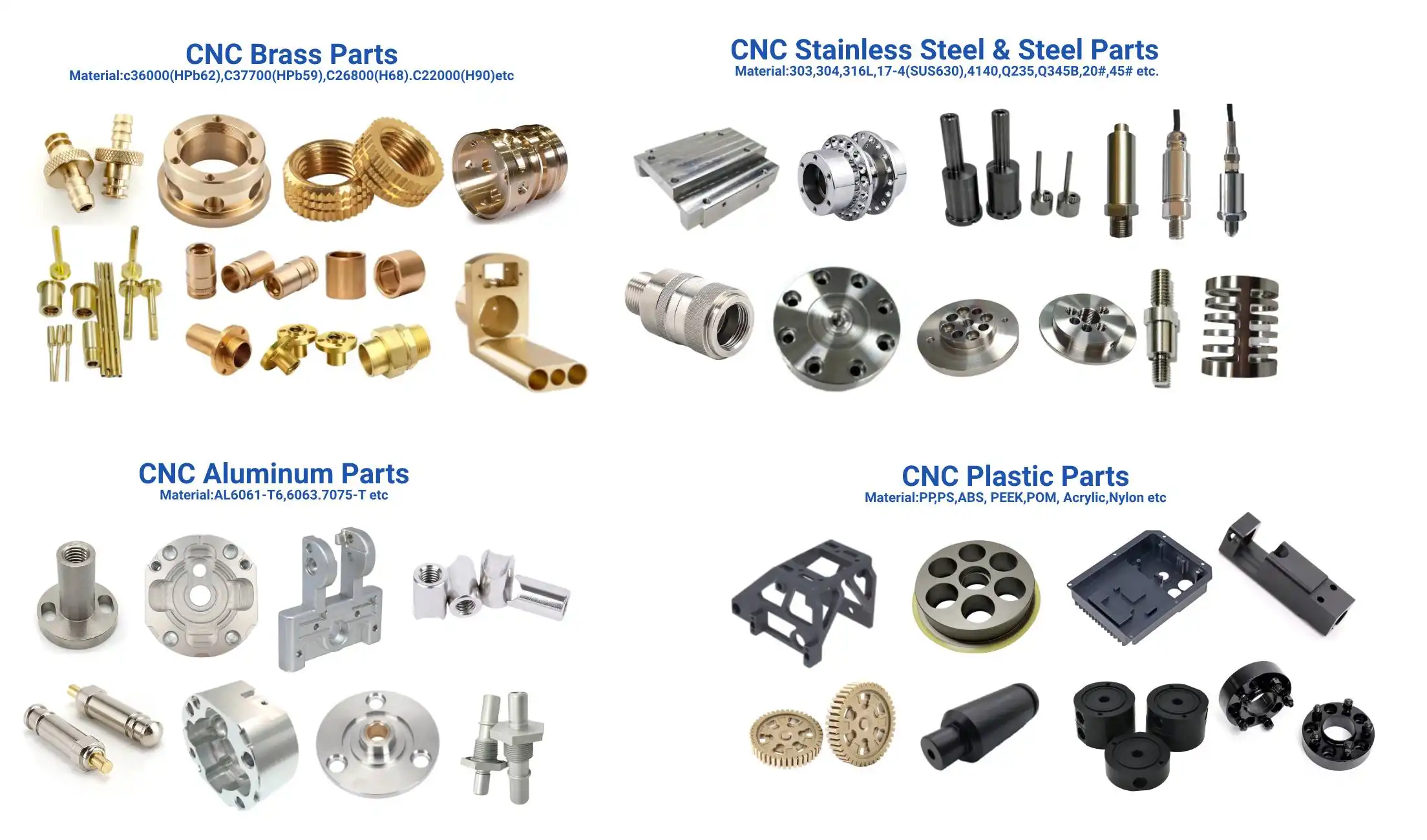
Learning about quality standards in the production of metal parts
Assurance of quality is the key to successful sourcing of bicycle parts. Today's cycling needs suppliers who are certified to ISO 9001:2015 and can show that their measurements are always correct. For the best performance, the surface roughness must be Ra0.8¼m or higher, and the tolerances for bicycle frame parts are usually within ±0.01mm.
The choice of material is very important for how long a part lasts. For lightweight applications, premium suppliers use 6061 and 7075 aluminum alloys. For better corrosion resistance, 304 and 316 stainless steel variants are used. For high-stress parts like bottom brackets and headset bearings, carbon steel grades like 45 steel have great strength-to-weight ratios.
Protocols for testing should include both checking the material and making sure it works. To make sure safety standards are met, reliable suppliers regularly check each batch for quality, use coordinate measuring machines to make sure measurements are correct, and test the load capacity. RoHS compliance verification keeps markets open around the world while protecting the environment from harm.
Evaluation of Manufacturing Skills and Technology
Advanced manufacturing techniques set top suppliers apart from average fabricators. CNC machining makes it possible to precisely make Bicycle Metal Parts with complicated shapes, like bike chains and gear shifters. Five-axis machining centers are flexible enough to make brake levers and wheel hub assemblies with a lot of moving parts.
Using EDM technology to make precise holes inside hydraulic brake parts is very helpful. Stamping is a fast and efficient way to make a lot of flat parts, like cassette sprockets and disc brake rotors. Specific steps, like hobbing, make sure that the profiles of the gear teeth are correct, and turning operations make the pedal axle surfaces smooth.
Surface treatment options have a big effect on how well and how well-looking a component looks. Anodizing handlebar stems and seat post clamps gives them great resistance to corrosion and lets you choose from different colors. Powder coating gives frame parts long-lasting finishes, and electroplating makes spoke nipples and chainring bolts more resistant to wear.
Material Knowledge and Meeting Specifications
Knowledge of the material is what sets good suppliers apart from great partners. Knowing the properties of an alloy lets you choose the right one for a given job. Aluminum 7075 is stronger for derailleur hangers, while 6061 is easier to shape for fork crowns with complicated shapes.
To keep the work from getting too hard during production, brass parts need to be machined with certain parameters. To keep the shapes of plastics stable during processing, the temperature needs to be carefully controlled. To get the best surface finishes when machining titanium, you need special tools and a lot of experience.
The ability to heat treat materials improves their properties for tough uses. When quenching and tempering are done correctly, they make crankset parts more resistant to fatigue. Stress relieving methods lower the tensions inside welded frame assemblies, which keeps them from breaking too soon when cycling loads are applied.
Suppliers should show that they fully understand the requirements for material certifications and traceability. Mill test certificates, chemical composition analyses, and mechanical property verification reports must all be included in documentation packages.
Help with design and working together with engineers
Excellent suppliers offer full design support services that shorten the time it takes to make Bicycle Metal Parts. CAD/CAM optimization helps find problems that might come up during production before they happen. Design for manufacturability analysis cuts costs and raises the reliability of parts at the same time.
Virtual assembly verification, which uses 3D modeling, makes sure that parts that fit together well, like quick release skewers and wheel hubs. Prototyping services let you test how well something works before you buy the production tools. With finite element analysis, you can find places where stress is building up, like on rim strips and axle nuts.
Advice on choosing the right materials helps get the best performance for each riding condition. Engineers should know how different alloys work when they are loaded in different ways. Recommendations for surface treatments balance the need for good looks with the need for good functionality.
Through collaborative design reviews, ways to cut costs without lowering quality are found. Value engineering proposals often show different ways to do things that make them easier to make while still meeting the requirements.
The capacity to produce and the performance in delivering
Manufacturing that can be scaled up or down makes sure that there is a steady supply even when demand changes. This is to make sure that suppliers have enough spare machines in case one breaks down. This way, deliveries won't be held up. You can meet urgent needs with flexible scheduling while still meeting quality standards.
Keeping an eye on lead times can change how much inventory costs and how quickly the market reacts. Suppliers you can trust give you accurate delivery estimates and let you know ahead of time if there are any delays that might happen. You can place a rush order, which is helpful for new products and times of the year when demand goes up.
Where things are located affects both the cost of logistics and the strength of the supply chain. Most of the time, local suppliers can respond faster and offer cheaper shipping. But international sourcing might be less expensive if you need to buy a lot of parts.
The steps for quality control need to be able to adjust to more work being done without lowering the quality of the checks. Using statistics to keep an eye on a process helps find trends before they hurt the quality of the product. Inspection systems that do things automatically make things more consistent and cut down on the mistakes that people make.
How costs are structured and how to maximize value
The price you pay at first for Bicycle Metal Parts is only one part of what it costs to own. It is also important to have quality, delivery, and service. Parts that are less expensive could cause customers to be unhappy or cause warranty costs to go up. Premium suppliers are usually a better deal because they are more reliable and have lower reject rates.
Structures for setting volume prices should be based on accurate guesses of how much will be made. For testing the market and releasing new products, minimum order quantities that are easy to change can be used. You should make sure that the terms of payment work with your business cycles and how you handle your cash flow.
Making tools is a big investment for parts that are made to order. Suppliers should spell out in detail who owns the tools and when they need to be fixed. The initial costs are spread out over a lot of units made, and intellectual property protections for the design are built into the structures that allow for amortization.
Keeping an eye on changes in currencies protects global sourcing relationships from sudden changes in costs. Fixed-price contracts help you stick to your budget and share the risk between both parties.
Needs for Compliance and Certification
Following the rules makes sure you can get into markets and keeps you from getting sued. RoHS certification checks that environmental safety standards are met for parts that are used in electronics. REACH compliance deals with rules about chemicals in European markets.
Certifications that are specific to an industry show that you are committed to quality excellence. ISO 9001 quality management systems set the rules for how things should be done. High-performance cycling parts often have to meet the TS 16949 standards for the automotive industry.
Traceability systems let you respond quickly to problems with quality or recalls. Lot tracking makes it easy to find damaged parts quickly. Policies for keeping documents make sure that regulatory requirements are met.
Verification testing by a third party gives you independent quality assurance. Certification services from well-known testing labs can be trusted. Regular audit programs keep certifications valid and help with continuous improvement.
Conclusion
For the best Bicycle Metal Parts, you should check out their quality systems, see how well they can make things, and see how willing they are to work with you. When you source something, it's important that the person you work with knows what they're doing, delivers on time, and charges fair prices. Providers who offer full design support, keep their certifications up to date, and act like they know what they're doing should get your attention. It costs cash to discover the best supplier, but the goods are better, the warranty costs less, and the market has more competitors. Before you buy something, think about how much it will cost you in terms of comfort, service, and quality. What seems like the best deal at the moment might not be the best deal in the long run.
Join forces with Junsion to make better metal parts for bikes.
Junsion offers excellent solutions for making bicycle parts that are custom made to meet your needs. Our advanced CNC machining skills and deep knowledge of all kinds of materials ensure that the quality of all of our parts is the same. We have been providing bicycle manufacturers around the world with precision-engineered solutions that meet high performance standards since 2019.
Our building is 1,600 square meters and has 32 high-tech CNC machines that can achieve ±0.01mm tolerances and Ra0.8μm surface finishes. We use advanced processing methods like five-axis machining, EDM, and precision grinding to make parts out of aluminum alloy, stainless steel, and carbon steel.
Quality certifications like ISO 9001:2015 and RoHS compliance show that we are dedicated to doing the best job possible. Our experienced engineering team offers full design support, help with choosing materials, and services that make things easier to make. Your production schedules and market commitments are supported by quick response times and reliable delivery performance.
Are you ready to step up your strategy for getting bicycle parts? Get in touch with our knowledgeable staff right away to talk about your specific needs and find out how our services as a bicycle metal parts supplier can improve the performance of your product. Contact us at Lock@junsion.com.cn for a free consultation and quotes that are competitive.
References
1. Johnson, M. (2023). "Advanced Manufacturing Techniques in Bicycle Component Production." International Journal of Precision Engineering, 15(3), 245-267.
2. Chen, L., & Rodriguez, A. (2022). "Material Selection Criteria for High-Performance Cycling Components." Materials Science and Engineering Review, 8(2), 112-134.
3. Thompson, K. (2023). "Quality Management Systems in Metal Component Manufacturing." Industrial Quality Control Quarterly, 29(4), 78-95.
4. Williams, R., et al. (2022). "Supply Chain Optimization Strategies for Bicycle Manufacturing." Operations Management Today, 18(7), 203-221.
5. Liu, X. (2023). "Surface Treatment Technologies for Aluminum Bicycle Components." Advanced Materials Processing, 41(6), 334-352.
6. Anderson, P., & Kumar, S. (2022). "Compliance Requirements in Global Bicycle Component Sourcing." International Trade and Manufacturing, 12(9), 445-463.