




How Is Custom Metal Hardware Designed for Specific Applications?
Custom metal hardware is made for specific uses by following a planned process that includes technical analysis, choosing the right materials, precise engineering, and thorough testing. The first step in the design process is to understand the specific functional requirements of each application. For example, load-bearing capacity for automotive parts or corrosion resistance for medical devices. The next steps include CAD modeling, prototype development, and iterative refinement to ensure the final product works perfectly in its intended setting.
Understanding the Requirements for Custom Metal Hardware Design
Identifying Application-Specific Challenges
When it comes to custom metal hardware, each business has its own problems. Managing heat and blocking electromagnetic interference (EMI) become critical when making electronics. Biocompatibility and sterilizing protection are important to companies that make medical devices. Aerospace applications must be able to withstand very high temperatures while remaining very lightweight. Before any design work starts, we work closely with purchase managers and product creators to figure out these important factors.
Aligning Design with Functional Needs
Matching component specs to real-world speed needs is the key to making gear that works well. Load capacity estimates show how thick the walls should be and how the structure should be built. Material decisions and surface processes depend on environmental factors, such as humidity, chemical exposure, or UV rays. Our engineering team at Dongguan Junsion Precision Hardware Co., Ltd. does full feasibility studies that look at mechanical stress, wear patterns, and expected lifecycles to set basic design standards.
Ensuring Compliance with Industry Standards
Hardware design must take regulatory standards into account. From the idea stage to production, our ISO 9001:2015-certified quality management system makes sure that every part meets international standards. RoHS compliance ensures safety for the climate, which is especially important for the consumer items and electronics industries. When we create precision parts for medical or aircraft uses, we build industry-specific certifications like AS9100 into our quality standards. This paperwork meets strict regulatory requirements.
Collaborative Design Development
For hardware creation to work well, many people need to work together. The procurement team sets the price limits and estimates the amount. Engineering teams provide technical standards and performance benchmarks. Our design experts take these needs and turn them into answers that we can make. This way of working together includes regular design reviews where we show CAD models, discuss different types of materials, and make changes to the specs based on what people say. Prototyping is an important proof tool because it lets people see how the shape, fit, and function work before going to full-scale production.
Materials and Manufacturing Processes Behind Custom Metal Hardware
Strategic Material Selection
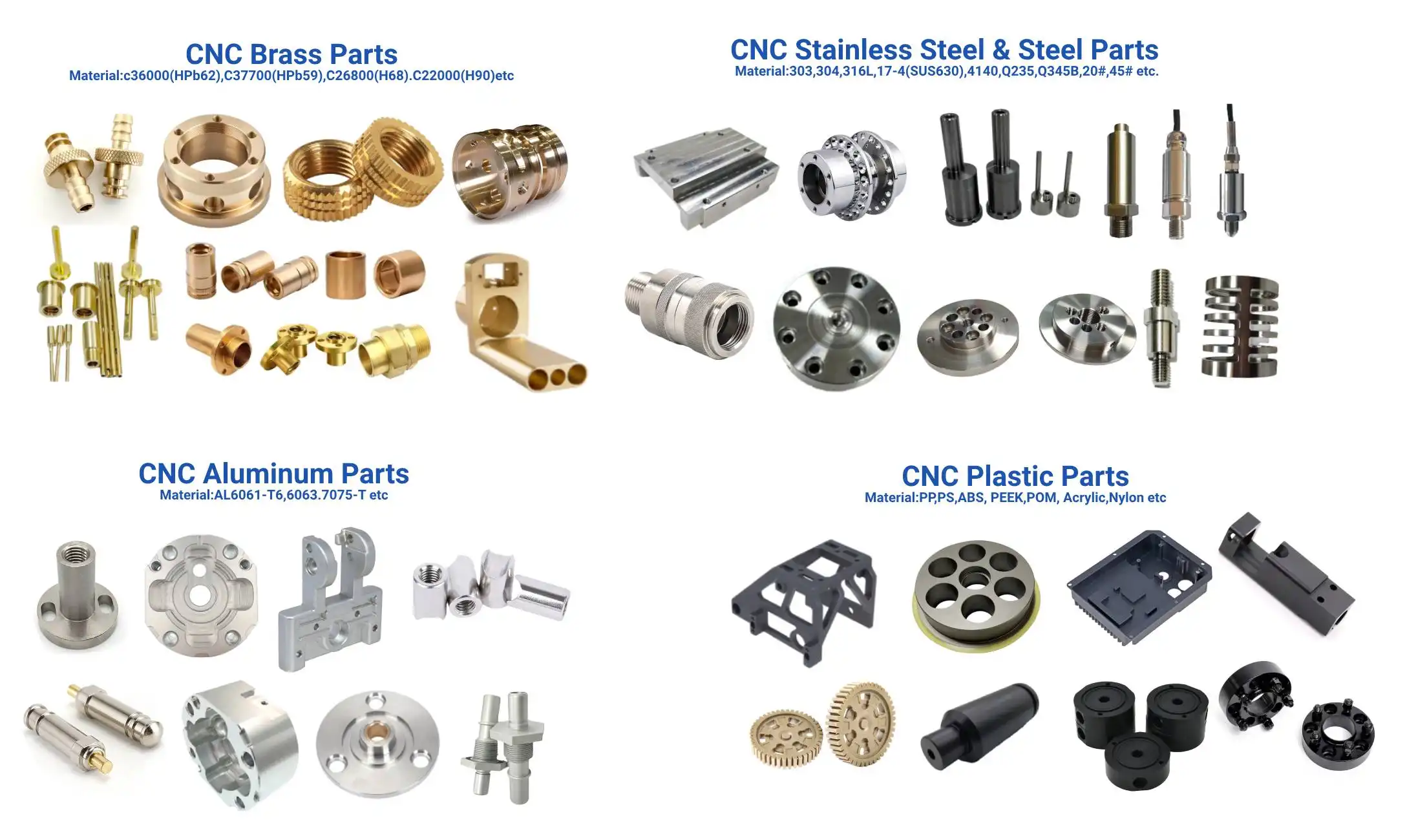
The choice of material has a big impact on how well and how long an item works. We have a wide selection of metals that can be used in a variety of ways. Different types of stainless steel, such as 316, 304, 303, and 410, have different levels of resistance to rust and ease of machining. Type 316 stainless steel is great for marine and chemical handling settings because it doesn't rust. For use in aircraft and robots, aluminum alloys have great strength-to-weight ratios. Copper is a great conductor of electricity for electronics parts, and titanium is safe for medical implants. Carbon steel is still a good value for high-strength construction uses where resistance to rust is not very important.
Advanced Manufacturing Techniques
The way of manufacturing has a direct effect on the freedom of the design, the cost of production, and the accuracy of the parts. Our cutting-edge factory uses a number of precise production methods to meet a wide range of design needs:
CNC cutting is the most accurate way to work with complicated shapes; it can achieve tolerances of up to ±0.01mm and surface roughness as low as Ra0.8μm. This level of accuracy is very important for parts that need to fit tightly or have precise measurements. Five-axis machining makes it possible to make complex three-dimensional shapes in a single setup, which cuts down on production time while keeping the shapes' shape.
Cylindrical parts like shafts, bushings, and screws can be made quickly and accurately by turning processes. Stamping is a cheap way to make a lot of flat or roughly shaped parts, which makes it perfect for making clamps, clips, and other hardware. We use the best features of each method based on the shape of your parts, the amount of volume you need, and your budget.
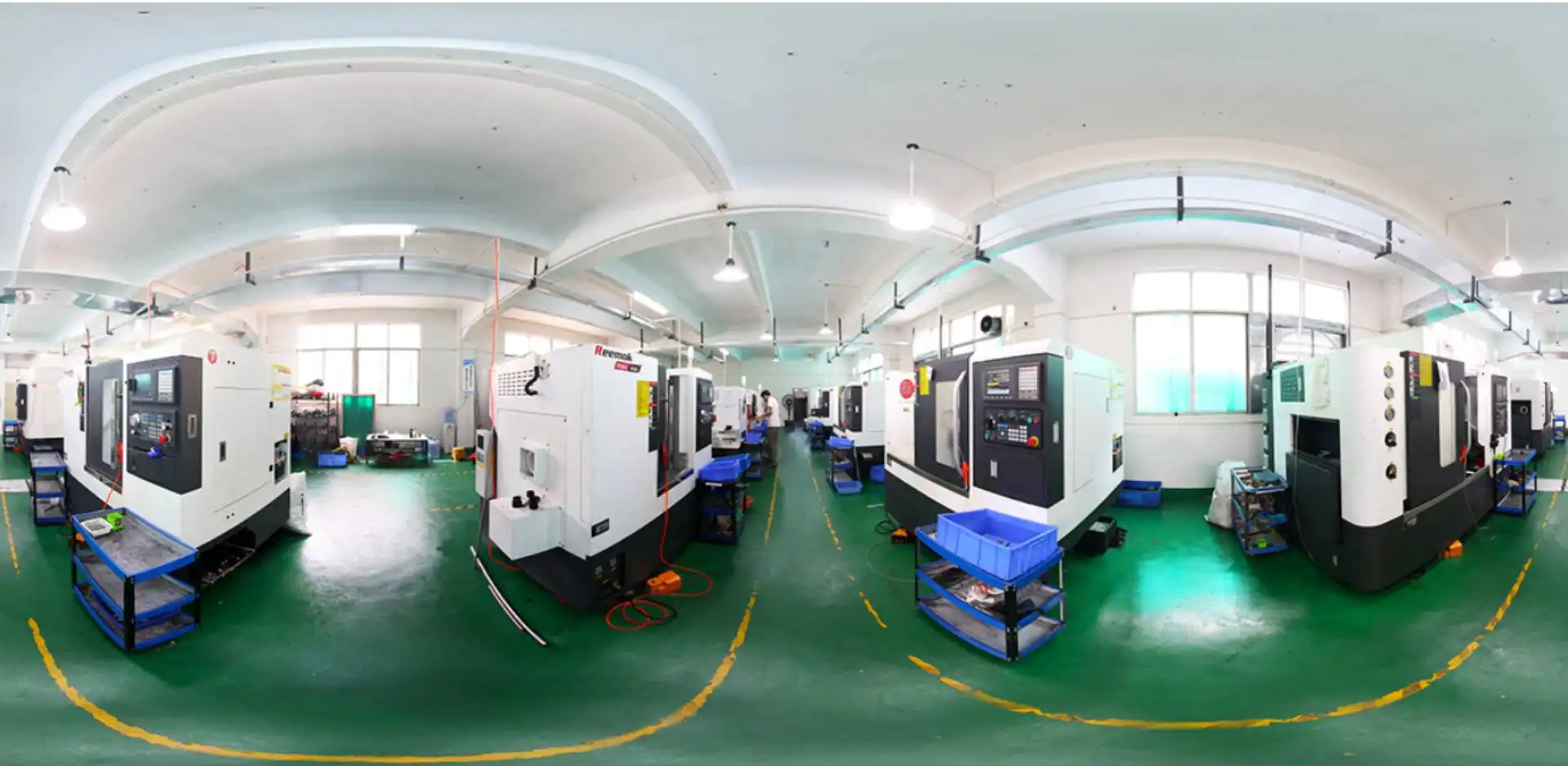
The 32 CNC machines in our 1,600-square-meter building are some of the most modern tools we have. They allow us to work on projects of all sizes, from small prototypes to big production runs. Because of this, we can make sure that the production method is best for your needs and not try to fit your idea into factory limits that were already set.
Quality Control and Testing Protocols
Tough quality control tells the difference between gear that works well and parts that are likely to break soon. During the manufacturing process, our testing method includes several steps of checking. Using 2.5D displays to check for dimension precision makes sure that every feature fits within the allowed range. Testing for hardness makes sure that the material has the right qualities and that the heat treatment worked. Salt spray testing mimics years of damaging contact, which proves that base materials and surface treatments are durable.
Material clearance paperwork keeps track of the chemical make-up and physical features of raw materials, making sure that all production batches are the same. We have been able to successfully send precision parts to more than 20 countries thanks to these strict quality controls. This has helped us build a reputation for dependability among global sourcing managers.
Step-by-Step Process of Designing Custom Metal Hardware for Specific Applications
Comprehensive Feasibility Study
The first step in the planning process is to carefully look at the project's needs, the surroundings, and the available funds. Our tech team looks at your application to find design problems and things to think about when making it. We check to see if your performance goals can be met within the limits of cost and output schedules. This feasibility study stops expensive redesigns later on by answering worries about how to make the idea work during the plan stage.
Conceptual Design and CAD Modeling
Once it's been decided that the project is possible, our artists make thorough three-dimensional CAD models that include all the geometric and dimensional details. These digital models make it possible to see exactly how parts will fit together and interact with other parts and systems around them. Finite element analysis, which predicts stress concentrations and possible breakdown places before actual prototypes are made, also helps improve designs with CAD modeling. We can work with plans from clients in either 2D or 3D forms, and we can help with design optimization to make things work better and cost less.
Prototype Fabrication and Testing
Digital ideas are turned into real-world parts that can be tested in the real world by making physical versions. We make prototypes with the same materials and methods that will be used in production. This way, we can be sure that the performance of the prototype matches the performance of the final product. These samples are put through functional tests that are specific to your application. For example, load testing is done on structural parts, wear testing is done on moving parts, and thermal cycling is done on parts that are exposed to high temperatures. During this phase, feedback from the client guides iterative improvements that make the design perfect before it is made in large quantities.
Production Planning and Scaling
When going from a prototype to mass production, you need to carefully plan your minimum order amounts, wait times, and quality control processes. We make production plans that work with the due dates of your project while still meeting our high quality standards. To avoid misunderstandings, our order confirmation method goes over every detail of the plan. Design reviews make sure that the parts can be made on a large scale, and we use statistical process controls to make sure that the dimensions of thousands of parts are all the same. Packaging rules keep finished parts safe while they're being shipped, so they get to your plant in perfect shape.
Practical Design Considerations and Applications of Custom Metal Hardware
Industry-Specific Design Solutions
Different fields need hardware design methods that are specific to those fields. For automation equipment to keep working efficiently, it needs to fit precisely and do the same thing over and over again. To meet tight safety standards, vehicle parts must be able to handle vibrations, changes in temperature, and exposure to the environment. For medical uses, you need materials that are biocompatible, surfaces that are smooth and don't let germs grow, and patterns that can be sterilized. Aerospace gear has to be very strong while also being as light as possible. It does this by using titanium or special aluminum metals.
Material Advantages in Critical Applications
Due to its high resistance to corrosion, cleanliness, and ability to keep its power over a wide range of temperatures, stainless steel is still the best choice for many tough uses. Type 304 stainless steel is great for general-purpose uses because it is easy to shape and weld. Type 316 is better at resisting corrosion in naval settings and chemical processes. Complex turned parts are easier to machine when Type 303 is used. Type 410 is stronger and doesn't fight rust as well, making it a good choice for fasteners and springs.
Innovative Design Features
Modern hardware design includes things that make it work better and give the user a better experience. Modular designs let you set up things in a way that fits your needs without having to completely rethink the whole thing. In public places, expensive items are kept safe from theft by anti-theft devices. Tool-free installation features cut down on the time it takes to put something together and get rid of the need for special tools. Surface treatments like anodizing, electroplating, sandblasting, powder coating, and heat treatment not only make parts more resistant to rust and wear, but they also make them look better. This makes parts that work efficiently and meet the needs of visual design.
Choosing the Right Custom Metal Hardware Supplier: What B2B Buyers Should Know
Essential Evaluation Criteria
Choosing a manufacturing partner is a big strategy choice that affects the standard of the product, the time it takes to finish the project, and the company's ability to compete in the long run. Certifications give you instant information about how well a seller manages quality. Getting ISO 9001:2015 approval shows that you have a method for controlling quality. RoHS compliance proves care for the environment. Certifications specific to an industry, like AS9100 for aircraft uses, show that you have a lot of knowledge in that area. The supplier's production ability tells you if they can keep up with your growing needs while keeping wait times the same.
Customization Capabilities and Technical Support
Suppliers who can handle complicated geometries, tight tolerances, and specialized materials are different from those who only offer general options. We keep a lot of materials on hand, like different types of stainless steel, aluminum alloys, copper, carbon steel, and titanium. This lets us make prototypes quickly without having to wait for materials to arrive. Our engineering team helps with design and makes sure that parts work well and can be made easily. This could lower costs while increasing usefulness. We're no longer just a provider; this way of working together makes us a real growth partner.
Pricing Structures and Logistics
A clear price builds trust and makes it possible to make accurate project budgets. Procurement managers can make better decisions when they understand how material choice, plan difficulty, and order size affect prices. Larger promises earn discounts for bulk orders, and minimum order number rules reflect the economics of setting up production. Project schedules are affected by lead times, and normal timelines include reviewing the design, making a prototype, trying it several times, and then starting mass production. Dongguan Junsion Precision Hardware Co., Ltd. has been in business since 2019 and has built a name for quick responses and reliable service. They ship precision parts to custom metal hardware in more than 20 countries.
Long-Term Partnership Value
Long-term ties with suppliers offer benefits that go beyond the original transactions. These benefits include continuity, which lowers risk and speeds up future projects. Dedicated account management makes sure that contact stays clear and that the project is always visible. Technical support goes beyond the sale and includes help with setup, fixing problems, and making changes to the design for newer versions of the product. Because we are committed to being open and honest, we will always be clear about our abilities, limits, and reasonable deadlines. We don't see our relationships with clients as one-time deals but as long-term partnerships based on shared success.
Conclusion
When making precise custom metal hardware parts for specific uses, you need to follow a methodical process that checks for technical performance, the ability to make the parts, and the lowest cost. Components that work reliably for their whole intended lifecycle are made by understanding application needs, choosing the right materials, using advanced production methods, and adhering to strict quality standards. The right production partner can turn your design ideas into real solutions, whether you need tight-tolerance machined parts for medical devices, corrosion-resistant fasteners for naval use, or lightweight structural parts for flight systems. Procurement teams, engineering offices, and skilled manufacturers who bring both technical knowledge and production skills to every project must work together for it to be successful.
FAQ
What factors determine the cost of precision metal components?
The price of unique gear depends on a number of factors. Choosing the right materials has a big effect on costs. For example, titanium and other unique metals cost more than regular stainless steel or aluminum. Machining time is affected by how complicated the design is; complex shapes need more processing steps. Costs are affected by tolerance requirements, since stricter requirements call for more exact tools and more quality checks. When you place a lot of orders, the cost of each unit goes down a lot, which is called "economy of scale." Choosing the surface treatment also affects the end price, and more expensive finishes like electroplating or powder coating make it so. We give thorough quotes that list all of these things, which makes it easy to figure out how much something costs.
How long does the design and manufacturing process typically take?
Customization level and project difficulty affect how long a project takes. It usually takes one to two weeks for the first viability studies and design reviews. Making a prototype usually takes two to three weeks. Testing and making small changes over and over again can take an extra one to two weeks, based on how the design changes. Once the sample is approved, it usually takes between three and six weeks to plan production and start mass production, but this depends on the number of orders and how complicated the parts are. Some steps can be sped up with rush services, but the cost may go up. During the original meetings, we give you accurate estimates of when things will be done, and we keep in touch throughout the project's lifecycle.
Partner with a Trusted Custom Metal Hardware Manufacturer
Dongguan Junsion Precision Hardware Co., Ltd. is ready to make your component needs a reality through precision engineering. Our advanced CNC machining, wide range of materials, and quality management that is ISO 9001:2015 approved give your projects the dependability they need. We can make tolerances of up to ±0.01 mm and surface finishes as smooth as Ra 0.8 μm. This makes sure that the quality stays the same from development to mass production. Our all-in-one service includes improving the design, making a sample, applying a surface treatment, and strict quality checks. This streamlines your purchasing process while still meeting all foreign standards. Get in touch with our tech team right away to talk about the needs of your project. Use Lock@junsion.com.cn, echo@junsion.com.cn, or evelyn@junsion.com.cn to get in touch with us. We deliver the precise parts that power your innovation as a dedicated custom metal hardware provider to the automotive, medical, aerospace, robots, and automation industries around the world.
References
1. Anderson, M. (2021). Precision Manufacturing: Materials and Processes for Hardware Components. Industrial Engineering Press.
2. Chen, L. & Roberts, J. (2022). "Quality Assurance in Custom Metal Fabrication: ISO Standards and Best Practices." Journal of Manufacturing Excellence, 18(3), 145-162.
3. Davidson, R. (2020). Engineering Design for Manufacturability: A Practical Guide to Hardware Development. Technical Publishing International.
4. Johnson, K. (2023). "Material Selection Strategies for Application-Specific Hardware Solutions." Precision Engineering Quarterly, 29(1), 78-95.
5. Miller, S. & Zhang, W. (2022). Advanced CNC Machining Techniques for Complex Geometries. Manufacturing Technology Institute.
6. Thompson, D. (2021). "Supplier Selection Criteria for B2B Procurement: Quality, Capacity, and Partnership Value." Supply Chain Management Review, 15(4), 203-218.