




Tungsten Carbide Inserts vs HSS Tools: Which Is Better?
In tough machining situations, tungsten carbide inserts regularly beat high-speed steel (HSS) tools. Carbide inserts are the best choice for accurate production because they are very hard, last a long time, and don't change much when heated or cooled. While HSS tools are cheaper up front and work well for light tasks, carbide inserts are much more efficient and save you money over the long term. This is especially true in high-volume production settings where downtime and tool replacements have a direct effect on profits.
Introduction
For modern factories to stay ahead of the competition, picking the right cutting tools is very important. Choosing between HSS tools and tungsten carbide inserts changes everything from the speed of production to the quality of the final product. This is a decision that procurement managers, product creators, and engineers have to make all the time. To improve manufacturing processes, it's important to understand the basic differences between these materials.
The technology behind cutting tools has changed a lot in the machine business. Tungsten carbide has become the material of choice for tough jobs, while HSS tools were the most common in industry for most of the 20th century. This change is because modern industrial needs are getting more complicated. For example, tighter standards, shorter production cycles, and longer tool life all have a direct effect on how profitable an operation is.
This is how we work with buying teams from the electronics, communications, consumer goods, and transportation businesses at Dongguan Junsion Precision Hardware Co., Ltd. Our customers always come to us for reliable advice on how to choose the right tools for their needs while staying within their budgets. This in-depth study looks at all the important things that affect choices about cutting tools. It gives us the technical information we need to make smart purchasing plans.
Understanding the Materials — Tungsten Carbide Inserts and HSS Tools
Composition and Manufacturing of Carbide Inserts
Powder metallurgy is used to make tungsten carbide inserts, which are a hybrid material. To make them, tungsten powder is mixed with carbon at temperatures above 1,400°C. This makes tungsten carbide particles, which are then mixed with a cobalt glue. The sintering process makes a substance that is between 8.5 and 9 on the Mohs scale, which is close to diamond's 10th-level hardness grade. As a result, the inserts are about twice as stiff and dense as steel, which makes them very hard during cutting operations.
High-Speed Steel Tool Construction
HSS tools are made of iron mixed with tungsten, molybdenum, chromium, and vanadium, among other things. This alloy's make-up is hard enough and resistant to heat enough for most machining tasks. M-series (molybdenum-based) and T-series (tungsten-based) grades are common types of HSS. Each has its own performance traits. Because it stays sharper longer than carbon steel, HSS doesn't have the same amount of strength as carbide materials.
Physical Property Comparisons
Carbide inserts can keep cutting at temperatures up to 1,000°C because they are thermally stable, while HSS tools start to soften around 600°C. Because of this basic difference, carbide inserts keep their cutting edge integrity during high-speed machining processes that would quickly wear down HSS tools. Because it is so hard, carbide is better at resisting wear than HSS tools because the edges don't break down as quickly in rough materials.
Performance Comparison: Tungsten Carbide Inserts vs HSS Tools
Tool Life and Durability Analysis
Machine data from real life shows that tungsten carbide inserts usually have tool lives five to ten times longer than similar HSS tools. In steel cutting, a good carbide insert might last for 500 to 800 parts before it needs to be replaced. On the other hand, HSS tools usually need to be replaced after 50 to 100 parts. This big difference comes from carbide's ability to keep its shape under long-term temperature and mechanical stress and to prevent abrasive wear.
These speed gaps are backed up by our experience making things at Junsion. When clients switch from HSS to carbide tooling, they notice right away that output accuracy gets better. The longer tool life cuts down on the number of times that the tools need to be changed. This means that production stops less often, and workers can focus on quality control instead of constantly replacing tools.
Maintenance Requirements and Operational Efficiency
To keep cutting well, HSS tools need to be sharpened on a frequent basis, which requires special grinding equipment and skilled workers. This cycle of repair costs money directly for grinding processes and indirectly for lost production time. On the other hand, carbide inserts have indexable designs that let workers change to new cutting edges without taking the toolholder out of the machine. When all the edges are worn down, the whole piece is replaced, so there is no need to sharpen it anymore.
Because carbide inserts are easier to maintain, they directly lead to lower worker costs and higher machine usage rates. By having workers spend less time maintaining tools and more time running useful cycles, factories can increase their throughput without hiring more people.
Cost-Benefit Analysis for Procurement Teams
Even though carbide inserts cost more to buy than HSS tools at first, the total cost of ownership always comes out in favor of carbide for middle to high-volume output. The study needs to look at how much each tool costs, how much it takes to change the tools, how long the machine is down, and how much scrap is made when tools break. When purchasing managers look at all of these costs, it's clear that carbide inserts are more cost-effective in most manufacturing situations.
Businesses that are trying to stick to a budget may choose HSS tools based only on how much they cost, but they don't always think about how much it costs to repair them often and lose efficiency. A careful study of the money side of things shows that carbide inserts usually pay for themselves within a few weeks of being used in production settings, and they keep saving money for a long time after that.
Decision-Making Factors for Procurement Managers
Application Requirements and Material Considerations
The material of the project has a big impact on the choice of tool. Tungsten carbide inserts are better than HSS tools at cutting through hardened steels, cast iron, and rare metals. HSS may work well for tasks that involve aluminum, brass, and other soft materials, but carbide is still more productive because it cuts at higher speeds. When figuring out what tools they should keep on hand, procurement teams have to look at their unique material mix.
The amount of production is another important choice factor. For short runs, HSS tools might be a good choice for shops that don't do a lot of work and change their setups often, especially when working with soft materials. Carbide's longer tool life and lower frequency of changeovers are huge benefits in high-volume production settings, which makes the higher initial investment well worth it.
Supplier Selection and Quality Assurance
Leading companies that make carbide inserts are Sandvik, Kennametal, and Mitsubishi. These companies are known for providing reliable quality and thorough technical support. These global names have a lot of different products that can be used for a lot of different kinds of machining. But specialized makers like Junsion offer good options because they can make things just the way you want them and they have quick customer service.
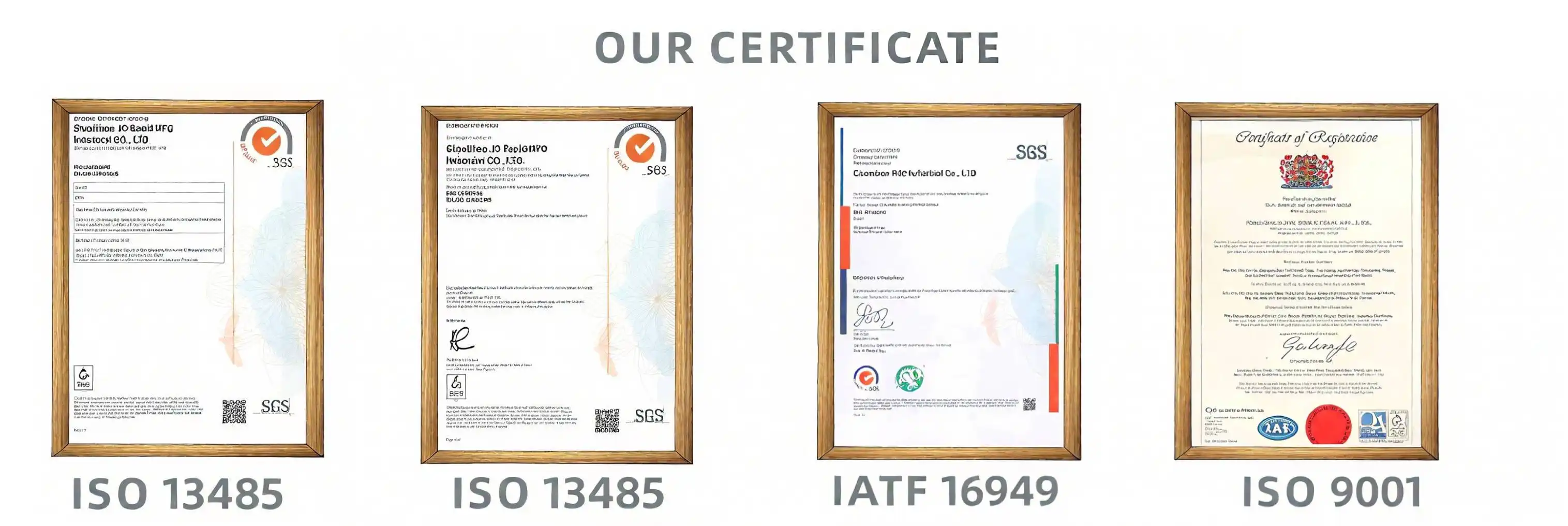
When purchasing things, people in charge should check that sellers have quality certifications like ISO 9001:2015 compliance and RoHS compliance to make sure they are safe for the earth. A supplier's dedication to quality assurance can be seen in their material certifications, dimensional inspection records, and the ability to track individual batches. At Junsion, we stick to these strict standards, with accuracy limits of ±0.01 mm and surface roughness requirements of Ra 0.8 μm or better.
Lead Times and Purchasing Channels
Standard carbide insert shapes can be shipped within days from a distributor's stock, but unique layouts need two to four weeks to be made. Purchasing managers should build relationships with providers that offer both standard and custom services. This way, they can make sure they have access to backups in case of emergencies and still be flexible for unique situations.
When it comes to special orders and buying in bulk, working directly with manufacturers can save you money compared to going through multiple levels of marketing. Our Dongguan plant has 32 high-tech CNC tools that can make custom inserts with complicated shapes and special coatings. This means that we can respond quickly to pressing customer needs.
Industry Use Cases and Success Stories
Steel Turning Applications
When using HSS tools to machine hardened steel rods, a big car part maker often had problems with the tools breaking. When the company switched to PVD-coated tungsten carbide inserts, the cutting speeds went up by 40% and the tool life improved by 600%. The benefits added together cut the cost of each part by 35% and increased output without buying any new tools.
Aluminum Milling in Electronics Manufacturing
To make electronic enclosures, aluminum metal needs to be machined quickly and with a smooth surface. A customer who made parts for communication devices had trouble with HSS end mills creating built-up edges. Edge buildup was avoided by switching to carbide inserts with polished cutting edges and custom shapes. This led to better surface quality and doubled production rates.
When HSS Tools Remain Relevant
Many prototype shops and repair departments keep a stock of HSS tools for broken cuts, threading tasks, and situations where the shape of the tool needs to be custom ground. Because it is tough and can be resharpened, HSS is good for one-off jobs where carbide's brittleness could cause chipping. The lower cost of the material also makes sense for tasks where tools could get damaged by contacting the object or being set up incorrectly.
Integration Strategies for Existing Operations
Instead of making big changes all at once, companies that want to switch to carbide inserts should do it in stages. Start with high-volume tasks where carbide's benefits seem to be most noticeable, and then increase based on proven results. Operator training programs make sure that inserts are handled, installed, and fixed correctly, which gets the most out of the technology and boosts worker trust.
Conclusion
Tungsten carbide inserts are the best choice for modern machining tasks that need steady performance, long tool life, and high operating efficiency. Carbide is the best material for production settings because it is harder, stays stable at high temperatures, and doesn't wear down easily. HSS tools are still useful in some situations. The higher original cost of carbide inserts pays off in a big way through less downtime, lower labor costs, and higher efficiency measures that directly boost production profits. Carbide inserts should be seen as strategic assets by procurement managers instead of daily costs, since they have an effect on how efficiently operations run as a whole.
FAQ
What advantages do tungsten carbide inserts provide over HSS tools?
When used in normal situations, tungsten carbide inserts give tools five to ten times more life than HSS tools. Because it is harder, it is possible to cut at faster speeds and feed rates, which increases production while keeping the accuracy of the measurements. Thermal stability keeps tools from breaking at high temperatures, so they can keep working well in tough jobs that would quickly wear out HSS tools.
How do coated and uncoated carbide inserts differ?
Coatings like PVD, CVD, and AlTiN add thin layers that make things less likely to wear down, reduce friction, and get rid of heat better. Coated inserts usually last 50–200% longer than untreated ones, which makes up for their higher cost by allowing for longer periods of time between service. Carbide that isn't covered works well on aluminum and other non-ferrous metals because coats could mess up the finish on the surface.
Can carbide inserts be resharpened like HSS tools?
Standard indexable carbide inserts don't need to be resharpened; instead, they have designs that can be replaced. When a cutting edge wears down, the user turns the insert around to reveal a new one. Professional regrinding can be done on some specialized carbide tools, but most makers suggest replacement because of the accuracy needed and the small price difference between new and used inserts.
Selecting Junsion as Your Tungsten Carbide Inserts Manufacturer
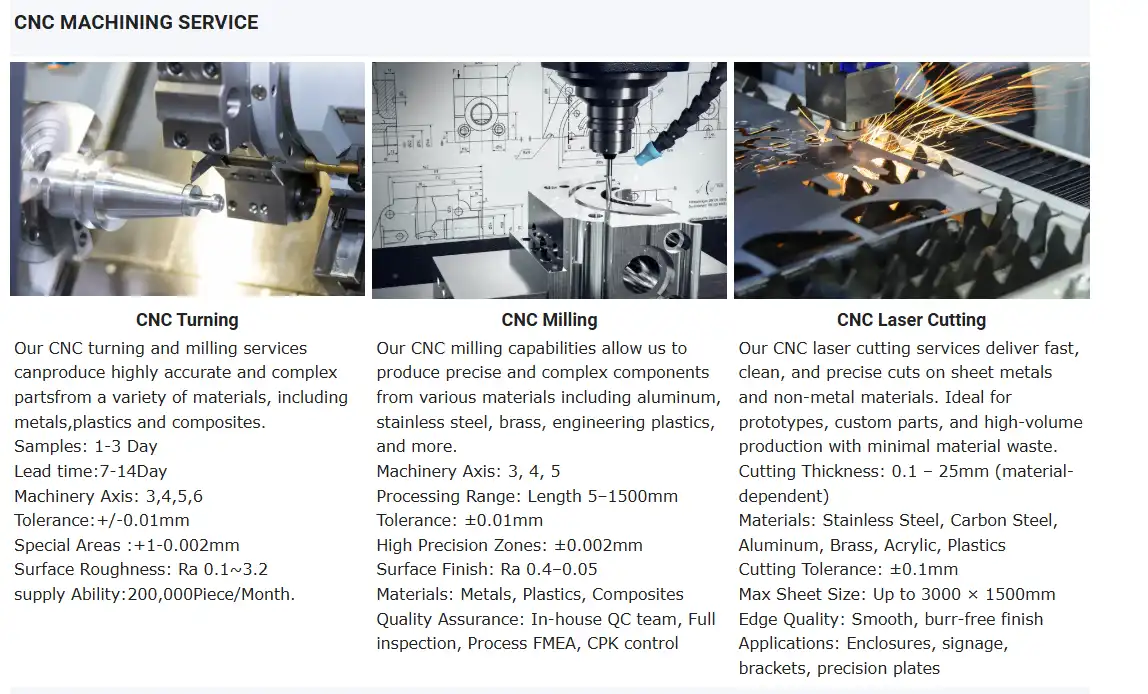
Dongguan Junsion Precision Hardware Co., Ltd. has a lot of experience making tungsten carbide inserts and can help buying teams that are looking for tungsten carbide insert sources they can trust to provide quality products and good service. Our 1,600-square-meter building has the latest in production technology as well as technical skills that include CNC machining, EDM, turning, and five-axis operations. We make inserts that meet the exacting standards needed for automation tools, medical devices, AI-based systems, and military uses.
Our many surface treatment choices include PVD coating for better resistance to wear, CVD coating for great chemical stability, and AlTiN coating for better resistance to oxidation in high-temperature settings. These advanced processes make inserts last longer and work better with certain types of materials. No matter if you need standard shapes or unique insert designs, our engineering team works directly with you to come up with precise tooling solutions.
Get in touch with our expert team at Lock@junsion.com.cn to talk about your unique needs and get quotes for tungsten carbide inserts for sale. We offer material approvals, dimensional inspection reports, and expert help to make sure that our products work well with your machining processes.
References
1. Stephenson, David A., and Agapiou, John S. "Metal Cutting Theory and Practice." CRC Press, 2016.
2. Trent, Edward M., and Wright, Paul K. "Metal Cutting, Fourth Edition." Butterworth-Heinemann, 2000.
3. Shaw, Milton C. "Metal Cutting Principles, Second Edition." Oxford University Press, 2005.
4. Astakhov, Viktor P. "Tribology of Metal Cutting: Developments in Surface Engineering. " Elsevier, 2006.
5. Kalpakjian, Serope, and Schmid, Steven R. "Manufacturing Engineering and Technology, Seventh Edition." Pearson, 2013.
6. Boothroyd, Geoffrey, and Knight, Winston A. "Fundamentals of Machining and Machine Tools, Third Edition." CRC Press, 2006.