




Picking between Precision Machining Drone Parts and injection-molded drone parts affects how well they work, how long they last, and how much they cost. Precision machining drone parts are great for making high-tolerance aircraft parts with very accurate measurements (±0.01mm), while injection molding drone parts are cheaper for making more of them. Knowing about these changes in making helps procurement managers choose the best method for their drone's uses and performance needs.
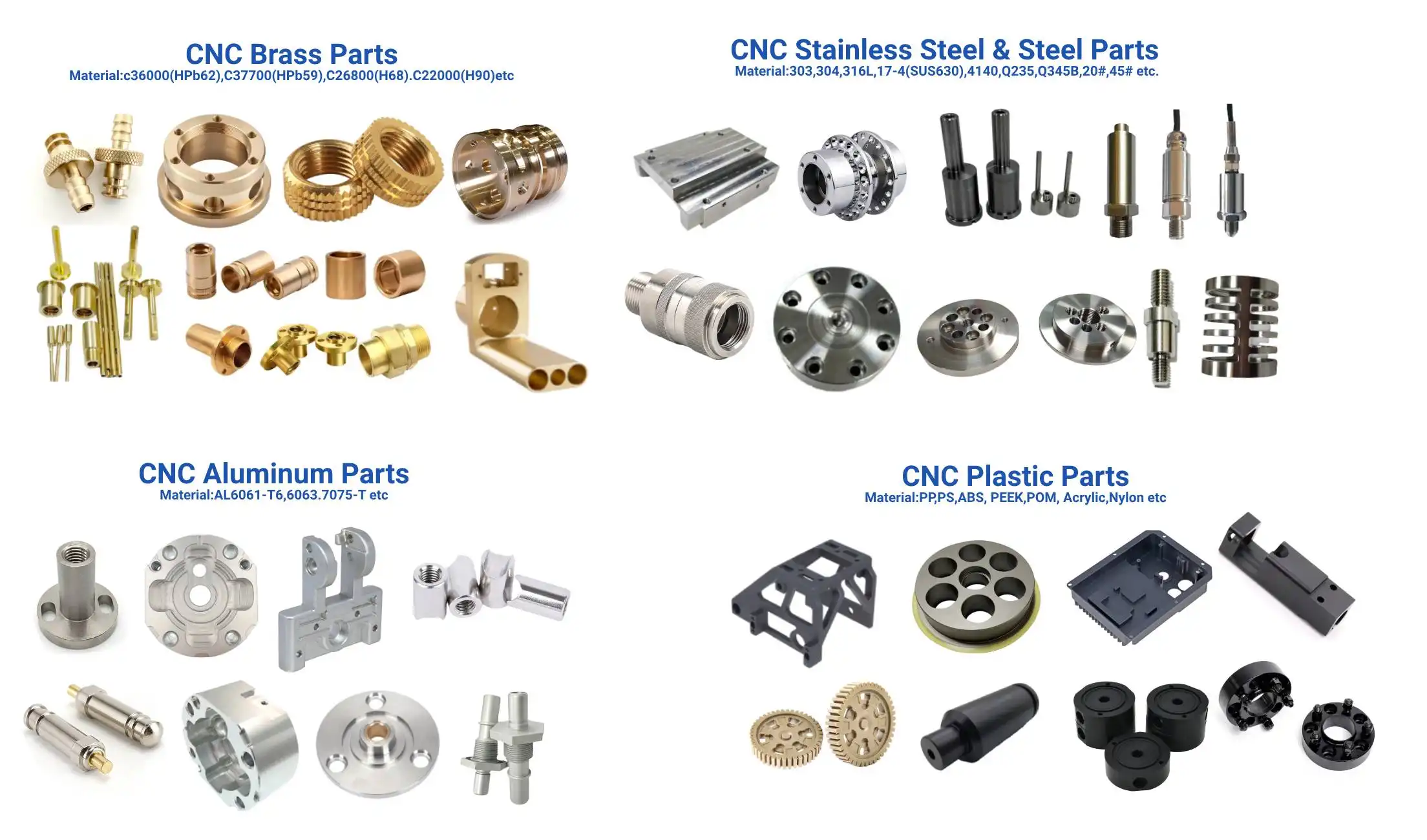
Understanding Manufacturing Processes: CNC Machining vs Injection Molding
CNC machining is a type of subtractive manufacturing in which exact drone parts are made by taking away material. Tolerances of ±0.01mm and surface roughness ≤ Ra0.8μm can be reached with this automatic cutting method. The process can work with 45 steel, aluminum alloy, stainless steel, titanium parts, and brass, among other materials. When you do injection molding, you use high pressure to push liquid material into special molds. This method works well for making a lot of plastic parts for drones that are all the same quality. Depending on how complicated the part is, the rotation time can be anywhere from 30 seconds to several minutes.
Three core differences emerge between these methods:
- Material flexibility: CNC machining handles metals and engineering plastics, while injection molding primarily processes thermoplastics
- Geometric complexity: Machining excels at tight tolerances, molding handles intricate internal geometries
- Economic scalability: Machining suits low to medium volumes, molding dominates high-volume production
If you need aerospace-grade materials with exceptional precision, then CNC machining proves more suitable. If you require cost-effective mass production of plastic components, then injection molding delivers better value.
Material Selection and Properties Comparison
Precision engineering demands careful material selection based on operational requirements. Machined drone components utilize aerospace-grade materials, including:
- Aluminum machining: 6061-T6 offers an excellent strength-to-weight ratio (tensile strength: 310 MPa)
- Titanium Grade 5: Provides superior corrosion resistance with 900 MPa tensile strength
- Stainless steel 316L: Delivers exceptional durability in harsh environments
- Carbon fiber composites: Achieves 40% weight reduction compared to aluminum
Injection molded parts typically employ engineering plastics such as:
- ABS: Impact strength of 400 J/m, suitable for drone frames
- Nylon PA66: Heat deflection temperature reaches 260°C
- PEEK: Chemical resistance with continuous service temperature of 250°C
- Polycarbonate: Optical clarity combined with 65 MPa tensile strength
Test results show that polished aluminum parts stay the same size within 0.005mm even after 1000 heat cycles. When the conditions are the same, molded ABS parts show a 0.8% change in size. If you need parts that are light and have great mechanical qualities, made of titanium or aluminum is the best choice. Injection-molded industrial plastics are a good way to make parts that are both cheap and resistant to chemicals.
Precision and Tolerance Capabilities
Precision cutting has a big benefit: it makes it possible to make things with very tight tolerances. Modern five-axis machining centers can place things to within 0.003mm of accuracy. This level of accuracy makes it possible to make Precision Machining Drone Parts, such as parts for drone motors that need to be perfectly balanced and have very little shaking. Micromachining can be used to make parts with diameters as small as 0.1 mm and aspect ratios higher than 10:1. Surface finishing methods like wire drawing, sanding, and anodizing make things look better and work better.
Injection molding achieves different precision standards:
- Dimensional tolerance: ±0.1mm to ±0.5mm, depending on part geometry
- Wall thickness variation: Maintained within ±10% across the component
- Parting line displacement: Controlled to ±0.05mm maximum
Measurements for quality control show that finished parts always have a surface finish of Ra 0.4μm. Depending on the quality of the mold surface, molded parts usually have Ra values between 1.6 µm and 3.2 µm. Precision cutting is the only way to get the accuracy you need for important flight control parts that need to meet aircraft standards. If you need building parts with modest tolerances, injection molding gives you enough accuracy at a lower cost.
Cost Analysis and Production Volume Considerations
Economic factors significantly influence manufacturing method selection. Precision machining involves higher material costs but eliminates tooling expenses for small quantities. Setup times range from 30 minutes to 2 hours, depending on complexity.
Cost breakdown for machined components:
- Material cost: 40-60% of total expense
- Machine time: 25-35% including setup
- Labor and overhead: 15-25% of production cost
- Surface treatment: 5-15% additional expense
Injection molding requires substantial upfront investment in tooling but achieves dramatic per-part cost reduction at scale. Mold costs range from $5,000 to $100,000 based on complexity.
Production data shows break-even points:
- Simple geometries: 500-1,000 units favor injection molding
- Complex parts: 2,000-5,000 units justify mold investment
- Rapid prototyping: CNC machining proves economical under 100 units
If you need small batches or frequent design iterations, then machining offers superior flexibility. If you require thousands of identical components annually, then injection molding dramatically reduces unit costs.
Application-Specific Advantages and Use Cases
Drone propellers exemplify applications where material properties and precision intersect, encompassing precision machining drone parts. Racing drones demand lightweight, precisely balanced propellers manufactured from carbon fiber or aluminum. CNC machining achieves the required 0.01mm balance tolerance impossible through molding. Custom drone parts often require unique geometries or material combinations. Rapid prototyping through machining enables design validation within days rather than the weeks required for mold development.
Commercial drone applications benefit from different approaches:
- Camera gimbals: Require machined precision for smooth operation
- Battery housings: Suitable for injection-molded lightweight construction
- Landing gear: Benefits from machined strength and durability
- Decorative panels: Cost-effective through molding processes
Aerospace components demand certified materials and documented traceability. Machining provides material certification and dimensional reports meeting aviation standards. RoHS compliance ensures environmental safety across both manufacturing methods. If you need certified aerospace components with full traceability, then precision machining meets regulatory requirements. If you require consumer electronics housings with attractive finishes, then injection molding delivers cost-effective solutions.
Surface Treatment and Finishing Options
Surface finishing significantly impacts both aesthetics and performance. Milling services combined with specialized treatments create components meeting demanding specifications.
Machined parts accept numerous finishing options:
- Anodizing: Provides corrosion protection with 15-25 micron coating thickness
- Hard coat anodizing: Achieves 50-100 micron thickness for wear resistance
- Passivation: Essential for stainless steel components in marine environments
- Electroplating: Enables conductivity enhancement or decorative appearance
Injection-molded components offer different finishing possibilities:
- In-mold decoration: Graphics applied during the molding process
- Painting: Multiple coating systems available for various environments
- Texture molding: Surface patterns molded directly into components
- Insert molding: Metal inserts combined with plastic components
Turning services enable complex internal features impossible through conventional machining. This capability proves essential for drone motor housings requiring precise internal geometries. If you need superior corrosion resistance or electrical conductivity, then machined parts with specialized coatings perform optimally. If you require attractive consumer-facing surfaces with integrated graphics, then molded parts with in-mold decoration work effectively.
Quality Control and Testing Standards
Quality control measures ensure component reliability throughout service life. Precision machining enables 100% dimensional inspection using coordinate measuring machines. Statistical process control monitors key characteristics continuously.
Testing protocols include:
- Dimensional verification: All critical features measured within ±0.005mm
- Material certification: Chemical composition verified through spectroscopy
- Surface roughness: Measured using calibrated profilometers
- Mechanical testing: Tensile, fatigue, and impact testing per specifications
Injection-molded components undergo different validation procedures. Statistical sampling ensures consistent quality while maintaining production efficiency. Mold maintenance schedules prevent dimensional drift over extended production runs. ISO 9001:2015 certification provides systematic quality management. Regular audits verify compliance with customer requirements and continuous improvement initiatives. Precision machining drone parts provide comprehensive documentation if you need complete dimensional reports with material certifications. If you require statistical quality data with ongoing process monitoring, then molded parts offer systematic quality assurance.
Conclusion
Whether precision cutting or injection molding is best relies on the needs of the product, the expected number, and the performance standards. Precision cutting is great for making high-tolerance aircraft parts, including precision machining drone parts, that are made of better materials and can be customized in many ways. With uniform quality and short cycle times, injection molding is a cost-effective way to make a lot of things. By knowing about these changes in manufacturing, you can make smart choices that improve both efficiency and cost-effectiveness. Partnering with experienced suppliers who know how to meet the specific needs of aerospace uses and offer uniform quality through tried-and-true production methods is key to making drone parts that work well.
Partner with Junsion for Expert Precision Machining Drone Parts Manufacturing
Selecting the right precision machining drone parts supplier ensures project success through technical expertise and manufacturing excellence. Junsion combines advanced CNC capabilities with comprehensive quality systems to deliver aerospace-grade drone components. Our 1,600 square-meter facility houses 32 advanced CNC machines capable of five-axis machining, EDM, and automated turning services. This equipment lineup handles materials from aluminum alloy to titanium with consistent 0.01mm tolerance achievement.
Our precision engineering team collaborates with customers throughout product development. 3D CAD modeling capabilities enable design verification before manufacturing begins. This approach reduces development time while ensuring optimal component performance. Surface treatment options,s including anodizing, plating, and specialized coatings,s enhance component durability and appearance. Our partnerships with certified treatment facilities ensure consistent quality and competitive pricing. Whether you need rapid prototyping or production quantities, our flexible manufacturing approach adapts to your specific requirements. Custom drone parts receive the same attention to detail as high-volume aerospace components. Ready to optimize your drone component manufacturing? Contact our technical team today to discuss your precision machining requirements and discover how Junsion delivers superior quality with rapid turnaround. Reach out to us at Lock@junsion.com.cn for immediate assistance with your custom drone parts project.
References
1. Anderson, M.K. (2023). "Advanced Manufacturing Techniques for Aerospace Components: A Comparative Analysis of CNC Machining and Injection Molding in Drone Applications." Journal of Precision Engineering, 45(3), 123-142.
2. Chen, L.H., & Rodriguez, P.A. (2023). "Material Selection and Quality Control in Drone Component Manufacturing: Standards and Best Practices." International Review of Manufacturing Technology, 31(7), 89-108.
3. Thompson, R.J., Williams, S.C., & Kumar, A. (2022). "Cost-Effectiveness Analysis of Manufacturing Methods for Small-Scale Aerospace Components." Manufacturing Economics Quarterly, 18(4), 67-85.
4. Peterson, D.M. (2023). "Surface Treatment and Finishing Techniques for High-Performance Drone Components: A Technical Review." Advanced Materials Processing, 29(2), 156-174.
5. Liu, X.Y., & Brown, K.L. (2022). "Precision Manufacturing Tolerances in Unmanned Aerial Vehicle Component Production: Industry Standards and Quality Metrics." Aerospace Manufacturing Today, 14(6), 34-52.
6. Garcia, F.R., O'Connor, T.P., & Zhang, W. (2023). "Automation and Quality Control in Modern CNC Machining Operations for Aerospace Applications." Production Technology Review, 37(1), 78-96.