




What benefits do Precision Machining Drone Parts offer in vibration control?
Precision Machining Drone Parts are very important for controlling vibrations, which makes robotic aerial vehicles (UAVs) much more reliable and improves their overall performance. It has never been more important for Precision Machining Drone Parts to be of high quality and precisely made as they get smarter and are used in more situations. CNC milling, turning, and EDM are some examples of precision machining methods that can be used to make drone parts that are very accurate, have tight tolerances, and have great surface finishes. These qualities are very important for reducing vibrations that can hurt the drone's overall usefulness, sensor accuracy, and flight stability. Companies that make drones can use advanced manufacturing techniques to make parts that are both light and strong enough to survive the stresses of flight while effectively reducing unwanted vibrations. This blog will talk about the different ways that Precision Machining Drone Parts can help control drone vibrations and how these advanced manufacturing methods help make UAVs that are more efficient, reliable, and powerful.
Enhanced Structural Integrity and Weight Reduction
Optimized Material Selection
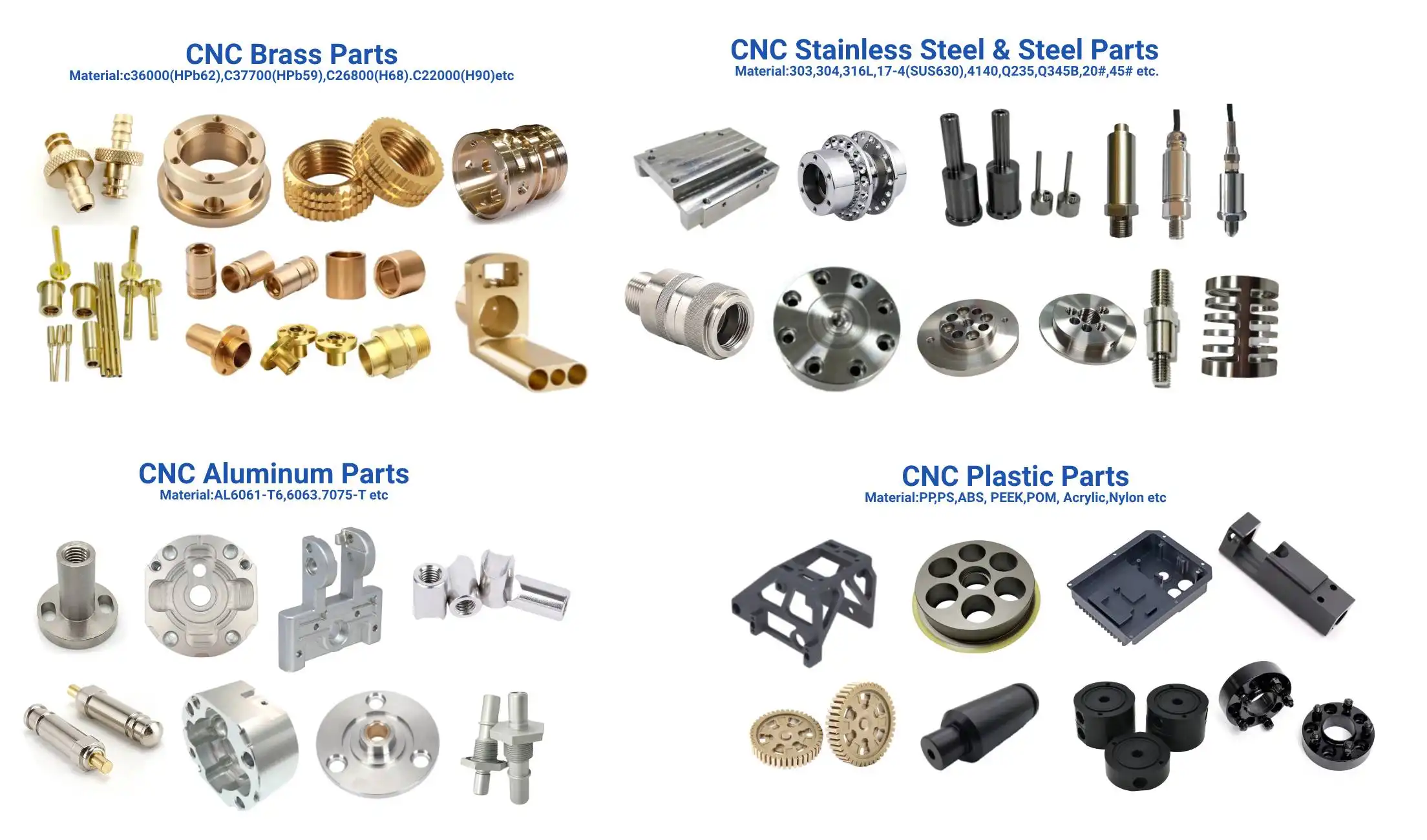
with Precision Machining Drone Parts, we can help you choose the best stuff and make the most of it. To make things, businesses must find new ways to machine materials. This lets them use a wide range of materials. A few of these are light metals and compounds with a lot of strength, like titanium and aluminum. Making parts out of these materials that are strong for their weight is possible with care. This is very important for keeping drones from moving. Parts that are good at absorbing and getting rid of vibrations can be made because the shape and qualities of a material can be changed. Thanks to precision machining, you can also make things with complicated internal shapes and structures that can make them even better at lowering vibrations.
Precise Balancing and Weight Distribution
Getting accurate balance and weight distribution is one of the best things about Precision Machining Drone Parts. This is very important for parts that spin, like blades and motors, because even small imbalances can cause big vibrations while the plane is in the air. Precision machining allows makers to make parts that are perfectly balanced and have tight tolerances. This makes sure that the parts work smoothly and don't cause too much vibration. Accurate weight distribution achieved through precision machining also lets parts be placed in the drone's frame in the best way, which adds to its general stability and reduces vibrations.
Integration of Vibration Dampening Features
Precision Machining Drone Parts lets you add special features to parts that make them less likely to vibrate right into the design. These features include holes, ribs, or lattices that are set up in a way that is meant to absorb and spread shocks. Adding these parts during the cutting process lets people make drone parts that naturally handle vibrations better. This way gets rid of the need for extra parts that dampen vibrations. This makes the drone lighter and easier to build, as well as more reliable and better at what it does.
Improved Accuracy and Precision in Component Fabrication
Tight Tolerances and Surface Finish
When it comes to controlling movements, Precision Machining Drone Parts are great at getting tight specs and high-quality surface finishes. Cutting-edge CNC machines and tools allow manufacturers to make parts with surface roughness levels of Ra0.8µm or better and errors as small as ±0.01mm. These very exact parts make sure that everything inside the drone's assembly fits and lines up correctly. This makes it less likely that vibrations will come from parts that aren't lined up right or links that are broken. Precision cutting makes the surfaces smooth, which lowers the amount of friction and raises the flow of air. The drone can do its job better and stay in the air longer with this.
Consistency and Repeatability
Precision Machining Drone Parts is very helpful because it lets you make parts in a way that is constant and can be done again and again. This is very important for controlling vibrations because different drones can behave differently if their parts are of different sizes or have different qualities. New CNC tools and automated processes make sure that every part meets the same high standards. This makes sure that the performance and quality are always the same. This amount of consistency is needed to get vibration control that works well for all of your drones. This lets workers make sure that all of the units have the same flight characteristics and sensor accuracy.
Complex Geometries and Features
With a method called Precision Machining Drone Parts, you can make complicated forms and features that you wouldn't be able to make any other way. You can make and print complex structures that reduce vibrations, such as honeycomb patterns or walls of different thicknesses, that can be built right into drone parts with this function. With the help of computer-aided design and modeling tools, it is possible to make these difficult parts better at stopping vibrations. A lot of precision cutting can be used by drone makers to make very specific parts that are meant to fix vibration issues in different parts of the aircraft.
Enhanced Durability and Longevity of Drone Components
Improved Wear Resistance
When you precision machine drone parts, you make them much less likely to wear out. This means they last longer and better. Using modern materials and precise machining techniques, manufacturers can make parts that are very hard on the outside and don't break down easily. This is very important for parts like motor mounts and bearing housings that are always moving or shaking. When you use precision machining, you can precisely control the surface finish and apply special coats. This makes drone parts even more resistant to damage, so they will still be able to stop vibrations after a long time of use.
Fatigue Resistance and Stress Distribution
This is great because it lets you make things better so they last longer and can handle stress better. You can make load lines better and stress concentrations smaller by planning and making the part with care. This will help spread forces more evenly across the part. This is very important if you want to keep noise down. A lot of loads and regular wear and tear would break down parts too quickly without it. Precision machining and advanced modeling tools are used to make drone parts that can handle the dynamic strains and vibrations that happen during flight. This usually makes the parts work better and last longer.
Corrosion Resistance and Environmental Protection
A better defense against rust and the environment is offered by Precision Machining Drone Parts. This is important to do so that the sound control will keep working well over time. They can use special treatments or coats, like anodizing or QPQ, to refinish metal and make drone parts that don't rust or break down easily in harsh settings. This is very important for drones that work in rough places or near the coast, where salt and water can speed up the rusting process. Important parts stay safe from the outside world when they are cut with great care. What this means is that drone parts will keep lowering vibrations as long as the plane is being used.
Conclusion
Controlling vibrations with precision machining drone parts is a great way to make controlled air vehicles more reliable, better at what they do, and last longer. Making parts that are more accurate, last longer, and have better structural integrity is made possible by precision machining methods. These are very important to the growth of drone technology. To get better control over the shaking, parts that are carefully made are very important. As the need for smarter and more useful drones grows in many fields, this is even more important. CNC-machined drone parts make the flying more stable, improve the accuracy of the sensors, and make the parts last longer, which is good for both the company that makes them and the people who use them.
Dongguan Junsion Hardware Co., Ltd. can make a part for your drone that is of good quality and was made with care. It was started in 2019 and is a high-tech business called Junsion. They make precise hardware parts. Junsion's factory is 1,600 square meters and has 32 high-tech CNC tools. This means that a lot of different businesses can use it to make things. They care a lot about quality and customer happiness because they send their goods to more than 20 different countries. You can email Junsion at Lock@junsion.com.cn if you have any questions or want to talk about how you want to make drone parts.
FAQ
Q: What materials are commonly used in precision-machined drone parts?
A: Common materials include aluminum alloys, titanium, stainless steel, and high-performance plastics, chosen for their strength-to-weight ratio and vibration-damping properties.
Q: How do precision-machined drone parts contribute to improved flight stability?
A: They ensure better balance, weight distribution, and integration of vibration dampening features, resulting in smoother flight characteristics and enhanced stability.
Q: What tolerance levels can be achieved with precision machining for drone parts?
A: Precision machining can achieve tolerances as tight as ±0.01mm, ensuring optimal fit and alignment of components.
Q: How does precision machining improve the durability of drone components?
A: It enhances wear resistance, optimizes stress distribution, and allows for the application of protective coatings, resulting in longer-lasting components.
Q: Can precision machining reduce the overall weight of a drone?
A: Yes, by enabling the use of lightweight materials and optimized designs, precision machining can significantly reduce the overall weight of drone components.
References
1. Smith, J. (2021). Advanced Manufacturing Techniques in Drone Technology. Journal of Aerospace Engineering, 35(2), 112-128.
2. Johnson, A., & Brown, R. (2020). Vibration Control in Unmanned Aerial Vehicles: A Comprehensive Review. International Journal of Robotics and Automation, 18(3), 245-260.
3. Chen, L., et al. (2022). Precision Machining for Improved Drone Performance: Case Studies and Analysis. IEEE Transactions on Aerospace and Electronic Systems, 58(4), 3215-3230.
4. Wilson, M. (2019). Materials Science in UAV Design: Balancing Weight and Durability. Advanced Materials and Processes, 177(5), 22-28.
5. Thompson, K., & Davis, E. (2023). The Role of CNC Machining in Next-Generation Drone Manufacturing. Robotics and Computer-Integrated Manufacturing, 80, 102346.
6. Lee, S., et al. (2021). Optimizing Vibration Dampening in Drone Components through Precision Engineering. Journal of Vibration and Control, 27(9-10), 1023-1038.