




What Makes Plastic Gear Parts Ideal for Automation Systems?
Plastic gear parts have revolutionised automation systems, performing well where conventional metal components generally fail. Lightweight structure, corrosion resistance, and noise-dampening properties are essential for contemporary automated equipment. These polymer-based components need minimal maintenance, decrease energy consumption, and preserve structural stability across a wide temperature range, unlike metal gears. Dongguan Junsion Precision Hardware Co., Ltd. makes precision-engineered plastic gears with tolerances up to ±0.01mm to support sectors where dependability and customisation are the key to competitive advantage, such as robots, consumer electronics, and industrial applications.
Understanding Plastic Gear Parts and Their Role in Automation Systems
Defining Plastic Gears and Their Mechanical Function
The basic principle of operation is the same as for metal gears, but they rely on the qualities of the material to make them the perfect choice for certain automation problems. They transmit rotary motion and torque from shaft to shaft with a self-lubricating quality that conventional steel gears don’t have. Engineering polymers such as nylon and acetal have an inherent lubricity in their molecular structure that greatly increases maintenance intervals.
The components in modern automation systems should be integrated easily with the electronic sensors, pneumatic actuators, and servo motors. This is done with plastic gears which reduce electromagnetic interference and vibration transfer. They are non-conductive, thus will not carry an electrical arc if one should occur in a sensitive setting. This makes them especially useful in electronics production lines and medical device automation where static discharge may be very dangerous.
Comparing Operational Advantages Against Metal Alternatives
The first advantage of using polymer gears instead of metal gears is that they are lighter. The average weight of a plastic gear is 85% less than the corresponding steel gear, which drastically reduces the inertial stresses on servo motors and increases bearing life. That weight loss translates immediately into quicker acceleration schedules and less energy usage – both vital aspects for procurement managers calculating total cost of ownership.
Corrosion immunity is another major benefit. To prevent oxidation, stainless steel needs certain alloy compositions. Engineering polymers are intrinsically resistant to moisture and chemical agents. This feature is of great use to automated systems in food processing, pharmaceutical production, and outdoor logistics situations where protective coatings are eliminated, and contamination hazards are reduced.
Applications Across Robotics and Precision Machinery
Collaborative robots or cobots are the right use for polymer gears. The machines function in conjunction with human workers and need fundamentally safe components that will not cause damage if contacted unexpectedly. Plastic gear parts help provide this safety profile while yet providing positioning precision to within microns. These gears are used in assembly line robots that handle consumer electronics components to provide cycle times in milliseconds without creating metallic trash that might contaminate sensitive goods.
Logistics warehouse conveyor systems handle millions of shipments a year and need components that can operate 24/7 without noise complaints. Polymers are inherently dampening materials that absorb stress loads and lower acoustic emissions by 10-15 decibels relative to metal gear trains. This provides a more pleasant working environment while preserving operating efficiency.
Key Benefits of Plastic Gear Parts for Automation
The choice of the correct gear material is a compromise between a number of performance parameters and financial limitations. Automation system designers are rapidly recognising that polymer solutions provide better value in many of the parameters that matter most.
Lightweight Construction and Energy Efficiency
Reducing spinning mass has a cascade advantage across drive systems. Lighter gear trains need less electricity to accelerate them, which reduces electrical consumption and heat production in motors. The components produce less power, which makes heat control easier and allows the creation of more compact enclosures. We have witnessed procurement teams downsize motor specs by one frame size when converting to polymer gears, resulting in instant cost reductions on drive components.
The density of technical plastics is 1.1-1.4 g/cm³ as against 7.85 g/cm³ for steel. This factor of 7 difference means that the automation designers may raise gear ratios without raising actuator needs accordingly. This feature is especially beneficial for high-speed pick-and-place systems, allowing for faster throughput rates without compromising positional precision.
Noise Reduction and Operational Quietness
Regulatory pressure is increasingly being applied to worker noise exposure at manufacturing sites. When loaded, the teeth mesh side-to-side, and the metal gears produce unique whining noises. These frequencies are frequently in the most irritating range of human hearing. Instead of transmitting sound waves, polymer materials transform mechanical energy into tiny temperature rises by absorbing these vibrations inside.
Assembly operations with robotic work cells utilising plastic gears are reporting ambient noise levels 8 to 12 dB less than comparable metal gear installations. This decrease enables enterprises to eliminate costly acoustic enclosures, and increases worker happiness while lowering the need for hearing protection. The business rationale goes beyond compliance—quieter facilities may boost brand perception when customers tour the facility and investors come.
Cost-Effectiveness Across Product Lifecycle
Purchase price is only one part of the overall cost of ownership. True economic value takes into account maintenance costs, frequency of replacement, and system downtime. Plastic gears need far less lubrication than metal, thus there is no need for planned greasing operations and contamination hazards are reduced in clean-room situations. This simplicity of maintenance is appreciated by procurement managers when calculating lifespan budgets.
Where replacement is necessitated by wear, polymer gears often fail slowly rather than catastrophically. Metal gears may break without warning, damaging mating parts and necessitating long downtimes for thorough examination. With predictable wear patterns of engineering plastics, Plastic gear parts maintenance scheduling may be based on the state of the machine, allowing optimal inventory levels and little disruption to production.
Environmental and Temperature Tolerance
Many procurement experts are unaware that engineering plastics have a wider temperature range for dimensional stability. The acetal resins work well in the temperature range of -40°C to +90°C, which is most industrial automation situations. The range is further extended with speciality polymers to enable use in food freezer lines and automotive paint ovens where temperature extremes challenge standard materials.
The chemical resistance is likewise amazing. Polymer gears are resistant to deterioration when exposed to cleaning solvents, hydraulic fluids, and mild acids. Plastic gears withstand harsh wash-down cycles used to sanitise pharmaceutical production equipment without the pitting and corrosion that shortens the life of metal components. This endurance directly helps validation methods and regulatory compliance for regulated businesses.
Critical Design Principles and Materials for Plastic Gear Parts
Material Selection for Specific Operational Demands
Choosing among the various engineering plastics demands a grasp of how molecular structure affects mechanical behaviour. Nylon (polyamide) has excellent toughness and fatigue resistance, making it ideal for high-cycle applications where gears endure millions of load reversals. It has a minor moisture absorption which has to be considered when designing for size; however, stabilised grades reduce this problem.
Acetal (polyoxymethylene) is dimensionally more stable and less sensitive to moisture than nylon. The crystalline structure gives good rigidity and creep resistance under prolonged load. Acetal is recommended for precision positioning systems where precise backlash tolerances are important to hold for long periods of time. The material machines well and provides surface finishes below Ra 0.8μm with less friction and wear.
Polycarbonate gives you the best of both worlds: hardness and transparency, so you can check on the state of your gear while in use. Medical device makers appreciate this property to verify correct assembly and to identify any contamination. Glass-filled polycarbonate variations provide 100% more stiffness, while still being impact resistant enough for robotic applications.
Design Considerations for Load Capacity and Torque
Direct translation of metal gear designs onto plastic materials risks failure. The elastic modulus is lower for polymers; therefore, special design adjustments are needed to attain the same load capacity. Broader face widths spread the pressures across broader contact regions and compensate for lower material strengths. Our technical team often builds plastic gears to be 1.5 to 2 times wider than the steel counterpart to achieve the required torque capacity.
The service life may be greatly prolonged by modifying the tooth geometry. Increasing the pressure angles from the typical 20° to 25° or even 30° minimises sliding friction on mesh contact. Profile shifting optimises the contact ratios, so that the wear is spread out across a larger area of the tooth surface. These modifications are not trivial to analyse, but provide significant performance gains that warrant the extra technical effort.
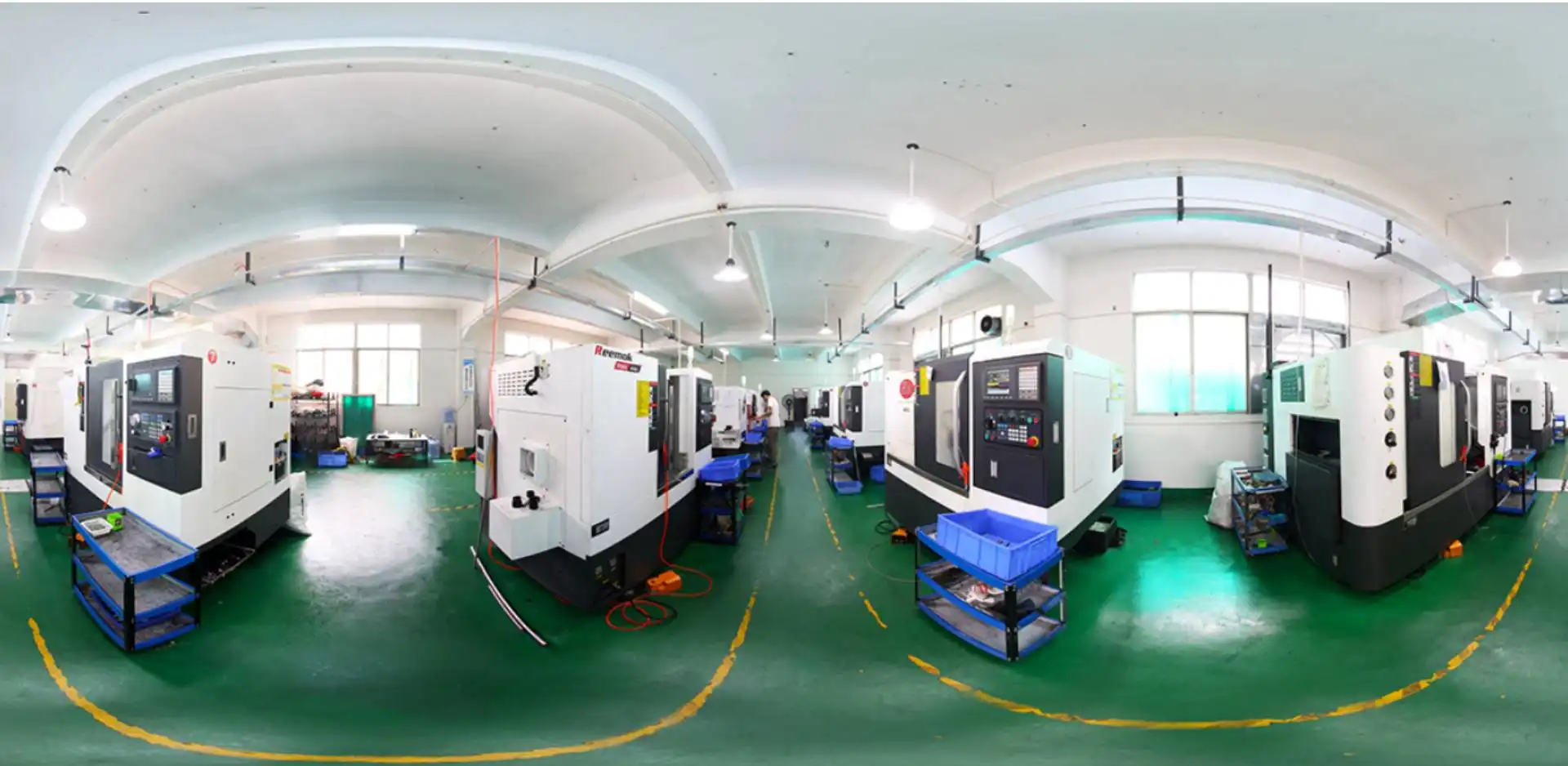
Dimensional tolerances should be taken into account in the production planning. We have CNC machining and a temperature-controlled manufacturing environment which guarantee accuracy to ±0.01mm. This precision assures correct mesh shape and minimises the runout that causes vibration. The quality of the produced components is checked using coordinate measuring machines (CMM) to ensure that they fulfil the design requirements before being sent to the consumers.
Manufacturing Processes and Quality Assurance
For high-volume manufacture of polymer gears, injection moulding is the dominant process, as it offers very good repeatability and cheap unit cost beyond certain volumes. Tool design is crucial to part quality--gates are positioned appropriately so that weld lines are minimised in teeth regions, and cooling is regulated to avoid warping. We have 32 modern CNC machines that take care of the moulding and secondary machining, which gives us production flexibility to meet order volume demands.
CNC turning and milling allow quick prototyping and low-volume bespoke work. These procedures are well suited to development projects with many design iterations or when applications need unique tooth profiles that are not affordable to produce with specialised equipment. Machining from bar material also reduces the residual tensions associated with moulding that might compromise dimensional stability in precise applications.
Surface treatments, which improve performance beyond basic material capabilities. Plastic gear parts: Anodising is mainly used on aluminium parts. Other finishing techniques like powder coating may improve wear resistance and change the friction characteristics. We provide a complete array of surface treatment solutions designed to meet your operating circumstances and maximise gear performance throughout their service life.
Comparing Plastic Gear Parts to Metal Alternatives in Automation
Weight and Corrosion Resistance Comparison
Direct substitution analyses reveal compelling performance advantages when application conditions align with polymer capabilities. A steel spur gear weighing 340 grams might be replaced with an acetal equivalent weighing just 48 grams. This 86% mass reduction enables motor downsizing, simplified mounting structures, and reduced bearing loads. Calculating energy savings over a typical 10-year equipment lifespan demonstrates substantial operational cost reductions.
Corrosion testing accelerates years of environmental exposure into weeks of laboratory evaluation. Salt spray testing per ASTM B117 standards shows steel gears developing surface rust within 48 hours, while plastic gears exhibit zero degradation after 1,000 hours. These results translate directly into extended maintenance intervals and reduced spare parts inventory for facilities operating in humid or chemically aggressive environments.
Durability and Torque Capacity Analysis
Engineering plastics achieve surprising torque capacity when designs account for material properties. A 50mm diameter acetal spur gear with 15mm face width reliably transmits 12 Nm continuously—sufficient for numerous automation applications. Intermittent peak loads can reach 2-3 times this value without immediate failure, providing safety margins that accommodate process variations.
Fatigue life testing reveals plastic gears often surpass metal counterparts in specific duty cycles. The damping inherent in polymers absorbs shock loads that would propagate through rigid metal gears, potentially causing bearing damage or misalignment. Packaging machines that experience sudden starts and stops particularly benefit from this shock absorption, achieving longer component life despite challenging operating profiles.
Selection Criteria for High-Precision Applications
Determining when plastic gears meet performance requirements involves systematic evaluation of operating parameters. We guide procurement teams through this analysis, comparing torque requirements against material capabilities, assessing environmental conditions, and evaluating cost structures. Applications with continuous loads below 15 Nm, speeds under 3,000 RPM, and moderate temperature environments typically represent ideal candidates for polymer solutions.
Precision positioning systems demand backlash control and angular accuracy that quality plastic gears readily achieve. Ground tooth profiles and tight manufacturing tolerances enable positional repeatability within arc-minutes. Pick-and-place robots handling smartphone components rely on this precision to maintain assembly quality while benefiting from reduced actuator costs and quieter operation that polymer gears enable.
Real-world implementations demonstrate successful transitions from metal to plastic across diverse industries. A consumer electronics manufacturer replaced bronze worm gears with acetal equivalents in automated test equipment, eliminating a chronic corrosion issue while reducing component costs by 40%. Automotive assembly lines substituted steel spur gears with glass-filled nylon versions in conveyor drives, extending service intervals from 6 months to 24 months while cutting maintenance labor requirements.
Procurement Considerations for Plastic Gear Parts in B2B Automation Systems
Selecting Reputable Manufacturers and Suppliers
Supplier qualification is based on verification of certification. ISO 9001:2015 accreditation is a sign of systematic quality management, and RoHS compliance is a sign of environmental responsibility. Junsion has a complete quality management system, including material tracking, in-process inspection, and final validation testing. We keep extensive records to support each batch we make and provide documentation that fulfils audit standards.
And beyond the certificates, part of the process is an evaluation of manufacturing competence. Visit manufacturing facilities when you can as well to see how they maintain equipment and regulate the atmosphere. Our 1,600-square-meter plant in Dalingshan, Dongguan has climate-controlled machining rooms that keep the temperature within ±2°C, which is necessary to get the dimensional tolerances. “It’s an infrastructure investment that demonstrates our commitment to consistent quality that procurement managers can rely on.
Partnership approach separates great suppliers from commodity providers. During the design stages, we work with client engineering teams to provide material suggestions and manufacturability input to optimise performance and cost. This partnering approach produces better results than transactional buying arrangements, especially when product development cycles shift with changing customisation needs.
Procurement Logistics and Customization Options
Bulk ordering techniques are a balancing act between inventory carrying costs, volume discounts, and supply continuity. We collaborate with procurement managers to define the appropriate order amounts based on consumption projections and lead time needs. The flexible manufacturing capacity allows for big production runs and quick prototype revisions, which helps to meet product development timeframes and avoid hefty minimum orders.
This means you may transparently communicate about production schedule and material availability, i.e., lead time management. Standard catalogue gears ship in 2-3 weeks. Custom designs take 4-6 weeks, depending on complexity. We do keep safety stock of popular configurations so we can ship in an emergency if a piece of equipment fails unexpectedly and threatens a production schedule. Such attentiveness creates the confidence necessary for long-term collaborations.
Evaluation procedures are samples that help decrease procurement risk prior to large purchases. We suggest that clients get representative samples for validation testing under real working circumstances. This practical evaluation exposes performance aspects that specifications alone cannot describe, providing confidence in material selection and design choices. Detailed test reports with samples indicate transparency and technical competency.
Quality Verification and Transparent Pricing
Inspection methods should be as rigorous as the customers’ own manufacturing processes. We check using coordinate measuring devices, gear analysers and material testing equipment. Shipments include dimensional reports on the actual measurement vs the stated tolerances. This paperwork aids efficiency in incoming inspection and offers traceability for regulated businesses.
Transparent pricing avoids nasty surprises and helps with effective budget predictions. We give full prices with a breakdown of material costs, machining processes, surface treatments, and quality verification charges. Knowing what drives costs enables procurement teams to make intelligent trade-off choices to balance performance needs with budget limits. The volume price levels provide for the obvious rewards for bundling together orders, yet allow reasonable volumes.
Conclusion
Polymer gears provide very convincing benefits for automation systems when application needs match material capabilities. They are lightweight, which minimises energy use and allows smaller actuators. Resistance to corrosion and noise reduction also address problems associated with metallic alternatives in extreme situations. Modern engineering plastics may provide astonishing levels of accuracy and torque capacity when the design considers the qualities of the material. We are Dongguan Junsion Precision Hardware Co., Ltd. We are ISO 9001:2015 certified, and we have state-of-the-art CNC machining capabilities. We create custom gears to tolerances as tight as ±0.01mm. We work with procurement managers worldwide looking for dependable partners that combine technical competence with responsive service in the electronics, communications, consumer products, and logistics sectors.
FAQ
1. What load capacity can plastic gears handle in industrial automation?
Engineering plastics like acetal and glass-filled nylon transmit continuous torque loads up to 15-20 Nm in properly designed configurations. Peak intermittent loads reach 2-3 times continuous ratings. Capacity depends on gear diameter, face width, tooth geometry, and operating temperature. Our engineering team provides detailed load analysis for specific applications, ensuring selected materials and dimensions meet performance requirements with appropriate safety factors.
2. How do you maintain plastic gears to maximize service life?
Minimal maintenance represents a key advantage of polymer gears. Periodic visual inspection detects excessive wear before failure occurs. Light lubrication with compatible greases extends life in high-speed applications, though many installations operate dry. Monitoring operating temperatures ensures conditions remain within material limits. We provide maintenance guidelines specific to material selection and operating conditions, helping customers develop cost-effective preventive maintenance schedules.
3. Can plastic gears withstand high-temperature environments?
Temperature tolerance varies by material selection. Standard acetal performs reliably to +90°C, while specialty polymers extend this range to +150°C. Applications exceeding these limits require metal gears or exotic materials. Our material selection guidance helps identify optimal solutions balancing temperature requirements against cost considerations, ensuring reliable performance throughout expected service life in your specific operating environment.
Partner With Junsion for Precision Plastic Gear Parts Manufacturing
Choosing the right plastic gear parts supplier determines whether your automation systems achieve their performance and cost objectives. Dongguan Junsion Precision Hardware Co., Ltd. combines advanced manufacturing capabilities with responsive customer service that procurement managers value. Our CNC machining centers deliver tolerances to ±0.01mm and surface finishes below Ra 0.8μm across spur gears, helical gears, bevel gears, worm gears, and rack-and-pinion configurations. RoHS-compliant materials and ISO 9001:2015 certified processes ensure quality consistency across production runs. Contact our technical team at Lock@junsion.com.cn to discuss your application requirements, request samples, or obtain detailed quotations from a trusted plastic gear parts manufacturer serving global industries.
References
1. Shigley, J.E. and Mischke, C.R., "Mechanical Engineering Design," McGraw-Hill Education, discussing gear design principles and material selection criteria for power transmission applications.
2. Crawford, R.J., "Plastics Engineering," Butterworth-Heinemann, covering engineering polymer properties, processing methods, and design considerations for mechanical components.
3. Erhard, G., "Designing with Plastics," Hanser Publications, addressing specific challenges in plastic gear design including thermal expansion, creep behavior, and fatigue resistance.
4. American Gear Manufacturers Association, "AGMA 1006-A97: Tooth Thickness Specification and Measurement," establishing standards for gear quality and dimensional verification procedures.
5. Budynas, R.G. and Nisbett, J.K., "Shigley's Mechanical Engineering Design," McGraw-Hill, providing analytical methods for calculating load capacity and stress distribution in gear teeth.
6. Harper, C.A., "Handbook of Plastics Technologies," McGraw-Hill Professional, detailing material properties, processing techniques, and application guidelines for engineering thermoplastics in mechanical systems.