




What Makes Custom Metal Hardware Highly Durable and Reliable?
Custom metal hardware derives its exceptional durability and reliability from three fundamental pillars: superior material selection, precision manufacturing techniques, and rigorous quality assurance protocols. When procurement managers source tailored metal components for demanding applications, they benefit from engineered solutions that address specific operational challenges—whether resisting corrosive chemicals in medical devices or enduring extreme vibrations in aerospace systems. Unlike generic off-the-shelf alternatives, customized hardware optimizes material grades, dimensional tolerances, and surface treatments to match exact environmental conditions, dramatically extending service life while reducing costly downtime and unexpected failures.
Understanding Custom Metal Hardware Durability and Reliability
Defining Durability and Reliability in Industrial Contexts
Durability is a measure of how well precise metal parts can handle long-term mechanical stress, exposure to the environment, and normal use. Reliability means that something works the same way every time and doesn't break down when it's supposed to. Both of these factors have a direct effect on the total cost of ownership, upkeep plans, and the ability to keep making things in industries like communications infrastructure, logistics automation, and electronics manufacturing.
Common Challenges with Standard Hardware Solutions
When buying teams have specific needs, off-the-shelf screws and brackets often fall short. Standard parts often don't have enough corrosion protection for warehouses that are damp, not enough tensile strength for heavy-duty uses, and not enough compatibility with certain building methods. Because of these problems, engineers have to lower the standards for their designs or change parts too soon, which raises costs and risks the quality of the final product.
Advantages of Tailored Metal Components
Through engineered efficiency, custom metal hardware, precise hardware fixes these problems. Manufacturers match the qualities of materials to the needs of applications by choosing the right types of stainless steel, like 316 for better resistance to corrosion or 410 for higher hardness. Customized sizes make sure that parts fit perfectly in systems, and special surface treatments like electroplating or anodizing protect the environment. This method gives you parts that will work reliably in the exact situations you need them to in your business.
Core Factors That Make Custom Metal Hardware Durable and Reliable
Precision-engineered metal parts last a very long time because the materials, manufacturing methods, and protective treatments are all carefully chosen. When procurement professionals understand these factors, they can make better decisions about where to source goods.
Premium Material Selection for Enhanced Performance
The choice of material has a big impact on how long and reliably a part works. We work with different types of stainless steel at Dongguan Junsion Precision Hardware Co., Ltd., such as 304, 303, 316, and 410. Each has its own benefits. The 316 grade is very resistant to chlorides and acidic environments, which makes it perfect for medical equipment and supply centers near the coast. On the other hand, 304 stainless steel is a good choice for consumer gadgets and general industrial equipment because it is both corrosion-resistant and cost-effective.
In addition to stainless steel, we also make parts out of copper, carbon steel, aluminum alloys, and titanium alloys, based on the needs of the application. Titanium hardware is very strong for how light it is, which is important for aircraft and robotics uses where weight reduction directly affects efficiency. Before going into production, each material is put through a lot of tests to make sure its mechanical features meet the standards.
Advanced Manufacturing Processes for Structural Integrity
The way a part is made has a direct effect on how reliable it is and how accurate its measurements are. Our facility uses a number of precise methods to make sure that the structure stays the same.
- CNC Machining: Parts made by computer numerical control systems can be within ±0.01mm of each other, which makes sure they fit perfectly in complicated setups. This level of accuracy is necessary for automation tools and AI intelligent systems, since even small changes can make them not work right.
- Turning Operations: High-speed turning makes cylinder-shaped parts with very smooth surfaces that have a roughness value of 0.8μm or less. This smooth surface keeps moving parts from rubbing against each other and improves corrosion resistance by reducing surface rough spots where dirt can gather.
- Five-Axis Machining: Five-axis skills help with complicated shapes that need more than one angle. This lets us make complex brackets and unique screws in just one setup. This method cuts down on handling, keeps standards tighter, and makes the whole part stronger by getting rid of weak joints.
- Stamping Processes: Precision stamping is the best way to get uniform quality and lower costs for large production runs. When we stamp, we keep very close measurements that are good for using on market goods and home items.
With these industrial skills, we are one of the best companies that makes fine hardware. We can handle a wide range of project needs, from prototyping to full-scale production.
Surface Treatment Technologies for Protection and Longevity
Protective surface treatments can help even the most expensive materials last longer in harsh settings. We offer a wide range of finishing choices that can be adjusted to the needs of each application:
- Anodizing: This process adds a strong oxide layer to metal parts, making them more resistant to corrosion and giving consumer-facing goods more color choices.
- Electroplating: This process puts down thin layers of metal that protect against corrosion and make electrical connections better for electronics.
- Powder Coating: Powder coating uses strong, even polymer finishes that don't chip, scratch, or react with chemicals in industrial settings.
- Sandblasting: Sandblasting gets surfaces ready for later treatments and makes matte finishes that are regular and cut down on glare in optical systems.
- Electrophoresis: This method coats complicated shapes very evenly, making them perfect for parts in cars and medical devices.
Each treatment choice meets different useful needs besides looks, making sure your parts work reliably for as long as they're supposed to.
Quality Control and Industry Certifications
Before being shipped, strict testing processes make sure that every part meets the standards. Our quality control method includes using 2.5D projectors to check the sizes of things, hardness tests to make sure the materials have the right properties, and salt spray tests to make sure the claims about corrosion protection are true. These steps make sure that the quality of each production batch is the same.
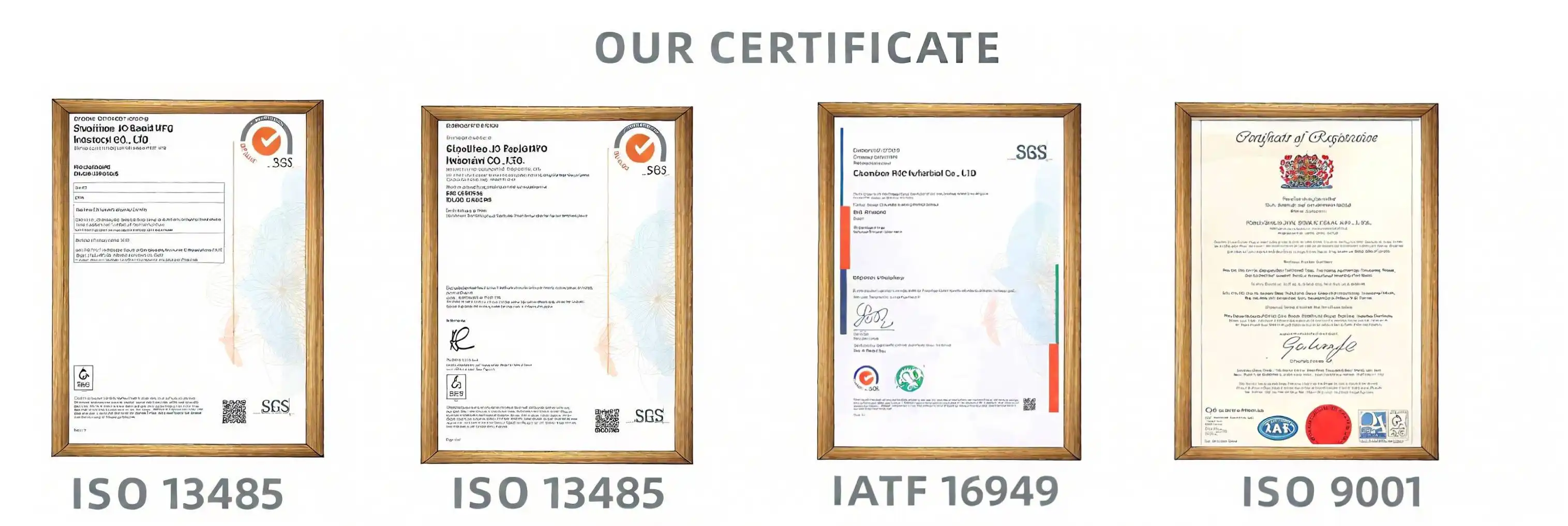
We keep our ISO 9001:2015 certification, which shows that we are dedicated to structured quality management. RoHS compliance makes sure that our parts meet the safety standards for the environment that are needed in the technology and consumer goods markets. When applications need extra checks, we can look for industry-specific certifications like AS9100 for aircraft projects. This will give you the proof your buying process needs.
Comparing Custom Metal Hardware and Standard Hardware for Durability
Material Quality and Manufacturing Precision Differences
Standard gear usually uses common materials that were chosen for their wide range of uses rather than their best performance. Most generic stainless steel screws are made from grades 201 or 202, which aren't as resistant to corrosion as 316 components that are properly defined. Off-the-shelf parts are made in a way that puts volume production ahead of tight standards. This means that there are differences in size that build up across units.
These objectives are turned around by customized precise components. The choice of material should take into account the conditions you'll be working in, such as salt spray in logistics centers or thermal cycling in car uses. Manufacturing methods keep limits the same from one batch to the next, which makes sure that the parts can be put together correctly and will stay stable over time.
Performance Under Extreme Industrial Conditions
Real-world uses show how long-lasting it is to use properly defined parts. Think about mechanical equipment that works in factories where the temperature changes, there is shaking, and chemicals are sometimes present. In just a few months, standard clamps made of mild steel with basic zinc finishing start to corrode, which stops production for repairs.
Custom-made clamps made of 304 stainless steel and powder finish will last for years in these conditions without breaking down. Investing in the right materials and treatments up front saves money on repair costs, cuts down on downtime, and makes tools more reliable overall. Similar performance gaps can be found in medical devices, military systems, and robotics, all of which have parts that can fail and have big effects.
Total Cost of Ownership Analysis
More and more, people who work in procurement are realizing that the purchase price is only one part of the true cost of a component. When looking at providers of precise hardware, you should think about the full ownership equation:
Standard parts may be cheaper at first, but they need to be replaced often because they wear out or corrode too quickly. For every replacement, there are costs for buying, managing supplies, installing, and stopping production. During the normal lifetime of a piece of equipment, these ongoing costs usually end up being many times higher than the value of the part.
Custom-engineered gear usually has higher unit prices because it is made with better materials and with more care. But a longer service life gets rid of the need for replacements and the costs that come with them. Making things more reliable cuts down on unexpected downtime and repair work. When total lifetime costs are taken into account, many procurement teams find that properly specified parts give a 300–500% return on investment compared to generic options.
How to Choose Durable and Reliable Custom Metal Hardware: A Buyer's Guide
Assessing Material Compatibility with Application Requirements
To choose the right parts, you must first have a full understanding of the operating conditions. Extreme temperatures, chemical contact, mechanical loads, and external factors can all affect the choice of material that is best. When it comes to stainless steel, medical devices that need to be sterilized often need a different grade than warehouse storage racks that only need to deal with humidity and small changes in temperature.
When asking for quotes, make sure you fully describe your natural conditions. Include the ranges of temperatures, the amount of water or chemicals that will be present, the load requirements, the projected service life, and any industry-specific rules that control the choice of material. With this knowledge, engineering teams can suggest the best grades and processes for materials.
Evaluating Supplier Manufacturing Capabilities
The ability of providers to make things directly affects their ability to meet your quality and service needs. When looking at possible partners, find out what kind of tools they have, how they handle quality, and how much they can produce.
Look for providers who use up-to-date CNC machines that can meet your standards. Check to see if they have their own quality testing tools instead of using outside labs that take too long to respond and slow down production. To make sure they can meet your number needs without losing quality or delivery performance, ask them how much they can produce and how long their lead times are usually.
We have 32 high-tech CNC tools on our 1,600-square-meter production floor at our Dalingshan facility. This lets us work on projects ranging from small Custom metal hardware prototypes to large production runs. We can make sure we use the best production process for your part by having a wide range of tools.
Verifying Credentials and Quality Transparency
Supplier approvals are an objective way to check that quality management practices are being followed. Getting ISO 9001:2015 approval shows that you take a structured approach to managing documents, controlling quality, and always making things better. Industry-specific certificates, such as AS9100, show that you have experience meeting the strict quality standards of the aircraft industry.
In addition to certificates, you should also look at how open the seller is about the quality processes. Manufacturers with a good reputation are happy to talk about how they check their products, provide specific quality documentation, and let you track down materials and processes. Being honest like this builds trust and makes it easier to solve problems if quality problems happen.
Key Questions for Vendor Assessment
When judging a seller, you should ask specific questions that show their skills and how well they work with your needs:
- What kinds of tolerances can you regularly reach when using different ways to make something?
- Which types of materials do you keep in stock, and which ones do you need to order specifically?
- How long does it take to make a prototype compared to a full production run?
- How do you handle ideas for improving the design when you're going over the customer's requirements?
- What kind of paperwork do you offer for verifying measurements and certifying materials?
- Do you offer engineering help with choosing materials and designing things that can be made?
The answers from suppliers show how knowledgeable they are in technical matters, how customer-focused they are, and whether they can really work with you to make things instead of just completing your orders.
Logistical Considerations for Procurement Planning
Aside from technical skills, real procurement factors also play a role in choosing a seller. When it comes to specialized parts, minimum order amounts can have an effect on inventory prices and cash flow. Lead times change the schedule for production and may mean that backup stock is needed for important uses. Customization flexibility tells you if your sellers can make changes to the designs of your goods as they change.
We set up our systems so that they can meet a wide range of buying needs. Our pricing system responds quickly to calls for specifications, usually within 24 to 48 hours. For prototyping, we offer flexible minimum quantities, and for production amounts, we offer short lead times and variable minimum quantities. This method helps purchasing teams find a good mix between how efficiently they use supplies and how much they need to make.
Sample and Quotation Evaluation
Before agreeing to large amounts of production, ask for samples. This is especially important for new supplier relationships or important uses. Physical samples let you check the accuracy of the dimensions, the quality of the surface finish, and the features of the material. Use the right measuring tools to compare samples to your specs and make sure that the capabilities match the claims.
When you look at quotes, don't just look at the unit prices; look at the total value as well. Think about services like design review, material approval paperwork, and packaging that is right for the way you receive things. Make it clear how to pay, who is responsible for shipping, and how to handle quality issues. Full understanding stops mistakes that stop the supply chain from working.
Best Practices to Maximize the Durability and Reliability of Your Custom Metal Hardware
Design Strategies for Long-Term Performance
The planning stage is where long-lasting parts are born. Stress analysis finds places with a lot of load that need to be strengthened or upgraded materials. When choosing the shape of parts that are loaded and unloaded over and over again in robots or automation equipment, fatigue resistance is taken into account. Stress concentrations that cause cracks and early failure can be avoided with good planning.
Work with your manufacturing partner as you build the plan. Suppliers with a lot of experience can give you useful advice on how to create something so that it can be made. They can suggest changes that make production more efficient without sacrificing performance. This collaborative method often finds ways to cut costs while also making parts more reliable, which is a real win for buying goals.
Customization Approaches That Enhance Operational Effectiveness
Customization that works goes beyond just specifying sizes; it also includes features that make installation easier, make it easier to service, and make it more reliable. Think about incorporating:
- Self-locating features that make sure the piece is oriented correctly
- Integrated fastening points that cut down on building steps and make the joints stronger
- Surface treatments that are matched to the chemicals that will be present in your application
- Choices of materials that don't cause galvanic corrosion when they touch different metals
These careful changes usually don't cost much to make but add a lot of value over the lifecycle of the part.
Maintenance and Handling Guidelines
Even high-end parts work better when they are properly maintained. Set up regular inspections that look for early signs of wear before they lead to failures. Cleaning parts on a regular basis is important to get rid of contaminants that speed up corrosion, especially in harsh settings. Follow the installation torque specifications for bolts to keep them from coming loose from vibration and to avoid overstressing them, which shortens their fatigue life.
Teach people the right way to handle things so that damage doesn't happen during installation. Scratches and gouges damage protected surface treatments, making places where corrosion can start that shorten the life of the part. Being aware can help you avoid damage that takes away from the value of your investment in high-quality parts.
Leveraging Supplier Support for Sustained Reliability
Strong ties with suppliers go beyond just delivering parts. Important production partners offer expert advice to solve problems with applications, offer warranties to cover flaws, and keep up quick customer service to address concerns.
There is more of an agreement between us and our customers than an exchange. Throughout the lifespan of your product, our engineering team is always here to answer technical questions. When the needs of an application change, we work together to make changes to components that keep speed high while meeting your new needs. This ongoing help makes the most of the money you spent on components and makes sure they keep working well.
Conclusion
Precision metal parts are very durable and reliable because they are made with the right materials, using advanced manufacturing techniques, and giving the outside a protective coating. This is all checked carefully for quality. If procurement professionals know about these factors, they can safely ask for custom metal hardware that works better than generic options and has a lower total cost of ownership. By working with skilled manufacturers that offer full engineering support, clear quality systems, and quick customer service, you can be sure that the parts you buy will work reliably throughout the demanding application lifecycles in the medical, aerospace, automation, and consumer electronics industries.
FAQ
What materials offer the best durability for precision hardware components?
The choice of material relies on the needs of the product. Grades 304 and 316 stainless steel are very good at resisting corrosion in most commercial settings. Grade 316 is even better at resisting chlorides and acids. 410 stainless steel may be better for applications that need more strength, while aerospace and robotics projects that need to be light often choose titanium alloys or aluminum for their best strength-to-weight ratios. When the right surface processes are applied to carbon steel, it can last for a long time without corrosion in most situations.
What lead times should I expect for custom precision components?
Lead times depend on the size and complexity of the job, as well as the current production plans. After the design is approved, prototyping usually takes one to two weeks, which gives time for iterative improvements before committing to production. Depending on the amount and the manufacturing steps needed, production quantities usually ship between two and four weeks. We make clear communication about realistic timelines during quotation a top priority. This way, you can safely plan your purchase schedules. For urgent needs, we may be able to offer rush services. Please call our team to talk about your unique time needs.
How do surface treatments improve component reliability and service life?
Surface treatments guard against corrosion, lower friction in moving parts, and make it easier for coatings or adhesives to stick. Anodizing metal parts makes a hard oxide layer that doesn't wear away or break down in the environment. When you electroplate metals, you place metals that don't corrode and may even make them better at conducting electricity. Powder coating makes products that are thick and last a long time. They are resistant to chemical damage and mechanical damage. Choosing the right treatments for your operational setting can greatly increase the life of a component while keeping its performance levels constant over the service time.
Partner with Junsion for Reliable Custom Metal Hardware Solutions
Suppliers from Dongguan Junsion Precision Hardware Co., Ltd. make high-quality parts that meet the strict requirements of buyers in the medical, aerospace, electronics, and communications industries. Our ISO 9001:2015-certified facility has advanced CNC equipment, a wide range of materials, and a variety of surface treatments that allow us to make unique custom metal hardware that fits your exact needs. We can hold limits of ±0.01 mm and surface roughness values of Ra 0.8 μm, which means that the quality will stay the same for even your toughest jobs. Our engineering team is available to help you from the design review process all the way through production and shipping, whether you need CNC precision parts, turned components, custom fasteners, or stamped metal parts. Contact us at Lock@junsion.com.cn right away to talk about your needs with a custom metal hardware maker with a lot of experience who wants you to succeed.
References
1. Davis, J.R. (2021). Stainless Steels: Properties, Selection, and Application Guidelines. ASM International Materials Engineering Publication Series.
2. Kalpakjian, S. & Schmid, S.R. (2020). Manufacturing Engineering and Technology: Precision Machining Processes. Pearson Education Manufacturing Technology Series.
3. Schweitzer, P.A. (2019). Fundamentals of Metallic Corrosion: Atmospheric and Media Corrosion of Metals. CRC Press Corrosion Technology Series.
4. Groover, M.P. (2020). Fundamentals of Modern Manufacturing: Materials, Processes, and Systems. Wiley Engineering Manufacturing Reference.
5. ASM International Handbook Committee (2021). Surface Engineering for Corrosion and Wear Resistance. ASM International Handbook Series Volume 5.
6. Boyer, R., Collings, E.W., & Welsch, G. (2022). Materials Properties Handbook: Titanium Alloys and Stainless Steel Comparisons. ASM International Reference Publications.